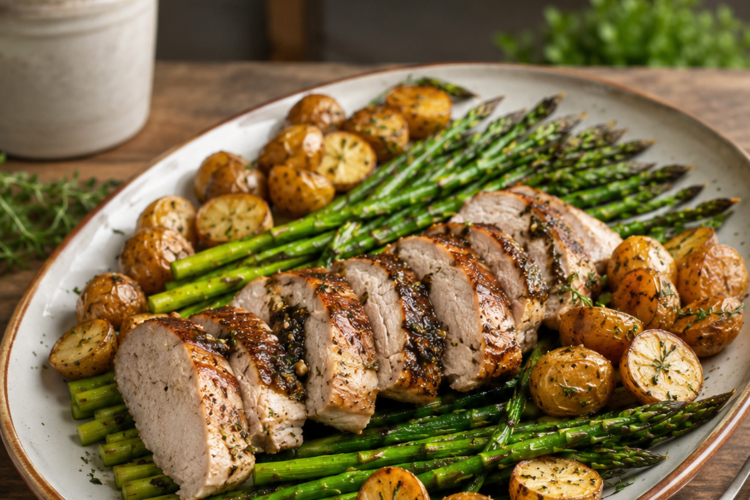
Sheet Pan Pork Tenderloin is a practical and flavorful dinner that brings juicy roasted pork, tender potatoes, crisp-tender asparagus, and a creamy mustard sauce together on one pan. This easy pork tenderloin recipe is ideal for busy weeknights because the preparation is straightforward, the ingredients are simple, and the cooking process does not require multiple pots and pans. With the right oven temperature and a reliable meat thermometer, the pork stays tender while the vegetables roast alongside it.
One-pan dinners are especially useful when you want a complete meal without spending a long time in the kitchen. This recipe combines a lean protein, a hearty potato side dish, and a fresh green vegetable in one simple cooking method. The potatoes and pork begin roasting first because they require more time in the oven, while the asparagus is added later so it remains fresh, flavorful, and properly cooked. The result is a balanced sheet pan dinner with different textures and plenty of flavor.
The seasoning is another reason this pork tenderloin sheet pan dinner works so well. Chili powder, onion powder, garlic powder, salt, black pepper, and optional chipotle powder create a savory spice blend that can be used across the entire meal. Using the same seasoning mixture for the pork and vegetables keeps the flavor consistent without requiring a long list of separate ingredients. The creamy combination of mayonnaise and whole grain mustard provides a cool, tangy finish that complements the roasted pork and vegetables.
Why This Sheet Pan Pork Tenderloin Recipe Is So Convenient
A major advantage of this easy sheet pan dinner is the minimal preparation and cleanup. Everything cooks on a large baking sheet, reducing the number of dishes that need to be washed after dinner. The recipe also requires no lengthy marinating time and no separate stovetop searing step. The pork tenderloin is seasoned, placed directly on the sheet pan, and roasted in the oven along with the potatoes and asparagus.
This recipe is also easy to organize because the cooking process follows a simple timeline. First, prepare the seasoning blend and slice the potatoes. Next, season the pork and start roasting the pork and potatoes together. After the initial roasting period, turn the potatoes and add the asparagus. While the remaining ingredients cook, prepare the quick two-ingredient mustard sauce. By the time the pork is ready to rest and slice, the vegetables are ready to serve.
For families and busy home cooks, this timing makes the meal especially practical. You can use the oven time to clean the kitchen, set the table, prepare drinks, or simply take a break while dinner cooks. Although the finished meal looks colorful and complete, the actual hands-on work is relatively short. That makes this one pan pork tenderloin recipe a useful choice for weeknight meals, family dinners, or any evening when you want a homemade meal without an overly complicated process.
Choosing the Right Pork Tenderloin
Pork tenderloin is a long, narrow, boneless cut of meat that is naturally lean and tender. It may also be labeled pork filet, pork tender, or pork loin filet, depending on the packaging and the store. It is important to understand that pork tenderloin and pork loin are different cuts. Pork loin is generally larger and thicker, so it requires a different cooking time from pork tenderloin.
Some packages contain two smaller tenderloins together. If that is what you have, both pieces can be cooked on the same large sheet pan as long as there is enough space around the ingredients. Keeping the pan from becoming too crowded helps the food roast more effectively. If the pork is crowded against the vegetables or other ingredients, it may not brown as evenly and can release moisture into the pan.
The most reliable way to determine when pork tenderloin is ready is by checking the internal temperature with a meat thermometer. The pork should reach 145°F in the thickest part. Cooking to temperature rather than relying only on the clock helps produce a better result because pork tenderloins can vary in thickness and shape. Once it reaches the proper temperature, remove it from the oven, allow it to rest briefly, and then slice it before serving.
Why Yukon Gold Potatoes Work Well
Yukon gold baby potatoes are a good match for this roasted pork tenderloin dinner because they have a naturally creamy texture and roast well at high heat. Slicing the potatoes into pieces approximately one-quarter inch thick helps them cook more evenly within the same overall cooking period as the pork. Their cut surfaces also have more contact with the hot sheet pan, encouraging browning and a tender interior.
The potatoes begin roasting before the asparagus because they require more time to become soft and golden. Tossing or turning them after the first ten minutes gives additional surfaces a chance to brown. Spreading the potatoes into an even layer is important because overlapping pieces can trap steam and prevent the edges from roasting properly. A large sheet pan gives the ingredients enough room to cook more effectively.
The recipe can also accommodate the listed substitutions for the potatoes. Small red potatoes or sliced sweet potatoes may be used instead. The size and thickness of the pieces should remain consistent so they cook evenly. No matter which potato option you choose, checking the vegetables near the end of the cooking process is useful because the exact roasting time can vary slightly based on the thickness of the slices and the performance of your oven.
Roasting Asparagus with Pork and Potatoes
Asparagus adds a fresh green element to this easy pork tenderloin recipe. Medium-thickness asparagus works particularly well because it can finish roasting during the final stage of cooking without becoming too soft too quickly. The woody ends should be trimmed before the asparagus is placed on the sheet pan, allowing the more tender portion of the vegetable to roast evenly.
Timing is important when adding asparagus to a sheet pan meal. Very thin stalks cook faster and can brown too much if they remain in the oven for the entire cooking period. If the asparagus is especially thin, add it later than usual so it does not overcook. Thicker stalks may need the full roasting time. Keeping an eye on the asparagus during the final stage helps preserve its texture and color.
The asparagus is coated with a small amount of oil and the reserved seasoning mixture before it returns to the oven. This gives the vegetable the same overall flavor profile as the pork and potatoes. If asparagus is unavailable or not preferred, the recipe may be adapted with green beans or halved Brussels sprouts. The cooking time should be considered carefully because different vegetables roast at different rates.
How to Make the Simple Pork Seasoning
The seasoning mixture is made by combining chili powder, onion powder, garlic powder, fine salt, black pepper, and optional chipotle powder. These everyday seasonings create a savory blend with a mild warmth. The chipotle powder can add a smoky, slightly spicy flavor, but it is optional. Paprika can be used as a substitute when a milder flavor is preferred, or the additional pepper may simply be omitted.
One of the useful features of this seasoning method is that it is divided between the ingredients rather than prepared separately for every part of the meal. A small amount is used to season the potatoes, another portion is reserved for the asparagus, and the remaining mixture coats the pork tenderloin. This creates a connected flavor throughout the sheet pan dinner while keeping the preparation uncomplicated.
Before seasoning the pork, pat the tenderloin dry with a paper towel. Removing excess surface moisture helps the seasoning adhere more effectively. Rub the spice mixture over all sides of the pork, making sure the surface is evenly covered. The seasoning does not need a long resting or marinating period, so the pork can go directly onto the prepared sheet pan and into the oven.
How to Cook Pork Tenderloin on a Sheet Pan
The oven is preheated to 425°F, providing the high heat needed for effective roasting. Start by arranging the sliced potatoes on the sheet pan, then drizzle them with part of the oil and season with the designated amount of the spice mixture. Tossing the potatoes helps distribute the oil and seasoning before they are spread into an even layer.
The pork tenderloin is then placed in the center of the pan and coated with the remaining seasoning after reserving a small amount for the asparagus. The pork and potatoes roast together for the first ten minutes. This gives the potatoes a head start and begins the cooking process for the pork without exposing the asparagus to too much heat.
After ten minutes, carefully remove the sheet pan from the oven. Toss or turn the potatoes so another side can roast and make enough room for the asparagus. Add the prepared asparagus, drizzle it with the remaining oil, and toss it with the reserved seasoning. Return the pan to the oven and continue roasting until the pork reaches 145°F internally, while checking the asparagus to make sure it does not become overly browned.
The Best Way to Know When Pork Is Done
Cooking time can provide a useful estimate, but an instant-read meat thermometer is the most dependable tool for checking pork tenderloin. The exact cooking time may vary because tenderloins differ in thickness and ovens can cook at slightly different rates. Insert the thermometer into the thickest section of the pork to get the most accurate reading.
The pork is ready when the internal temperature reaches 145°F. Avoid relying only on the color of the meat because appearance is not as accurate as a measured internal temperature. Once the pork reaches the target temperature, remove it from the oven and transfer it to a cutting board before slicing.
Allowing the meat to rest briefly before cutting is useful because it gives the juices time to settle throughout the pork. When the tenderloin is sliced too quickly, more moisture can escape onto the cutting board. After resting, slice the pork into even pieces and serve it with the roasted potatoes, asparagus, and creamy mustard sauce.
Creamy Whole Grain Mustard Sauce
The creamy mustard sauce is one of the simplest parts of the meal, yet it adds a tangy contrast to the roasted ingredients. It is prepared by stirring mayonnaise and whole grain mustard together until the mixture is smooth and evenly combined. Whole grain mustard contains visible mustard seeds, giving the sauce additional texture and a strong, savory flavor.
Stone-ground mustard may also be used when it has a similar coarse texture. Dijon mustard can be substituted for a smoother sauce. The exact flavor will vary slightly depending on the mustard used, but the simple two-ingredient method remains the same. The sauce can be prepared while the pork and vegetables finish roasting, so it does not add significant time to the meal.
Serve the sauce alongside the sliced pork and roasted vegetables. Guests can spoon it over the pork or use it as a dipping sauce. Because the rest of the meal contains warm roasted flavors, the creamy mustard mixture provides a pleasant contrast without requiring any additional cooking or preparation.
Serving Ideas for This Complete Pork Dinner
This Sheet Pan Pork Tenderloin is designed to be a complete dinner, so no extra side dishes are necessary. The pork provides the main protein, the Yukon gold potatoes offer a hearty accompaniment, and the asparagus adds a vegetable component. The creamy mustard sauce completes the plate with extra flavor and moisture.
If you would like to add something else to the table, bread can be served alongside the meal. Sourdough bread or quick homemade biscuits are both suitable choices and can be useful for serving with any remaining mustard sauce. A simple green salad can also be added when serving a larger group or when you want additional vegetables.
For presentation, arrange the sliced pork on a platter or divide it directly among individual plates. Add the roasted potatoes and asparagus, then serve the mustard sauce on the side. Because the meal contains contrasting colors from the pork, golden potatoes, green asparagus, and creamy sauce, it can look appealing without any elaborate garnish.
Notes for Better Sheet Pan Results
A large sheet pan is important for this recipe. Overcrowding the ingredients can lead to steaming instead of roasting, especially with potatoes and vegetables. Spread everything into as even a layer as possible, leaving some space where practical. This allows the hot air in the oven to circulate and helps the ingredients develop better color.
Pay attention to the thickness of the asparagus. Medium stalks can generally be added after the first ten minutes of roasting, but very thin asparagus cooks more quickly. If the stalks are thin, wait longer before adding them to the sheet pan. If the asparagus begins to brown too much before the pork is ready, remove it from the pan and set it aside while the remaining ingredients continue cooking.
Potato thickness also matters. Slicing the potatoes to approximately the same thickness helps prevent some pieces from remaining firm while others become too soft. If the slices are much thicker than the recommended size, they may require additional roasting time. A consistent cut gives the meal a more even final texture and makes timing easier to manage.
Storing and Reheating Leftovers
Any remaining Sheet Pan Pork Tenderloin should be stored in an airtight container in the refrigerator for up to three days. The pork and vegetables can be kept together or stored separately, depending on your preference. Allow the food to cool appropriately before refrigerating it, and keep the leftovers covered to help maintain their quality.
The leftovers can be reheated in a large skillet over medium-low heat with a few tablespoons of water. Covering or gently stirring the ingredients as they warm can help prevent them from drying out. Heat until everything is warmed through, taking care not to overcook the pork during reheating.
For a faster option, individual portions can be reheated in the microwave for one to two minutes. The exact time will depend on the microwave and the amount of food being reheated. The creamy mustard sauce can be served after reheating or stored separately if preferred. Properly stored leftovers make this sheet pan pork tenderloin recipe useful for an easy next-day lunch or dinner.
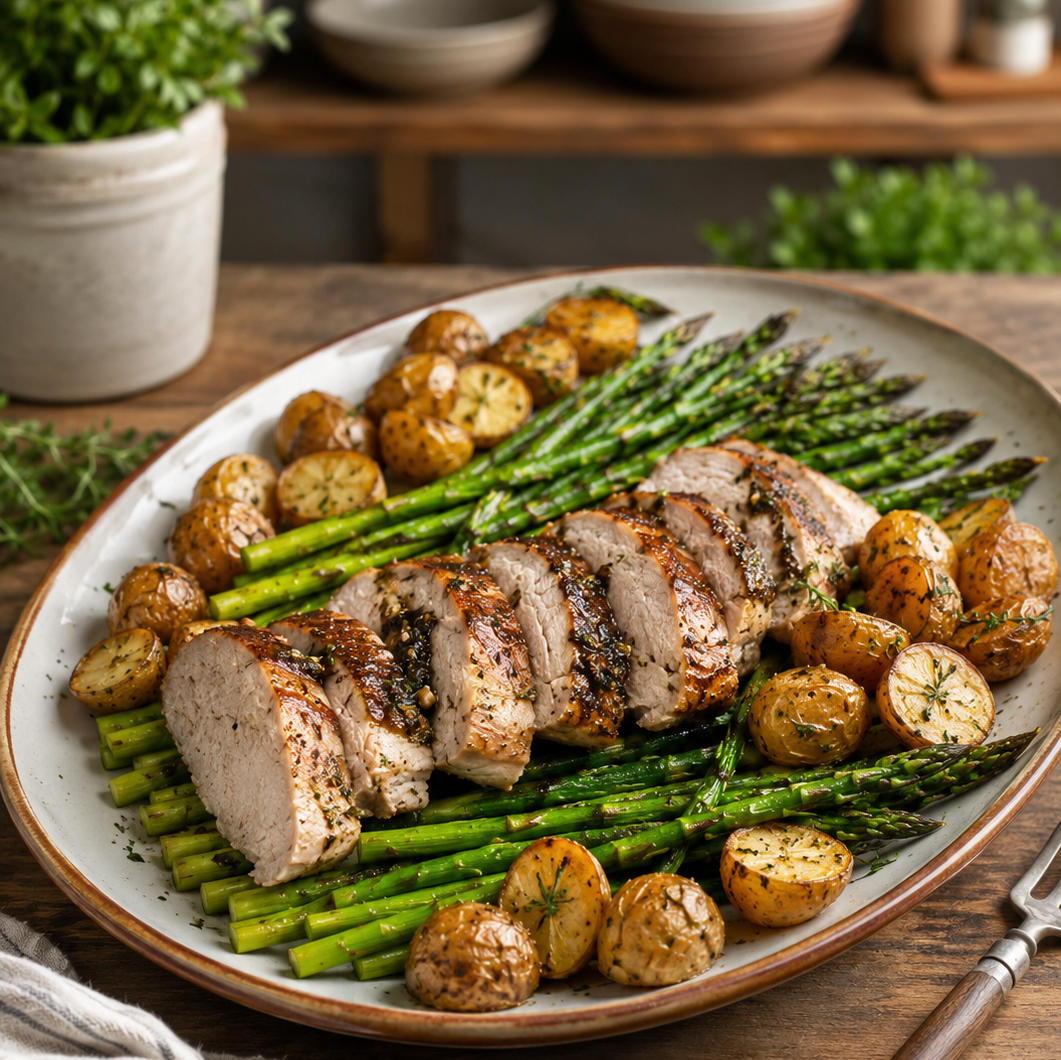
Sheet Pan Pork Tenderloin Recipe
A flavorful one-pan pork dinner featuring oven-roasted pork tenderloin, Yukon gold potatoes, and asparagus.
4
servings15
minutes30
minutes374
kcal45
minutesIngredients
- For the seasoning blend:
1 ½ teaspoons chili powder
½ teaspoon onion powder
½ teaspoon garlic powder
½ teaspoon fine salt
¼ teaspoon black pepper
⅛ teaspoon chipotle powder, optional (sub paprika or omit for less heat)
- For the sheet pan meal:
1–1 ½ lbs Yukon gold baby potatoes, sliced ~¼ inch thick
1 tablespoon avocado oil or olive oil, divided
1 lb asparagus, medium thickness, ends trimmed*
1 ¼ lb pork tenderloin
- For the creamy mustard sauce:
2 tablespoons mayonnaise
2 tablespoons whole grain mustard (may substitute dijon)
Directions
- Preheat the oven to 425°F.
- Combine the chili powder, onion powder, garlic powder, fine salt, black pepper, and chipotle powder, if using, in a small bowl. Set the seasoning mixture aside.
- Arrange the sliced Yukon gold potatoes on a large sheet pan. Drizzle with ½ tablespoon of the oil and sprinkle with ½ teaspoon of the seasoning mixture. Toss until coated, then spread the potatoes into an even layer.
- Pat the pork tenderloin dry with a paper towel. Place it in the center of the sheet pan.
- Reserve ½ teaspoon of the seasoning mixture for the asparagus. Rub the remaining seasoning over all sides of the pork tenderloin.
- Place the sheet pan in the preheated oven and roast for 10 minutes.
- Remove the sheet pan from the oven. Toss the potatoes using tongs or a spatula so another side can brown, then create space on the pan for the asparagus.
- Add the trimmed asparagus to the sheet pan. Drizzle with the remaining ½ tablespoon of oil and sprinkle with the reserved ½ teaspoon of seasoning. Toss the asparagus to coat and spread it into an even layer.
- Return the sheet pan to the oven. Continue baking for another 20 to 25 minutes, or until the pork reaches an internal temperature of 145°F. Check the asparagus during cooking and remove it early if it begins to brown too much.
- While the pork and vegetables finish cooking, combine the mayonnaise and whole grain mustard in a small bowl. Stir until evenly mixed.
- Transfer the cooked pork to a cutting board, slice it, and serve with the roasted potatoes, asparagus, and creamy mustard sauce.
- Place any leftovers in an airtight container and refrigerate for up to 3 days.
Notes
- If the asparagus stalks are very thin, add them to the sheet pan after the pork and potatoes have roasted for 15 minutes instead of 10 minutes. Then continue roasting for approximately 15 minutes more. For the best results, check the pork with a meat thermometer and cook until it reaches an internal temperature of 145°F.
Nutrition Facts
- Calories: 374kcal
- Fat: 15g
- Carbohydrates: 18g
- Fiber: 2g
- Sugar: 4g
- Protein: 37g
