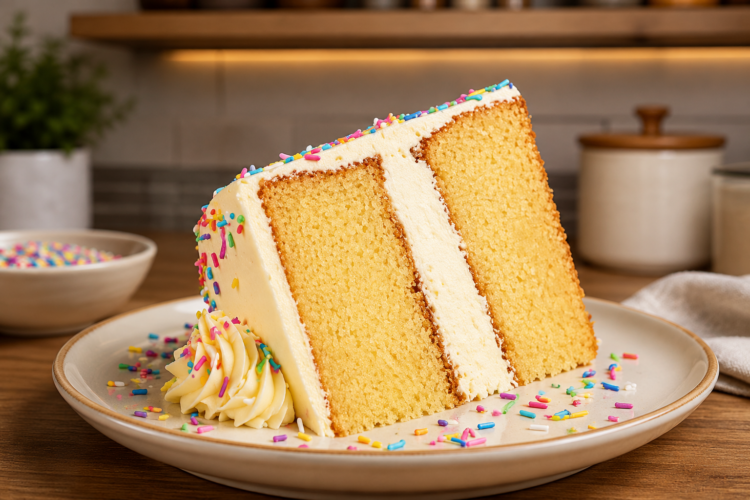
A classic birthday cake is often associated with soft layers, sweet vanilla flavor, a tender crumb, and creamy frosting. This keto cake recipe is designed to bring those familiar qualities to a low-carb dessert while keeping the carbohydrate content much lower than traditional cake. The finished cake is light, fluffy, moist, and suitable for birthdays, celebrations, holidays, or any time a simple homemade cake is needed. Each serving contains approximately 2 grams of net carbs, making it an appealing choice for anyone following a ketogenic or low-carb lifestyle.
One of the most difficult parts of creating a good keto dessert is achieving the same texture expected from a traditional baked cake. Regular wheat flour naturally creates structure and a soft crumb, but keto-friendly flours behave very differently. A carefully balanced combination of blanched almond flour and coconut flour helps this keto birthday cake develop a better texture while keeping it grain-free and low in carbohydrates. The result is a vanilla cake that feels moist and tender rather than dense, dry, or overly heavy.
This easy keto cake is made as two layers, which makes it ideal for frosting and serving as a celebration cake. The layers can be assembled with a smooth keto vanilla frosting for a classic appearance, or they can be finished according to the occasion. The cake itself has a gentle vanilla flavor that works well with creamy frosting without becoming too sweet. Because the recipe uses simple mixing and standard cake pans, it is also approachable for home bakers who may be preparing a low-carb cake for the first time.
Another advantage of this recipe is its dependable ingredient list. It does not rely on an unusually long collection of specialty products, and the ingredients work together to create a moist, soft cake. Almond flour provides richness and structure, while coconut flour absorbs moisture and helps support the batter. Butter adds flavor and contributes to the tender crumb, while eggs give the cake structure. Allulose provides sweetness with a texture that works particularly well in keto baking.
For a keto birthday cake, texture is just as important as flavor. A cake can have the right level of sweetness but still feel disappointing if the crumb is dry or gritty. This recipe focuses on creating a balanced result by combining ingredients that complement one another. The butter and eggs create a rich base, the flours provide structure, and the baking powder helps the layers rise. Almond milk and vanilla complete the batter, producing a smooth mixture that bakes into a soft and moist cake.
Why This Keto Cake Recipe Works
The combination of almond flour and coconut flour is one of the main reasons this low-carb cake develops a satisfying texture. Almond flour contains natural fats and helps create a moist, tender result. For the best appearance and consistency, blanched almond flour is especially useful because it is finer and smoother than coarser varieties. A finely ground flour helps prevent the finished cake from feeling gritty and also supports a more even crumb throughout each layer.
Coconut flour is used in a smaller amount because it is highly absorbent. It helps manage the moisture in the batter and works alongside the almond flour to provide additional structure. Using only one alternative flour can sometimes produce a cake that is too dense, too soft, or overly dry. The combination in this recipe creates a better balance, allowing the cake to remain moist while still holding its shape after baking and cooling.
Butter is another important part of the recipe. Unsalted butter adds richness and helps create the familiar soft texture associated with vanilla cake. It also allows the amount of salt to be controlled separately. Coconut oil can be used as an alternative, but it may change the texture slightly and produce a result that feels more bread-like than a traditional cake. For a classic birthday cake texture, unsalted butter is the most suitable choice.
Allulose is used as the sweetener because it behaves differently from many other keto sweeteners. It dissolves more easily and helps create a smoother batter without the noticeable grit that can sometimes appear in sugar-free baked goods. It also avoids the strong aftertaste associated with some alternative sweeteners. When creamed with butter, it helps create a lighter mixture before the eggs and other ingredients are added, contributing to the final texture of the cake.
Eggs provide both structure and moisture. Four large eggs help hold the cake together and support the rise created by the baking powder. Room-temperature eggs are especially useful because they blend more smoothly into the creamed butter mixture. Very cold eggs can cause the softened butter to firm up and may make the batter more difficult to combine evenly. Allowing the eggs to sit briefly before starting can make the mixing process easier.
Almond milk adds moisture without overpowering the vanilla flavor of the cake. Unsweetened almond milk keeps the recipe aligned with a keto-friendly approach, although the original method also allows another type of milk or water when necessary. Vanilla extract gives the cake its familiar flavor, while baking powder and salt support the overall structure and balance. These simple ingredients work together to create a classic low-carb vanilla cake that is easy to prepare at home.
How to Prepare the Cake Pans
Preparing the oven and cake pans before mixing the batter helps the baking process go more smoothly. The oven should be preheated to 180C/350F so that it reaches the correct temperature before the prepared batter is ready. Two 8-inch pans are used to create the classic double-layer cake shape. Lining the pans with parchment or baking paper helps the baked layers release more easily after they have cooled.
Properly prepared pans can also help the cake layers keep a clean shape. The batter should be divided as evenly as possible so that both layers bake at a similar rate and have comparable thickness. An uneven amount of batter can result in one layer finishing before the other or creating a noticeably taller cake on one side. Smoothing the tops before baking also encourages a more even surface.
Greased springform pans may also be used. Whatever pan is selected, it should be ready before the final mixing stage. Once the baking powder is incorporated and the batter is complete, the cake should be transferred to the prepared pans without unnecessary delay. This helps maintain the intended texture and rise during baking.
Mixing the Dry Ingredients
The dry ingredients include blanched almond flour, coconut flour, baking powder, and salt. These ingredients should be mixed together thoroughly before they are combined with the wet mixture. This step distributes the baking powder and salt evenly throughout the flours and helps prevent concentrated pockets of either ingredient in the finished cake.
Combining the two flours first also makes it easier to create a more consistent batter later. Coconut flour absorbs moisture quickly, so distributing it evenly through the almond flour helps it incorporate more smoothly when added to the wet ingredients. A well-mixed dry blend supports an even texture throughout both cake layers.
The dry ingredients should be set aside while the butter and allulose are prepared. This simple organization makes the recipe easier to follow and prevents overworking the batter. Once the butter, sweetener, eggs, milk, and vanilla have been combined, the dry mixture can be added and mixed until the batter becomes creamy and uniform.
Creaming the Butter and Allulose
The butter and allulose should be beaten together until fluffy, which takes approximately eight minutes according to the original preparation method. This stage is important because it helps create a lighter base for the cake. As the mixture is beaten, it becomes smoother and more aerated, supporting the light and tender texture that makes a birthday cake enjoyable.
A stand mixer is convenient for this step, but a hand mixer can also be used. The goal is to create a fluffy mixture before adding the eggs. Taking the time to complete this step properly can improve the overall texture of the cake, especially when working with low-carb flours that do not behave like traditional wheat flour.
The eggs are then added one at a time. Each egg should be incorporated well before the next is introduced. Adding them gradually allows the mixture to remain smooth and helps create a consistent batter. After all the eggs are fully combined, the almond milk and vanilla extract can be added and mixed until evenly incorporated.
The prepared dry ingredients are added last. They should be mixed into the wet ingredients until the batter is creamy and smooth. Once the mixture has reached an even consistency, it is ready to divide between the prepared cake pans. There is no need to continue mixing longer than necessary after the flour mixture has been fully incorporated.
Baking the Keto Cake Layers
The completed batter should be divided evenly between the two prepared 8-inch pans. Using a spatula to smooth the top of each layer helps create a more even finish. The pans are then placed in the preheated oven and baked for approximately 22 to 25 minutes. Because oven temperatures and pan materials can vary, the cake should be checked toward the end of the baking time.
A toothpick or skewer inserted into the center of the cake should come out clean when the layers are ready. This is a useful way to check that the middle has finished baking without relying only on the surface color. The tops should also appear set, and the cake should hold its shape when gently handled.
After baking, the layers should be allowed to cool completely before frosting. This step is essential because warm cake can soften or melt the frosting and make the layers difficult to assemble. Cooling the cake fully also allows the crumb to settle, making it easier to handle when transferring the layers or adding frosting.
Frosting and Assembling the Keto Birthday Cake
Once both layers are completely cool, the cake can be assembled with the keto vanilla frosting. The frosting can be spread between the two layers and then applied around the sides and top. The amount and style of frosting can be adjusted to create a simple homemade cake or a more polished celebration dessert.
A smooth layer of frosting between the cakes helps hold the finished dessert together while adding moisture and flavor to every slice. The vanilla frosting also complements the mild vanilla flavor of the cake without competing with it. For a classic birthday cake presentation, the cake can be frosted completely and sliced after the layers have settled together.
Because the cake is made with two separate layers, it has a more traditional appearance than a single-layer dessert. This makes it suitable for birthdays, family gatherings, holidays, and other occasions when a low-carb dessert is needed. The finished keto cake provides a familiar cake experience while keeping the net carbohydrate count lower than many conventional birthday cakes.
Notes for Making the Cake Ahead
This keto birthday cake can be prepared ahead of time, making it convenient when baking for a special occasion. The cake may be made up to two days in advance. Once the cake has been baked and frosted, it should be covered and stored in the refrigerator. This helps keep the cake fresh while protecting the frosting and preserving its texture.
Before serving a refrigerated cake, it is best to allow it to come closer to room temperature. Removing it from the refrigerator approximately two hours before serving gives the butter-based ingredients time to soften. This can improve the texture of both the cake and the frosting, making each slice softer and more pleasant to eat.
Making the cake in advance can also simplify preparation for a birthday or celebration. Instead of baking, cooling, frosting, and serving on the same day, the major work can be completed earlier. The cake then only needs to be stored properly and brought closer to room temperature before serving.
Storage Notes
Leftover keto cake should be stored in an airtight container in the refrigerator. When properly stored, it can remain fresh for up to five days. Keeping the cake covered is important because it helps prevent it from absorbing unwanted refrigerator odors or drying out.
For easier storage and serving, the cake can be cut into individual slices after it has been assembled. This makes it simple to remove only the amount needed while keeping the remaining portions protected. An airtight container is particularly useful for preserving the moisture of the cake and maintaining the texture of the frosting.
The cake can also be frozen for longer storage. Individual slices can be placed in freezer-safe containers and frozen for up to six months. Freezing single portions is useful because only the required number of servings need to be thawed at one time. For the best texture, frozen slices should be thawed overnight in the refrigerator before serving.
Nutrition and Keto-Friendly Benefits
Each slice of this keto cake provides approximately 172 calories, 5 grams of carbohydrates, 4 grams of protein, and 16 grams of fat. The recipe also contains approximately 3 grams of fiber per serving, resulting in around 2 grams of net carbs. This lower net carbohydrate count makes the cake suitable for many people following a ketogenic or reduced-carbohydrate eating pattern.
The cake is also made with blanched almond flour and coconut flour rather than traditional wheat flour, giving it a grain-free ingredient base. Almond flour contributes healthy fats and a rich texture, while coconut flour provides fiber and helps absorb moisture. These ingredients allow the cake to offer a different nutritional profile from a standard flour-based birthday cake.
Although this recipe is designed as a keto-friendly dessert, portion size remains important when planning meals and desserts. Nutritional needs vary between individuals, and the listed values are provided as a general guide for one slice based on the recipe’s stated information. For anyone carefully tracking macronutrients, the net carb count can be particularly useful when planning a keto dessert.
A Simple Low-Carb Cake for Celebrations
A good celebration dessert should feel enjoyable and satisfying, and this keto cake is designed to deliver a familiar birthday cake experience without relying on traditional flour or regular sugar. Its light crumb, moist texture, gentle vanilla flavor, and creamy frosting make it suitable for many occasions. The recipe uses straightforward preparation steps and produces two layers that can be assembled into an attractive homemade cake.

Keto Cake Recipe
A light, fluffy, and perfectly moist keto vanilla cake with a soft crumb and creamy keto vanilla frosting. This two-layer low-carb cake is suitable for birthdays, celebrations, holidays, and other special occasions, with approximately 2 grams of net carbs per serving.
10
minutes25
minutes172
kcal35
minutesIngredients
1 1/2 cups blanched almond flour (150g)
1/2 cup coconut flour (56g)
2 teaspoon baking powder (8g)
1/4 teaspoon salt
3/4 cup butter, unsalted (170g)
1 cup allulose (200g)
4 large eggs
1/2 cup almond milk
1 teaspoon vanilla extract
1 serving keto vanilla frosting (240g)
Directions
- Preheat the oven to 180C/350F. Line two 8-inch pans with parchment or baking paper and set them aside. Greased springform pans may also be used.
- In a mixing bowl, combine the blanched almond flour, coconut flour, baking powder, and salt. Mix well until the dry ingredients are evenly distributed, then set the bowl aside.
- Using a stand mixer or hand mixer, beat the unsalted butter and allulose until the mixture becomes light and fluffy. Continue mixing for approximately 8 minutes.
- Add the eggs one at a time, beating well after each addition until fully incorporated.
- Add the almond milk and vanilla extract. Mix until combined.
- Add the prepared dry ingredients to the wet mixture and beat until the batter becomes creamy and evenly mixed.
- Divide the cake batter evenly between the two prepared 8-inch pans. Smooth the tops to help the layers bake evenly.
- Bake for approximately 22 to 25 minutes, or until a skewer or toothpick inserted into the center comes out clean.
- Remove the cake layers from the oven and allow them to cool completely before adding the frosting.
- Once the layers are fully cool, assemble and frost the cake using the keto vanilla frosting.
Notes
- Make Ahead: This cake can be prepared up to 2 days in advance. After baking and frosting, cover the cake and refrigerate it. For a softer texture, remove it from the refrigerator about 2 hours before serving.
- Storage: Keep leftover cake in an airtight container in the refrigerator for up to 5 days.
- Freezing: Place individual slices in freezer-safe containers and freeze for up to 6 months. Thaw overnight in the refrigerator for the best texture.
Nutrition Facts
- Calories: 172kcal
- Fat: 16g
- Carbohydrates: 5g
- Fiber: 3g
- Protein: 4g
