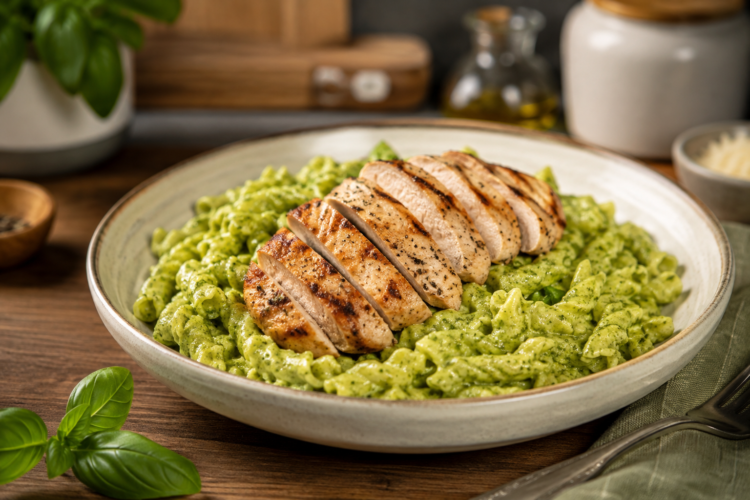
High Protein Pesto Pasta With Chicken is a quick and satisfying meal that brings together tender marinated chicken, protein-rich pasta, creamy Parmesan, egg, bone broth, and flavorful pesto in one comforting dish. Ready in around 30 minutes, this easy chicken pesto pasta is ideal for busy weeknights, family dinners, and meal prep. The combination of protein pasta and chicken makes it especially appealing for anyone looking for a filling pasta recipe with approximately 50 grams of protein per serving.
Unlike many traditional pesto pasta recipes that can feel heavy or sticky, this version uses a carefully combined mixture of warm pasta, bone broth, Parmesan, egg, and pesto to create a smoother texture. The pasta remains coated in a flavorful sauce while the juicy chicken adds a substantial protein boost. The result is a fresh and creamy pesto chicken pasta that feels satisfying without requiring complicated cooking techniques or a long list of ingredients.
This High Protein Chicken Pasta
One of the best things about this high protein pesto pasta is how easily it fits into everyday cooking. It has the comfort of a classic pasta dinner while offering a larger amount of protein from several ingredients. Chicken breast is the main protein source, while protein pasta and Parmesan add additional protein. This makes the recipe useful for meal planning when you want a balanced, filling meal that does not feel overly complicated or restrictive.
The fresh pesto flavor also gives this chicken pasta a bright and savory character. Pesto brings an aromatic combination of herbs, cheese, and other ingredients that pair naturally with grilled chicken and pasta. Whether you use homemade high-protein pesto or a store-bought version, it helps turn simple ingredients into a meal with bold flavor. The dish works well as a weeknight dinner because most of the preparation can happen while the pasta cooks.
Another reason to make this recipe is its flexibility. The original ingredients are simple enough for regular home cooking, and the method can be adapted to the equipment already available in your kitchen. The chicken can be grilled as directed or cooked in a skillet on the stovetop. Thick chicken breasts can also be sliced into thinner pieces to help them cook more evenly and quickly. This practical approach makes the recipe accessible even when you are short on time.
The Best Pasta for High Protein Pesto Pasta
The original recipe uses an 8-ounce box of frilly protein pasta, such as Loopy Loops or Campanelle. The shape of the pasta is important because its curves and folds can hold onto the pesto and creamy Parmesan mixture. Every bite can therefore carry more of the sauce instead of leaving most of it at the bottom of the bowl. Using a protein pasta also helps support the high-protein focus of the recipe.
Cook the pasta according to the directions on the package in generously salted water. Since different protein pastas may cook at different rates, following the package instructions is the most reliable way to achieve the right texture. Once cooked, strain the pasta and rinse it well with hot water. The goal is to keep the pasta warm rather than allowing it to become cold, because the warmth plays an important role when the Parmesan and egg mixture is added later.
After draining the pasta, return it to the cooking pot with a splash of the bone broth and cover it. This helps preserve warmth and moisture while the chicken finishes cooking. Keeping the pasta in the same pot also means less cleanup. The warm pasta can then be gently stirred with the remaining ingredients to create the finished pesto pasta sauce.
Why Bone Broth Works in This Pesto Pasta Recipe
Bone broth provides moisture and helps loosen the pesto and cheese mixture so that it can coat the pasta more evenly. It is used gradually rather than all at once, allowing you to work the sauce into the pasta until the texture becomes smooth. The warm broth also helps prevent the dish from becoming dry, which can happen with pesto pasta if the sauce is too thick.
This ingredient is also useful because bone broth is commonly valued for its collagen content and other nutrients. However, its main role in this recipe is practical: it creates a lighter, silkier consistency while adding savory flavor. The original ingredient notes allow the use of another type of broth if preferred, so the recipe can still be made when bone broth is not available.
When reheating leftovers, bone broth is particularly helpful. Pasta tends to absorb sauce as it sits in the refrigerator, which can make the leftovers thicker the next day. Adding a small amount of broth while warming the pasta slowly on the stovetop can help restore a smoother texture. This simple step can make meal-prepped pesto chicken pasta taste fresher and more enjoyable.
The Creamy Parmesan and Egg Mixture
The combination of one egg and shredded Parmesan cheese gives this high protein pasta its distinctive creamy texture. These ingredients are mixed together in a separate bowl before being added to the warm pasta. The mixture should then be stirred quickly through the pasta so that the ingredients emulsify and create a smooth coating.
Temperature and timing are important during this stage. The pasta should be warm and easy to stir, but the mixture should not be left sitting on excessive heat. Stirring the pasta with a splash of bone broth over low heat before adding the egg mixture helps prepare the correct texture. Once the pasta is smooth and moving easily, the cheese and egg can be incorporated quickly.
If the pasta is too hot or the mixture is not stirred fast enough, the egg may begin to set and form small scrambled pieces. This does not make the dish inedible, and the flavor will still be enjoyable, but the sauce may look less smooth. To reduce the chance of this happening, work quickly and keep the heat low. The bone broth can help create a smoother environment before the egg mixture is added.
Preparing Tender Marinated Chicken
The chicken is prepared with a simple marinade made from lemon juice, olive oil, salt, and garlic cloves. These ingredients add flavor without making the process complicated. Place the chicken breasts in a bowl or bag with the listed marinade ingredients and allow them to sit while the pasta cooks. If you have more time, the chicken can be marinated overnight to develop a stronger flavor.
Chicken breast is an excellent choice for this high protein pesto chicken pasta because it is lean, versatile, and easy to cook in several ways. Three chicken breasts, or approximately 1.5 pounds, provide enough chicken for six servings. This makes the dish suitable for sharing or preparing as part of a weekly meal plan.
For thicker chicken breasts, slicing them into thinner pieces before cooking can reduce cooking time and help the meat cook more evenly. The chicken can be grilled for approximately 5 to 10 minutes per side, depending on thickness. A stovetop skillet is also a suitable alternative when a grill is unavailable. The most important point is to cook the chicken safely while avoiding overcooking, which can cause it to become dry.
How to Cook Juicy Chicken for Pasta
For best results, cook the chicken until it reaches approximately 160°F, then remove it from direct heat and allow it to rest for five minutes. During this resting period, the internal temperature can continue rising to the recommended final temperature of 165°F. Resting also gives the juices time to settle, helping the chicken remain moist when sliced.
Avoid cutting the chicken immediately after cooking. Allowing it to rest before slicing helps preserve its texture. For meal prep, the chicken can be kept separate from the pasta or sliced and stored with the finished pasta. Keeping the chicken separate may make reheating more flexible, especially if you want to prevent the meat from becoming dry.
The lemon, olive oil, garlic, and salt create a simple flavor base that works well with pesto. The bright lemon notes can balance the rich Parmesan and pesto, while garlic adds depth to the chicken. Because the seasoning is straightforward, the pesto remains the main flavor of the finished dish instead of being covered by too many competing ingredients.
How to Make High Protein Pesto Pasta With Chicken
Begin by preparing the chicken and placing it with the lemon juice, olive oil, salt, and garlic cloves. While the chicken marinates, bring a pot of generously salted water to a boil and cook the frilly protein pasta according to the package instructions. Drain the pasta, rinse it well with hot water, then return it to the pot with a small splash of bone broth. Cover the pot to help retain warmth.
Next, cook the chicken. Grill it for approximately 5 to 10 minutes per side, adjusting the cooking time according to thickness. A skillet may also be used. Remove the chicken from the heat when it reaches about 160°F and let it rest for five minutes. The final temperature should reach 165°F before serving. Resting the chicken while finishing the pasta allows both components to be ready at nearly the same time.
In a small bowl, combine the egg and shredded Parmesan. Return attention to the pasta and gently stir it over low heat with another splash of bone broth. Once the pasta is warm, smooth, and easy to stir, quickly mix in the Parmesan and egg combination. Continue stirring so the ingredients emulsify into the pasta rather than forming scrambled pieces.
Add the pesto and the remaining bone broth, then continue stirring until the sauce coats the pasta smoothly. The finished sauce should look creamy and well combined rather than thick and gummy. If needed, work the ingredients through the pasta patiently so the pesto, broth, egg, and Parmesan become evenly distributed.
Finally, slice the rested chicken and place it over the high protein pesto pasta. Serve immediately while the pasta is warm and creamy. This presentation makes the dish suitable for a simple weeknight dinner, while the generous serving size also makes it practical for family meals or meal prep.
Why Chicken Is a Great High-Protein Ingredient
Chicken is one of the most widely used ingredients in high-protein cooking because it is versatile and works well with many flavors. It can be grilled, pan-cooked, baked, or used in salads, pasta dishes, wraps, and meal-prep recipes. In this pesto chicken pasta, it provides the main source of protein while contributing a tender and satisfying texture.
Chicken breast is also relatively lean compared with many other cuts of meat. This makes it a practical option when building a meal around protein while keeping the recipe balanced. It naturally complements the protein pasta, Parmesan, and egg in this dish, allowing the overall meal to deliver around 50 grams of protein per serving based on the original nutritional information.
Protein also plays an important role in making meals feel filling. Combining chicken with pasta can therefore create a more substantial dinner than a simple pasta and sauce combination. The mix of carbohydrates from the pasta, protein from the chicken and other ingredients, and fats from the pesto and olive oil creates a satisfying meal with a variety of textures and flavors.
A Good Option for Meal Prep
High protein chicken pesto pasta is especially useful for meal preparation because the recipe makes six servings. You can prepare the complete recipe in advance and divide it into individual airtight containers. According to the original storage guidance, leftovers can be kept in the refrigerator for up to four days.
For storage, you may keep the chicken separate from the pasta or chop it and store it together. Keeping the components separate can provide more control during reheating, while storing them together can make individual meals more convenient. Either approach works depending on your personal meal-prep routine.
When reheating, add a small splash of bone broth and warm the pasta slowly on the stovetop. This helps loosen the sauce and replace moisture absorbed during refrigeration. Reheating gently can also help preserve the creamy consistency. If using a microwave, avoid overheating because prolonged high heat may dry the chicken and cause the pasta sauce to become less smooth.
Notes for the Best Pesto Pasta Texture
A smooth texture is one of the most important parts of this recipe. The pasta should remain warm after draining, which is why it is rinsed with hot water and returned to the covered pot. Cold pasta can make it harder for the Parmesan and egg mixture to combine evenly, while excessively high heat can cause the egg to scramble.
Before adding the egg and Parmesan mixture, stir the pasta with a little bone broth over low heat. This should make the pasta warm, loose, and easy to move around the pot. Once that consistency is achieved, add the egg mixture and stir promptly. The faster the ingredients are incorporated, the better the chance of creating a smooth, creamy coating.
If the egg does form small scrambled pieces, the pasta can still be served and enjoyed. The flavor will remain similar, even though the appearance and texture may change. Learning the correct temperature and stirring method will become easier after making the recipe once or twice.
Common Questions About High Protein Pesto Chicken Pasta
Why is egg added to this pasta recipe?
The egg works with the Parmesan and warm pasta to create a richer and creamier sauce. It also contributes additional protein, which supports the high-protein profile of the recipe. The key is to combine it quickly with warm pasta and to control the heat so that it blends into the sauce rather than cooking into separate pieces.
What should I do if the sauce is too thick?
Add a little of the bone broth and continue stirring over low heat until the pasta loosens. Bone broth is already included in the recipe specifically to help create the desired consistency. Add it gradually rather than making a large adjustment all at once, because a small amount can noticeably change the texture.
Can I use pre-cooked chicken?
Yes. Using pre-cooked grilled chicken breast or rotisserie chicken can reduce preparation time. Add the cooked chicken when serving or warm it gently before placing it over the pasta. Be careful not to overcook it during reheating, as cooked chicken can become dry when exposed to high heat for too long.
Can the chicken be marinated overnight?
Yes. Marinating the chicken overnight can allow the lemon, olive oil, garlic, and salt to develop more flavor. Keep the chicken covered in the refrigerator while marinating. If you are preparing the recipe for a busy day, this step can make the cooking process even faster.

High Protein Pesto Pasta With Chicken
A creamy and flavorful high-protein chicken pesto pasta made with marinated chicken breast, frilly protein pasta, bone broth, Parmesan, egg, and pesto.
6
servings10
minutes569
kcal10
minutesIngredients
- For the High Protein Pesto Pasta
1 8oz box of frilly protein pasta (like Loppdy Loops or Campanelle, use gluten free as needed)
½ cup bone broth
1 egg
½ cup parmesan cheese (shredded, use plant based as needed)
1 8oz high protein pesto* (or store bought)
- For the Marinaded Chicken
1.5 pounds chicken breasts (or 3 chicken breasts)
2 tablespoon lemon juice
2 tablespoon olive oil
1 teaspoon salt
2 garlic cloves
Directions
- Combine the 1.5 pounds chicken breasts with the 2 tbsp lemon juice, 2 tbsp olive oil, 1 tsp salt, and 2 garlic cloves in a bowl or bag. Allow the chicken to marinate while preparing the pasta. Cook the 1 8oz box of frilly protein pasta in heavily salted water according to the package directions. Drain the pasta and rinse it well with hot water. Turn off the heat, return the pasta to the pot, add a splash of bone broth, and cover to keep it warm.
- Grill the chicken for approximately 5 to 10 minutes per side, depending on thickness. Thick chicken breasts can be sliced into thinner pieces for faster cooking. A stovetop skillet can also be used. Cook until the chicken reaches about 160°F, then remove it from the heat and let it rest for 5 minutes so it reaches a final internal temperature of 165°F.
- In a small bowl, combine the ½ cup parmesan cheese and 1 egg. Place the pasta over low heat and stir with another splash of bone broth until the pasta becomes warm, smooth, and easy to stir. Quickly add the Parmesan and egg mixture, stirring continuously to emulsify the ingredients.
- Add the 1 8oz high protein pesto* and the remaining ½ cup bone broth. Stir everything together until the pasta is evenly coated and the sauce reaches a smooth, creamy consistency.
- Slice the rested chicken and arrange it over the pesto pasta. Serve warm and enjoy immediately.
Notes
- Storage
Store leftovers in an airtight container in the refrigerator for up to 4 days. The chicken can be stored separately from the pasta or chopped and stored with it. - Reheating
Warm leftovers slowly on the stovetop and add a small amount of bone broth to loosen the sauce. Gentle reheating can help restore the creamy texture. - For Faster Preparation
Pre-cooked grilled chicken breast or rotisserie chicken may be used when you want to reduce cooking time. - For More Flavor
Marinating the chicken overnight can intensify the flavor of the lemon, garlic, olive oil, and salt mixture. - Avoiding Scrambled Egg Pieces
Before adding the egg and Parmesan mixture, make sure the pasta is warm, smooth, and easy to stir. Keep the heat low and stir quickly as soon as the egg mixture is added. If the egg begins to scramble, the dish will still be safe and flavorful, but the sauce may not have the same smooth appearance.
Nutrition Facts
- Calories: 569kcal
- Fat: 29g
- Carbohydrates: 30g
- Fiber: 6g
- Sugar: 0.4g
- Protein: 50g
