
When the weather turns cool, a warm bowl of vegetable soup is one of the easiest ways to enjoy a satisfying homemade meal. This anti-inflammatory vegetable soup with turmeric combines colorful vegetables, fragrant spices, fresh lemon juice, parsley, and vegetable broth in one comforting pot.
The recipe is packed with ingredients such as carrots, celery, green cabbage, cauliflower, garlic, turmeric, and cumin, creating a flavorful soup that feels wholesome without requiring complicated cooking techniques. With a total cooking time of about 40 minutes, it is practical enough for a weekday lunch or dinner and comforting enough for a relaxed weekend meal.
Why Make This Turmeric Vegetable Soup?
This turmeric vegetable soup is designed around simple ingredients that work beautifully together. The combination of onions, carrots, and celery creates a flavorful foundation, while cabbage and cauliflower add body and texture. Turmeric gives the broth its characteristic golden color and earthy flavor, while cumin and paprika add warmth. Garlic contributes another layer of savory flavor, and lemon juice and parsley provide a fresh finish. The result is a vegetable-packed soup that tastes much more complex than the straightforward preparation might suggest.
A Hearty Soup Made with Everyday Vegetables
One of the best features of this healthy vegetable soup recipe is that it relies on familiar vegetables that are easy to prepare. There is no need for specialty produce or complicated ingredients. Onions, celery, and carrots form the aromatic base, while cauliflower and green cabbage make the soup more substantial. Because the vegetables are cooked directly in the soup pot, their natural flavors become part of the broth as they soften. This makes the recipe particularly convenient when you want a homemade soup without spending hours in the kitchen.
Building Flavor Before Adding the Broth
The first stage of cooking is important because it establishes the flavor of the entire soup. Olive oil is heated in a large soup pot before the diced onion, sliced celery, and carrots are added. These vegetables are sautéed until the onion becomes soft and translucent. This gentle cooking process helps develop their natural sweetness and gives the broth a deeper savory foundation. Rather than immediately adding liquid, allowing the vegetables to soften first gives the finished soup a fuller flavor and a more balanced taste.
Adding Cauliflower, Cabbage, Garlic, and Spices
Once the first vegetables have softened, the cauliflower, green cabbage, garlic, turmeric, cumin, paprika, and optional chili flakes are added. This is where the soup begins to take on its distinctive aroma and golden appearance. Cooking the spices briefly with the vegetables helps release their fragrance, while the cabbage starts to wilt and become tender. The cauliflower also begins cooking during this stage, allowing it to absorb the seasoning before the vegetable broth is introduced.
The Role of Turmeric in the Soup
Turmeric is one of the defining ingredients in this recipe. It has a warm, earthy flavor and gives the soup a beautiful golden hue. Combined with cumin, paprika, garlic, and black pepper, turmeric creates a savory spice profile that complements the vegetables rather than overpowering them. The amount used in this recipe provides noticeable flavor while allowing the natural sweetness of the carrots, onions, and cabbage to remain part of the overall taste. This makes the soup approachable even for people who do not usually cook with turmeric.
How the Vegetable Broth Brings Everything Together
After the vegetables and spices have had time to cook, vegetable broth is poured into the pot and brought to a simmer. The broth surrounds the vegetables and gradually takes on their flavors as everything cooks together. Simmering also gives the cauliflower, cabbage, carrots, and celery enough time to become tender without turning them completely mushy. Keeping the heat at a gentle simmer is helpful because it allows the vegetables to cook evenly while the broth reduces slightly and becomes more concentrated.
A Fresh Finish with Lemon and Parsley
Fresh lemon juice and chopped parsley are added near the end of cooking, giving the soup a bright contrast to its warm spices and rich vegetable flavors. Lemon is particularly useful in vegetable soups because its acidity can lift the entire dish and make the flavors taste fresher. Parsley contributes a light herbal note and adds a fresh green element to the finished bowl. These final ingredients should not be overlooked because they help balance the earthy turmeric, cumin, and paprika.
What Makes This a Comforting Winter Soup?
A good winter soup should be warming, flavorful, and satisfying without feeling unnecessarily heavy. This recipe fits that description because it contains a generous selection of vegetables simmered in a seasoned broth. The cabbage and cauliflower provide substance, while carrots add natural sweetness and celery contributes a fresh savory note. The combination of spices makes every spoonful warming and aromatic. Served hot, the soup makes an excellent lunch or light dinner when you want something comforting and easy to prepare.
How to Prepare the Vegetables
Proper preparation makes the cooking process much smoother. Dice the onion evenly, thinly slice the celery and carrots, chop the garlic, and prepare the cauliflower into manageable florets. The cabbage should be chopped into pieces that are easy to scoop with a spoon. Keeping the vegetable pieces relatively consistent helps them cook more evenly. Since the soup comes together quickly once cooking begins, preparing all of the vegetables before turning on the stove is a convenient way to keep the process organized.
Step-by-Step Cooking Method
Begin by heating the olive oil in a large soup pot over medium heat. Add the diced onion, thinly sliced celery, and carrots, then cook them for approximately six to seven minutes. Stir occasionally so the vegetables soften evenly and the onions do not brown excessively. When the onion is translucent and the vegetables have begun to become tender, add the remaining vegetables and seasonings. Continue cooking for another two to three minutes so the cabbage begins to soften and the spices become fragrant.
Next, pour the vegetable broth into the pot and bring the mixture to a gentle simmer. Reduce the heat and allow the soup to cook for about 15 to 20 minutes, or until the vegetables are tender and the broth has reduced slightly. Cooking time can vary depending on the size of the vegetable pieces, so checking the texture toward the end of cooking is useful. The vegetables should be tender enough to eat comfortably while still maintaining some structure.
Seasoning the Finished Soup
Once the vegetables are tender, season the soup with kosher salt and ground black pepper according to the recipe. Taste the broth before serving and make sure the seasoning is balanced. The lemon juice should then be added along with the chopped parsley. Allow the soup to simmer for a few additional minutes so the fresh ingredients become integrated into the broth. A final taste at this point can help you determine whether the seasoning is where you want it before serving.
Easy Ways to Change the Soup
Although the original recipe is already packed with vegetables, it can also serve as a flexible base for different meals. Potatoes or sweet potatoes can be included alongside the cauliflower and cabbage if you want a heartier texture. Broccoli can replace or accompany the cauliflower, while kale can be added toward the end because leafy greens cook quickly. Baby spinach can be stirred in near the finish, allowing it to wilt gently in the hot soup.
Adding Beans for a More Filling Meal
Canned beans can be a useful addition when you want to make this vegetable soup more substantial. Beans provide a soft, hearty texture that works naturally with the vegetable-based broth. They should be added around 10 minutes before serving so they have enough time to warm through without becoming overly soft. This is an easy way to turn a light vegetable soup into a more filling meal while maintaining its comforting character.
Adding Grains, Pasta, or Lentils
Cooked rice, cooked pasta, and cooked quinoa can also be used to make individual servings more substantial. Rather than cooking these additions directly in the soup, cooked versions can be placed in a bowl before the hot soup is ladled over them. Cooked lentils are another option and can be added to the pot about 10 minutes before serving. These additions make the soup versatile enough to suit different preferences while keeping the vegetable broth at the center of the dish.
Adding Chicken for Extra Protein
The basic recipe is vegetarian, but chicken can be included if you want additional protein. Adding chicken changes the dish from a vegetarian soup into a meat-based meal, but it can still work well with the turmeric, lemon, vegetables, and herbs. If you choose to add chicken, the pieces should be fully cooked before serving. The original recipe itself remains vegetable-based, making it suitable for anyone looking specifically for a vegetarian soup option.
Serving Suggestions for Vegetable Soup
This healthy vegetable soup with turmeric can be served as a light lunch, simple dinner, or starter before a larger meal. It is satisfying enough to enjoy on its own, particularly when served generously with the vegetables and broth in every bowl. If you prefer a more substantial meal, adding beans, lentils, rice, pasta, quinoa, or another suitable ingredient can increase the heartiness. The bright lemon and parsley finish also means the soup does not need a complicated garnish.
Why Cabbage Works So Well Here
Green cabbage is an especially useful ingredient in this soup because it changes character as it cooks. Raw cabbage has a firm texture, but simmering softens it and brings out a gentle natural sweetness. It also absorbs the flavors of the turmeric, cumin, garlic, and vegetable broth. For anyone who has not traditionally included cabbage in homemade soup, this recipe is an easy introduction. The cabbage adds bulk without making the broth excessively thick or heavy.
Keeping the Vegetables Tender
The cooking sequence helps prevent the vegetables from becoming unevenly cooked. Onion, celery, and carrots are added first because they benefit from several minutes of sautéing. Cauliflower and cabbage are added afterward, followed by the broth and simmering stage. This timing gives each vegetable enough attention without requiring separate cooking. The goal is tender vegetables that still retain their individual identity rather than a soup where everything has cooked down completely.
Storage in the Refrigerator
Leftover soup can be stored in the refrigerator, making this recipe useful for meal preparation. Allow the soup to cool completely before transferring it to an airtight container and placing it in the refrigerator. According to the recipe information, it can be kept for up to six days. When ready to eat, reheat the desired amount either in the microwave or gently on the stovetop. Reheating over low heat can help warm the soup evenly without aggressively boiling the vegetables.
Freezing the Soup
This soup can also be frozen for longer storage. Once it has cooled completely, transfer it to an airtight freezer-safe container and freeze for up to four months. When you are ready to use it, thaw the soup in the refrigerator overnight before reheating it on the stovetop. Freezing is particularly convenient when you want to prepare a large batch ahead of time. Leave enough room in the storage container for expansion when freezing.
Notes for the Best Results
For the best texture, avoid cutting the vegetables into extremely small pieces because they can become soft more quickly during simmering. Keep the heat gentle after adding the vegetable broth and check the vegetables toward the end of the cooking time. Fresh lemon juice should be added close to the end because it provides a brighter flavor when it has not been exposed to prolonged cooking. Parsley is also best added near the finishing stage to preserve its fresh herbal character.
Frequently Asked Questions About Turmeric Vegetable Soup
Can I make this soup ahead of time?
Yes. This soup is suitable for preparing ahead because the flavors can continue to blend while it rests. Once cooked, cool it properly and store it in an airtight container in the refrigerator. When you are ready to serve, reheat the soup gently on the stovetop or in the microwave. If the soup has thickened slightly during storage, gentle reheating will bring the broth back to a comfortable serving consistency.
Is this vegetable soup vegetarian?
Yes. The original recipe uses olive oil, vegetables, vegetable broth, herbs, spices, lemon juice, salt, and pepper, making it a vegetarian soup. If chicken is added, however, it would no longer be vegetarian. Beans or lentils can be used instead when you want to increase the heartiness while keeping the recipe plant-based.
Can I freeze homemade vegetable soup?
Yes. This recipe can be frozen for up to four months when properly cooled and stored in an airtight container. Thaw it overnight in the refrigerator and then reheat it on the stovetop. Freezing individual portions can also make it easier to enjoy a quick homemade lunch or dinner without reheating the entire batch.
What can I serve with this soup?
The soup is flavorful enough to enjoy by itself, but it can also be paired with bread, cooked grains, or another simple side. Rice, pasta, quinoa, beans, and lentils can also be incorporated according to the recipe’s suggested variations. These additions are particularly useful when you want to transform a lighter bowl of soup into a more filling meal.
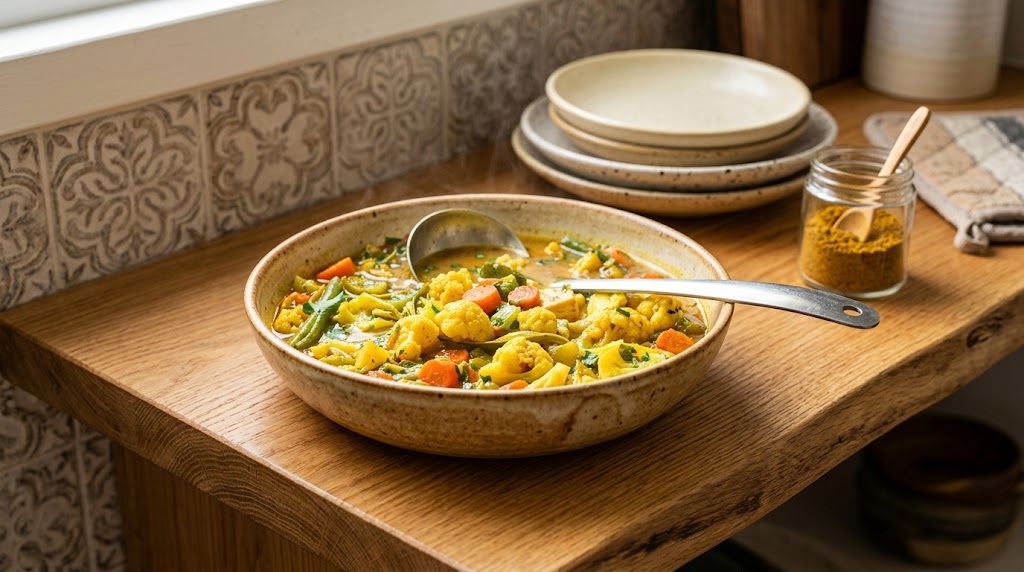
Anti-Inflammatory Vegetable Soup With Turmeric
A warm and nourishing vegetable soup made with olive oil, onion, celery, carrots, garlic, cauliflower, green cabbage, turmeric, cumin, paprika, vegetable broth, lemon juice, and fresh parsley.
6
servings15
minutes25
minutes159
kcal40
minutesIngredients
3 tablespoons olive oil
1 medium onion, diced
3 stalks of celery, thinly sliced
4 carrots, peeled and thinly sliced
3 cloves of garlic, chopped
3 cups of cauliflower florets
3 cups chopped green cabbage
1 teaspoon turmeric
1 teaspoon cumin
1/2 teaspoon paprika
Pinch of chili flakes (optional)
6 cups vegetable broth
1 1/2 teaspoons kosher salt, or to taste
1/2 teaspoon ground black pepper, or to taste
1/4 cup chopped parsley
Juice of one lemon
Directions
- Heat 3 tablespoons of olive oil in a large soup pot over medium heat. Add the diced onion, sliced celery, and carrots. Cook for approximately 6–7 minutes, stirring occasionally, until the onion is soft and translucent.
- Add the chopped garlic, cauliflower florets, chopped green cabbage, turmeric, paprika, cumin, and chili flakes if using. Cook for another 2–3 minutes, stirring occasionally, until the cabbage begins to soften and the spices become fragrant.
- Pour the vegetable broth into the pot and bring the mixture to a simmer. Reduce the heat and cook for approximately 15–20 minutes, or until the vegetables are tender and the broth has reduced slightly.
- Add kosher salt and ground black pepper to taste. Add the fresh lemon juice and chopped parsley, then allow the soup to simmer for a few additional minutes.
- Ladle the hot vegetable soup into bowls and serve immediately.
Notes
- Reheating: Reheat leftovers in the microwave or gently on the stovetop.
- Refrigerator storage: Allow the soup to cool completely, transfer it to an airtight container, and refrigerate for up to 6 days.
- Freezer storage: Cool completely before transferring to an airtight container. Freeze for up to 4 months. Thaw overnight in the refrigerator before reheating on the stovetop.
- Optional additions: Potatoes, sweet potatoes, broccoli, kale, baby spinach, beans, rice, pasta, quinoa, lentils, or chicken can be used as variations as described in the recipe article.
Nutrition Facts
- Calories: 159kcal
- Fat: 7.8g
- Carbohydrates: 23.4g
- Sugar: 8.8g
- Protein: 3.3g
