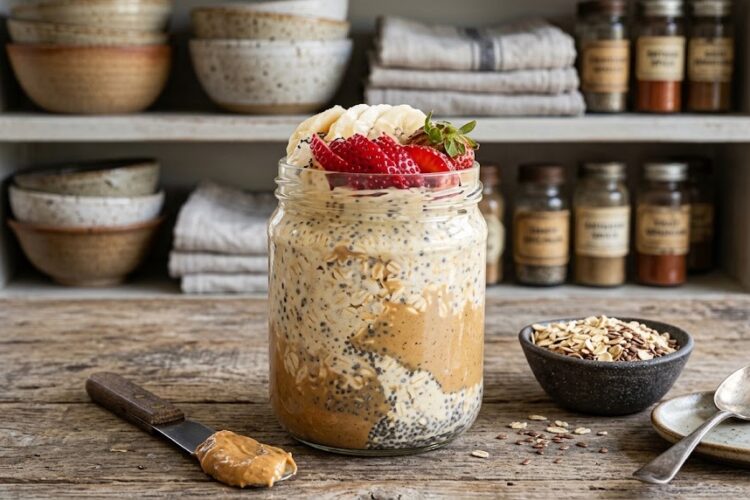
Peanut Butter Overnight Oats are a simple make-ahead breakfast that combines creamy peanut butter, hearty rolled oats, chia seeds, almond milk, and a touch of maple syrup. This easy overnight oats recipe requires just a few minutes of preparation and no cooking, making it especially useful for busy mornings. The oats soften while resting in the refrigerator, creating a creamy, satisfying texture that can be enjoyed straight from the jar or warmed before serving.
One of the best things about this peanut butter overnight oats recipe is how little effort it requires. Everything is mixed in one small jar or bowl, so there is no need to prepare several dishes or spend time standing over the stove. Once the ingredients are combined, the refrigerator does the rest of the work. After several hours of soaking, the oats become tender and absorb the flavors of peanut butter, maple syrup, chia seeds, and almond milk.
What Are Overnight Oats?
A No-Cook Make-Ahead Breakfast
Overnight oats are rolled oats that are soaked in milk or another liquid for several hours instead of being cooked. During this resting time, the oats gradually soften and absorb the liquid, producing a spoonable breakfast with a pleasantly creamy consistency. Because the preparation happens ahead of time, overnight oats are particularly convenient for mornings when there is little time available for cooking or assembling breakfast.
Unlike traditional oatmeal, which is heated on the stovetop or in the microwave, overnight oats are prepared cold and left to soften in the refrigerator. The uncooked rolled oats retain more of their structure, which can give the finished dish a texture that feels less soft and gummy than some cooked oatmeal. The chia seeds also absorb liquid and help create a thicker, more pudding-like consistency.
Why Peanut Butter Overnight Oats Work So Well
Simple Ingredients and Minimal Preparation
This recipe follows a straightforward formula that makes overnight oats easy to prepare consistently. Almond milk provides the liquid needed to soften the oats, while chia seeds absorb some of that liquid and contribute to the thick texture. Rolled oats form the main base, peanut butter adds richness and a nutty flavor, and maple syrup brings sweetness. Together, these ingredients create a balanced breakfast without complicated preparation.
The combination of peanut butter and oats is also naturally satisfying because it brings together creamy and chewy textures in every spoonful. Peanut butter gives the oats a richer mouthfeel, while rolled oats remain pleasantly tender after soaking. Chia seeds add small pops of texture throughout the mixture, and maple syrup gives the recipe a gentle sweetness that complements the nutty flavor without overpowering it.
How to Make Peanut Butter Overnight Oats
Step 1: Combine the Wet Ingredients
Start by choosing a small mason jar, food-storage container, or bowl with a secure lid. Add the unsweetened plain almond milk, chia seeds, peanut butter, and maple syrup. Stir the mixture with a spoon until the ingredients are reasonably combined. The peanut butter does not need to disappear completely into the almond milk. Leaving a few small swirls of peanut butter can actually make the finished oats more enjoyable.
Using a container with enough room for stirring is helpful because the oats will expand slightly as they absorb the liquid. If the container is too small, mixing can become messy and the oats may not be evenly coated. A jar with a lid is especially convenient because it can go directly into the refrigerator once preparation is complete.
Step 2: Add the Rolled Oats
Next, add the gluten-free rolled oats to the peanut butter mixture. Stir several times so the oats are distributed throughout the liquid. Use the back of the spoon to gently press the oats downward, making sure they are fully moistened and immersed in the almond milk. This step matters because dry oats sitting above the liquid may remain firm rather than softening properly overnight.
Rolled oats are the preferred choice for this particular preparation because they soften gradually while maintaining some texture. Quick oats can also be used, but they tend to become softer after soaking. Steel-cut oats behave differently and generally need more liquid and a longer soaking period, so they will not produce exactly the same consistency as rolled oats.
The Importance of Chia Seeds
How Chia Seeds Affect Texture
Chia seeds are an important part of the texture in this overnight oats recipe. When exposed to liquid, they absorb moisture and swell, helping the mixture become thicker as it rests. The result is a creamy consistency that works particularly well with peanut butter and rolled oats. If you prefer a thicker overnight oats texture, the chia seeds are especially useful because they help turn the mixture into a more pudding-like breakfast.
The amount of chia seeds can also influence the final consistency. This recipe uses 3/4 tablespoon, which provides enough thickening without making the oats excessively dense. Since different brands of almond milk, oats, and peanut butter can have slightly different textures, the finished consistency may vary. If the oats seem particularly thick when served, a little additional liquid can be stirred in before eating.
Refrigerating the Oats Overnight
Give the Oats Enough Time to Soak
Once all the ingredients have been mixed, cover the container securely and place it in the refrigerator. The oats should soak overnight or for at least six hours. This resting period allows the rolled oats to absorb the almond milk while the chia seeds thicken the mixture. At the same time, the peanut butter and maple syrup have time to distribute their flavors throughout the oats.
Although the recipe is called overnight oats, you do not necessarily have to wait until morning if you prepare them earlier in the day. A minimum soaking time of about six hours gives the ingredients enough time to soften and develop the intended texture. For the best eating experience, the prepared oats are particularly enjoyable within the first 12 to 24 hours.
Choosing the Right Milk
Almond Milk and Other Dairy-Free Options
Unsweetened plain almond milk is used in this recipe, but the ingredient list also allows other dairy-free milk options. Coconut, soy, or hemp milk can be used as alternatives. Each type of milk may slightly change the flavor and consistency, but the basic preparation remains the same. Choosing an unsweetened variety also gives you better control over the sweetness because maple syrup is already included.
If you use a milk alternative with a naturally stronger flavor, keep in mind that it can influence the finished oats. Coconut milk, for example, can contribute a noticeable coconut taste, while soy milk may create a somewhat fuller flavor. Almond milk keeps the recipe relatively neutral, allowing the peanut butter to remain the dominant flavor.
Peanut Butter Makes This Breakfast Extra Creamy
Natural Peanut Butter or Almond Butter
Natural salted peanut butter gives these overnight oats their characteristic nutty flavor and creamy richness. Both creamy and crunchy peanut butter can be used, depending on the texture you prefer. Creamy peanut butter creates a smoother mixture, while crunchy peanut butter leaves small pieces of nuts throughout the oats for additional texture.
Almond butter can also replace the peanut butter if desired, although this changes the flavor profile. Other nut or seed butters can be used as alternatives as well. Since the original recipe includes peanut butter as a key ingredient, keeping it in the mixture provides the classic peanut butter overnight oats flavor that makes this breakfast so appealing.
Maple Syrup for Natural Sweetness
Adjust the Sweetness to Your Preference
Maple syrup provides the sweetness in this recipe and pairs naturally with the roasted, nutty flavor of peanut butter. The recipe calls for one tablespoon, creating a gently sweet breakfast without making it taste like dessert. If you prefer a different sweetener, the ingredient list allows coconut sugar, organic brown sugar, or stevia to be used according to taste.
The amount of sweetness can also depend on the peanut butter and milk you choose. Some nut butters contain added sweeteners, while unsweetened almond milk has a more neutral flavor. If you prefer a less sweet breakfast, you can use the listed alternative sweeteners according to your preference while keeping the basic structure of the recipe intact.
Can You Eat Overnight Oats Cold?
Enjoy Them Straight From the Refrigerator
Yes, overnight oats can be eaten cold directly from the refrigerator. In fact, eating them chilled is one of the main reasons they are so convenient for busy mornings. Once the oats have soaked for at least six hours, simply remove the lid, stir if necessary, add your favorite toppings, and enjoy. There is no cooking, reheating, or additional preparation required.
Cold peanut butter overnight oats can be especially convenient for work, school, or travel when prepared in a portable container. A jar with a secure lid makes the breakfast easy to store in the refrigerator until you are ready to eat. If the mixture has become thicker than you prefer, stir in a little additional liquid to loosen it.
Can You Warm Overnight Oats?
A Warm Breakfast Option
Although overnight oats are commonly eaten cold, they can also be warmed if you prefer a hot breakfast. The prepared oats can be heated in the microwave for approximately 45 to 60 seconds. Make sure the container has enough room at the top because the mixture can expand during heating. For added safety and convenience, transferring the oats to a microwave-safe bowl is another option.
You can also warm the oats in a saucepan over medium heat until heated through. If the oats become too thick or dry during warming, add more liquid as needed. Heating changes the character of the dish, making it closer to traditional oatmeal while preserving the peanut butter, maple, and oat flavors.
Best Toppings for Peanut Butter Overnight Oats
Fresh Fruit and Crunchy Additions
The prepared oats can be enjoyed as they are, but toppings make it easy to add variety. Sliced banana is a natural pairing with peanut butter and brings a soft, fruity contrast to the creamy oats. Strawberries and raspberries provide a brighter fruit flavor and can add freshness to the rich peanut butter base.
Flaxseed meal or additional chia seeds can be sprinkled over the top for extra texture. Granola is another option if you enjoy a crunchy contrast against the soft overnight oats. Since the toppings are optional, you can change them from day to day without changing the basic recipe. This makes the same overnight oats base suitable for several different breakfast combinations.
How to Store Overnight Oats
Refrigerator Storage
Prepared peanut butter overnight oats should be stored in a covered container in the refrigerator. They can be prepared approximately two to three days ahead, although the texture is generally best during the first 12 to 24 hours. As the oats continue to absorb liquid, they may become progressively thicker and softer.
For the best results, prepare individual portions in jars or small containers with secure lids. This makes serving simple and avoids repeatedly opening and closing one large container. Always keep the oats refrigerated rather than leaving them at room temperature for extended periods. The recipe is intended as a refrigerated make-ahead breakfast.
Are Overnight Oats Gluten-Free?
Choosing Certified Gluten-Free Oats
Oats themselves are naturally gluten-free, but cross-contact during processing can be an important consideration for people who need to avoid gluten. For a gluten-free version of this recipe, use oats specifically labeled and certified gluten-free. The recipe already specifies gluten-free rolled oats, making that choice straightforward.
People with celiac disease or significant gluten sensitivity should always pay attention to product labels and choose ingredients appropriate for their individual dietary requirements. Different products can have different manufacturing practices, so checking the packaging is an important part of preparing gluten-free overnight oats.
Can You Use Quick Oats?
Understanding the Texture Difference
Quick oats can be used for overnight oats, although the texture will not be exactly the same as when using rolled oats. Because quick oats are processed to cook more rapidly, they soften more quickly when exposed to liquid. After several hours in the refrigerator, they may produce a softer and less distinct texture.
Rolled oats are recommended for this recipe because they provide a pleasant balance between tenderness and structure after soaking. If you only have quick oats available, they can still be used. Simply expect a softer final consistency rather than the more substantial texture associated with traditional rolled oats.
Can You Use Steel-Cut Oats?
A Different Type of Overnight Oats
Steel-cut oats are less suitable for this particular formula because they are much less processed than rolled oats. They generally require more liquid and a longer soaking period to soften. Even after soaking, they can remain considerably chewier than rolled oats. Therefore, substituting them directly without adjusting the preparation may result in a breakfast with a noticeably different texture.
If you enjoy chewy oatmeal, steel-cut oats can be used in separate overnight-oats recipes designed specifically for that variety. For this five-ingredient peanut butter version, however, gluten-free rolled oats are the better choice because they soften predictably during the recommended soaking time.
Why This Recipe Is Great for Busy Mornings
Prepare Breakfast Before the Day Begins
One of the biggest advantages of peanut butter overnight oats is that the work happens in advance. Instead of waking up and preparing breakfast from scratch, you can simply take the prepared jar from the refrigerator. This makes the recipe useful for rushed mornings, meal preparation, packed breakfasts, and anyone who prefers having food ready before the day gets busy.
The short preparation time is another advantage. There is no chopping required for the base recipe, no stovetop cooking, and no complicated equipment. The ingredients are stirred together in one container, refrigerated, and ready the next day. Optional fruit and crunchy toppings can be added immediately before eating.
Notes for the Best Peanut Butter Overnight Oats
Helpful Preparation Notes
For the best texture, make sure the rolled oats are completely moistened before refrigerating. Pressing the oats beneath the liquid helps prevent dry patches. If you prefer thicker oats, allow the mixture to soak longer or adjust the liquid carefully. If you prefer a looser consistency, stir in a little more almond milk before serving.
Peanut butter does not have to be perfectly blended into the almond milk. Leaving some peanut butter swirls creates small pockets of rich flavor throughout the finished breakfast. If you prefer a completely smooth mixture, simply stir more thoroughly before adding the oats. Either approach works, so the choice mainly depends on the texture you enjoy.
The oats can be served cold or warmed before eating. When heating, make sure there is sufficient room in the container and use a microwave-safe vessel. If the oats become overly thick after refrigeration or heating, additional liquid can help restore a softer consistency. For toppings, fresh banana, strawberries, raspberries, flaxseed meal, extra chia seeds, or granola can all be added just before serving.
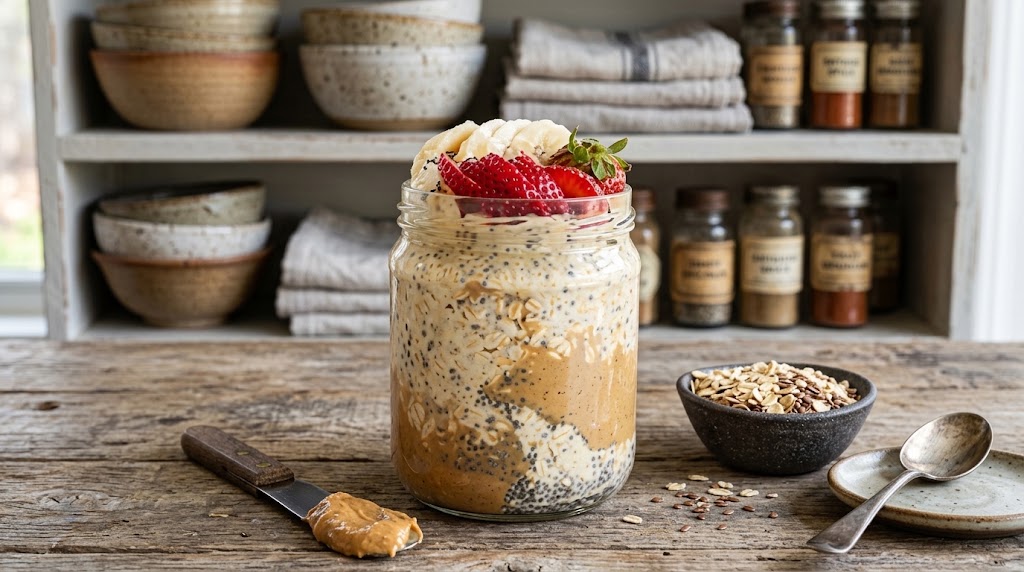
Peanut Butter Overnight Oats (5 Ingredients!)
Easy Peanut Butter Overnight Oats made with five main ingredients and prepared in minutes. This creamy, no-cook breakfast combines gluten-free rolled oats, unsweetened almond milk, chia seeds, natural peanut butter, and maple syrup.
1
servings5
minutes452
kcal360
minutes6
hours5
minutesIngredients
- Overnight Oats
1/2 cup unsweetened plain almond milk, or another dairy-free milk such as coconut, soy, or hemp
3/4 tablespoon chia seeds
2 tablespoons natural salted peanut butter or almond butter, creamy or crunchy
1 tablespoon maple syrup, or coconut sugar, organic brown sugar, or stevia to taste
1/2 cup gluten-free rolled oats
- Optional Toppings
Sliced banana, strawberries, or raspberries
Flaxseed meal or additional chia seeds
Granola
Directions
- Place the almond milk, chia seeds, peanut butter, and maple syrup in a small mason jar or lidded bowl. Stir until combined. The peanut butter does not have to blend completely; a few swirls can remain for extra peanut butter flavor.
- Add the gluten-free rolled oats and stir again. Press the oats down with a spoon so every oat is coated with the almond milk and properly immersed in the mixture.
- Cover the jar or bowl securely and refrigerate overnight, or for at least 6 hours. During this time, the oats soften and the chia seeds help thicken the mixture.
- The following day, stir the oats if needed and enjoy them chilled. Add sliced banana, berries, granola, flaxseed meal, or additional chia seeds according to preference.
- For warm overnight oats, microwave for approximately 45–60 seconds, making sure the container has enough room for expansion. Alternatively, transfer the oats to a saucepan and heat over medium heat until warm. Add more liquid if necessary.
- Keep the prepared overnight oats refrigerated and consume within 2–3 days. The texture is generally best during the first 12–24 hours. This recipe is not freezer-friendly.
Nutrition Facts
- Calories: 452kcal
- Fat: 22.8g
- Carbohydrates: 51.7g
- Fiber: 8.3g
- Sugar: 15.8g
- Protein: 14.6g
