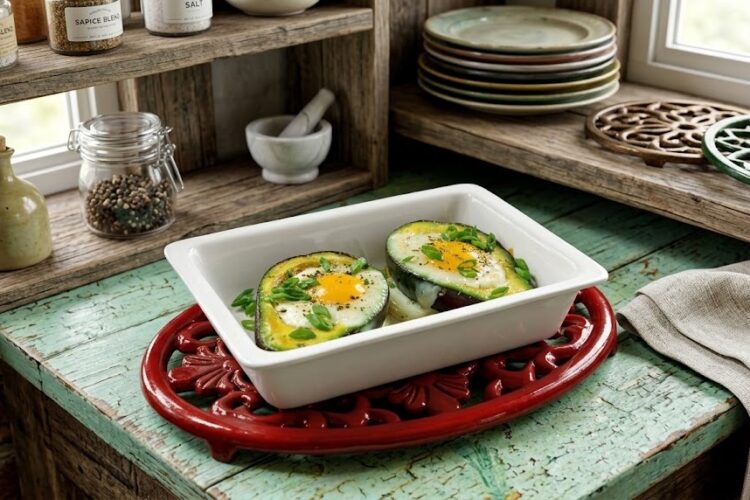
Paleo Baked Eggs in Avocado is a simple, satisfying, and naturally low-carb breakfast that brings together several wholesome ingredients in one easy baked dish. Soft avocado, gently baked eggs, fresh chives, herbs, and crispy bacon create a meal that is rich in flavor without requiring a long list of ingredients. The creamy texture of warm avocado pairs especially well with the tender egg yolk, making this a comforting choice for breakfast, brunch, or a quick protein-focused meal.
This baked avocado egg recipe is also convenient for busy mornings because the preparation is straightforward. The ingredients are placed directly into the avocado halves, seasoned, and baked until the eggs reach the desired level of doneness. With a total cooking time of about 25 minutes, it offers an easy way to prepare a warm meal without standing over a stovetop. The final touch of crumbled bacon adds a savory finish and makes every bite more satisfying.
Why Baked Eggs and Avocado Work So Well Together
Creamy Avocado Meets Tender Baked Egg
Avocado and eggs naturally complement one another because they have rich, smooth textures and mild flavors that can easily absorb herbs and seasonings. When the avocado is baked, it becomes slightly softer and warmer while still maintaining its creamy character. The egg sits in the center of the avocado, creating an attractive presentation and allowing the two ingredients to be eaten together in every bite.
The yolk adds another layer of richness, while the egg white provides a lighter texture around it. Chopped chives and dried parsley bring freshness and gentle herbal flavor without overpowering the main ingredients. Sea salt and ground black pepper complete the seasoning, while the crumbled bacon provides a savory contrast. The result is a warm avocado breakfast that feels substantial but does not depend on bread, flour, or added sugar.
A Naturally Paleo and Low-Carb Recipe
A Good Choice for Simple Paleo Meal Planning
This Paleo Baked Eggs in Avocado recipe fits naturally into a paleo-style eating plan because its ingredients are simple and minimally processed. Avocado, eggs, herbs, and bacon form the foundation of the dish, while no grains, refined flour, or sugary ingredients are required. The recipe is also naturally gluten-free, which makes it suitable for people looking for a breakfast without wheat-based ingredients.
With 9 grams of total carbohydrates and 7 grams of dietary fiber per serving, this dish has a relatively low amount of net carbohydrates. That makes baked avocado eggs an appealing option for people who are searching for low-carb breakfast recipes or meals that can provide satisfying fats and protein. The avocado contributes a large part of the dish’s creamy texture, while the eggs and bacon help create a more filling breakfast.
The Appeal of a High-Protein Breakfast
Protein and Healthy Fats in One Simple Dish
A satisfying breakfast often includes a combination of protein and fat, and this recipe delivers both through its original ingredients. Each serving contains 11 grams of protein, primarily from the eggs and bacon. Protein can make a meal feel more substantial and can help turn a simple breakfast into something that keeps hunger away for longer than a light snack.
The total fat content is 24 grams per serving, much of which comes from the avocado and eggs. This combination gives the recipe its rich texture and satisfying character. Rather than relying on heavy sauces or complicated additions, the natural creaminess of avocado does much of the work. The baked egg also creates a warm center that makes the dish feel more like a complete meal than simply eating a cold avocado with an egg on the side.
Easy Preparation for Busy Mornings
A Quick Recipe with Minimal Kitchen Work
One of the best things about this baked egg and avocado recipe is how little preparation it requires. The oven is heated while the eggs are prepared, and the avocado is halved and pitted before being placed in the baking dish. There is no need to prepare a complicated sauce, dough, or batter. Once the eggs are placed into the avocado halves and the seasonings are added, the dish is ready for the oven.
The total preparation time is only 10 minutes, followed by approximately 15 minutes of baking. This makes the recipe practical for breakfast and also useful for an easy brunch. While the dish bakes, other parts of the meal can be prepared, or the kitchen can simply be cleaned. The short cooking time is another reason why this recipe works well for people who want a fresh, homemade breakfast without spending a long time cooking.
Preparing the Avocado for Baking
Keeping the Avocado Halves Stable
A halved avocado has a rounded shape, so stability is important when it is being used as a natural container for an egg. If the avocado tips over while being moved or baked, the uncooked egg can spill out. Placing the avocado halves carefully in the baking dish and resting them against the edge helps prevent this problem. Choosing a baking dish that keeps the avocado in place also makes the recipe easier to handle.
The size of the avocado pit cavity can vary. Because the recipe uses small eggs, they are more likely to fit inside the hollow space. The original method also calls for adding the yolk first and then spooning in the egg white until the avocado cavity is full. This gradual approach is helpful because it gives better control and reduces the chance of overflowing the avocado.
Handling the Eggs Carefully
Keeping the Yolks Intact
The egg yolk is an important part of the finished texture and appearance, so the eggs should be cracked into a bowl carefully. This allows the yolks to be handled more gently before they are transferred into the avocado halves. Placing the yolk into the center first gives the dish its classic baked egg appearance, while the egg white fills the surrounding space.
Depending on the exact size of the avocado and egg, the entire egg white may not fit into the avocado cavity. The original recipe method addresses this by filling the cavity only until it is full. This prevents unnecessary spilling and helps the avocado remain stable during baking. Working slowly at this stage produces a cleaner and more evenly shaped result.
Fresh Herbs and Simple Seasonings
Adding Flavor Without Covering the Main Ingredients
The seasoning in this Paleo Baked Eggs in Avocado recipe is simple but effective. Fresh chives add a mild onion-like flavor and a fresh green finish. Dried parsley contributes an earthy herbal note that works well with both avocado and egg. These seasonings help give the recipe more flavor without making it complicated or changing the natural character of the main ingredients.
Sea salt and ground black pepper are added according to taste, allowing the final flavor to be adjusted easily. Because bacon is also included, the saltiness of the finished dish can vary depending on the bacon that is used. For this reason, seasoning should be applied with the understanding that the crumbled bacon will add another savory element after baking.
Baking at the Right Temperature
Cooking the Eggs Until Set
The recipe is baked at 425 degrees F, or 220 degrees C, for approximately 15 minutes. A hot oven allows the egg to cook efficiently while warming the avocado. The exact appearance of the egg may vary slightly depending on the oven, the size of the avocado, and the size of the eggs. The goal is to bake until the eggs are cooked.
The avocado may become softer as it bakes, but it should still hold its shape well enough to support the egg. The baking dish should be moved gently because the avocado halves remain delicate, especially when they are filled with hot cooked egg. Once the eggs are ready, the bacon is sprinkled over the top as the final step.
Why the Bacon Is Added at the End
A Savory and Crisp Final Topping
The cooked bacon is crumbled and added after the avocado and eggs have finished baking. This helps preserve the bacon’s cooked texture instead of allowing it to soften further in the oven. The bacon provides a savory contrast to the mild avocado and rich egg, making the finished recipe more flavorful and satisfying.
Sprinkling the bacon over the baked avocado also creates a better distribution of flavor across the dish. Each serving receives a finishing layer of savory, crumbled bacon rather than having all the bacon hidden inside the avocado cavity. The topping also gives the dish a more appealing appearance, especially when served for brunch or presented as a simple homemade breakfast.
A Healthy Breakfast with Nutrient-Rich Ingredients
Understanding the Nutritional Value
The original nutritional information lists 280 calories per serving, along with 11 grams of protein and 24 grams of total fat. The recipe also provides 9 grams of total carbohydrate, including 7 grams of dietary fiber. Avocado is well known for its fiber content and creamy texture, making it especially useful in recipes designed around simple whole-food ingredients.
The recipe also provides vitamin C, potassium, calcium, and iron. These nutrients contribute to the overall nutritional profile of the meal, while the eggs and bacon provide protein and additional savory flavor. Nutritional values can vary depending on the exact size of the avocado and eggs and the specific type of bacon used, but the provided information gives a useful general overview of the recipe.
A Good Option for Breakfast or Brunch
Serve It as a Complete Simple Meal
Although this dish is often considered a breakfast recipe, it can also work well for brunch or a light meal at other times of the day. The combination of avocado, egg, and bacon is filling enough to stand on its own. It is particularly useful when a quick, warm meal is preferred over a complicated recipe with many separate components.
For a simple breakfast, the baked avocado halves can be served immediately after the bacon is added. The creamy avocado and warm eggs are best enjoyed fresh from the oven. Because the dish contains soft avocado, the presentation is most appealing when it is served soon after cooking rather than left sitting for an extended period.
Notes for the Best Baked Avocado Eggs
Choose Small Eggs as Specified
Using the specified small eggs is important because avocado cavities have limited space. Larger eggs may overflow the center of the avocado, making the dish harder to prepare and bake neatly. The recipe’s method of adding the yolk first and then gradually adding egg white is also useful because avocado sizes naturally vary.
For a stable result, place the avocado halves securely in the baking dish. Resting them against the side helps reduce movement. If the avocado appears unsteady, arranging it carefully before adding the egg can make the rest of the preparation much easier. A stable avocado is less likely to spill when the baking dish is transferred into the hot oven.
Do Not Overfill the Avocado Cavity
The avocado should be filled only until the cavity is full. It may be tempting to force the entire egg into a small avocado, but doing so can cause the egg white to spill over the sides. Spoon the yolk gently into the center first, then add enough egg white to fill the remaining space.
This simple technique keeps the recipe neat and also helps the egg remain in contact with the avocado as it cooks. If the cavity is larger, it can hold more egg white. If it is smaller, filling only to the top prevents unnecessary overflow and helps preserve the appearance of the finished baked avocado eggs.
Season According to Taste
The listed amount of chives, parsley, sea salt, and black pepper can be adjusted to taste as directed in the original ingredients. The recipe is intentionally flexible with these seasonings, allowing the herbs and spices to be distributed according to preference. Chives can be scattered across the egg and avocado for a fresher flavor and more visible color.
Because bacon is included, remember that the final dish may become saltier once the topping is added. A light amount of sea salt before baking can be enough, especially when the bacon has a naturally salty flavor. Ground black pepper can be adjusted more freely depending on how strong or mild the preferred seasoning is.
Common Questions About Baked Eggs in Avocado
How Do You Keep the Avocado from Tipping Over?
The easiest method is to arrange the avocado halves in the baking dish so they are supported by the edge or by another stable surface in the dish. This is particularly important before the egg is added. Once filled, the avocado should be moved as little as possible to avoid spilling the uncooked egg.
A properly sized baking dish is useful because the avocado halves should have enough support without being tightly crushed together. Position them before transferring the egg, and then carefully move the baking dish into the preheated oven. Taking a few extra moments to stabilize the avocado can make the recipe much easier to prepare.
Can This Recipe Be Made Without a Complicated Breakfast Setup?
Yes. This is one of the main advantages of the recipe. There is no need for a blender, mixer, special baking equipment, or complicated preparation. A baking dish, a bowl for the eggs, and basic measuring utensils are enough for preparing the ingredients.
The short ingredient list also makes the recipe easy to understand. The focus remains on avocado, eggs, herbs, seasonings, and bacon. This straightforward approach is useful for home cooks who want a simple paleo breakfast recipe without a large amount of preparation or cleanup.
Why Are the Eggs Added to a Bowl First?
Cracking the eggs into a separate bowl makes it easier to keep the yolks intact and transfer them carefully. The yolks can then be spooned directly into the avocado cavities before the egg whites are added gradually. This provides greater control than cracking an entire egg directly into the avocado.
The method is especially useful because avocado cavities differ in size. By separating the transfer process into smaller steps, the amount of egg white can be adjusted according to the available space. This helps prevent overflow while maintaining the original structure and appearance of the recipe.
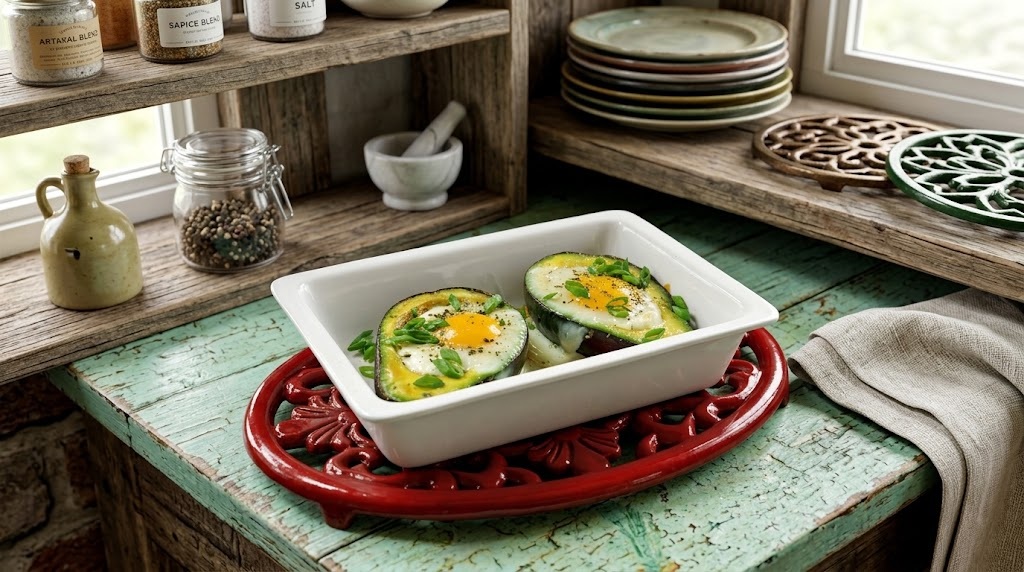
Paleo Baked Eggs in Avocado
Paleo Baked Eggs in Avocado is a warm, savory, and satisfying breakfast recipe made by baking small eggs inside creamy avocado halves.
2
servings10
minutes15
minutes280
kcal25
minutesIngredients
Small eggs: 2
Avocado: 1 avocado, halved and pitted
Fresh chives: 2 teaspoons, chopped, or to taste
Dried parsley: 1 pinch, or to taste
Sea salt and ground black pepper: 1 pinch, or to taste
Cooked bacon: 2 slices, crumbled
Directions
- Preheat the oven to 425 degrees F (220 degrees C).
- Carefully crack the eggs into a bowl, taking care to keep the egg yolks intact.
- Place the avocado halves in a baking dish. Position them securely, resting them along the edge of the dish so they do not tip over.
- Gently spoon one egg yolk into the cavity of each avocado half. Add egg white gradually until the cavity is filled. Repeat with the remaining avocado and egg.
- Season the filled avocado halves with chopped fresh chives, dried parsley, sea salt, and ground black pepper.
- Carefully place the baking dish in the preheated oven.
- Bake for approximately 15 minutes, or until the eggs are cooked.
- Remove the baking dish from the oven and sprinkle the crumbled cooked bacon over the avocado halves.
- Serve the Paleo Baked Eggs in Avocado immediately while warm.
Nutrition Facts
- Calories: 280kcal
- Fat: 24g
- Carbohydrates: 9g
- Protein: 11g
