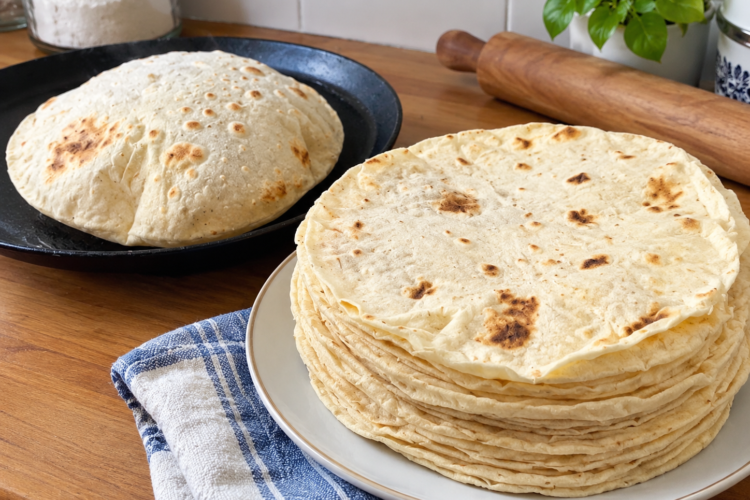
Homemade flour tortillas are a simple way to bring fresh flavor and a soft, tender texture to everyday meals. Made with five basic ingredients, this easy homemade flour tortillas recipe produces flexible, lightly golden flatbreads that work beautifully for tacos, burritos, quesadillas, sandwich wraps, and homemade tortilla pizzas. Unlike many packaged tortillas, freshly cooked tortillas can be enjoyed warm straight from the skillet, making them a delicious addition to family lunches and dinners.
You do not need special baking equipment or advanced cooking skills to make flour tortillas at home. A mixing bowl, a sturdy spoon, a rolling pin, and a skillet are enough to get started. If you own a stand mixer with a dough hook, preparing the dough can be even quicker. Both methods produce excellent results, so you can choose whichever approach fits your kitchen and cooking routine.
The secret to soft homemade tortillas lies in the dough’s consistency, the resting period, and the cooking temperature. When these details are handled correctly, the tortillas become easy to roll, cook evenly, and remain flexible after cooling. Whether you are preparing a Mexican-inspired dinner, making lunchbox wraps, or stocking your freezer with convenient homemade flatbreads, this flour tortilla recipe is a practical choice for your kitchen.
Why Make Flour Tortillas from Scratch?
Store-bought tortillas are convenient, but homemade flour tortillas offer a freshness that is difficult to match. They have a tender bite, a pleasant wheat flavor, and a soft texture that makes them suitable for many different fillings. Cooking them in a hot, dry skillet also creates attractive golden spots without requiring deep frying or complicated preparation. Served warm, they can make even a simple meal of beans, vegetables, or leftover chicken feel more satisfying.
Another reason to prepare tortillas at home is the control you have over the ingredients. This recipe uses all-purpose flour, kosher salt, baking powder, oil, and warm water. There is no need for complicated ingredients or specialized equipment. You can also choose an oil that suits your preferences, provided it works well in the dough. Olive oil gives the tortillas a mild flavor, while neutral vegetable oil lets the flavor of the flour remain more noticeable.
Homemade tortillas are also useful for meal preparation because they can be made in batches. Once cooked and cooled, they can be refrigerated for later meals or frozen for longer storage. Keeping a supply ready makes it easier to prepare quick lunches, after-school snacks, and weeknight dinners without starting from scratch every time. Their versatility means that one batch can serve several different purposes throughout the week.
What Makes This Easy Flour Tortilla Recipe Special?
This easy flour tortilla recipe is designed to be straightforward, even for someone who has never made flatbread before. The dough comes together with a short mixing process, and only a brief kneading period is needed to create a smooth consistency. Unlike recipes that require yeast and extended proofing, these tortillas do not need a long rising period. This makes them particularly convenient when you want fresh bread without spending hours in the kitchen.
The addition of baking powder helps create a tender texture, while the oil contributes moisture and flexibility. Warm water brings the flour together into a workable dough, allowing it to become smooth without being excessively dry. The ingredients serve different purposes, and keeping their proportions consistent is important for obtaining tortillas that roll easily and cook properly. The result is a simple flatbread that complements both traditional Mexican-inspired dishes and everyday homemade meals.
Another advantage is that the recipe can be prepared by hand or with a stand mixer. Hand mixing gives you a direct feel for the dough and requires little equipment, while a mixer makes the process convenient when preparing larger batches. In either case, the dough should be smooth, manageable, and only slightly tacky before resting. Taking a little care at this stage helps prevent cracking during rolling and produces more evenly shaped tortillas.
Understanding the Five Basic Ingredients
All-purpose flour provides the structure of homemade flour tortillas. It contains the proteins that form gluten when combined with water and worked through kneading. This gluten structure gives the dough enough strength to stretch into thin circles without tearing immediately. Measuring the flour accurately is helpful because too much flour can make the dough stiff, while too little can leave it difficult to handle. A light dusting of flour during kneading and rolling is usually sufficient.
Kosher salt adds flavor and balances the mild taste of the flour. Although the quantity is small, it helps ensure that the finished tortillas do not taste bland. Baking powder is included to support a tender texture and a little lightness. These ingredients are mixed with the flour before the liquids are added, helping distribute them evenly throughout the dough. Combining the dry ingredients first is a simple step that encourages consistent results across the batch.
Oil contributes tenderness and helps keep the cooked tortillas pliable. Extra virgin olive oil is the specified option, but vegetable oil or another fairly neutral-flavored oil can also be used. Melted butter, avocado oil, and melted lard are additional alternatives mentioned for this style of tortilla, although they may change the flavor or texture slightly. Warm water hydrates the flour and helps the ingredients come together into a workable dough. It should feel comfortably warm rather than hot enough to burn your hands.
How to Make Homemade Flour Tortillas by Hand
Begin by placing the flour, kosher salt, and baking powder in a medium mixing bowl. Stir the dry ingredients with a sturdy wooden spoon or silicone spatula until they are evenly combined. This initial mixing helps distribute the salt and baking powder throughout the flour, reducing the chance of uneven flavor. Choose a bowl with enough room to stir comfortably, since the dough will become heavier as the water and oil are incorporated.
Make a small well in the center of the dry ingredients and add the oil and warm water. Stir from the center outward, scraping the bottom and sides of the bowl to bring the flour into the liquid. Continue mixing until the loose flour has been incorporated and a rough, shaggy dough begins to form. At first, the mixture may look uneven or slightly rough, but it should gradually come together as the moisture spreads through the flour.
Transfer the dough to a lightly floured work surface and knead it for approximately one to two minutes. Press the dough forward with the heel of your hand, fold it back toward you, and repeat until it becomes smoother. Avoid adding large amounts of extra flour, as excessive flour can make the finished tortillas dry or stiff. The dough should become cohesive and manageable rather than sticky enough to cling heavily to your fingers or the work surface.
Once the dough is smooth, gather it into a ball and prepare it for resting and portioning. Although this recipe can be made with minimal kneading, the resting stage remains important. It gives the dough time to relax after mixing, making it easier to roll into thin circles. Working gently and allowing the dough enough time to rest can make a noticeable difference in how easily the tortillas stretch and how evenly they cook in the skillet.
How to Make Flour Tortilla Dough in a Stand Mixer
A stand mixer is a convenient option if you prefer to reduce hands-on preparation. Add the all-purpose flour, kosher salt, and baking powder to the mixer bowl. Attach the dough hook and mix briefly until the dry ingredients are evenly distributed. Starting with the dry ingredients helps prevent concentrated pockets of salt or baking powder and prepares the flour for even hydration once the liquid ingredients are added.
With the mixer running at medium speed, gradually add the oil and warm water. Continue mixing until the flour absorbs the liquid and the ingredients begin to form a ball. This generally takes about a minute, although the exact time depends on your mixer and the flour’s moisture absorption. Once the dough comes together, reduce the speed to low and continue mixing for another minute or until the texture looks smoother and more uniform.
Stop the mixer and check the dough before removing it from the bowl. It should hold together as a single mass rather than appearing crumbly or leaving a large amount of wet dough stuck to the sides. Transfer it to a lightly floured surface and proceed with portioning and resting. Even though the mixer does much of the work, it is still worth checking the texture yourself because flour measurements and kitchen conditions can affect how the dough behaves.
Dividing and Resting the Dough
After preparing the dough, divide it into 16 equal portions. Keeping the portions similar in size helps the tortillas cook evenly and makes it easier to use them for wraps, tacos, and other dishes. If you prefer precise portions, a kitchen scale can help, but you can also divide the dough by eye. Shape each piece into a small ball, then gently flatten it into a thick disc before allowing it to rest.
Resting the dough is one of the most important steps in this recipe. When flour is mixed with water and kneaded, gluten develops and gives the dough elasticity. If you try to roll it immediately, the dough may resist stretching and shrink back toward its original shape. Resting allows the gluten to relax, making each portion easier to roll thinly. It also makes the rolling process less frustrating, particularly for beginners who are still learning to shape evenly sized tortillas.
Allow the dough portions to rest for approximately 15 minutes, keeping them covered so their surfaces do not dry out. A clean kitchen towel or suitable covering can help prevent a dry outer layer from forming. If the dough develops a dry surface, it may crack when rolled. A short, covered rest makes the portions more flexible and helps them remain smooth as you prepare each tortilla for cooking.
Rolling the Tortillas into Thin Circles
Lightly flour your work surface and rolling pin before shaping the dough. Take one rested dough ball and roll it from the center outward, turning it occasionally to encourage an even circle. Aim for a diameter of approximately six to seven inches. The tortillas do not need to look perfectly round to taste delicious, but keeping the thickness relatively even is important because thick sections take longer to cook than thin edges.
Use only enough flour to prevent sticking. Too much flour can collect on the tortilla surface and burn in the skillet, creating dark specks and an unpleasant toasted taste. If a tortilla sticks, gently lift it and dust the work surface with a small amount of flour before continuing. Avoid pressing too aggressively with the rolling pin, as the goal is to stretch the dough evenly rather than compress it into an overly dense layer.
As each tortilla is rolled, place it on a piece of parchment paper or another suitable nonstick separator. Keep the uncooked tortillas apart so they do not stick together or lose their shape when lifted. If you are preparing the entire batch before cooking, cover the rolled tortillas lightly to prevent them from drying out. Having the dough ready in advance allows you to focus on the skillet and cook each tortilla without rushing.
Cooking Soft Flour Tortillas in a Skillet
Heat a dry nonstick skillet or cast-iron pan over medium-high heat. A griddle also works well if you want to cook several tortillas in succession. Allow the cooking surface to become hot before adding the first tortilla. No additional oil is needed in the pan because the dough already contains oil. Cooking on a dry surface helps the tortillas develop characteristic golden-brown spots while remaining soft enough to fold around fillings.
Place one rolled tortilla in the hot skillet and cook it for approximately 30 to 60 seconds. Small bubbles may begin to appear on the surface, and light brown spots should form underneath. These signs indicate that the tortilla is cooking properly. Turn it over and cook the other side for approximately 15 to 20 seconds. The precise timing can vary with the thickness of the dough and the heat of the pan, so watch the tortilla rather than relying on the clock alone.
Avoid leaving the tortilla in the skillet for too long. Extended cooking removes moisture and can make the flatbread dry, brittle, or difficult to fold. You want the surface to develop light golden patches without becoming uniformly dark or crisp. If the tortillas brown too quickly, lower the heat slightly. If they remain pale and take too long to cook, allow the skillet to heat more thoroughly before continuing with the next one.
Continue cooking the remaining tortillas one at a time. If the pan becomes excessively hot during the process, briefly reduce the heat to maintain consistent cooking. Once each tortilla is ready, transfer it directly to the container where you will keep the cooked batch. A smooth cooking routine helps you produce tortillas that are evenly cooked, tender, and suitable for immediate serving or later storage.
The Secret to Keeping Homemade Tortillas Soft
One of the easiest ways to keep homemade flour tortillas soft is to stack them as soon as they come off the skillet. Place the cooked tortillas inside a covered container, a zip-top bag that is suitable for warm food, or under a slightly damp kitchen towel. The trapped warmth creates gentle steam, which helps soften the tortillas and prevents their surfaces from drying out. This step is especially helpful if you are cooking all 16 tortillas before bringing them to the table.
Avoid leaving freshly cooked tortillas uncovered on a plate for an extended period. As they cool, moisture escapes and the texture can become firmer. Stacking them while warm allows their residual heat to help maintain flexibility. The towel should be slightly damp rather than dripping wet, since too much moisture can make the tortillas soggy. Once the tortillas have cooled sufficiently, transfer them to an airtight container for storage.
If your tortillas turn out stiff, check the cooking time and temperature first. Overcooking is a common reason for dry flatbreads, especially when the skillet is too hot or each tortilla is left on the pan until it becomes heavily browned. Another possible issue is insufficient resting, which can make the dough harder to roll evenly. Correcting these small details often improves the result significantly, helping you make soft flour tortillas that fold without cracking.
Delicious Ways to Serve Homemade Flour Tortillas
Fresh flour tortillas are ideal for homemade burritos and wraps. Fill them with grilled chicken, cooked beans, rice, sautéed vegetables, or your favorite combination of ingredients. Because these tortillas are flexible, they can be folded around generous fillings without immediately breaking apart. For a quick lunch, use leftover roasted vegetables and chicken with a little sauce. For a more substantial dinner, add beans, rice, and fresh toppings to create a satisfying homemade burrito.
Tacos and enchiladas are another excellent way to use these tortillas. Warm each tortilla briefly before adding the filling so it becomes easier to fold. For tacos, try seasoned meat, beans, grilled vegetables, salsa, and chopped herbs. For enchilada-style dishes, fill and roll the tortillas, arrange them in a baking dish, and add your preferred sauce and toppings before baking. Their mild flavor complements savory fillings without overpowering the other ingredients.
You can also turn homemade flour tortillas into individual tortilla pizzas. Spread a thin layer of sauce over each tortilla, add cheese and your favorite toppings, then bake until the edges become crisp and the cheese melts. This is a useful meal idea for busy evenings because each person can customize a personal pizza. Keep the toppings relatively light so the tortilla cooks properly and does not become soggy in the center.
For a quick snack, brush a tortilla lightly with butter, sprinkle it with cinnamon and sugar, and warm it until fragrant. You can also use tortillas for sandwich wraps filled with vegetables, chicken, salmon, or shrimp. Serve the wraps with a suitable dipping sauce for lunch or a casual gathering. Their versatility makes them useful far beyond tacos, allowing one basic recipe to support both sweet and savory meals.
How to Make Crispy Homemade Tortilla Chips
Homemade flour tortillas can also be transformed into crispy chips. Brush each tortilla with approximately one teaspoon of olive oil on both sides and sprinkle lightly with kosher salt. Cut the tortillas into triangles or other convenient shapes, then arrange them in a single layer on a baking tray. Bake at 450°F for approximately five minutes, watching carefully because thinner pieces can brown quickly. The finished chips should be crisp enough to break easily.
These baked tortilla chips can be served with salsa, hummus, or other dips. They are also useful as a crunchy topping for soups and salads when broken into smaller pieces. Allow the chips to cool before storing them, as trapped steam can soften their texture. For the best crispness, avoid piling them together while they are still warm. This simple variation is a practical way to use extra tortillas when you want a different texture.
Helpful Tips for Better Flour Tortillas
The first useful tip is to measure the ingredients carefully and pay attention to the dough’s texture. Flour can absorb water differently depending on the brand, storage conditions, and humidity in your kitchen. The dough should be smooth and workable rather than dry and crumbly or excessively sticky. A lightly floured work surface is generally enough to manage the dough, so avoid adding large quantities of extra flour during kneading or rolling.
The second tip is to give the dough time to rest after mixing and dividing it. This short break improves flexibility and makes the rolling process much easier. If a dough ball keeps shrinking back as you roll it, let it rest for a few additional minutes before trying again. Keeping the dough covered during resting is equally important because a dry outer surface can crack and create uneven edges.
Finally, pay attention to the skillet temperature. Medium-high heat is a useful starting point, but different pans heat at different speeds and retain heat differently. Look for small bubbles and light brown spots instead of waiting for the entire tortilla to become dark. Cooked tortillas should be stacked and covered promptly to preserve their softness. These simple techniques can help you achieve more consistent results from batch to batch.
Frequently Asked Questions About Homemade Flour Tortillas
Can I make flour tortillas without a mixer?
Yes, this recipe can be made entirely by hand. Combine the dry ingredients in a bowl, add the oil and warm water, and stir until a rough dough forms. Knead it on a lightly floured surface for one to two minutes, then continue with the resting, rolling, and cooking steps. A sturdy wooden spoon, silicone spatula, or Danish whisk can help you mix the ingredients without specialized equipment.
Which oil works best for homemade flour tortillas?
Extra virgin olive oil is the specified option, but vegetable oil and other fairly neutral-flavored oils can also work well. Avocado oil and melted butter are additional possibilities if you prefer their flavor. Melted lard is another traditional-style choice for flour tortillas. Coconut oil and peanut oil can contribute more noticeable flavors, so consider how their taste will complement the meals you plan to serve with the finished tortillas.
Why did my flour tortillas become stiff?
Tortillas often become stiff when they are cooked for too long or at an excessively high temperature. Aim for approximately 30 to 60 seconds on the first side and 15 to 20 seconds on the second, adjusting as needed for your pan. Keeping the cooked tortillas stacked and covered also helps prevent moisture loss. If the dough was difficult to roll, a longer resting period may improve its flexibility.
How should I store leftover homemade tortillas?
Once the tortillas have cooled, place them in an airtight container or sealed food-storage bag. They can be kept at room temperature for approximately 24 hours, provided they are stored in suitable conditions, or refrigerated for up to one week. For longer storage, freezing is a convenient option. Reheat the tortillas briefly before serving to restore some of their softness and make them easier to fold.
Can I freeze homemade flour tortillas?
Yes, these tortillas freeze well when properly packed. Allow them to cool, then stack them with parchment paper or waxed paper between individual tortillas to prevent sticking. Place the stack in a freezer-safe, sealed bag and remove excess air before closing it. Thaw the tortillas before reheating, or separate them carefully if they are still slightly frozen. Gentle warming in a skillet helps make them flexible again.
Can I use a tortilla press instead of a rolling pin?
A rolling pin is the recommended option for this particular recipe because it allows you to stretch the dough into the desired six- to seven-inch circles. The dough is designed to be rolled easily after resting, so a tortilla press is not necessary. A rolling pin also gives you more control over the final thickness, helping you produce thin, flexible tortillas that cook quickly in a skillet.
What to Serve with Homemade Flour Tortillas
For a complete Mexican-inspired meal, pair the tortillas with a fresh chopped salad, pico de gallo, or Mexican-style rice. A crisp salad provides freshness and texture alongside warm flatbreads, while tomato-based salsa adds acidity that balances rich fillings such as cheese, meat, or beans. Rice is another useful accompaniment for burritos, enchiladas, and taco dinners, creating a satisfying meal without requiring complicated preparation.
You can also serve homemade tortillas with grilled vegetables, seasoned chicken, shredded beef, black beans, or sautéed shrimp. Add toppings such as lettuce, tomatoes, onions, avocado, or your preferred sauce to create a meal that suits different tastes. For a casual family dinner, arrange the tortillas and fillings separately so everyone can assemble their own wraps. This approach makes the recipe particularly useful for gatherings and customizable weeknight meals.
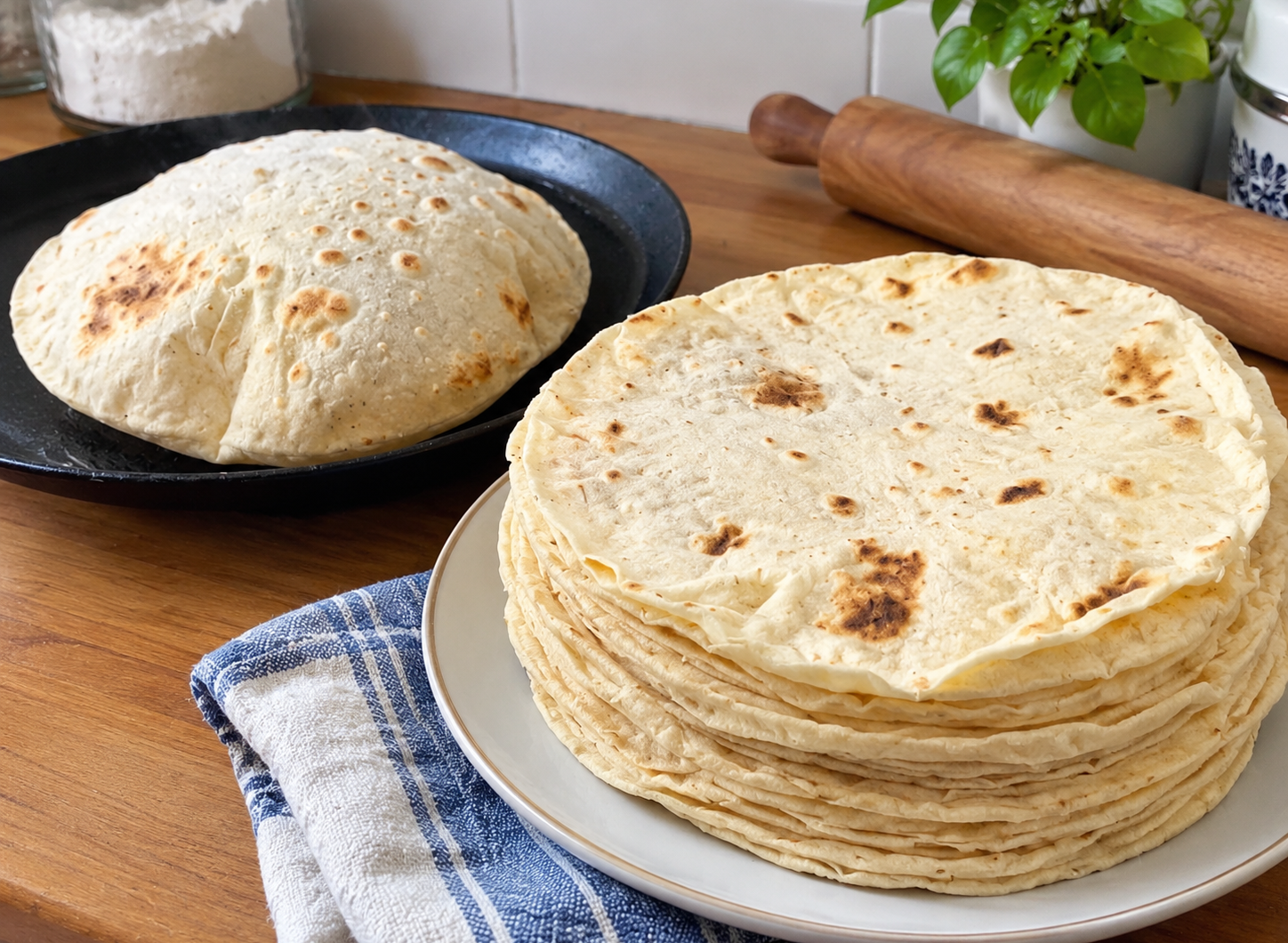
Homemade Flour Tortillas Recipe
Soft, tender homemade flour tortillas made with five basic ingredients. Perfect for tacos, burritos, quesadillas, sandwich wraps, and tortilla pizzas.
4
servings25
minutes25
minutes125
kcal15
minutes1
hour5
minutesIngredients
3 cups all-purpose flour
1 teaspoon kosher salt
1 teaspoon baking powder
⅓ cup extra virgin olive oil, vegetable oil or other fairly neutral flavored oil
1 cup warm water
Directions
- Making the dough by hand
- Combine the dry ingredients. Place the flour, kosher salt, and baking powder in a medium mixing bowl. Stir with a sturdy wooden spoon or silicone spatula until evenly mixed.
- Add the oil and water. Make a well in the center of the dry mixture. Add the oil and warm water, then stir from the bottom up until the flour is incorporated and a shaggy dough forms.
- Knead the dough. Transfer the dough to a lightly floured work surface. Knead for one to two minutes until smooth and no longer sticky, adding only a light dusting of flour if needed.
- Making the dough with a mixer
- Mix the dry ingredients. Add the flour, salt, and baking powder to the stand mixer bowl. Fit the dough hook and mix until combined.
- Add the liquids. With the mixer running at medium speed, add the oil and water. Mix for about one minute, or until the dough starts to form a ball.
- Finish mixing. Reduce the mixer to low speed and continue mixing for one minute, until the dough becomes smooth. Transfer it to a lightly floured work surface.
- Shaping and cooking
- Divide and rest. Divide the dough into 16 equal pieces. Shape each into a ball, flatten slightly, and cover. Let rest for approximately 15 minutes so the dough becomes easier to roll.
- Roll the tortillas. On a lightly floured surface, roll each ball into a circle approximately six to seven inches wide. Keep the rolled tortillas separated with parchment paper to prevent sticking.
- Heat the skillet. Preheat a dry nonstick skillet or cast-iron pan over medium-high heat. Do not add oil to the skillet.
- Cook the first side. Place a tortilla in the hot skillet and cook for 30 to 60 seconds, until bubbles appear and light golden-brown spots develop underneath.
- Flip and finish. Turn the tortilla over and cook for another 15 to 20 seconds. Remove it when cooked but still soft and flexible.
- Keep warm and serve. Stack the cooked tortillas in a covered container or under a slightly damp kitchen towel. Serve warm, or allow them to cool before storing.
Notes
- Keep the dough covered: Cover the dough portions during resting to prevent their surfaces from drying out.
- Avoid overcooking: Excessive heat or prolonged cooking can make tortillas stiff. Look for light golden spots rather than dark, uniform browning.
- Oil alternatives: The specified oil can be replaced with another suitable neutral-flavored oil. Melted butter, avocado oil, or melted lard are also possible alternatives, but they may change the flavor.
- Storage: Store cooled tortillas in an airtight container at room temperature for approximately 24 hours or refrigerate for up to one week.
- Freezing: Separate tortillas with parchment or waxed paper and store them in a sealed freezer-safe bag. Thaw and warm before serving.
- Tortilla press: A rolling pin is recommended for this recipe because it makes it easy to control the shape and thickness.
Nutrition Facts
4 servings per container
- Amount Per ServingCalories125
- % Daily Value *
- Total Fat
5g
7%
- Total Carbohydrate
18g
7%
- Protein 2g 4%
* The % Daily Value tells you how much a nutrient in a serving of food contributes to a daily diet. 2,000 calories a day is used for general nutrition advice.
