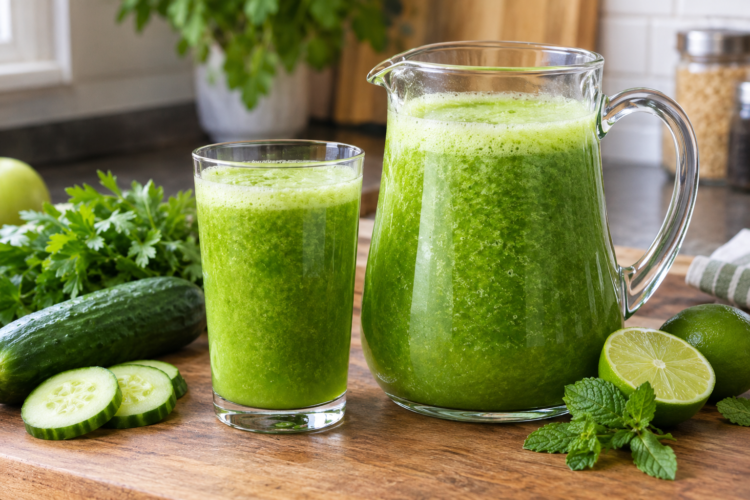
Fresh homemade green juice is a refreshing way to enjoy leafy greens, crisp vegetables, fresh herbs, and a little natural sweetness from fruit. This healthy green juice recipe combines six simple ingredients to create a vibrant drink with a clean, fresh flavor. Made with kale, ginger, Granny Smith apple, celery, English cucumber, and parsley, it is a practical choice for anyone looking to include more vegetables in their daily routine.
One of the best things about making green juice at home is how simple the process can be. You need approximately 15 minutes, six fresh ingredients, and either a juicer or a blender. Preparing your own juice also gives you control over the ingredients, allowing you to enjoy the natural flavors of vegetables without adding unnecessary sweeteners. Whether you prefer a morning green juice or a refreshing drink during the day, this recipe is easy to incorporate into your regular meal routine.
Why Make Fresh Green Juice at Home?
Homemade green juice offers a convenient way to combine several vegetables and herbs in one drink. Instead of purchasing packaged juice, you can prepare a fresh batch whenever you have suitable produce in your refrigerator. This can be especially useful when you have extra kale, celery, cucumber, or parsley that needs to be used before it loses its freshness. A simple green juice recipe can help reduce food waste while making everyday meals more varied.
Another advantage is the ability to adjust the flavor according to your preferences. Kale provides the main leafy-green character, celery contributes a mildly savory taste, and cucumber adds a cooling freshness. Granny Smith apple balances these vegetables with a gentle tartness, while ginger brings a little warmth and parsley contributes a bright herbal note. Together, these ingredients create a balanced drink without requiring added sugar or complicated preparation.
Making green juice at home can also be more economical than regularly purchasing bottled versions. You can buy fresh produce in quantities that suit your household and use the remaining ingredients in salads, soups, stir-fries, and other meals. Since the recipe requires only six ingredients, it is easy to prepare without stocking a long list of specialty products. The result is a fresh vegetable drink that fits naturally into a balanced eating pattern.
What Makes This Healthy Green Juice a Good Choice?
This homemade green vegetable juice contains a combination of leafy greens, fresh produce, and herbs that contribute different nutrients. Kale is known for its vitamin K and vitamin C content, while celery and cucumber provide freshness and naturally occurring water. Parsley contributes additional micronutrients, and apple supplies carbohydrates and natural sugars that help round out the flavor. Ginger adds a distinctive taste without requiring a large quantity.
The original nutrition estimate for this recipe is approximately 92 calories per serving, with two large servings per batch. It also lists carbohydrates, protein, fiber, and several vitamins and minerals. These figures make the drink a useful option for people who want a vegetable-focused beverage, although the exact nutritional content can vary with ingredient size, produce variety, and the juicing or straining method used.
It is important to remember that juicing and eating whole vegetables are not nutritionally identical. When juice is extracted and the pulp is discarded, some of the fiber remains in the pulp instead of reaching the glass. Blending the ingredients and keeping the pulp produces a thicker drink that retains more of the original fiber. Both approaches can be useful, depending on whether you prefer a smooth juice or a more substantial smoothie-like texture.
The Six Ingredients You Need
Kale
Kale provides the deep green color and leafy flavor that define this fresh green juice. One bunch, approximately five ounces, is used in the recipe. Different varieties of kale can work, so you do not need to find a particular type. Before using it, rinse the leaves thoroughly under running water to remove dirt and other debris. If you plan to use a blender, remove the thick central veins when they seem too tough for your equipment.
Kale has a naturally robust flavor, which is why the other ingredients are important for balancing the finished drink. Apple softens its bitterness, cucumber adds a refreshing quality, and parsley reinforces the herbal character. If you are new to green juice, taking the time to prepare the leaves properly can make the drink easier to blend and more pleasant to consume.
Fresh Ginger
A one-inch piece of peeled fresh ginger gives this juice a lively, slightly spicy flavor. Although the quantity is small, ginger has a noticeable effect on the overall taste. It adds warmth to the mild cucumber and celery while complementing the tart apple. Peel the ginger before juicing or blending, and cut it into smaller pieces if your equipment requires them.
Ginger is widely used in cooking because of its distinctive aroma and flavor. In this recipe, it is included primarily to create a more interesting drink without adding another sweet ingredient. If you enjoy a stronger ginger taste, you can experiment with the amount in future batches, keeping in mind that additional ginger may make the juice more pungent.
Granny Smith Apple
One Granny Smith apple supplies a crisp, tart flavor that helps balance the earthy taste of kale. This variety is less sweet than many other apples, making it a suitable choice for a vegetable-forward juice. It also contributes natural sweetness, so the recipe does not need added sugar, syrup, or honey. Wash the apple carefully and remove any damaged portions before cutting it into pieces.
You can use another large apple if Granny Smith apples are unavailable. A sweeter variety will create a milder, fruitier drink, while a tart apple keeps the flavor sharper and more refreshing. For people who prefer green juice without an overwhelmingly leafy taste, the apple plays an important role in making the vegetables more approachable.
Celery
Five celery stalks, with the ends trimmed, add a fresh, mildly savory flavor to this recipe. Celery works particularly well in vegetable juice because it contributes moisture and combines easily with cucumber, kale, and parsley. Its light taste helps prevent the finished drink from becoming too heavy or dominated by one ingredient. Wash each stalk thoroughly, paying attention to the spaces where dirt can collect.
Celery is also a convenient ingredient because it can be used in many other dishes. Any remaining stalks can be chopped into salads, added to soups, or used as part of a cooked vegetable mixture. When juicing, feed the celery through your machine according to its instructions. For blending, cut the stalks into manageable pieces so they break down more easily.
English Cucumber
Half of a large English cucumber contributes a mild flavor and a refreshing quality to the juice. English cucumbers generally have thin skin and a relatively mild taste, which makes them convenient for this recipe. Wash the cucumber well and cut it into pieces that fit your juicer or blender. Depending on your equipment and preference, the skin can usually remain on after thorough washing.
Cucumber helps balance the stronger flavors of kale, ginger, and parsley. It also contributes moisture, which is useful when processing a mixture of leafy greens and firmer produce. If you have another cucumber variety available, you can use it instead. The finished flavor may differ slightly, but the drink will still have its characteristic fresh vegetable taste.
Fresh Parsley
A handful of fresh parsley, approximately one ounce, completes the six-ingredient combination. Parsley has a clean, herbal flavor that makes the juice taste brighter and fresher. Rinse it carefully to remove any grit, and shake off excess water before adding it to the juicer or blender. Both flat-leaf and curly parsley can be suitable, depending on what you have available.
Parsley is more than a decorative garnish in this recipe. It contributes to the overall flavor and adds variety to the vegetable mixture. Because fresh herbs can have a noticeable taste, make sure the parsley is fresh and free from wilted or discolored leaves. Combined with cucumber, celery, apple, and ginger, it gives the juice a lively finish.
How to Make Homemade Green Juice
Step 1: Wash and Prepare the Ingredients
Start by washing the kale, celery, cucumber, parsley, and apple thoroughly under clean running water. Peel the ginger and trim the celery ends. Cut the apple and vegetables into pieces that fit comfortably into your juicer’s feeding chute. If you are using a blender, make the pieces smaller to help the blades process the ingredients evenly. Remove the tough kale veins if needed, especially when working with a standard blender.
Preparing the ingredients carefully makes the rest of the process quicker and easier. You do not need to chop everything into tiny pieces if your juicer can handle larger chunks, but avoid forcing oversized pieces into the machine. Check the manufacturer’s instructions before adding produce, since different juicers and blenders have different capacity and preparation requirements.
Step 2: Juice the Vegetables and Fruit
Once everything is ready, feed the ingredients through your juicer according to the machine’s instructions. Process the kale, ginger, apple, celery, cucumber, and parsley until you have extracted the juice. You can follow the ingredient order provided in the recipe card, allowing the juicer to process the produce gradually. If leafy greens are difficult for your machine to handle, alternate them with firmer or juicier ingredients when appropriate.
As the ingredients are processed, the colors and flavors combine into a vibrant green drink. The apple adds tartness, the cucumber contributes a refreshing quality, and the ginger creates a gentle spicy finish. When the juicing process is complete, stir the juice briefly to distribute the flavors evenly. Pour it into serving glasses and enjoy it while it is fresh.
Step 3: Use a Blender Instead of a Juicer
You can still prepare this healthy green juice recipe if you do not own a juicer. Place the prepared kale, ginger, apple, celery, cucumber, and parsley into a high-powered blender. Add a small amount of water only if necessary to help the ingredients move through the blades, keeping in mind that extra water changes the final consistency and may affect the nutrition estimate.
Blend on a high setting until the ingredients are broken down as thoroughly as possible. The result will generally be thicker than juice extracted with a juicer because the blended mixture contains the fruit and vegetable pulp. If you enjoy a thicker drink, pour it directly into a glass. This approach also preserves more of the original fiber than discarding the pulp.
Step 4: Strain the Juice for a Smoother Texture
If you prefer a smoother, less pulpy drink, place a fine-mesh sieve over a clean bowl or jug. Slowly pour the blended mixture through the sieve, then use the back of a spoon to press the pulp gently. This helps extract additional liquid while leaving much of the remaining solid material behind. Transfer the strained juice into glasses once you have reached your preferred consistency.
Straining is entirely optional, so choose the texture that suits you. A fully blended drink is closer to a green smoothie, while a strained version has a lighter mouthfeel. Remember that removing the pulp also removes some fiber, so the nutritional composition will differ depending on how much solid material you keep. Either method can produce a refreshing drink from the same six ingredients.
Tips for the Best-Tasting Green Juice
Choose Fresh, High-Quality Produce
The flavor of homemade green juice depends heavily on the freshness of its ingredients. Choose kale with firm leaves, celery stalks that feel crisp, cucumber without soft spots, and parsley that looks green and fresh. Apples should be firm and free from significant bruising. Using good-quality produce helps create a cleaner flavor and makes the finished juice more enjoyable without needing sweeteners or flavoring additives.
It is also worth preparing only the amount you expect to drink. Fresh juice does not have the same shelf life as commercially processed products, and its quality can decline after preparation. If your vegetables are beginning to wilt, inspect them carefully before using them. Avoid ingredients that show signs of spoilage, and wash all produce thoroughly before processing.
Balance the Strong Flavors
Green juice can taste bitter or intensely herbal if the leafy greens dominate the mixture. In this recipe, the Granny Smith apple helps balance kale, while cucumber softens the overall flavor. Ginger provides a spicy note, and parsley contributes a fresh herbal finish. Keeping the proportions close to the original recipe is a useful starting point if you are learning to enjoy vegetable-based drinks.
If the flavor seems too strong, try changing the type of apple rather than immediately adding sugar. A sweeter apple can make the juice taste milder, although it will also increase the amount of natural sugar. You can also experiment with replacing kale with spinach in a future batch. Make small changes at a time so you can identify which combinations best suit your taste.
Prepare the Ingredients Ahead of Time
You can make your morning routine easier by washing and cutting the produce the night before. Place the prepared ingredients in a clean, tightly covered container and refrigerate them until you are ready to make the juice. Keeping the ingredients chilled and covered helps protect their quality and reduces the amount of preparation needed when you are short on time.
For the best flavor, juice the prepared ingredients shortly before serving. Cutting produce in advance is a convenience rather than a requirement, so you can also prepare everything immediately before blending or juicing. If you notice unusual odors, sliminess, or other signs of spoilage, do not use the affected ingredients. Proper refrigeration and careful handling are important whenever fresh produce is prepared ahead.
Healthy Green Juice Variations
Replace Kale with Spinach
Spinach is a convenient alternative if you prefer a milder green juice. Its flavor is generally less robust than kale, allowing the apple, cucumber, ginger, and parsley to remain noticeable. Use fresh spinach in place of kale when you want a different taste. The nutritional values will change because spinach and kale do not have identical nutrient profiles, so the original nutrition estimate should not automatically be applied to this variation.
Other leafy greens can also be explored according to your preference. However, different greens vary in taste and composition, so introduce substitutions gradually. If you enjoy a bold vegetable flavor, kale may remain your preferred option. If you want a gentler introduction to green juice, spinach is worth trying. Both can contribute variety to a diet that includes different vegetables.
Add Citrus for a Brighter Flavor
Peeled orange or tangerine can add a citrus note to your homemade green juice. The fruit’s fragrant, sweet-tart flavor pairs well with cucumber, celery, and ginger. Citrus is particularly useful if you want to change the taste without relying on added sweeteners. Remove the peel and any seeds before processing, following the instructions for your particular juicer or blender.
Keep in mind that adding more fruit changes the sweetness and carbohydrate content of the drink. The original recipe uses just one apple to balance the vegetables, so a small citrus addition is a reasonable place to begin. You can experiment with different amounts until you find a flavor that works for you, while keeping the drink primarily vegetable-based if that is your goal.
Experiment with Fresh Herbs and Other Vegetables
Basil and cilantro offer alternative herbal flavors when you want to change the usual combination. A small amount can make the juice taste noticeably different without requiring a complete change to the recipe. Carrots and tomatoes are also possible additions, contributing their own flavors and altering the color and consistency. Introduce new ingredients in modest amounts so that the original balance of the drink is not overwhelmed.
A small pinch of turmeric powder is another optional variation mentioned for this recipe. Turmeric has an earthy taste that can complement ginger, although it will change the character of the finished drink. Treat these variations as optional ways to explore new combinations rather than necessary additions. The original six-ingredient recipe is complete on its own and does not require extra ingredients to work.
When Is the Best Time to Drink Green Juice?
Many people enjoy fresh green juice in the morning because it is convenient to prepare alongside breakfast. You can also serve it with lunch or enjoy a small glass when you want something refreshing. There is no special time that makes green juice essential, and you do not need to follow a juice cleanse or replace a regular meal to include it in your routine.
For a more balanced breakfast, pair your juice with foods that provide protein, healthy fats, and additional fiber, such as eggs, plain yogurt, or whole-grain foods that fit your dietary needs. Juice alone may not provide enough energy or protein to function as a complete meal for many people. Think of it as one possible part of your daily food choices rather than a substitute for a varied diet.
Understanding the Health Benefits and Limitations
Nutrients from Vegetables and Herbs
Kale, parsley, celery, cucumber, and apple supply a range of vitamins, minerals, and plant compounds. The precise amount of each nutrient depends on the produce used and how the juice is prepared. The nutrition information supplied with this recipe reports vitamin C, vitamin K, vitamin A, folate, potassium, and other micronutrients. These nutrients contribute to normal body functions as part of a varied and balanced eating pattern.
Although green juice can help you consume produce, it should not be described as a cure for illness or a guaranteed way to increase energy or strengthen immunity. Individual experiences differ, and the effect of any one drink depends on a person’s overall diet, activity, sleep, and health. Eating a variety of whole vegetables and fruits remains important, particularly because whole produce provides fiber that may be lost during juicing.
Green Juice Is Not a Detox Treatment
Green juice is sometimes marketed as a detox drink, but the body already has systems, including the liver and kidneys, that process and eliminate waste products. There is no need to complete a juice fast or drink a particular combination of vegetables to cleanse the body. This recipe is better understood as a fresh vegetable drink that can contribute to an eating pattern rich in produce.
You can enjoy it because you like its flavor and convenience without expecting it to remove toxins or produce rapid health changes. Avoid replacing meals with juice for extended periods without appropriate medical guidance. A balanced approach that includes regular meals, sufficient fluids, and a variety of nutrient-rich foods is a more practical long-term strategy than relying on a single drink.
Considerations for Certain Health Conditions
Fresh green juice may not be appropriate in unlimited amounts for everyone. People who need to monitor vitamin K intake because they take certain blood-thinning medications, or who have been advised to restrict particular nutrients, should ask their healthcare professional how this recipe fits their individual needs. The ingredients are nutritious for many people, but personal medical circumstances can change what is appropriate.
People with kidney conditions, specific dietary restrictions, or digestive sensitivities may also need individualized advice about leafy greens, potassium, or other components of the drink. If you have a medical condition or take medication that could be affected by dietary changes, consult a qualified healthcare professional before making green juice a regular habit. This recipe is a food preparation suggestion, not a medical treatment.
Frequently Asked Questions About Homemade Green Juice
Can I make green juice without a juicer?
Yes. A blender works well for this recipe. Cut the ingredients into smaller pieces, remove tough kale veins when necessary, and blend everything on high until smooth. You can drink the mixture as it is for a thicker consistency or strain it through a fine-mesh sieve for a lighter texture. A high-powered blender may process larger pieces more easily, but you should always follow your appliance’s instructions.
How many servings does this recipe make?
The recipe makes two large glasses or approximately three smaller glasses. The exact yield depends on the juicer, the moisture content of the vegetables, and how much liquid is extracted. If you use a blender and keep all the pulp, the volume and texture may differ from juice made with a juicer. Divide the finished drink according to your preferred serving size.
Can I prepare green juice the night before?
You can wash and cut the vegetables and apple the night before, then store them in a tightly covered container in the refrigerator. For the freshest flavor, prepare the juice just before drinking it. If you need to store already-made juice, refrigerate it promptly in a clean, airtight container and follow your appliance’s guidance. The original recipe notes that some juicers permit storage for up to 24 hours, but this should not be treated as a universal guarantee of safety or quality.
Can I make green juice sweeter?
Yes. Choosing a sweeter apple variety is a simple way to change the flavor. You can also experiment with a small amount of peeled orange or tangerine. Keep in mind that adding fruit changes the drink’s natural sugar and carbohydrate content. If you prefer a less sweet juice, stay with Granny Smith apple and keep the original vegetable proportions.
Is blended green juice better than strained juice?
Neither option is automatically better for everyone. Blending and keeping the pulp retains more of the ingredients’ fiber, while straining creates a smoother drink that some people prefer. Your choice can depend on texture, digestion, and how you want the juice to fit into your meals. If fiber intake is a priority, eating whole vegetables and fruits or keeping the blended pulp are useful options.
Notes for Preparing and Serving
For the best results, use fresh produce, wash everything thoroughly, and cut the ingredients to suit your equipment. If you are using a blender, smaller pieces generally help produce a smoother mixture. Strain only if you prefer less pulp, and remember that straining changes the fiber content. Serve the juice immediately whenever possible to enjoy its freshest flavor and quality.
You can adjust future batches with different leafy greens, herbs, or small amounts of citrus while keeping the original combination as your starting point. Refrigerate any juice you are not drinking immediately, and use clean, airtight containers. Because homemade juice is not commercially pasteurized, handle it carefully and do not rely on smell or appearance alone to determine whether stored juice is safe.
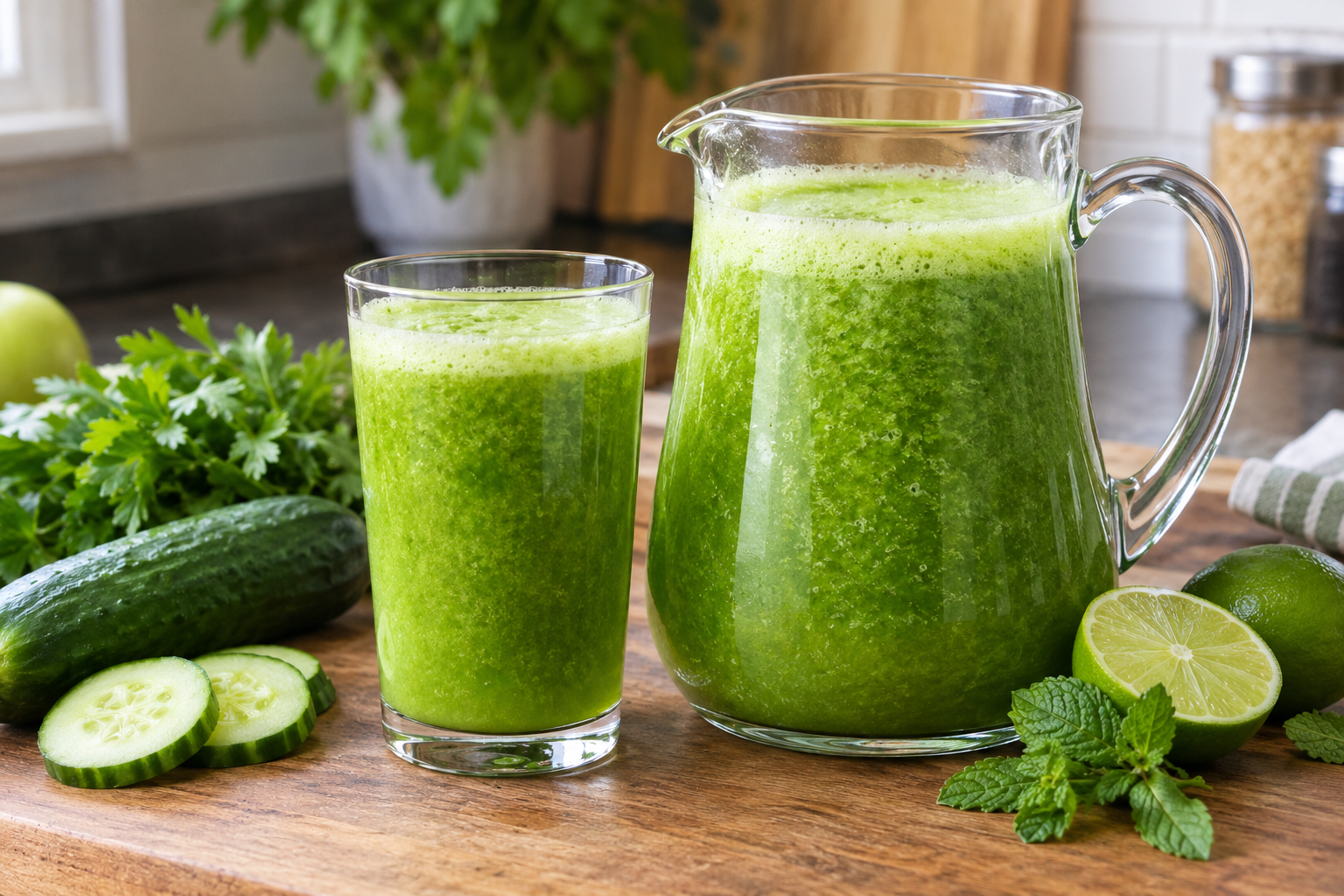
Healthy Fresh Homemade Green Juice
A refreshing homemade green juice prepared with kale, fresh ginger, Granny Smith apple, celery, English cucumber, and parsley. This simple vegetable drink takes approximately 15 minutes to prepare and can be made with a juicer or blender.
2
servings15
minutes92
kcalIngredients
1 bunch kale (about 5 oz)
1-inch piece fresh ginger, peeled
1 Granny Smith apple (or any large apple)
5 celery stalks, ends trimmed
½ large English cucumber
1 handful fresh parsley (about 1 oz)
Directions
- Wash the produce: Rinse the kale, celery, cucumber, apple, and parsley thoroughly under running water. Peel the ginger and trim the celery ends.
- Cut the ingredients: Chop the apple and vegetables into pieces that fit your juicer. If using a blender, cut them into smaller pieces and remove tough kale veins if necessary.
- Juice the ingredients: Feed the kale, ginger, apple, celery, cucumber, and parsley through your juicer according to the appliance’s instructions.
- Blend if you do not have a juicer: Add all the prepared ingredients to a blender and blend on high until smooth. Add a little water only if needed to help the mixture blend.
- Strain if desired: If you prefer a smoother drink, pour the blended mixture through a fine-mesh sieve. Press the pulp gently with the back of a spoon to extract more liquid.
- Serve fresh: Divide the juice between two large glasses or three smaller glasses. Enjoy immediately for the freshest taste.
Notes
- Make-ahead preparation: Wash and cut the produce the night before, then refrigerate it in a tightly covered container.
- Blender option: A blender produces a thicker drink. Keep the pulp for more fiber or strain it for a smoother consistency.
- Variations: Replace kale with spinach, add peeled orange or tangerine, or experiment with basil, cilantro, or a pinch of turmeric powder.
- Storage: Fresh juice is best consumed immediately. If storing, refrigerate promptly in a clean, airtight container and follow your juicer’s storage guidance.
- Dietary considerations: If you have a medical condition or take medication that may interact with dietary changes, consult your healthcare professional before regularly consuming green juice.
Nutrition Facts
2 servings per container
- Amount Per ServingCalories92
- % Daily Value *
- Total Carbohydrate
21g
8%
- Dietary Fiber 6.2g 22%
- Total Sugars 12.5g
- Protein 2.8g 4%
* The % Daily Value tells you how much a nutrient in a serving of food contributes to a daily diet. 2,000 calories a day is used for general nutrition advice.
