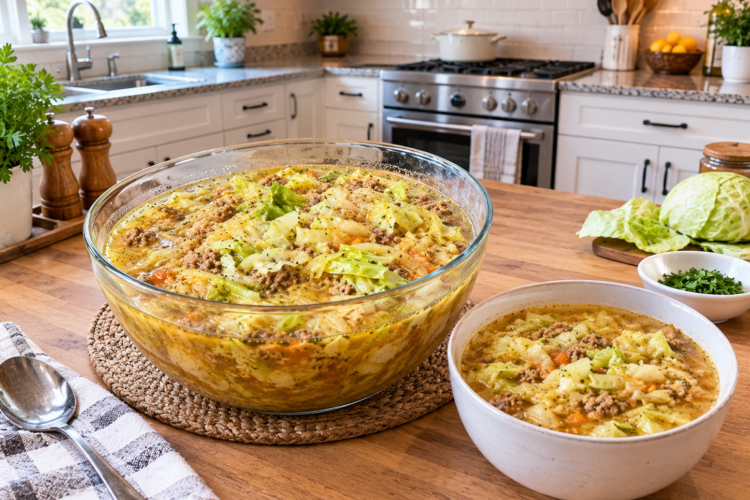
Easy cabbage and ground beef soup is a comforting, flavorful meal made with lean ground beef, tender green cabbage, carrots, celery, tomatoes, and a savory beef broth. This homemade ground beef cabbage soup brings together simple ingredients to create a satisfying dinner that works especially well on chilly evenings, busy weeknights, or whenever you want something warm and filling without spending hours in the kitchen. With its rich tomato-based broth and gentle seasoning, every spoonful delivers a delicious balance of beef, vegetables, and herbs.
One of the best things about this easy cabbage soup recipe is how quickly it comes together. The vegetables soften in olive oil, the ground beef develops a rich savory flavor as it browns, and the broth brings all the ingredients together in one pot. A little dried thyme adds an earthy aroma, while red pepper flakes provide a subtle warmth. Finally, a small amount of red wine vinegar brightens the finished soup, balancing the richness of the beef and tomatoes without making the broth taste sour.
This ground beef and cabbage soup is also a practical option for anyone looking for a simple homemade meal with protein and vegetables in every serving. Unlike recipes that require several pans, complicated preparation, or long cooking times, this soup follows a straightforward method that even beginner cooks can manage. You can prepare it in a Dutch oven or a large soup pot, let it simmer until the cabbage becomes tender, and serve it hot with your favorite side dish or enjoy it on its own.
Why You’ll Love This Ground Beef Cabbage Soup
A Complete Meal in One Pot
Preparing dinner becomes easier when your main protein, vegetables, and broth cook together in a single pot. This cabbage and beef soup includes lean ground beef for protein, cabbage and carrots for vegetables, and tomatoes and beef broth for a flavorful base. Because everything cooks together, the ingredients have time to blend, creating a hearty meal without the need for several separate dishes. Fewer cooking utensils also mean less cleanup after dinner, making this recipe especially useful for busy households.
Ready in About 40 Minutes
When you need a satisfying homemade dinner but have limited time, this easy ground beef soup is an excellent choice. Chopping the vegetables and preparing the other ingredients takes only a short amount of time, and the cooking process is simple enough to follow while getting the rest of your meal ready. The vegetables cook first, followed by the ground beef and seasonings, before the broth and cabbage simmer together. In approximately 40 minutes, you can have a warm pot of soup ready to serve.
Hearty Without Feeling Too Heavy
The combination of beef and cabbage gives this soup a satisfying texture without relying on cream, cheese, or other heavy ingredients. Green cabbage becomes tender and slightly sweet as it simmers, while carrots add a mild sweetness that balances the acidity of the tomatoes. Celery, onion, garlic, and thyme build layers of savory flavor throughout the broth. Using lean ground beef also helps keep excess grease under control while preserving the rich, comforting taste that makes homemade beef soup so appealing.
Excellent for Meal Prep and Leftovers
This soup is a useful addition to a weekly meal-prep routine because it stores well and can be reheated for convenient lunches or dinners. The flavors of the beef, vegetables, herbs, and tomato broth continue to blend as the soup rests, so a bowl served the following day can taste just as satisfying as a freshly cooked portion. Prepare a batch at the beginning of the week, divide it into individual containers, and refrigerate the portions you plan to eat soon. Extra servings can be frozen for later meals.
Easy to Customize
Another advantage of homemade cabbage and ground beef soup is its flexibility. You can adjust the red pepper flakes to suit your preferred spice level, add extra beef broth for a thinner consistency, or use ground turkey when you want a different protein. Green cabbage is the best choice for the intended texture, but Savoy cabbage can also work. These simple adjustments let you adapt the soup to your family’s preferences while keeping the main recipe straightforward and delicious.
Ingredients That Make This Soup Delicious
Lean Ground Beef
Lean ground beef gives the soup its hearty flavor and satisfying texture. As it browns, it develops savory notes that become part of the broth, making the finished dish taste rich without requiring a long simmer. Choosing lean beef helps reduce excess grease, although you can drain any accumulated fat after browning if needed. Breaking the beef into small, bite-sized pieces also makes it easier to distribute evenly throughout the soup, ensuring that each serving contains a good balance of meat and vegetables.
Green Cabbage
Green cabbage is the main vegetable in this recipe and contributes both texture and mild sweetness. As it cooks in the tomato and beef broth, the leaves soften and absorb the surrounding flavors. Cutting the cabbage into pieces approximately one inch across helps it maintain a pleasant texture rather than becoming too small or disappearing into the broth. Cabbage shrinks noticeably during cooking, so the generous quantity used here creates a substantial, chunky soup. Savoy cabbage is another possible choice, although its more delicate leaves may become tender sooner.
Onion, Celery, and Carrots
Onion, celery, and carrots form the aromatic vegetable base that gives the soup depth. Cooking them in olive oil before adding the remaining ingredients allows their natural flavors to develop and helps the onion soften. Carrots bring a gentle sweetness, celery contributes a fresh savory note, and onion provides a familiar foundation for the beef and tomato broth. These vegetables complement the cabbage without overpowering it, making the soup taste balanced and well-rounded.
Garlic and Tomato Paste
Garlic adds a distinctive savory aroma that works particularly well with beef, thyme, and tomatoes. Minced garlic is stirred into the browned beef and softened vegetables near the beginning of the cooking process. Tomato paste is added at the same time and cooked briefly to deepen its flavor. This short cooking step is worthwhile because it helps remove the raw taste of the paste and creates a richer foundation for the broth. Together, garlic and tomato paste give the soup a more developed flavor without requiring additional complicated ingredients.
Fire-Roasted Diced Tomatoes
Fire-roasted diced tomatoes provide acidity, color, and a lightly roasted tomato flavor. Their juices combine with the beef broth to create the soup’s tomato-based liquid, while the tomato pieces add texture throughout the pot. They also help balance the savory taste of the beef and the sweetness of the carrots and cabbage. Using a 15-ounce can makes preparation convenient because the tomatoes are already chopped and ready to add. Stir them in with the broth so their flavor can spread evenly as the soup simmers.
Low-Sodium Beef Broth
Beef broth supplies the main liquid and adds another layer of savory flavor. Low-sodium broth is particularly useful because canned tomatoes and other ingredients can contribute varying amounts of salt. Starting with a lower-sodium option gives you greater control over the final seasoning. Four cups create a thick, chunky soup, especially with the cabbage and other vegetables included. If you prefer a more broth-heavy bowl, you can add a little extra beef broth and adjust the seasoning after the soup has finished cooking.
Thyme, Red Pepper Flakes, and Red Wine Vinegar
Dried thyme provides an earthy herbal flavor that complements both beef and cabbage. Red pepper flakes add gentle heat, although you can increase the amount or leave them out depending on your taste. Red wine vinegar is added at the end rather than during the initial simmer. Its acidity brightens the tomato broth and balances the richness of the meat, creating a more lively flavor. Salt and black pepper complete the seasoning, while chopped fresh parsley offers an optional fresh garnish when serving.
How to Make Easy Cabbage and Ground Beef Soup
Step 1: Prepare the Vegetables
Begin by chopping the onion, celery, and carrots into manageable pieces. Mince the garlic and cut the green cabbage into roughly one-inch chunks. Keeping the cabbage pieces relatively large is helpful because they shrink and soften during simmering. Measure the tomato paste, dried thyme, red pepper flakes, diced tomatoes, and beef broth before you start cooking. Preparing everything in advance makes the process smoother and helps you add the ingredients at the right time without rushing.
Step 2: Soften the Onion, Celery, and Carrots
Heat the olive oil in a large Dutch oven or heavy-bottomed soup pot over medium heat. Add the chopped onion, celery, and carrots, stirring occasionally as they cook for approximately five minutes. The vegetables should begin to soften without becoming deeply browned. This first stage builds the foundation of the soup’s flavor and helps the vegetables release their natural aromas. Keep the heat moderate so the onion does not burn, especially if your pot heats unevenly.
Step 3: Brown the Ground Beef
Move the softened vegetables toward one side of the pot to create space for the ground beef. Add the beef to the exposed area and let it make contact with the hot cooking surface so it can begin browning. Break it into bite-sized pieces with a spoon or spatula and cook for about five to seven minutes, or until the meat is fully cooked. Stir the beef together with the vegetables, and drain excess grease if necessary. Proper browning gives the soup a deeper savory flavor.
Step 4: Add Garlic and Seasonings
Stir in the minced garlic, tomato paste, dried thyme, and red pepper flakes. Cook for approximately one minute, stirring frequently so the garlic does not burn and the tomato paste coats the beef and vegetables. You should notice a fragrant aroma as the ingredients warm together. This brief step helps the herbs and garlic distribute throughout the mixture while allowing the tomato paste to develop a richer flavor. If you prefer a mild soup, omit the red pepper flakes or use the amount specified in the recipe.
Step 5: Add the Tomatoes and Beef Broth
Pour the fire-roasted diced tomatoes and low-sodium beef broth into the pot. Stir well, scraping the bottom gently to loosen any browned bits left behind from cooking the beef. These small pieces contribute extra flavor to the broth. Increase the heat and bring the mixture to a boil. Once the liquid is bubbling, the tomato juices and broth will begin combining with the seasonings, preparing the base for the cabbage. Keep an eye on the pot so the liquid does not boil over.
Step 6: Add the Cabbage and Simmer
Add the chopped green cabbage and stir until the pieces are distributed throughout the soup. Reduce the heat to maintain a gentle simmer, then cook for approximately 15 minutes, or until the cabbage reaches your preferred tenderness. Stir occasionally to help the cabbage cook evenly and remain submerged in the broth. Larger pieces should become tender while retaining enough structure to make the soup feel hearty. If the soup becomes thicker than you prefer, add a little more beef broth during cooking.
Step 7: Finish and Season the Soup
Once the cabbage is tender, remove the pot from the heat and stir in the red wine vinegar. Taste the broth before adding salt and black pepper, since the sodium content of beef broth and canned tomatoes can vary between brands. Adjust the seasoning gradually until the flavors are balanced. The vinegar should brighten the broth rather than dominate it. If desired, sprinkle chopped fresh parsley over the finished soup just before serving to add a fresh color contrast and a light herbal note.
Step 8: Serve While Warm
Ladle the soup into individual bowls, making sure each portion includes ground beef, cabbage, carrots, and plenty of tomato broth. Serve it as a complete meal or pair it with a slice of crusty bread, a simple side salad, or another favorite accompaniment. Because the soup is filling and vegetable-rich, it does not need elaborate sides to make dinner satisfying. For a family meal, place the pot on the table and allow everyone to choose their preferred portion size.
Tips for the Best Ground Beef and Cabbage Soup
Cut the Cabbage Into Generous Pieces
Cabbage loses volume as it cooks, so small pieces can become very soft and blend into the broth. Cutting it into chunks of approximately one inch helps preserve its texture and gives the soup a more substantial appearance. Try to keep the pieces reasonably similar in size so they cook at a similar rate. If you prefer very soft cabbage, you can simmer the soup a little longer, but check the texture periodically to prevent the vegetables from becoming overly mushy.
Brown the Beef in the Same Pot
There is no need to cook the beef in a separate pan. Moving the softened vegetables aside creates enough room for the meat to brown directly in the pot, while the vegetables remain warm and continue contributing flavor. This method saves time and reduces cleanup. Allow the beef to brown before breaking it into smaller pieces, then combine everything thoroughly. If your pot is crowded or the beef releases too much liquid, give it additional time to cook off excess moisture before adding the tomatoes and broth.
Adjust the Amount of Broth
The stated quantity of cabbage creates a thick, chunky soup that contains plenty of solid ingredients in each spoonful. If you prefer a lighter consistency with more liquid, add extra beef broth until it reaches your desired texture. Add it gradually so the soup does not become too diluted. Because additional broth can soften the overall flavor, taste the finished soup again and adjust the salt, pepper, or other seasonings as needed. This small change allows you to make the same recipe suitable for different serving preferences.
Add Vinegar After Cooking
Red wine vinegar may seem like an unusual ingredient in a beef and cabbage soup, but it serves an important purpose. A small amount of acidity balances the richness of the ground beef and the sweetness of the cooked vegetables. Stirring it in after the soup has finished simmering preserves its fresh, bright character. Start with the specified two teaspoons, taste the broth, and avoid adding too much at once. The finished soup should taste savory and balanced, not noticeably vinegary.
Taste Before Adding Salt
Beef broth and canned tomatoes can differ considerably in sodium content, even when their labels look similar. For that reason, it is best to wait until the soup has finished cooking before adding extra salt. Taste a spoonful of broth along with a little beef and cabbage, then adjust the seasoning gradually. Black pepper can add extra depth, while additional red pepper flakes are an option for anyone who likes more heat. Careful final seasoning helps the individual ingredients remain distinct while bringing the whole dish together.
Variations and Ingredient Substitutions
Make It With Ground Turkey
Ground turkey can replace ground beef if you prefer a lighter-tasting alternative or simply want to use what you already have available. Brown the turkey using the same method and cook it thoroughly before adding the tomatoes and broth. The resulting soup will generally have a milder meat flavor, but the thyme, garlic, fire-roasted tomatoes, and red wine vinegar still provide plenty of character. You can keep the beef broth for a deeper savory taste or use chicken broth if that better suits your preference.
Adjust the Spice Level
The quarter teaspoon of red pepper flakes adds a gentle warmth rather than making the soup intensely spicy. For a mild family-friendly version, omit the flakes altogether. If you enjoy a stronger kick, increase the amount slightly and taste the broth before adding more. Adding the spice with the garlic and tomato paste helps distribute its flavor throughout the pot. When serving people with different preferences, keeping the main batch mild and offering extra red pepper flakes at the table is a simple solution.
Create a Brothier Soup
For a soup with more liquid, increase the beef broth by approximately one cup or add a smaller amount at a time until you reach the consistency you like. This works particularly well if you prefer to serve the soup in larger bowls or enjoy drinking the flavorful broth between bites. Remember that a higher broth quantity may require a little additional seasoning. Taste the soup after making the adjustment, and add salt or pepper only as needed.
What to Serve With Cabbage and Ground Beef Soup
This soup is substantial enough to serve on its own, but a simple side can make the meal feel more complete. Crusty bread, toasted sourdough, or warm dinner rolls are useful choices for soaking up the tomato and beef broth. If you prefer something lighter, serve the soup with a fresh green salad dressed with a simple vinaigrette. Steamed vegetables or a small side of roasted potatoes can also work, although the soup already contains several vegetables and provides plenty of texture.
For a convenient lunch, transfer a portion into a heat-safe container and pair it with crackers or a small sandwich. For dinner, serve generous bowls straight from the pot while the broth is hot and fragrant. Optional chopped parsley adds freshness and makes the presentation more appealing without changing the soup’s main flavor. Choose accompaniments based on your appetite and the occasion; the main attraction is the satisfying combination of beef, cabbage, and vegetables in a savory homemade broth.
Is Ground Beef and Cabbage Soup Healthy?
Ground beef and cabbage soup can be a useful way to include protein and vegetables in a balanced meal. Ground beef supplies protein, iron, and other nutrients, while cabbage, carrots, celery, onions, and tomatoes contribute fiber and a range of vitamins and minerals. The soup does not rely on cream or a large quantity of cheese for its texture, and using lean beef and low-sodium broth can help you manage the fat and sodium content of the finished dish.
The nutritional value depends on the exact ingredients, brands, serving size, and preparation method. Canned tomatoes and beef broth can contain added sodium, while the fat content of ground beef varies depending on the cut. Choosing lean beef and checking product labels are practical ways to make informed choices. This soup can fit into many eating patterns, but it should not be considered automatically suitable for every dietary requirement. Anyone following a specific nutrition plan should evaluate the full ingredients and portion size.
How to Store, Refrigerate, and Freeze Leftovers
Refrigerating the Soup
Allow leftover soup to cool briefly, then transfer it to clean, airtight containers and refrigerate promptly. For the best quality, use refrigerated leftovers within three days. Dividing a large batch into smaller containers helps it cool more quickly and makes it easier to reheat only the amount you need. Keep the containers covered to prevent the soup from absorbing other refrigerator odors. When you are ready to eat, reheat a portion on the stovetop over medium-low heat or in the microwave until it is steaming hot throughout.
Freezing for Later Meals
This cabbage and ground beef soup can be frozen for up to three months for convenient future meals. Let the soup cool before placing it in freezer-safe containers, leaving a little space at the top because liquids expand as they freeze. Label each container with the name and date so you can keep track of storage time. When you want to serve it, thaw the soup overnight in the refrigerator and reheat it thoroughly. The cabbage may become softer after freezing and thawing, but the beef and tomato broth should still deliver a satisfying flavor.
Reheating Without Losing Too Much Texture
For the most even results, reheat refrigerated or thawed soup gently in a saucepan, stirring occasionally so the ingredients warm throughout. If the broth has thickened during storage, add a small splash of beef broth or water to loosen it. Microwave reheating also works well for individual portions; use a microwave-safe container and stir partway through heating. Avoid reheating more soup than you need repeatedly, since repeated heating and cooling can affect quality. Always ensure leftovers are heated thoroughly before serving.
Frequently Asked Questions
Can I Use a Different Type of Cabbage?
Green cabbage is the preferred option because it becomes tender during simmering while retaining a pleasant texture. Savoy cabbage can also be used if that is what you have available. Its leaves are generally more delicate, so check the soup earlier to prevent the cabbage from becoming too soft. Whichever type you choose, cut it into reasonably large pieces and adjust the cooking time according to its texture. The flavor will vary slightly, but the tomato broth, beef, and seasonings will still bring the soup together.
Can I Replace Ground Beef With Ground Turkey?
Yes, ground turkey is a practical substitute for ground beef. Cook it thoroughly using the same browning method before adding the garlic, tomato paste, and seasonings. Turkey usually has a milder flavor, so the finished soup may taste less robust than the beef version. Keeping the beef broth helps maintain a savory base, while chicken broth creates a lighter overall flavor. If you use a particularly lean turkey, monitor the pot during browning to prevent the meat from drying out before the broth is added.
How Can I Make the Soup Less Thick?
If you prefer a soup with more broth, add extra beef broth a little at a time until the consistency suits you. The cabbage and other vegetables absorb liquid and make the soup feel chunky, so adding approximately one additional cup is a reasonable starting point. Stir well and taste the broth after adjusting the liquid. You may need a little extra seasoning to maintain the same depth of flavor. Adding broth is easier than trying to thicken the soup later, so adjust gradually rather than pouring in a large amount at once.
Does Red Wine Vinegar Make the Soup Taste Sour?
No, the small amount used in this recipe should not make the soup noticeably sour. Instead, it helps balance the savory beef, sweet vegetables, and acidity of the tomatoes. Adding the vinegar after the soup finishes cooking gives the broth a fresher, brighter taste. If you are unsure about the flavor, start with the specified quantity and taste before adding anything else. The goal is to enhance the other ingredients rather than create a strong vinegar flavor.

Easy Cabbage and Ground Beef Soup
This easy ground beef and cabbage soup features lean ground beef, tender green cabbage, carrots, celery, and fire-roasted tomatoes in a savory beef broth.
6
servings10
minutes30
minutes191
kcal40
minutesIngredients
1 tablespoon olive oil
1 onion, chopped
2 stalks celery, chopped
2 carrots, chopped
1 lb. lean ground beef
4 cloves garlic, minced
2 tablespoons tomato paste
1 teaspoon dried thyme
1/4 teaspoon red pepper flakes, or adjust to taste
15 ounces fire-roasted diced tomatoes
4 cups low-sodium beef broth
5 cups green cabbage, cut into 1-inch chunks
2 teaspoons red wine vinegar
Salt and pepper, to taste
Chopped fresh parsley, for optional garnish
Directions
- Prepare the vegetables: Chop the onion, celery, and carrots. Mince the garlic and cut the green cabbage into approximately 1-inch chunks.
- Cook the vegetables: Heat the olive oil in a large Dutch oven or soup pot over medium heat. Add the onion, celery, and carrots. Cook for about 5 minutes, stirring occasionally, until softened.
- Brown the ground beef: Move the vegetables to one side of the pot. Add the ground beef and allow it to brown. Break it into bite-sized pieces and cook for 5–7 minutes, or until fully cooked. Drain excess grease if necessary.
- Add the seasonings: Stir in the minced garlic, tomato paste, dried thyme, and red pepper flakes. Cook for approximately 1 minute, stirring until fragrant.
- Pour in the broth: Add the fire-roasted diced tomatoes and low-sodium beef broth. Stir everything together, increase the heat, and bring the mixture to a boil.
- Add the cabbage: Stir in the chopped green cabbage until evenly distributed throughout the soup.
- Simmer until tender: Reduce the heat and simmer for approximately 15 minutes, or until the cabbage is tender and the flavors have blended.
- Finish the soup: Remove the pot from the heat and stir in the red wine vinegar. Taste and season with salt and pepper as needed.
- Garnish and serve: Sprinkle with chopped fresh parsley if desired. Ladle into bowls and serve warm.
Notes
- Cut the cabbage into fairly large, approximately 1-inch pieces to help it retain its texture while cooking.
- Lean ground beef provides a rich flavor while helping reduce excess grease.
- Add extra beef broth if you prefer a thinner, brothier soup.
- Stir in the red wine vinegar at the end to balance the richness of the beef and tomatoes.
- Taste the finished soup before adding extra salt because broth and canned tomatoes vary in sodium content.
- Ground turkey can replace ground beef if desired. Green cabbage is preferred, but Savoy cabbage can also be used.
- Store leftovers in an airtight container in the refrigerator for up to 3 days.
- Freeze in freezer-safe containers for up to 3 months. The cabbage may become softer after thawing and reheating.
Nutrition Facts
6 servings per container
- Amount Per ServingCalories191
- % Daily Value *
- Total Fat
6g
8%
- Total Carbohydrate
13g
5%
- Total Sugars 6g
- Protein 21g 42%
* The % Daily Value tells you how much a nutrient in a serving of food contributes to a daily diet. 2,000 calories a day is used for general nutrition advice.
