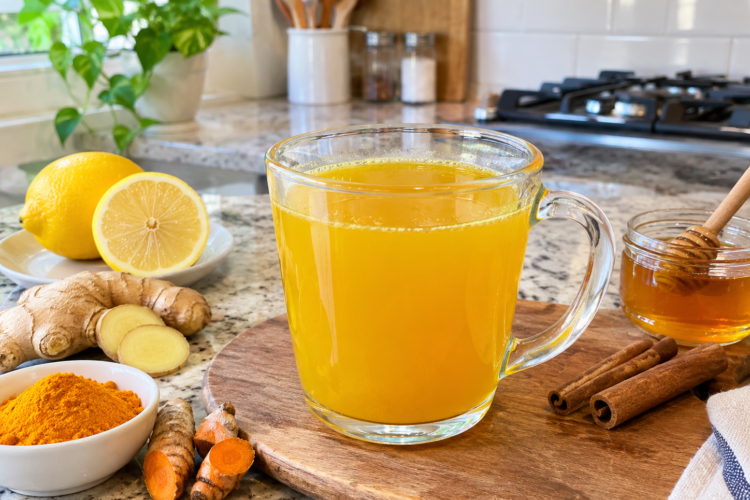
Turmeric, ginger, cinnamon, lemon, and honey tea is a comforting homemade herbal drink made with five simple ingredients and water. This naturally golden beverage combines the earthy flavour of fresh turmeric, the gentle heat of ginger, the warm sweetness of cinnamon, and the refreshing taste of lemon.
A little honey brings everything together, creating a pleasant balance of sweet, spicy, and citrusy flavours. Whether you enjoy it in the morning or as a relaxing evening drink, this easy turmeric ginger tea is a lovely addition to your daily routine.
One of the best things about this turmeric lemon ginger tea recipe is how simple it is to prepare. You do not need special equipment, complicated techniques, or expensive ingredients. Everything simmers together in one pot, allowing the natural flavours and colours of the spices to infuse into the water. After approximately ten minutes, you have a beautiful golden herbal tea that can be enjoyed warm or chilled.
This homemade turmeric tea is naturally caffeine-free, making it a suitable alternative to traditional black tea and coffee when you want something warm without caffeine. It is especially enjoyable during colder weather, when a steaming cup of ginger cinnamon tea can feel comforting. The combination of fresh spices and lemon also gives this drink a refreshing flavour that works throughout the year.
What Makes This Turmeric Ginger Cinnamon Tea Special?
This homemade turmeric tea stands out because of its combination of fresh ingredients and naturally aromatic spices. Instead of relying on packaged tea bags or artificial flavours, the recipe uses fresh turmeric and ginger, a cinnamon stick, fresh lemon juice, and honey. Each ingredient contributes its own taste, colour, and aroma, producing a balanced herbal drink without requiring complicated preparation.
Fresh turmeric gives the tea its distinctive golden-yellow appearance and earthy flavour. Ginger adds a pleasant spicy warmth, while cinnamon brings a naturally sweet and woody aroma. Fresh lemon juice brightens the overall taste, preventing the spices from becoming too heavy. Honey provides a gentle sweetness that softens the sharp citrus flavour and makes every sip more enjoyable.
Another advantage is that you can adjust the strength according to your personal preference. If you enjoy bold flavours, allow the ingredients to simmer for longer or increase the amount of ginger. If you prefer a lighter herbal drink, reduce the simmering time and add a little extra water. This flexibility makes the recipe suitable for different tastes.
Why You Will Love This Homemade Herbal Tea
There are plenty of reasons to make this easy turmeric ginger cinnamon tea at home. First, the preparation is straightforward, and most of the cooking time is hands-off. Once the ingredients are added to the pot, you simply allow them to simmer while their flavours develop. This makes it an excellent option for busy mornings or quiet evenings when you want something homemade without spending much time in the kitchen.
The recipe also uses familiar ingredients that are easy to find in most grocery stores. Fresh ginger, turmeric, cinnamon, lemons, and honey can be kept in a regular kitchen, making it convenient to prepare whenever you want a warm drink. You can also prepare a larger batch and refrigerate the remaining tea for another day.
The flavour is another reason to enjoy this drink. Unlike plain turmeric water, which can taste quite earthy, this recipe combines several ingredients to create a more rounded beverage. Cinnamon adds warmth, ginger provides a little spice, lemon contributes freshness, and honey makes the drink pleasantly sweet.
Finally, this herbal tea is completely caffeine-free when prepared as directed. You can enjoy it as an alternative to caffeinated beverages without adding coffee or traditional tea leaves.
Ingredients for Turmeric, Ginger, Cinnamon, Lemon and Honey Tea
The beauty of this recipe comes from using a small number of ingredients that complement one another. Fresh roots are particularly useful because they provide a natural flavour and allow you to control the strength of the finished drink. Here is a closer look at the ingredients and how each one contributes to the recipe.
Fresh turmeric: Fresh turmeric root gives this herbal tea its rich golden colour and characteristic earthy flavour. You will need approximately ten slices of peeled and sliced turmeric. Fresh turmeric is my preferred choice because ground turmeric can leave a slightly powdery texture in the finished drink. Choose fresh roots that feel firm and look healthy. Turmeric can stain chopping boards, kitchen counters, and clothing, so handle it carefully.
Fresh ginger root: Ginger provides the warming, slightly peppery flavour that makes this tea especially comforting. The recipe uses six to ten slices of peeled and sliced fresh ginger. Add more ginger if you prefer a stronger, spicier drink. For a more intense flavour, you can grate the ginger instead of slicing it, although grated ginger should be strained before serving to remove the small pieces of pulp.
Cinnamon stick: Cinnamon adds a naturally sweet aroma and warm spice flavour. A whole cinnamon stick is ideal because it slowly releases its flavour while the tea simmers. Ceylon cinnamon is a popular choice because it has a delicate, mildly sweet taste. Ground cinnamon can also be used as a substitute, although it may make the finished tea slightly cloudy.
Fresh lemon: Lemon juice balances the earthy and spicy ingredients with its bright citrus flavour. One freshly squeezed lemon is enough to give the tea a refreshing finish. Add the lemon juice after switching off the heat to preserve its fresh taste. If you do not have lemons, lime juice can be used as an alternative.
Water: Water forms the base of the herbal tea and allows all the ingredients to infuse together. Six cups of water are used for this recipe, providing four servings. You can slightly adjust the quantity depending on whether you prefer a concentrated herbal drink or a lighter tea.
Honey: Honey is added at the end to sweeten the drink according to your taste. Its natural sweetness balances the sharpness of lemon and the strong flavours of turmeric and ginger. Manuka honey is one option, but ordinary honey works perfectly well. Maple syrup can also be used as an alternative sweetener.
How to Make Turmeric Ginger Cinnamon Lemon Honey Tea
Making this homemade turmeric tea requires only a saucepan, a knife, and a few minutes of preparation. The key is allowing the fresh roots and cinnamon to simmer gently so their flavours can develop. Lemon juice and honey are added after cooking to give the finished drink a fresh, balanced taste.
Prepare the Fresh Turmeric and Ginger
Begin by washing the fresh turmeric and ginger roots under running water to remove any dirt or residue. Use the back of a small spoon to gently scrape away the skin if necessary. This method is convenient because it removes only a thin layer and makes it easier to work around the uneven shapes of fresh roots.
Slice the turmeric and ginger into reasonably thin pieces. There is no need to make every slice exactly the same size, but thinner slices generally release their flavour more quickly. Keep the turmeric separate from light-coloured surfaces as its bright natural pigment can leave stubborn stains.
Prepare the Cinnamon Stick
Rinse the cinnamon stick carefully before using it. Small amounts of dust or dirt can sometimes become trapped in its natural folds, so a quick wash helps keep the ingredients clean. If your cinnamon stick is particularly long, you can break it into smaller pieces to make it easier to fit inside the saucepan.
Whole cinnamon is useful for infusing herbal drinks because it gradually releases its aroma into the water. If you are using cinnamon powder instead, remember that the finished tea may have a slightly different texture.
Combine the Ingredients in a Saucepan
Place the sliced turmeric, ginger, and cinnamon stick into a medium-sized saucepan. Pour in the six cups of water and give everything a gentle stir. Make sure the ingredients are covered with water so they can infuse evenly as the mixture heats.
Place the saucepan over medium-high heat and bring the mixture to a boil. Once the water begins bubbling, reduce the heat to low and allow it to simmer gently. Avoid keeping the mixture at a vigorous boil for the entire cooking time because gentle simmering is sufficient to extract the flavours.
Simmer Until the Tea Develops Its Golden Colour
Allow the mixture to simmer for approximately ten minutes. During this time, the turmeric will release its beautiful golden colour, while ginger and cinnamon will contribute their warm, aromatic flavours. The longer the ingredients simmer, the more concentrated the drink will become.
Taste a small amount after ten minutes to decide whether the flavour is strong enough. If you prefer a richer and spicier herbal tea, continue simmering for another ten to twenty minutes. The total simmering time can range from ten to thirty minutes, depending on your preferred strength and how much time you have available.
Add Fresh Lemon Juice
Once the tea has reached your preferred flavour and colour, switch off the heat. Squeeze the juice from one fresh lemon and stir it into the warm turmeric and ginger infusion. Adding lemon after cooking helps maintain its fresh citrus flavour and gives the drink a pleasant finishing touch.
Make sure you remove any lemon seeds before adding the juice. If you prefer a milder citrus flavour, start with a smaller quantity and adjust according to taste. The lemon should complement the spices rather than overpower them.
Sweeten with Honey and Serve
Allow the tea to cool slightly before stirring in the honey. Add enough to achieve your preferred level of sweetness, mixing until it dissolves completely. Honey is easier to incorporate when the drink is warm rather than extremely hot.
Pour the finished turmeric ginger cinnamon lemon honey tea into cups. You can strain the liquid if you prefer a smooth drink without pieces of ginger, turmeric, or cinnamon. Serve immediately while warm, or allow it to cool and refrigerate it for a refreshing chilled herbal beverage.
Tips for Making the Best Turmeric Ginger Tea
A few simple preparation techniques can make a noticeable difference in the flavour and appearance of your homemade herbal tea. Choosing fresh ingredients, controlling the simmering time, and adding the finishing ingredients at the right moment will help you achieve a balanced drink every time.
Use fresh turmeric and ginger: Fresh roots generally provide a pleasant natural flavour and texture. Although powdered spices are convenient substitutes, they can leave sediment at the bottom of your cup. If you use ground turmeric or ginger, stir carefully and strain the tea before serving if needed.
Peel the roots with a spoon: The back of a teaspoon is an effective tool for removing the thin skin from fresh turmeric and ginger. It works particularly well around the small bumps and uneven surfaces of the roots, reducing unnecessary waste.
Adjust the ginger according to taste: For a mild drink, use six slices of ginger. If you enjoy a stronger spicy flavour, increase the amount to ten slices or grate the ginger before simmering. Remember that grated ginger releases more flavour and will need straining for a smoother result.
Choose good-quality cinnamon: Ceylon cinnamon is a suitable choice for regular preparation because it contains less coumarin than cassia cinnamon. Cassia is sometimes sold simply as cinnamon, so check the packaging if you specifically want Ceylon cinnamon.
Add honey after cooking: Stirring honey into slightly cooled tea makes it easier to control the sweetness. You can also use maple syrup if you prefer a plant-based sweetener.
Avoid turmeric stains: Fresh turmeric has a strong natural pigment that can stain kitchen surfaces, utensils, and fabrics. Use a suitable cutting board and clean your work area promptly after preparing the roots.
How to Get More Juice from Fresh Lemons
Fresh lemon juice gives this herbal tea its refreshing citrus finish, so getting the most juice from your lemon can help reduce waste. Before cutting the lemon, bring it to room temperature if it has been refrigerated. A cold lemon can be slightly harder to squeeze, particularly when it is firm.
Place the lemon on a clean countertop and roll it gently under your palm while applying light pressure. This helps loosen the internal juice sacs, making it easier to extract the juice. Cut the lemon in half and squeeze each side using a citrus juicer or your hands.
Remove any seeds before adding the juice to your saucepan. If you enjoy a more noticeable lemon flavour, you can add a little extra juice after tasting the tea.
Health and Wellness Benefits of the Ingredients
Turmeric, ginger, cinnamon, lemon, and honey are widely used in traditional cooking and homemade beverages. Each ingredient contributes different plant compounds, nutrients, or natural flavours. Their combination makes this tea a pleasant way to enjoy several familiar kitchen ingredients in one caffeine-free drink.
Turmeric: Turmeric contains curcumin, a naturally occurring compound that has been studied for its antioxidant and anti-inflammatory properties. However, the amount of curcumin in a homemade tea can vary considerably, and this drink should not be considered a treatment for inflammation or other medical conditions.
Ginger: Ginger contains naturally occurring compounds called gingerols and is commonly used in food and drinks. Some research suggests that ginger may help with certain types of nausea and digestive discomfort. However, individual responses differ, and people with sensitive digestion may experience heartburn or stomach irritation.
Cinnamon: Cinnamon contains aromatic plant compounds that contribute to its distinctive flavour. It has been studied for several potential health effects, including its relationship with blood sugar metabolism. However, drinking cinnamon tea does not replace medical treatment or a balanced diet.
Lemon: Lemon provides vitamin C, which contributes to normal immune system function and helps protect cells from oxidative stress. It also adds refreshing acidity and helps balance the earthy taste of turmeric and ginger.
Honey: Honey is a natural sweetener that contains small amounts of plant compounds. It gives the tea a smooth sweetness and can make the flavour more enjoyable. However, honey is still a source of sugar, so it is best used in moderation.
When to Enjoy This Caffeine-Free Herbal Tea
One of the advantages of this homemade turmeric ginger tea is that it does not contain traditional tea leaves or coffee. This makes it a convenient option for people who want a warm drink without adding caffeine to their routine.
In the morning, a cup of this golden herbal tea can be a refreshing alternative to regular tea. Its combination of ginger, lemon, and cinnamon creates a lively flavour that works particularly well alongside breakfast. You can serve it with toast, oatmeal, eggs, or other light morning meals.
During colder months, the tea is especially enjoyable when served warm. The spicy aroma of ginger and cinnamon creates a comforting drinking experience, making it a lovely choice for a quiet afternoon or evening. You can also prepare it ahead of time and enjoy it chilled during warmer weather.
How to Store Turmeric Ginger Cinnamon Tea
If you prepare more tea than you need, allow the remaining liquid to cool before transferring it to a clean, airtight container. Store the container in the refrigerator and keep the tea chilled for up to two days.
You can enjoy the refrigerated tea cold or reheat a portion in a small saucepan whenever you want a warm drink. Heat it gently rather than bringing it to a prolonged boil. If you prefer, strain out the remaining spice pieces before storing to keep the liquid smooth.
Always use a clean spoon when removing tea from the container. Discard any remaining drink if it develops an unusual smell, appearance, or taste.
Possible Side Effects and Precautions
Although the ingredients in this recipe are commonly used in everyday cooking, natural ingredients can still cause unwanted reactions in some people. Consuming large quantities of concentrated ginger, turmeric, or cinnamon may cause digestive discomfort, including heartburn, nausea, or diarrhoea.
People who take blood-thinning medication, including warfarin, or medicines that affect blood sugar should speak with a healthcare professional before regularly consuming concentrated herbal preparations. Turmeric and ginger may interact with certain medications, while cinnamon supplements and large amounts of cinnamon may also present concerns.
Pregnant or breastfeeding individuals, people with gallbladder problems, and anyone managing a long-term medical condition should seek appropriate medical advice before making concentrated herbal drinks a regular habit. This recipe is intended as a beverage, not as a replacement for prescribed medication or professional medical care.
Frequently Asked Questions
Can I use turmeric powder instead of fresh turmeric?
Yes, ground turmeric can be used if fresh turmeric is unavailable. However, the finished tea may have a slightly powdery texture and a different flavour. Start with a modest quantity and adjust according to taste. Straining the drink before serving can help remove some of the remaining particles.
Can I use ground ginger instead of fresh ginger?
Yes, dried ginger powder is a convenient substitute for fresh ginger root. Since powdered ginger has a concentrated flavour, add it gradually and taste the tea before adding more. Keep in mind that ground ginger may make the liquid slightly cloudy.
Is Ceylon cinnamon better than cassia cinnamon?
Ceylon cinnamon is generally preferred for frequent use because it contains significantly less coumarin than cassia cinnamon. High coumarin intake may be harmful to the liver in susceptible individuals. Both varieties can provide a pleasant cinnamon flavour, but Ceylon is a sensible choice when you plan to use cinnamon regularly.
Can I drink turmeric ginger lemon tea every day?
This tea can be enjoyed as part of a varied and balanced diet, provided the ingredients are suitable for you. However, there is no established requirement to drink it daily, and larger quantities do not necessarily provide additional benefits. If you take medication or have an existing medical condition, consult your healthcare professional before making it a daily habit.
Can I drink this tea before bedtime?
Yes. The recipe is naturally caffeine-free, so it can be enjoyed in the evening without the caffeine found in regular tea or coffee. Its warm temperature and pleasant aroma make it a comforting evening beverage. If lemon causes acidity or reflux for you, consider reducing the amount or enjoying the drink earlier in the day.
Can I drink this turmeric tea cold?
Absolutely. Allow the tea to cool completely, transfer it to an airtight container, and refrigerate it. It can be served chilled straight from the refrigerator. You can also add ice if you prefer a colder and more refreshing drink.
How long should I boil turmeric and ginger tea?
For this recipe, ten minutes of gentle simmering is a good starting point. If you want a stronger flavour and deeper colour, continue simmering for up to thirty minutes. The ideal time depends on how concentrated you like your herbal tea.
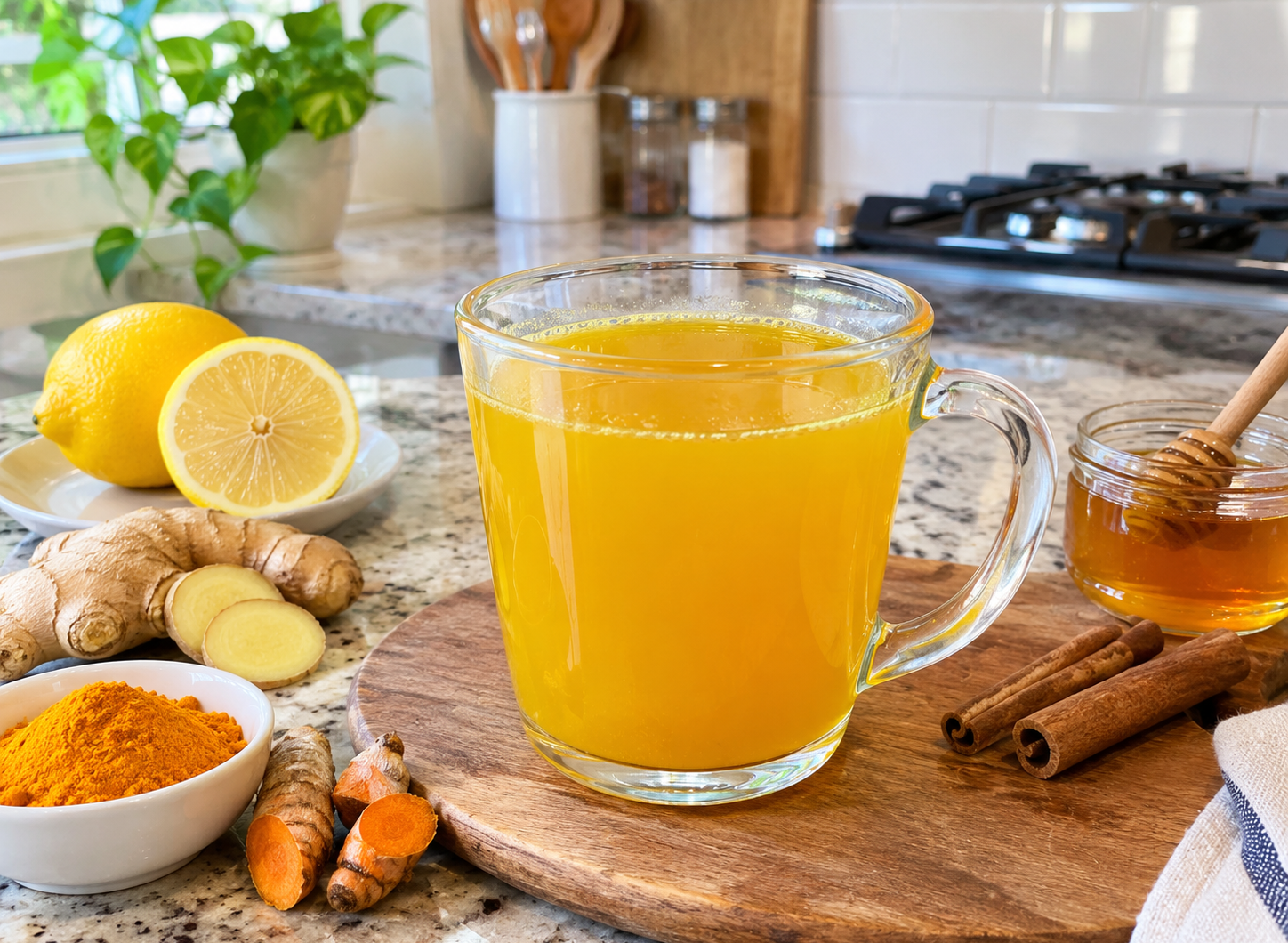
Turmeric, Ginger, Cinnamon, Lemon & Honey Tea Recipe
A naturally golden, caffeine-free herbal tea made with fresh turmeric, ginger, cinnamon, lemon, and honey.
4
servings3
minutes10
minutes34
kcal13
minutesIngredients
10 slices fresh turmeric, peeled and sliced (turmeric powder can be substituted).
6–10 slices fresh ginger, peeled and sliced (dried ginger powder can be substituted).
1 cinnamon stick (cinnamon powder can be substituted).
1 fresh lemon, juiced (lime juice can be substituted).
6 cups water.
Honey, to taste (Manuka honey is suggested; white or brown sugar can be substituted).
Directions
- Prepare the roots: Wash the fresh turmeric and ginger. Peel if desired, then cut both into slices.
- Prepare the cinnamon: Wash the cinnamon stick thoroughly to remove any dirt trapped in its folds.
- Combine the ingredients: Add the sliced turmeric, ginger, cinnamon stick, and six cups of water to a saucepan. Do not add the lemon juice or honey yet.
- Bring to a boil: Place the saucepan over medium-high heat and bring the mixture to a boil.
- Simmer gently: Reduce the heat and simmer for approximately 10 minutes. Taste the tea and continue simmering for up to 30 minutes if you prefer a stronger flavour.
- Add lemon juice: Switch off the heat and stir in the freshly squeezed lemon juice.
- Sweeten the tea: Add honey according to your preferred sweetness and stir until dissolved.
- Serve: Strain into cups if desired and enjoy warm, or cool and refrigerate for a refreshing cold drink.
Notes
- Use the back of a spoon to peel fresh turmeric and ginger easily while reducing waste.
- For a stronger ginger flavour, grate the ginger instead of slicing it. Strain the tea before serving to remove the pulp.
- Fresh turmeric can stain kitchen surfaces and clothing, so handle it carefully.
- Ceylon cinnamon is recommended instead of cassia cinnamon, particularly for regular consumption.
- Roll lemons gently on the countertop before squeezing to help release more juice.
- Store leftover tea in an airtight container in the refrigerator for up to two days.
- Enjoy the tea chilled or gently reheated.
- Use honey according to taste and stir it in after the tea has cooled slightly.
Nutrition Facts
4 servings per container
- Amount Per ServingCalories34
- % Daily Value *
- Total Fat
1g
2%
- Total Carbohydrate
8g
3%
- Total Sugars 2g
- Protein 1g 2%
* The % Daily Value tells you how much a nutrient in a serving of food contributes to a daily diet. 2,000 calories a day is used for general nutrition advice.
