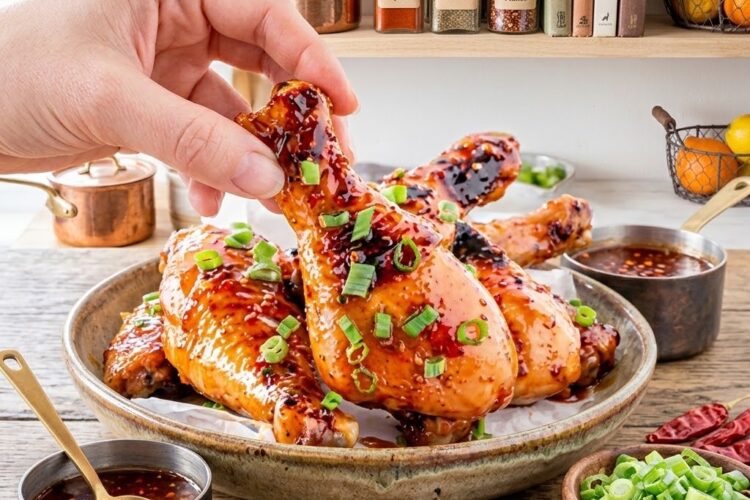
Honey Glazed Chicken is a simple and flavorful chicken dinner that combines tender baked chicken with a rich, sticky, sweet-and-savory glaze. Made with honey, soy sauce, pineapple juice or orange juice, garlic, and ginger, this recipe creates a balanced flavor that is both comforting and satisfying. The chicken is marinated first, then baked until fully cooked, and finally coated with a thick glossy glaze.
A short broiling step gives the chicken a caramelized finish that makes it especially delicious. This easy chicken recipe works well for busy weeknights, family dinners, or special meals when you want something impressive without complicated preparation.
One of the best things about Honey Glazed Chicken is the way simple ingredients work together to create a bold homemade sauce. Honey adds sweetness and helps produce the sticky texture that gives the recipe its name. Soy sauce brings a savory and slightly salty flavor, while garlic and ginger add warmth and depth. Pineapple juice or orange juice provides a subtle fruity taste that brightens the glaze. Together, these ingredients create a delicious combination that coats the chicken beautifully and turns an ordinary chicken dinner into a flavorful main dish.
This Honey Chicken Recipe
Easy to Prepare
This Honey Glazed Chicken recipe does not require difficult cooking techniques or a long list of ingredients. The marinade comes together quickly by whisking a few ingredients in a bowl. Half of the mixture is used to marinate the chicken, while the other half is reserved for making the final glaze. After the chicken has absorbed the flavors, it is baked in the oven while the reserved sauce is simmered. This simple process makes the recipe easy to manage, even for home cooks who want a delicious dinner without spending hours in the kitchen.
The preparation is also practical because the glaze can be made while the chicken is baking. There is no need to prepare several different sauces or use complicated equipment. Once the chicken is fully cooked, the thickened honey glaze is brushed over the surface. The chicken then spends only a few minutes under the broiler, giving it a sticky and shiny finish. This makes the recipe efficient and helps ensure that the chicken and glaze are ready to serve at nearly the same time.
Perfect for a Family Dinner
Honey Glazed Chicken is a versatile main dish that can easily be served as part of a complete family meal. The sweet and savory flavor pairs well with many simple side dishes, including rice, vegetables, salad, or your preferred grain. Because the glaze has a balanced flavor, the chicken can be paired with both mild and more flavorful sides without becoming overwhelming. It is an easy recipe to include in a regular dinner rotation when you want something different from plain baked chicken.
The finished chicken also looks attractive on the dinner table because of its glossy caramelized glaze. Optional green onions and sesame seeds can add a simple finishing touch before serving. Although the presentation is appealing enough for a special occasion, the method remains easy enough for a regular weeknight meal. This combination of simple preparation and great flavor makes the recipe useful for many different occasions.
The Secret to the Honey Glaze
Sweet, Savory, and Full of Flavor
The signature flavor of this dish comes from the combination of honey and soy sauce. Honey provides the sweetness that makes the glaze rich and sticky, while soy sauce creates an important savory balance. The two ingredients work together especially well because neither one completely overpowers the other. The result is a glaze with a deeper and more satisfying flavor than a simple sweet sauce.
Garlic and ginger add additional layers of flavor to the honey glaze. Garlic provides a familiar savory aroma, while ginger contributes gentle warmth. Pineapple juice or orange juice adds a light fruity element that helps bring all the ingredients together. As the sauce simmers, these flavors become more concentrated and develop into a rich glaze that is perfect for brushing over the baked chicken.
Honey Creates the Sticky Finish
Honey is responsible for much of the beautiful appearance of the finished chicken. When the glaze is heated, the honey helps create a glossy coating that clings to the chicken. During the final broiling step, it becomes lightly caramelized and sticky, giving the dish its classic Honey Glazed Chicken appearance. The glaze should look rich and shiny rather than dry or overly thick.
Because honey contains natural sugars, it can darken quickly under high heat. For this reason, the broiling stage only takes a few minutes. The chicken should be watched carefully during this step to prevent the glaze from burning. When done correctly, the honey coating becomes beautifully sticky while the chicken remains tender and juicy underneath.
How to Prepare the Marinade
Combine the Ingredients
Start by whisking together the honey, soy sauce, pineapple juice or orange juice, garlic, and ginger until everything is well combined. The mixture should have an even consistency and allow the honey to blend smoothly with the other ingredients. Once prepared, divide the marinade into two portions before adding any chicken.
One half of the mixture is used to marinate the chicken, while the remaining half is kept in the refrigerator. The reserved portion will later be cooked in a saucepan to make the finishing glaze. Separating the mixture at this stage keeps the preparation simple and ensures that there is a clean portion available for the sauce.
Marinate for Maximum Flavor
Place the chicken in a large bowl or ziploc bag and pour half of the marinade over it. Massage the sauce into the chicken so that all pieces are evenly coated. Cover the bowl or seal the bag after removing as much air as possible. Refrigerate for two to three hours, turning the chicken occasionally when practical.
The recommended marinating time should not be extended. Two to three hours is enough to allow the flavors to develop without affecting the texture of the chicken unnecessarily. The fruit juice in the marinade adds a light acidic element, so keeping within the suggested time helps achieve the best balance. The chicken will absorb the sweet and savory flavors and be ready for baking.
Baking the Chicken
Prepare the Oven
When the chicken has finished marinating, preheat the oven to 425°F. Line a large baking sheet with parchment paper or aluminum foil to make cleanup easier. Arrange the chicken on the prepared pan, allowing enough space between the pieces for the heat to circulate properly.
Bake the chicken for approximately 20 to 25 minutes, flipping it halfway through the cooking time. This helps both sides cook evenly. The exact cooking time can vary depending on the size and type of chicken, so checking the internal temperature is the most reliable method for determining when it is ready.
Check for the Correct Internal Temperature
The chicken should reach an internal temperature of 165°F before serving. A meat thermometer is helpful because it prevents both undercooking and unnecessary overbaking. Insert the thermometer into the thickest part of the chicken, avoiding the bone when possible, to get an accurate reading.
Avoid overbaking because excessive cooking can cause chicken to become dry. Once it reaches 165°F, it is ready for the glaze and final broiling step. Following the correct temperature rather than depending only on the suggested cooking time is especially important if you choose to use a different cut of chicken.
Making the Sticky Honey Glaze
Simmer the Reserved Marinade
While the chicken is baking, transfer the reserved half of the marinade to a medium saucepan. Bring it to a simmer over medium heat and allow it to cook for approximately 10 minutes. During this time, the sauce begins to reduce and the flavors become more concentrated.
The honey, soy sauce, juice, garlic, and ginger develop into a richer sauce as it simmers. Stir occasionally to promote even heating. This process helps transform the thin marinade into a more flavorful glaze that will coat the chicken and provide its sweet, sticky finish.
Thicken with Cornstarch
To give the glaze the right consistency, whisk the cornstarch with 1 tablespoon of the hot marinade in a small bowl. Mix until the cornstarch is dissolved and the slurry is smooth. Adding the cornstarch this way helps prevent lumps from forming in the sauce.
Whisk the slurry into the simmering glaze and continue cooking for one more minute. The sauce should become thicker and develop a glossy appearance. Remove it from the heat once it reaches a consistency that can easily coat the chicken without being too thin.
Broil for a Shiny Caramelized Finish
Brush on the Glaze
Once the chicken has finished baking, generously brush the thickened honey glaze over every piece. The warm sauce should create a rich coating that covers the surface of the chicken. This is where the sweet and savory flavor becomes most noticeable and gives the dish its characteristic appearance.
Make sure the chicken is well coated before placing it under the broiler. The glaze will become even more attractive as the honey is exposed to high heat. A generous coating helps create a sticky finish and ensures that the flavor reaches every bite.
Broil Briefly
Broil the glazed chicken for approximately two to three minutes. The purpose of this step is to make the glaze shiny, sticky, and lightly caramelized. Since honey can burn quickly, keep a close eye on the chicken throughout the broiling process.
Remove the chicken when the glaze looks glossy and slightly caramelized. Serve immediately for the best texture and flavor. If desired, garnish with sliced green onions and sesame seeds. These optional additions provide color and a pleasant finishing touch.
Serving Suggestions
Honey Glazed Chicken pairs especially well with rice because the simple flavor of rice balances the sweet and savory sauce. The extra glaze can also be enjoyed with the rice, making the entire meal more flavorful. Steamed vegetables or roasted vegetables are another excellent choice.
A fresh salad can provide a lighter contrast to the rich glaze, while your preferred grain or side dish can turn the recipe into a complete dinner. The chicken is versatile enough to work with many different accompaniments, so it can easily be adapted to your family’s meal preferences.
Variations to Try
Add Some Heat
For a spicy version, add red pepper flakes or cayenne pepper to the glaze. This creates a sweet and spicy flavor that contrasts nicely with the honey. Start with a small amount and adjust according to your preferred heat level.
Sriracha or hot honey can also be drizzled over the finished chicken. Adding spice at the end makes it easy to customize the dish without changing the rest of the recipe. This variation is ideal for anyone who enjoys a stronger, hotter flavor.
Use a Different Sweetener
Honey can be substituted with maple syrup, agave, or brown sugar if necessary. Each alternative will change the flavor of the finished chicken. Maple syrup adds its own distinct sweetness, agave creates a different flavor profile, and brown sugar can provide a deeper caramel-like taste.
Although these substitutions work, honey gives the recipe its traditional flavor and sticky texture. If another sweetener is used, the finished glaze may look and taste different, but the same basic cooking method can still be followed.
Try Another Cut of Chicken
Chicken thighs, chicken breasts, or chicken wings can be used instead of drumsticks. Different cuts will require different cooking times, so always check that the chicken reaches 165°F before serving.
Chicken thighs may produce a juicy result, while chicken breasts offer another popular option. Chicken wings can also be used for a smaller serving style. Regardless of the cut, the honey glaze remains a delicious finishing sauce.
Alternate Cooking Methods
Grilled Honey Glazed Chicken
The chicken can be grilled over medium-high heat instead of baked. Turn the pieces occasionally and cook until they reach an internal temperature of 165°F. Brush the glaze over the chicken during the final minutes of grilling.
Adding the glaze near the end helps prevent the honey from burning over direct heat. Grilling also adds a light smoky flavor that works well with the sweet and savory sauce.
Air Fryer Honey Glazed Chicken
For the air fryer method, cook the chicken in a preheated air fryer at 380°F for 20 to 25 minutes, flipping it halfway through. Check the internal temperature to ensure it reaches 165°F.
Coat the cooked chicken with the prepared glaze and serve immediately, or return it to the air fryer for a few minutes to help the glaze set. This is a convenient alternative to oven baking.
Notes for Storage and Reheating
Allow leftover chicken to cool before transferring it to an airtight container. Refrigerate for up to three days. Proper storage helps preserve the flavor and texture for another meal.
To reheat, gently warm the chicken in the oven or microwave. Avoid overheating, as this can dry out the chicken. Reheat only until warmed through so the meat remains tender and the honey glaze retains its rich flavor.
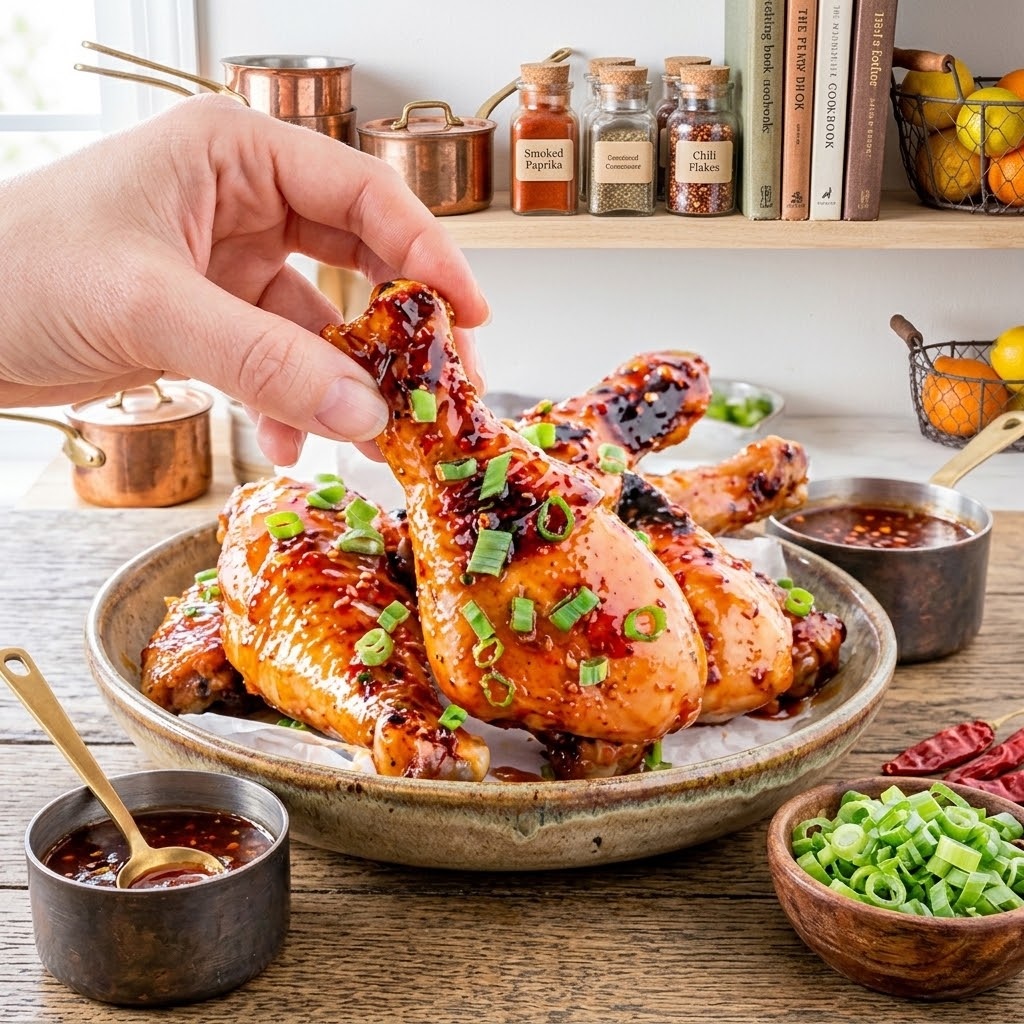
Honey Glazed Chicken
Juicy, tender chicken coated in a rich and sticky honey glaze made with soy sauce, pineapple juice or orange juice, garlic, and ginger.
6
servings10
minutes25
minutes467
kcal120
minutes2
hours35
minutesIngredients
- For the Honey Glazed Chicken:
⅔ cup honey
½ cup soy sauce
⅓ cup pineapple juice or orange juice
2 to 3 cloves garlic, minced (or 1 teaspoon garlic powder)
1½ teaspoons ground ginger or 1 to 2 tablespoons fresh, minced ginger
2 pounds chicken, I used drumsticks
1 tablespoon cornstarch
- Optional Garnish:
green onions
sesame seeds
Directions
- In a small bowl, whisk together the honey, soy sauce, pineapple juice or orange juice, minced garlic, and ground ginger until thoroughly combined. Divide the mixture into two equal portions. Use one portion for marinating the chicken and keep the remaining portion refrigerated for the glaze.
- Place the chicken in a large bowl or a ziploc bag. Pour half of the prepared marinade over the chicken and massage the mixture into all pieces. Cover the bowl or seal the bag after removing as much air as possible. Refrigerate for 2 to 3 hours, turning the chicken occasionally. Do not marinate longer than recommended. Keep the remaining marinade refrigerated.
- Preheat the oven to 425°F. Line a large baking sheet with parchment paper or aluminum foil. Arrange the marinated chicken on the prepared baking sheet.
- Bake for 20 to 25 minutes, flipping the chicken halfway through. Continue cooking until the thickest part reaches an internal temperature of 165°F.
- While the chicken bakes, transfer the remaining marinade to a medium saucepan. Bring it to a simmer over medium heat and cook for approximately 10 minutes, allowing it to reduce and thicken.
- Place the cornstarch in a small bowl and whisk it with 1 tablespoon of the hot marinade until smooth and fully dissolved.
- Whisk the cornstarch slurry into the simmering marinade. Cook for one additional minute until the glaze becomes thicker and glossy. Remove from the heat.
- Brush the thickened glaze generously over the cooked chicken. Place the chicken under the broiler for 2 to 3 minutes until the coating is shiny, sticky, and lightly caramelized. Watch carefully to prevent burning.
- Remove the chicken from the oven and serve immediately. Garnish with green onions and sesame seeds if desired.
Notes
- Storage: Allow leftover chicken to cool, then store it in an airtight container in the refrigerator for up to 3 days.
- Reheating: Warm gently in the oven or microwave until heated through. Avoid overheating because additional cooking can dry out the chicken.
- Flavor Variations: Add red pepper flakes or cayenne pepper for heat. Sriracha or hot honey may also be drizzled over the finished chicken.
- Sweetener Options: Honey can be substituted with maple syrup, agave, or brown sugar, although the flavor of the finished chicken will change.
- Different Chicken Cuts: Chicken thighs, chicken breasts, or chicken wings may be used, but cooking times will vary. Always cook the chicken until it reaches an internal temperature of 165°F.
- Grill Method: Cook over medium-high heat, turning occasionally, until the chicken reaches 165°F. Brush with the glaze during the final few minutes.
- Air Fryer Method: Cook in a preheated air fryer at 380°F for 20 to 25 minutes, flipping halfway through. Confirm that the chicken reaches 165°F, then coat with the glaze and serve, or return it to the air fryer briefly to set the glaze.
Nutrition Facts
- Calories: 467kcal
- Fat: 23g
- Carbohydrates: 36g
- Fiber: 0.4g
- Sugar: 33g
- Protein: 30g
