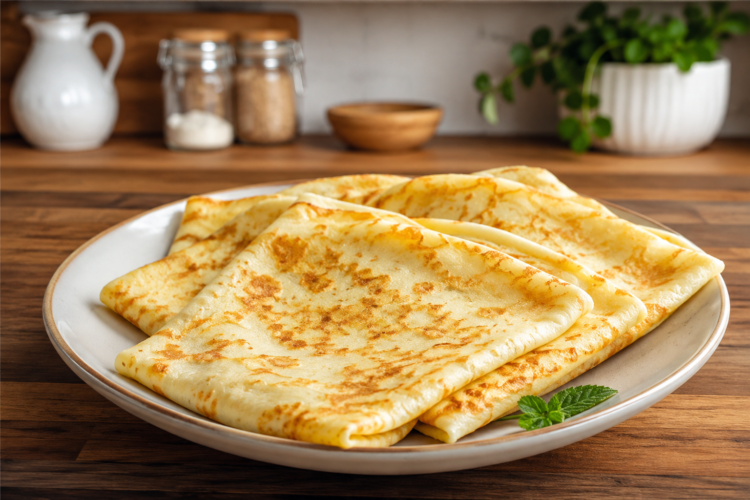
These keto crepes are a simple and flexible option for anyone looking for a low carb breakfast, light lunch, snack, or even a sugar-free dessert base. Soft, thin, and pliable, they can be filled with either sweet or savoury ingredients depending on what you are in the mood for. Unlike traditional crepes, which are usually made with wheat flour, these low carb crepes are grain-free and gluten-free.
The recipe uses eggs, egg whites, cream cheese, and psyllium husk to create a smooth batter that cooks into thin crepes without relying on regular flour. With a quick preparation time and only a few basic ingredients, this is an easy keto recipe to keep on hand when you want something different from the usual eggs and bacon breakfast.
One of the best things about this keto crepe recipe is how versatile it is. A batch can be served with a sweet filling for breakfast or dessert, or paired with cheese, vegetables, chicken, or another savoury filling for a satisfying low carb meal. The crepes have a neutral enough flavour to work with many different ingredients, making them useful for meal planning. They can also be prepared ahead of time and stored in the refrigerator or freezer, which is especially helpful for busy mornings. If you follow a ketogenic diet, gluten-free diet, or simply want to reduce your carbohydrate intake, these homemade crepes provide a practical alternative to flour-based versions.
Why These Low Carb Crepes Work So Well
Traditional crepes depend on flour to give the batter structure and help create their familiar thin texture. Making keto crepes without regular flour requires a different combination of ingredients, and this recipe uses eggs, cream cheese, and psyllium husk to achieve that result. Eggs form the main structure of the crepe, while the cream cheese contributes richness and helps create a softer texture. Psyllium husk absorbs moisture and gives the batter additional body, helping the finished crepes remain flexible enough to fold, roll, or fill without easily falling apart.
The batter is naturally thin and liquid after blending, which may seem unusual if you are expecting a thicker pancake-style mixture. However, this loose consistency is important because it allows the batter to spread easily across the surface of the pan. When the pan is gently tilted or the batter is swirled around, it forms a thin and even layer. Cooking the crepes over medium heat gives them enough time to set before they are turned. Once cooked, they should have a light golden surface and a soft, flexible texture that makes them suitable for many keto-friendly fillings.
A Quick Keto Breakfast for Busy Mornings
Finding an easy low carb breakfast that does not feel repetitive can sometimes be difficult. Eggs are a common part of many keto meal plans, but eating them prepared the same way every day can become boring. These keto breakfast crepes offer a simple way to use eggs in a completely different form. The recipe takes only a few minutes to prepare, and the cooking process is straightforward once the pan is properly heated. Because the ingredient list is short, there is also very little preparation involved before you begin.
The finished crepes can be served immediately, making them a convenient choice for mornings when you do not have much time. They can also be made in advance and stored for later use. This means you can prepare a larger batch, separate the crepes with parchment paper, and keep them ready for quick meals throughout the week. Simply choose your preferred filling and gently warm the crepes before serving. Whether you prefer a sweet keto breakfast or a savoury low carb meal, the basic recipe can easily fit into your routine.
Understanding the Role of Psyllium Husk
Psyllium husk is an important ingredient in many low carb and gluten-free recipes because of its ability to absorb liquid and provide structure. It comes from the husks of Plantago ovata seeds and is a source of soluble fibre. In keto cooking, psyllium husk is often used in recipes where traditional flour is removed. It can help thicken sauces, improve the texture of baked goods, and add flexibility to doughs and batters. In these keto crepes, it helps support the structure while still allowing the finished crepes to remain soft and bendable.
It is important to pay attention to the type of psyllium product you are using. Whole or regular psyllium husks have a different texture from finely ground psyllium husk powder. The powder is much finer and can absorb liquid more quickly, so using the same quantity as whole husks may result in a batter that becomes thicker than intended. The ingredient instructions already account for this difference by using 2 tablespoons of psyllium husks or 1 tablespoon of psyllium husk powder. Following the correct measurement will help keep the batter thin enough to spread properly in the pan.
How to Make a Smooth Keto Crepe Batter
The easiest way to prepare the batter is to blend all of the ingredients until they are thoroughly combined. A stick blender, food processor, or powerful blender can be used for this step. Blending is particularly useful because it helps distribute the cream cheese evenly throughout the mixture. The goal is to create a smooth, liquid batter without visible lumps of cream cheese or uneven pieces of psyllium husk. A smooth batter will spread more consistently and produce crepes with a more even texture.
Do not be concerned if the batter appears thinner than a typical pancake mixture. Keto crepe batter needs to be liquid enough to move freely when poured into the pan. If it becomes too thick, it may not spread into a thin layer, and the finished result may be closer to a small pancake than a traditional crepe. After blending, it is helpful to begin cooking soon so that you can maintain the intended consistency. Prepare your frying pan before pouring the first portion of batter, and make sure the cooking surface is evenly coated with butter.
Choosing the Right Pan for Keto Crepes
A good non-stick frying pan is one of the most useful tools for making thin crepes at home. A dedicated crepe pan can make spreading and flipping easier because of its wide, flat surface and low sides, but it is not essential. Any reliable non-stick pan can work well when it is properly heated and lightly greased. The recipe notes use a crepe pan with a diameter of 20 cm, which produces a manageable size that is easy to turn. A smaller pan may result in more individual crepes from the same amount of batter.
The most important factor is the quality of the non-stick surface. Keto crepes are thin and delicate, especially before the first side has completely set, so a pan that sticks can make flipping difficult. Heating a small amount of butter in the pan helps create a better cooking surface and adds flavour. Avoid using excessive heat, as a very hot pan can brown the outside before the crepe has had enough time to firm up. Medium heat is generally the best choice for giving the crepe time to cook evenly.
How to Cook Thin and Flexible Keto Crepes
Once the butter has melted and the pan is ready, pour in a portion of the liquid batter. Immediately tilt and rotate the pan so the mixture spreads across the surface in a thin layer. The amount of batter used will depend on the size of your pan, but the goal is to create a delicate crepe rather than a thick pancake. Allow the crepe to cook on medium heat until the surface begins to firm up and the underside develops some colour.
Flipping is easiest when the first side has properly set. Trying to turn the crepe too early may cause it to tear because the centre is still soft. A thin spatula can help lift the edge and gently turn it over. Cook the second side until it is lightly browned and cooked through. Continue with the remaining batter, adding butter to the pan as needed. As you make more crepes, you may find that the process becomes easier because you can adjust the amount of batter and cooking time to suit your particular pan.
Sweet Filling Ideas for Keto Crepes
The basic recipe has a mild flavour that can work well with sweet low carb fillings. If you enjoy a sweeter crepe, the batter can be complemented with 5 drops of stevia glycerite and flavours such as vanilla or cinnamon. These additions can provide a more dessert-like taste while keeping the recipe suitable for a low carb eating plan. The crepes can then be filled with other keto-friendly ingredients according to your preference.
For a simple breakfast, consider serving the crepes with a suitable low carb creamy filling or other sugar-conscious toppings. Their soft and flexible texture makes them easy to fold around fillings without becoming overly heavy. They can also be rolled into a tube or folded into quarters for a more traditional presentation. Because the crepes themselves are thin, the filling becomes an important part of the finished dish, allowing you to create different flavour combinations from the same basic recipe.
Savoury Ways to Serve Low Carb Crepes
Keto crepes are not limited to sweet breakfasts and desserts. They can also become a useful base for savoury meals. The neutral flavour works well with ingredients such as cheese, cooked vegetables, meat, or other keto-friendly fillings. If you want the crepes themselves to have a more savoury profile, a small amount of seasoning can be used. A pinch of salt, onion powder, garlic, or paprika can complement savoury fillings without changing the basic structure of the recipe.
These savoury crepes can be served for breakfast, lunch, or a light dinner. They are especially useful when you want something that feels different from a standard low carb wrap. Once filled, the crepes can be folded or rolled and served immediately. Their flexibility also makes them useful for preparing individual portions ahead of time. You can cook the crepes first, store them separately, and add different fillings when you are ready to eat, giving you several meal options from one batch.
Common Questions About Keto Crepes
Are Crepes Suitable for a Keto Diet?
Traditional crepes are generally made with flour and are usually higher in carbohydrates, so they may not fit a strict ketogenic eating plan. This keto crepe recipe is different because it does not use wheat flour or grain-based ingredients. The recipe is built around eggs, egg whites, cream cheese, and psyllium husk. According to the nutritional information provided for this recipe, each serving contains 3.5 grams of total carbohydrates, making it a lower carbohydrate alternative to conventional crepes.
Do You Need a Special Crepe Pan?
A dedicated crepe pan can be useful, but it is not required. A large non-stick frying pan can produce excellent results as long as the surface allows the delicate crepes to release easily. The recipe uses a 20 cm crepe pan, but a smaller non-stick pan can also be used. In fact, using a smaller pan may make the crepes easier to handle and can produce approximately eight smaller crepes from the same batch of batter.
Can Low Carb Crepes Be Made With Only Two Ingredients?
Simple egg-based crepe recipes can be made with fewer ingredients, and some low carb versions use combinations such as eggs and cream cheese. However, psyllium husk plays an important role in this particular recipe by adding structure and helping create a more pliable result. Removing it would change the texture and behaviour of the batter. For the best result when following this specific recipe, it is best to keep the original ingredients and measurements unchanged.
Notes for Better Results
The texture of psyllium husk can vary between products, and this is one of the most important details to remember when preparing the batter. Regular psyllium husks look like tiny individual pieces rather than a fine powder. Psyllium husk powder, on the other hand, has a much finer consistency. Because the powder can absorb liquid differently, the recipe uses half as much powder as regular husks. Using the correct version and measurement will help prevent the batter from becoming too thick.
The size of your frying pan will also affect the number of crepes you make. The recipe notes are based on a 20 cm crepe pan and produce six servings. If you use a smaller pan, you may create more individual crepes from the same amount of batter. This can be helpful if you prefer smaller portions or want easier-to-flip crepes. Regardless of pan size, try to keep each layer thin and evenly spread for the best texture.
Flavour variations can also be adapted to the type of filling you plan to use. For sweet crepes, stevia glycerite combined with vanilla or cinnamon can create a warmer and sweeter flavour. For savoury versions, seasonings such as salt, onion powder, garlic, or paprika can be used. These are optional additions rather than replacements for the original ingredients. The basic recipe remains the same, while the optional flavouring allows the crepes to work with different types of meals.
Storing Keto Crepes for Meal Prep
These low carb crepes are a practical recipe for meal preparation because they store well after cooking. Once the crepes have cooled, place them in an airtight container and refrigerate them for up to 5 days. Separating the crepes with parchment paper can make them easier to remove individually, especially if you are preparing several servings at once. This method helps prevent them from sticking together and allows you to take out only the number of crepes you need.
For longer storage, the crepes can also be frozen for up to 3 months. Place a layer of parchment paper between each crepe before freezing to keep them separated. When you are ready to use them, allow them to defrost and then gently warm them in a frying pan over low heat. Reheating slowly helps preserve their soft texture and reduces the chance of overcooking. This makes the recipe convenient for preparing ahead and enjoying whenever you need a quick keto breakfast or low carb meal.
Why This Keto Crepe Recipe Is Worth Adding to Your Meal Plan
A good keto recipe should be practical as well as enjoyable, and these low carb crepes offer both. The preparation is quick, the ingredients are straightforward, and the finished crepes can be used in many different ways. They can be served sweet or savoury, eaten fresh or stored for later, and adapted to suit breakfast, lunch, or dessert. Their grain-free and gluten-free composition also makes them a useful choice for people avoiding traditional flour-based recipes.
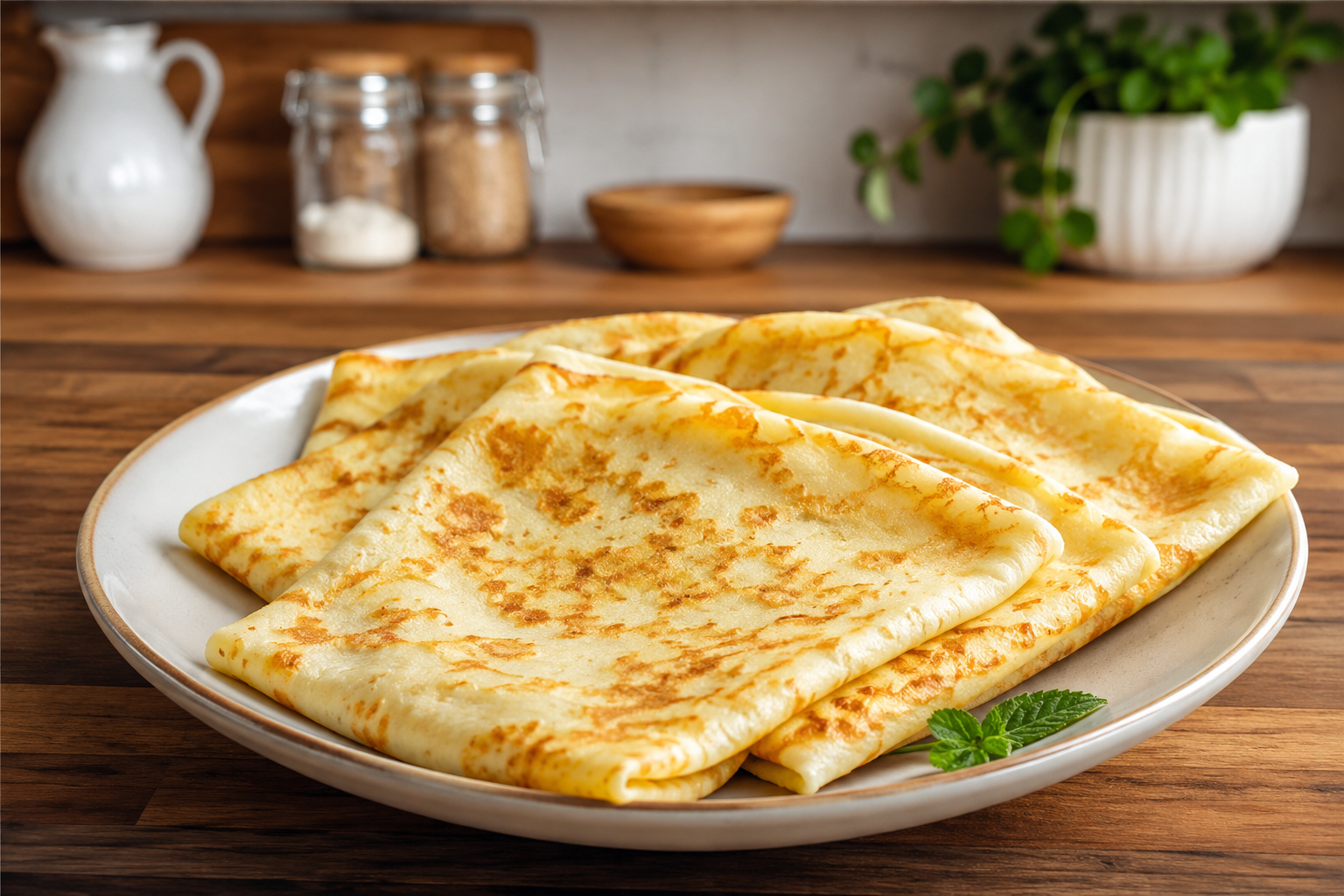
Keto Carnivore Crepes Recipe
These soft and pliable keto crepes are a grain-free and gluten-free alternative to traditional flour crepes. Made with eggs, egg whites, cream cheese, and psyllium husk, they can be served with either sweet or savoury fillings.
6
servings3
minutes5
minutes103
kcal8
minutesIngredients
4 eggs
4 egg whites
2 tablespoon psyllium husks or 1 tablespoon psyllium husk powder
4 tablespoon cream cheese, full fat
Butter, for frying
Directions
- Add the eggs, egg whites, psyllium husks or psyllium husk powder, and full-fat cream cheese to a suitable mixing container.
- Blend the ingredients using a stick blender, food processor, or powerful blender until the mixture is smooth. The finished batter should be very liquid.
- Place a non-stick frying pan or crepe pan over medium heat and add a small amount of butter.
- Once the butter has melted, pour a portion of the batter into the pan. Immediately swirl or tilt the pan so the batter spreads into a thin, even layer.
- Cook until the top begins to firm up and the underside has browned lightly.
- Carefully flip the crepe and cook the second side until done.
- Repeat the process with the remaining batter, adding butter to the pan when necessary.
- Serve the keto crepes warm with your preferred sweet or savoury fillings.
Notes
- A 20 cm crepe pan was used for this recipe. Using a smaller non-stick pan may produce up to eight crepes from the same amount of batter.
- The crepes can be enjoyed as they are or paired with sweet and savoury fillings.
- For a sweeter flavour, optional additions include 5 drops of stevia glycerite along with vanilla or cinnamon.
- For savoury crepes, optional flavourings include a pinch of salt, onion powder, garlic, or paprika.
- Regular psyllium husks and psyllium husk powder have different textures. If using finely ground psyllium husk powder, use the stated reduced quantity.
- Store cooked crepes in an airtight container in the refrigerator for up to 5 days.
- For freezing, place parchment paper between each crepe and freeze for up to 3 months.
- After defrosting, gently reheat the crepes in a frying pan over low heat.
Nutrition Facts
- Calories: 103kcal
- Fat: 6.6g
- Carbohydrates: 3.5g
- Fiber: 2.3g
- Sugar: 0.6g
- Protein: 7.3g
