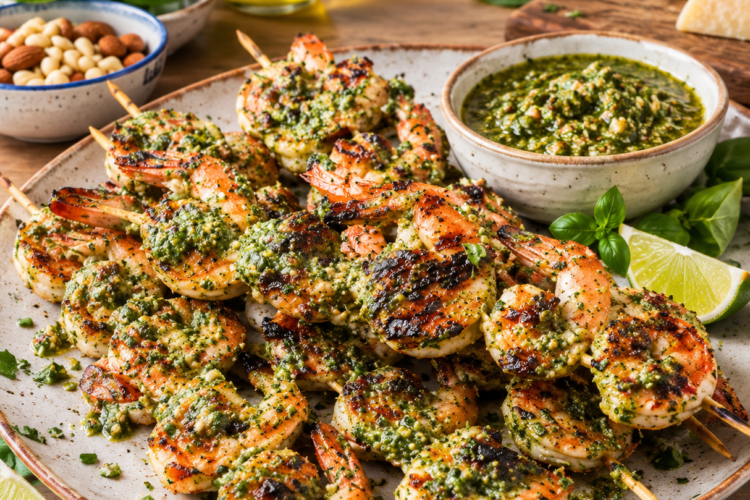
Grilled Pesto Shrimp is a simple seafood recipe that combines juicy shrimp with fresh basil pesto, garlic, Parmesan cheese, nuts, lime juice, olive oil, and a little crushed red chili. The shrimp are cooked quickly over medium-high heat until they are tender inside and beautifully charred around the edges. This easy grilled shrimp recipe is ideal for busy weeknight dinners, summer cookouts, family meals, or casual entertaining when you want a flavorful dish without spending hours in the kitchen.
The combination of grilled shrimp and homemade pesto makes this recipe especially appealing because both components bring something different to the finished dish. The shrimp have a naturally mild, slightly sweet flavor, while the pesto adds fresh basil, garlic, Parmesan, citrus, nuts, and olive oil. Grilling then adds a smoky, lightly charred taste that gives the shrimp a restaurant-style finish. Despite the impressive flavor, the preparation is straightforward enough for a beginner to follow comfortably.
Why This Grilled Shrimp Recipe Works So Well
One of the biggest advantages of this recipe is its speed. The total preparation and cooking time is only about 20 minutes, so it can easily fit into a busy evening schedule. The homemade pesto can be blended while the grill is heating, and the shrimp require only a few minutes on each side. There is no complicated sauce-making process or lengthy cooking time. Everything comes together quickly, making this a practical option whenever you need an easy seafood dinner.
Another reason this recipe stands out is the contrast between the fresh pesto and the smoky grilled shrimp. The basil gives the dish a bright herbal flavor, while Parmesan and olive oil provide richness. Almonds and pine nuts add a pleasant nutty quality, and lime juice cuts through the richness with a refreshing citrus note. Crushed red chili flakes add a small amount of heat that complements the sweetness of the shrimp without overpowering the other ingredients.
Choosing the Best Shrimp for Grilling
The size of the shrimp matters when preparing grilled shrimp skewers. Larger shrimp are generally easier to grill because they are easier to thread onto wooden skewers and handle during cooking. They also provide enough surface area for the pesto to coat them generously. Smaller shrimp cook very quickly, which means they can become overcooked before you have enough time to develop attractive grill marks and char.
For this recipe, peeled and deveined shrimp make preparation much easier. Removing the shell means the pesto can come into direct contact with the shrimp, allowing the sauce to coat the surface evenly. Deveining also makes the shrimp more convenient to eat after grilling. Shrimp can certainly be cooked in their shells, but peeled shrimp are especially practical when serving them on skewers at the dinner table or at an outdoor gathering.
Preparing the Shrimp Before Grilling
Before placing the shrimp on the grill, the wooden skewers should be soaked in water for 20 minutes. This simple step helps prevent the exposed wood from burning too quickly over the high heat of the grill. Once the skewers have been soaked, thread the shrimp onto them carefully. Leave around two inches of skewer exposed on each side, which gives you enough room to hold and turn the skewers during cooking.
Try to arrange the shrimp so they are secure but not tightly compressed together. Proper spacing allows the heat to reach the shrimp more evenly and helps the pesto-covered surfaces develop attractive grill marks. If the shrimp are packed too closely together, they may steam instead of grill properly. Once they are arranged on the skewers, they are ready for the pesto and the hot grill.
Making Fresh Homemade Basil Pesto
The homemade basil pesto is the heart of this grilled shrimp recipe. It is made by blending fresh basil leaves with dry-roasted unsalted almonds, pine nuts, garlic, grated Parmesan cheese, lime juice, kosher salt, extra virgin olive oil, and crushed red chili flakes. These ingredients create a thick, fragrant sauce that is full of fresh herbs, savory flavor, citrus brightness, and subtle heat.
Preparing pesto at home is much easier than it may seem. Simply add the ingredients to a food processor and blend until the mixture becomes smooth and well combined. The food processor does most of the work, and the entire process takes only a couple of minutes. Once the pesto is ready, reserve one-quarter of it for serving. Keeping some pesto fresh and separate gives the finished grilled shrimp an extra burst of flavor when they reach the table.
Getting the Best Flavor From the Pesto
The balance of ingredients in the pesto is important because the sauce needs to complement the shrimp without hiding their natural flavor. Fresh basil gives the pesto its characteristic herbal taste, while Parmesan contributes saltiness and savory depth. The almonds and pine nuts provide richness and texture, and garlic gives the sauce a stronger aromatic character.
Lime juice is particularly useful in this recipe because its bright acidity works beautifully with seafood. It adds freshness and helps balance the richness of the olive oil, cheese, and nuts. The crushed red chili flakes provide a mild spicy element that makes the pesto more interesting. Because the pesto is used both before and after grilling, its fresh flavor remains noticeable throughout the dish.
Optional Basil Blanching for Brighter Pesto
If you want your homemade pesto to have a brighter green appearance, blanching the basil is an optional technique worth considering. Fresh basil can naturally become darker after it is blended, especially when exposed to air. This change is mostly visual and does not mean the pesto has lost its freshness or flavor.
To maintain a greener color, the basil can be briefly blanched before being added to the food processor and then cooled quickly. This extra step is completely optional, however, and it is not necessary for making delicious pesto. If you are preparing a quick dinner, simply blending the fresh basil with the remaining ingredients is perfectly suitable. The finished sauce will still have the fresh basil flavor needed for this grilled shrimp recipe.
How to Grill Pesto Shrimp
Start by preparing the grill and heating it to medium-high, approximately 400°F. Spray the grill grates with non-stick cooking spray to make it easier to turn the shrimp and reduce the chance of sticking. Once the grill has reached the proper temperature, brush the shrimp generously with pesto on both sides. The pesto should cover the shrimp without creating an excessively thick layer.
Place the shrimp skewers directly onto the hot grill and allow them to cook for approximately four minutes on the first side. Avoid moving them around constantly because keeping them in contact with the hot grill helps create the desirable browned and charred exterior. After the first side has cooked, carefully turn the skewers and continue grilling for about three minutes on the opposite side.
How to Know When the Shrimp Are Fully Cooked
Shrimp cook very quickly, so paying attention to their appearance is more important than relying on an exact number of minutes. Properly cooked shrimp should become opaque and firm while developing a lightly charred exterior. They should not remain translucent in the center. Large shrimp may need the full cooking time described in the recipe, while smaller shrimp can finish considerably faster.
Avoid leaving the shrimp on the grill longer than necessary. Overcooked shrimp can quickly become tough, dry, and rubbery, which takes away from the tender texture that makes grilled seafood so enjoyable. If your shrimp are smaller than those used for this recipe, begin checking them after two to three minutes per side. Remove them from the grill as soon as they are fully cooked.
Do Shrimp Need to Be Marinated Before Grilling?
Shrimp do not require a long marinade for this recipe. The pesto provides plenty of flavor and works as a fresh coating that can be brushed directly onto the shrimp shortly before grilling. This is one reason the recipe is so convenient when you are trying to prepare dinner quickly.
A long marinade is not necessary because shrimp are delicate and cook rapidly. Instead, the focus should be on using fresh shrimp, coating them well with pesto, and cooking them over a properly heated grill. The combination of pesto and high heat provides plenty of flavor without requiring several hours of preparation. This makes the recipe particularly useful for spontaneous summer grilling.
How to Keep Shrimp Moist and Tender
The most important way to prevent dry grilled shrimp is to avoid overcooking them. Shrimp require only a short amount of time over medium-high heat, and even an extra few minutes can significantly change their texture. Keep an eye on their color and appearance while they cook, particularly if you are using shrimp that are smaller than the original recipe calls for.
Another helpful technique is to flip the shrimp only once during cooking. Allowing the first side to develop char before turning the skewers creates a more appealing grilled exterior. Once the second side is cooked and the shrimp are opaque, transfer them to a serving platter immediately. Do not leave them sitting over the heat while you prepare the rest of the meal.
What to Serve With Grilled Pesto Shrimp
These grilled pesto shrimp can be served in several different ways. The simplest option is to arrange the cooked shrimp on a serving platter and offer the reserved pesto alongside them. The extra pesto provides a fresh, flavorful finish and allows everyone to add as much sauce as they prefer.
For a more complete dinner, serve the shrimp with rice, pasta, or vegetables. Rice is an easy option because it provides a neutral base that allows the pesto and grilled shrimp to remain the main focus. Pasta is another excellent choice because the extra pesto can be tossed through it for additional flavor. Grilled or roasted vegetables also pair naturally with the smoky shrimp and fresh basil sauce.
Grilled Pesto Shrimp for Summer Gatherings
This recipe is especially well suited to summer grilling because it cooks quickly and can be served directly from the skewers. The colorful shrimp, green pesto, and charred edges create an attractive presentation without requiring complicated garnishes. Preparing the pesto ahead of time can make outdoor entertaining even easier because the sauce will already be ready when it is time to grill.
For a gathering, arrange the cooked shrimp on a large serving platter and keep the reserved pesto nearby. Guests can take individual skewers and add extra pesto as desired. If you are serving other grilled foods, these shrimp can also become a flavorful seafood option alongside vegetables and other simple side dishes.
Easy Ways to Adjust the Pesto
The original pesto combines almonds and pine nuts for a rich, nutty flavor. If you already have one type of nut available, the pesto can be made using that option rather than purchasing both specifically for the recipe. The combination of almonds and pine nuts gives the sauce its distinctive character, but either option can work when necessary.
Lime juice also gives the pesto a refreshing twist that works particularly well with grilled seafood. If lime is unavailable, lemon juice can be used instead. Lemon provides a similar acidic brightness and can balance the richness of Parmesan, olive oil, and nuts. Whichever citrus option is used, the goal is to keep the pesto fresh and lively.
Storing Leftover Grilled Shrimp
Freshly grilled shrimp are best served immediately, but leftovers can be stored for later. Allow the shrimp to cool to room temperature before transferring them into an airtight container. Refrigerate the cooked shrimp and use them within three days. Proper storage helps preserve their flavor and prevents them from absorbing strong odors from other foods in the refrigerator.
If you expect to have leftovers, keeping some pesto separate is a good idea. The reserved pesto can be added when serving the shrimp again, providing a fresh flavor that helps brighten the refrigerated seafood. Avoid leaving cooked shrimp at room temperature for an extended period, and refrigerate leftovers promptly once they have cooled.
Reheating Grilled Pesto Shrimp
Microwave reheating is convenient, but shrimp should be warmed gently. Place the leftovers on a plate and heat them in short intervals of approximately 10 to 15 seconds. Check them between intervals so they do not become overheated. Shrimp can turn rubbery when exposed to too much heat, so gradual reheating is preferable.
A skillet is another option for reheating. Add a small amount of butter or oil and warm the shrimp for approximately two to three minutes on each side. They can also be reheated in an air fryer at around 350°F or in an oven at the same temperature. Covering the shrimp loosely with aluminum foil can help prevent them from drying out. Once they are warmed through, serve them with the remaining pesto.
Notes for Making the Best Grilled Pesto Shrimp
For consistently good results, use large shrimp whenever possible and pay close attention to cooking time. Smaller shrimp can finish much sooner, so begin checking them after two to three minutes per side. Soaking the wooden skewers before grilling is also important because it reduces the chance of the wood becoming excessively charred. A hot, properly prepared grill helps create the best texture and attractive grill marks.
The pesto can be prepared shortly before grilling or ahead of time to make dinner preparation easier. Always reserve one-quarter of the pesto for serving, as this provides a fresh finishing sauce for the cooked shrimp. If you prefer a milder dish, the chili flakes can be left out, while those who enjoy more heat can appreciate their subtle spicy contribution.
Grilled Pesto Shrimp
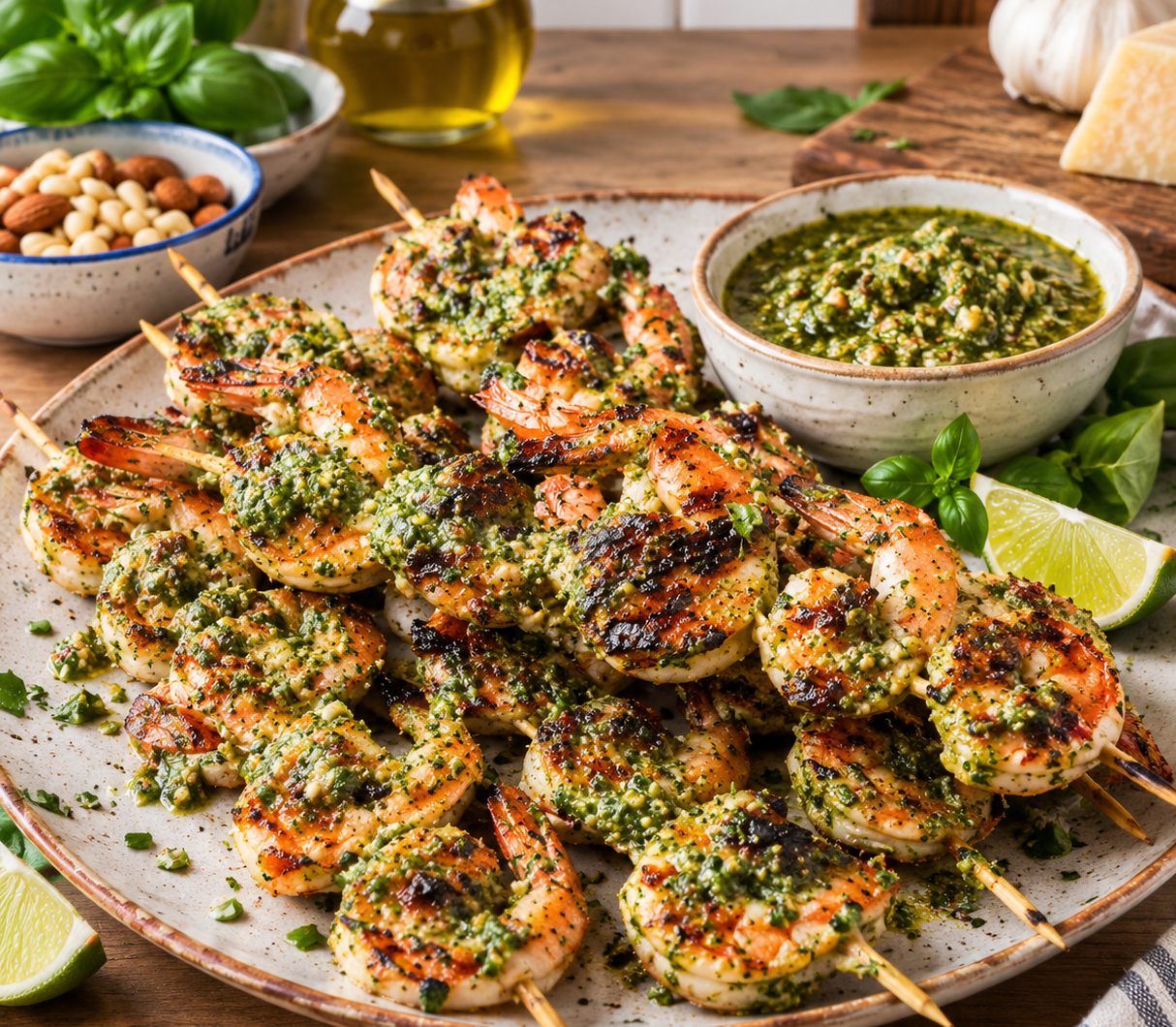
Easy Grilled Pesto Shrimp made with large peeled and deveined shrimp coated in fresh homemade basil pesto, Parmesan cheese, garlic, almonds, pine nuts, lime juice, olive oil, and chili flakes.
5
servings10
minutes10
minutes276
kcal20
minutesIngredients
- For the shrimp:
5 wooden skewers, soaked in water for 20 minutes
1 pound shrimp, peeled and deveined
- For the homemade pesto:
2 cups basil leaves, loosely packed
1.5 tbsp almonds, dry-roasted and unsalted
1.5 tbsp pine nuts
3 cloves garlic
1/3 cup grated Parmesan cheese
2 tbsp lime juice
1/4 tsp kosher salt
1/3 cup extra virgin olive oil
Pinch of crushed red chili flakes, optional
Directions
- Add the basil, almonds, pine nuts, garlic, Parmesan cheese, lime juice, kosher salt, extra virgin olive oil, and crushed red chili flakes to a food processor.
- Blend the pesto on high for 1–2 minutes, or until the mixture becomes smooth and well combined. Reserve 1/4 of the pesto separately for serving.
- Spray the grill grates with non-stick cooking spray. Preheat the grill to medium-high heat, approximately 400°F.
- Thread the peeled and deveined shrimp onto the soaked wooden skewers. Leave about 2 inches of skewer exposed on both ends for easier handling.
- Brush the pesto generously over both sides of the shrimp.
- Place the shrimp skewers on the preheated grill. Cook for approximately 4 minutes on the first side.
- Carefully flip the skewers and grill for another 3 minutes, or until the shrimp are fully cooked, opaque, and lightly charred around the edges.
- Transfer the grilled shrimp to a serving platter and serve immediately with the reserved pesto.
Nutrition Facts
- Calories: 276kcal
- Fat: 20g
- Carbohydrates: 3g
- Fiber: 1g
- Sugar: 0.4g
- Protein: 22g
