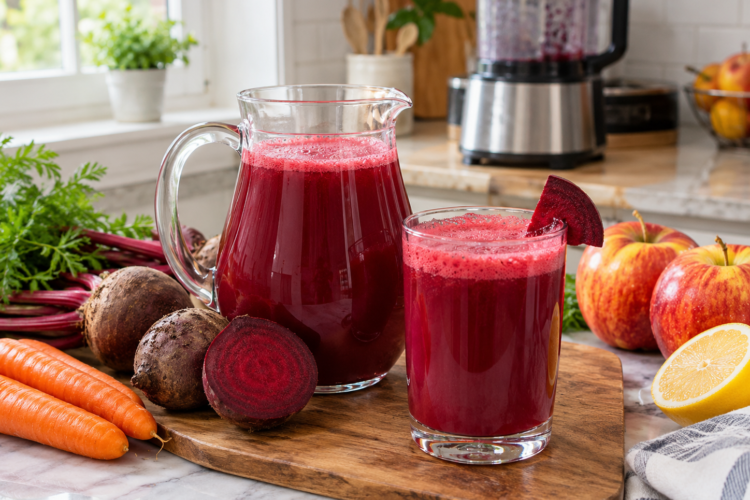
Fresh beetroot juice is a colorful, naturally sweet drink that combines the earthy flavor of red beets with crisp apples, fresh carrots, lemon, orange, cucumber, and ginger. This homemade beetroot juice recipe creates a refreshing blend of fruits and vegetables that is easy to prepare in the morning or enjoy as an afternoon drink. With its bright red color, fresh citrus aroma, and gentle ginger warmth, it offers a delicious way to add more plant-based ingredients to your daily routine.
Making beetroot juice at home allows you to control the ingredients and enjoy the natural flavors without adding refined sugar or artificial sweeteners. Apples and carrots provide sweetness, while lemon and orange introduce a pleasant citrus tang. Cucumber gives the drink a lighter, refreshing quality, and fresh ginger adds a little spice. Together, these ingredients create a balanced juice that tastes fruity, earthy, and slightly zesty rather than overwhelmingly sweet or intensely earthy.
One of the best things about this fresh beetroot juice recipe is its simplicity. You only need a handful of fresh ingredients, a juicer or blender, and approximately ten minutes of preparation time. Whether you are looking for a healthy breakfast drink, a homemade fruit and vegetable juice, or a refreshing beverage to serve with a light meal, this recipe is an easy option to keep in your collection.
What Makes This Fresh Beetroot Juice Special?
A Delicious Combination of Fruits and Vegetables
Beetroot has a distinctive earthy taste that can be too strong for some people when consumed alone. Combining it with apples, carrots, and citrus fruits makes the flavor more approachable. Apples contribute natural sweetness, carrots add a mild, pleasant flavor, and oranges help soften the earthiness of the beets. Lemon provides a fresh, tangy finish that keeps the drink from tasting too sweet.
Cucumber is another useful ingredient because its mild flavor complements the other produce without overpowering it. Fresh ginger adds warmth and a slightly peppery taste, making every sip more interesting. The optional sumac provides an additional tangy note that works particularly well with the beetroot and citrus. This combination makes the juice suitable for people who enjoy homemade wellness drinks with a mixture of sweet, tart, and earthy flavors.
An Easy Homemade Alternative to Packaged Juice
Preparing fresh beetroot juice at home gives you control over what goes into your glass. You can make it using whole fruits and vegetables without adding extra sugar, syrups, or artificial flavors. The natural sweetness of apples, carrots, and oranges is generally enough to create a pleasant drink, while lemon and ginger provide flavor without the need for additional sweeteners.
Homemade juice can also be adjusted to suit your preferences. If you enjoy a sweeter drink, choose a naturally sweet apple variety such as Gala or Fuji. If you prefer a sharper flavor, keep the lemon and ginger as listed. You can also change the texture depending on whether you use a juicer or blender. A juicer produces a smoother liquid, while a blender allows you to retain more of the ingredients’ fiber if you choose not to strain the mixture.
Ingredients for Healthy Fresh Beetroot Juice
Red Beets
Red beets are the main ingredient in this vibrant vegetable juice. They have a naturally earthy, slightly sweet flavor and contain folate, potassium, and other nutrients. Beets are also a source of dietary nitrates, which the body can convert into nitric oxide. This compound helps relax blood vessels and supports healthy blood flow. Choose firm beets with smooth skin and no soft or damaged areas for the freshest flavor.
Peeling and dicing the beets before blending makes them easier to process, especially when using a standard household blender. Fresh beets can stain cutting boards, clothing, and countertops, so handle them carefully. If you want a juice with a milder earthy taste, the apple, orange, and lemon in this recipe help balance the flavor naturally.
Gala or Fuji Apple
A large Gala or Fuji apple contributes natural sweetness and a crisp fruit flavor. Apples are particularly useful in beetroot juice because they balance the earthiness of the beets without requiring added sugar. Their mild tartness also complements the citrus ingredients, creating a more rounded flavor.
Remove the core and cut the apple into pieces before juicing or blending. Depending on your equipment, you may leave the skin on after washing the fruit thoroughly. Keeping the skin can help retain some of the apple’s fiber when blending, although the final fiber content will depend on whether you strain the juice.
Fresh Carrots
Carrots bring gentle sweetness, a bright orange color, and a source of beta-carotene to this homemade ABC juice. ABC juice commonly refers to a combination of apple, beetroot, and carrot, and this recipe builds on that familiar blend by including cucumber, citrus, and ginger.
Peel the carrots and cut them into manageable pieces before preparing the drink. Smaller pieces can make blending easier and may help your juicer process the vegetables more efficiently. Choose firm carrots with a fresh appearance and avoid those that have become soft or shriveled. Their natural sweetness works particularly well with the red beets and apple.
Lemon and Orange
Lemon and orange provide the citrus flavor that brings this juice together. Lemon adds acidity and brightness, while orange contributes sweetness and a fragrant citrus aroma. Their contrasting flavors balance the earthy vegetables and make the finished drink taste fresh and lively.
Peel both fruits before placing them in the juicer or blender, as the peel and some of the white pith can contribute bitterness. Remove any visible seeds as needed. Citrus fruits contain vitamin C, an essential nutrient involved in normal immune function and the absorption of non-heme iron from plant foods. However, the actual amount of iron in this juice is modest, so it should not be considered a treatment for iron deficiency.
Persian Cucumber
Persian cucumber gives the juice a mild, clean flavor that helps balance the sweetness of the apples and carrots. It also contributes water, making it a useful ingredient for a refreshing fruit and vegetable drink. Its delicate flavor blends easily with beetroot, citrus, and ginger without competing with them.
Wash the cucumber thoroughly and peel it as specified in the recipe. Cut it into smaller pieces to make it easier to process. Persian cucumbers are usually small and tender, so they are convenient for homemade juicing. If you enjoy light, hydrating beverages, the cucumber is an important part of the recipe’s overall flavor balance.
Fresh Ginger
A one-inch piece of fresh ginger adds a warm, slightly spicy flavor to the drink. Ginger complements the earthy beetroot and sweet apple while enhancing the citrus aroma. Even a small amount can make the juice taste brighter and more complex, particularly when served chilled.
Peel the ginger before adding it to the juicer or blender. If you prefer a milder drink, you can start with a smaller piece, although the original recipe calls for a one-inch piece. Fresh ginger has a stronger, more aromatic flavor than many dried alternatives, making it a suitable choice for this homemade juice.
Optional Sumac
Sumac is an optional ingredient that contributes a tangy, citrus-like taste. It is commonly used in Mediterranean and Middle Eastern cooking, where it adds brightness to salads, vegetables, and other dishes. In this beetroot juice recipe, a small pinch complements the lemon and orange while adding a subtle extra layer of flavor.
Use approximately half a teaspoon if you choose to include it. Since sumac is optional, you can leave it out without changing the main preparation method. The juice will still have plenty of flavor from the fresh produce, citrus, and ginger.
Health Benefits of Fresh Beetroot Juice
Provides Vitamins and Minerals
This homemade beetroot juice combines several fruits and vegetables that provide a variety of essential nutrients. Beets contribute folate and potassium, carrots supply beta-carotene, and citrus fruits provide vitamin C. Apples and cucumbers add additional plant-based nutrients and water. Together, these ingredients make a colorful drink that can contribute to a varied diet.
The nutritional value depends on the size and variety of the produce, the preparation method, and whether the juice is strained. Blending and keeping the pulp generally preserves more fiber than extracting juice and discarding the solid material. Although fresh juice can be a convenient way to consume different fruits and vegetables, it should complement rather than replace a balanced diet built around a variety of whole foods.
Supports Healthy Blood Circulation
Beetroot contains naturally occurring nitrates that can be converted into nitric oxide in the body. Nitric oxide helps blood vessels relax, supporting circulation and potentially contributing to lower blood pressure in some people. Research on beetroot and beetroot juice suggests that dietary nitrates may have a modest blood-pressure-lowering effect, although individual results vary.
This does not mean that drinking beetroot juice guarantees better heart health or replaces prescribed treatment. Blood pressure is affected by many factors, including overall diet, physical activity, sleep, genetics, and medication. Enjoying beetroot as part of a balanced eating pattern can be one way to include nitrate-rich vegetables in your routine.
Contributes Antioxidants
Beets, apples, carrots, citrus fruits, and ginger contain different plant compounds that contribute to the nutritional variety of this drink. Red beets contain betalains, pigments responsible for their deep color. Carrots provide carotenoids, while apples and citrus fruits contain other beneficial plant compounds. Ginger also contains naturally occurring compounds that have been studied for their biological activity.
These substances are often described as antioxidants because some can help protect cells from oxidative damage under certain conditions. However, no single juice can prevent disease or eliminate inflammation. The more reliable approach is to consume a wide range of colorful fruits and vegetables regularly as part of an overall healthy lifestyle.
Supplies Vitamin C from Citrus
Lemon and orange provide vitamin C, which supports normal immune system function, collagen formation, and iron absorption. Vitamin C is particularly helpful for absorbing non-heme iron, the form found in plant foods. Adding citrus to a meal that includes plant-based iron sources can improve the amount of iron your body absorbs.
Although beetroot is often associated with iron, this juice is not exceptionally rich in iron. The listed nutritional information provides approximately 1.4 milligrams of iron for the stated serving basis. People with diagnosed iron deficiency should follow appropriate medical advice rather than relying on beetroot juice as their primary source of iron.
Offers a Refreshing Way to Enjoy Produce
Drinking a freshly prepared beverage can be appealing when you want a change from plain water or packaged drinks. The cucumber and citrus provide a refreshing flavor, while apples and carrots add natural sweetness. Ginger gives the juice a gentle warmth, creating a drink that works well for breakfast, a light snack, or an afternoon refreshment.
Fresh beetroot juice does not provide the same hydration benefits as water alone in every situation, but its water content can contribute to daily fluid intake. If you are watching your sugar intake, remember that juice can deliver naturally occurring sugars more quickly than eating whole fruit, especially when the pulp is removed. You can adjust your portion size according to your individual dietary needs.
How to Make Fresh Beetroot Juice
Step 1: Prepare the Fresh Ingredients
Begin by washing the beets, apple, carrots, lemon, orange, and cucumber thoroughly under running water. Peel the beets, carrots, citrus fruits, cucumber, and ginger as specified in the ingredient list. Core the apple, remove any visible citrus seeds, and cut the produce into pieces that fit comfortably into your juicer or blender.
Preparing everything before you begin helps the process move quickly and makes it easier to check that all the ingredients are included. Keep the cutting board and utensils clean, especially if you are preparing several fruits and vegetables together. Since beetroot juice can stain surfaces, wiping up spills promptly can prevent unwanted marks.
Step 2: Choose Your Preparation Method
You can prepare this healthy beet juice using either a juicer or a blender. A juicer extracts liquid from the produce and separates much of the pulp, resulting in a thinner drink. A blender breaks down the ingredients together and requires added water to help the mixture move smoothly around the blades.
The best option depends on your equipment and preferred texture. If you already own a juicer, the process is straightforward because the prepared ingredients can be fed through the machine. If you only have a blender, you can still make a flavorful beetroot drink without buying additional equipment. Both methods allow you to enjoy the combination of beetroot, apple, carrot, cucumber, citrus, and ginger.
Step 3: Make the Juice Using a Juicer
Feed the prepared beetroot, apple, carrots, lemon, orange, cucumber, and fresh ginger through your juicer according to the manufacturer’s instructions. Add the ingredients gradually rather than forcing large pieces into the machine. Allow the juicer to extract the liquid fully, and collect the juice in a clean container.
Once all the produce has been processed, stir the juice gently to distribute the flavors. Add the optional sumac if desired and mix well. Pour the drink into glasses and serve immediately for its freshest taste. If you prefer a colder beverage, chill the ingredients beforehand or serve the juice over ice, keeping in mind that melting ice will dilute its flavor.
Step 4: Make the Juice Using a Blender
Place the prepared beets, apple, carrots, lemon, orange, cucumber, and ginger into your blender. Add one cup of water to help the blades move the ingredients and create a smooth mixture. Secure the lid firmly and blend on medium-high speed until the produce is thoroughly broken down and the liquid looks evenly combined.
If the mixture is too thick for your blender to process comfortably, pause the machine and use a spatula to move the ingredients toward the blades, following the appliance’s safety instructions. Do not reach into the blender while the blades are moving. Blend again until the mixture is as smooth as your equipment allows, then move to the straining step.
Step 5: Strain and Serve
Pour the blended mixture through a fine-mesh strainer into a clean jug or bowl. Use a spoon to gently move the liquid through the mesh if needed. Straining removes much of the solid pulp and creates a smoother, more juice-like texture. If you prefer a thicker drink with more fiber, you can skip straining and serve the blended mixture as it is.
Taste the finished drink and add the optional sumac if you have not already included it. Divide the juice between two servings and enjoy it fresh. The flavor is usually brightest immediately after preparation, when the citrus and ginger aromas are still pronounced. Stir briefly before drinking if the ingredients begin to separate.
Tips for the Best Homemade Beetroot Juice
Choose Fresh, Firm Produce
Fresh ingredients make a noticeable difference in both flavor and texture. Select beets that feel firm, carrots that are crisp, apples without bruised areas, and citrus fruits that feel relatively heavy for their size. Wash everything thoroughly before peeling and cutting. Produce that is fresh and properly stored is more likely to give your juice a clean, pleasant flavor without unwanted bitterness.
Balance the Earthy Flavor
If beetroot juice tastes too earthy for your liking, the apple, orange, and lemon help balance it. Gala and Fuji apples are useful choices because their sweetness complements the vegetables. Cucumber adds a mild flavor, while ginger gives the juice a lively finish. You can also serve the drink chilled to make its flavor feel more refreshing without changing the ingredient quantities.
Decide Whether to Strain the Juice
Straining is optional when using a blender, but it changes the texture and nutritional profile of the finished drink. A strained juice is smoother and easier to sip, while an unstrained blend retains more of the pulp and dietary fiber. Fiber supports digestive health and can help you feel satisfied after eating. If you prefer a thicker drink, blending without straining is a reasonable alternative.
Drink It Fresh and Store It Safely
Fresh juice is best enjoyed shortly after preparation because its flavor and some nutrients can change during storage. If you need to prepare it ahead of time, transfer it promptly to a clean, airtight container and refrigerate it at or below 40°F (4°C). For best quality, aim to consume it within 24 hours, and discard it if it develops an unusual smell, appearance, or taste. Avoid leaving freshly made juice at room temperature for extended periods.
Frequently Asked Questions About Beetroot Juice
Can I Make Beetroot Juice Without a Juicer?
Yes. A regular blender works well for this recipe. Add the prepared ingredients with one cup of water and blend until the mixture is thoroughly broken down. Strain through a fine-mesh strainer if you want a smoother drink. If you prefer to retain more fiber, serve the blended mixture without straining. The result will be thicker than juice made in a dedicated juicer but will still provide the recipe’s characteristic fruity, earthy flavor.
Is Fresh Beetroot Juice Healthy?
Fresh beetroot juice can be a nutritious addition to a balanced diet because it contains produce that provides vitamins, minerals, and plant compounds. Beetroot contributes dietary nitrates, carrots provide beta-carotene, and citrus fruits supply vitamin C. However, juicing removes much of the fiber when the pulp is discarded, and the drink still contains natural sugars. For a more fiber-rich option, blend the ingredients and keep the pulp.
Can I Drink Beetroot Juice Every Day?
Whether daily beetroot juice is suitable depends on your overall diet, health, medications, and portion size. Some people enjoy small servings regularly, while others may prefer it occasionally. Beetroot contains oxalates, which may be relevant for people prone to certain types of kidney stones. Its dietary nitrates may also affect blood pressure. If you have kidney disease, a history of oxalate kidney stones, low blood pressure, or take medication that affects blood pressure, ask a healthcare professional whether regular beetroot juice is appropriate for you.
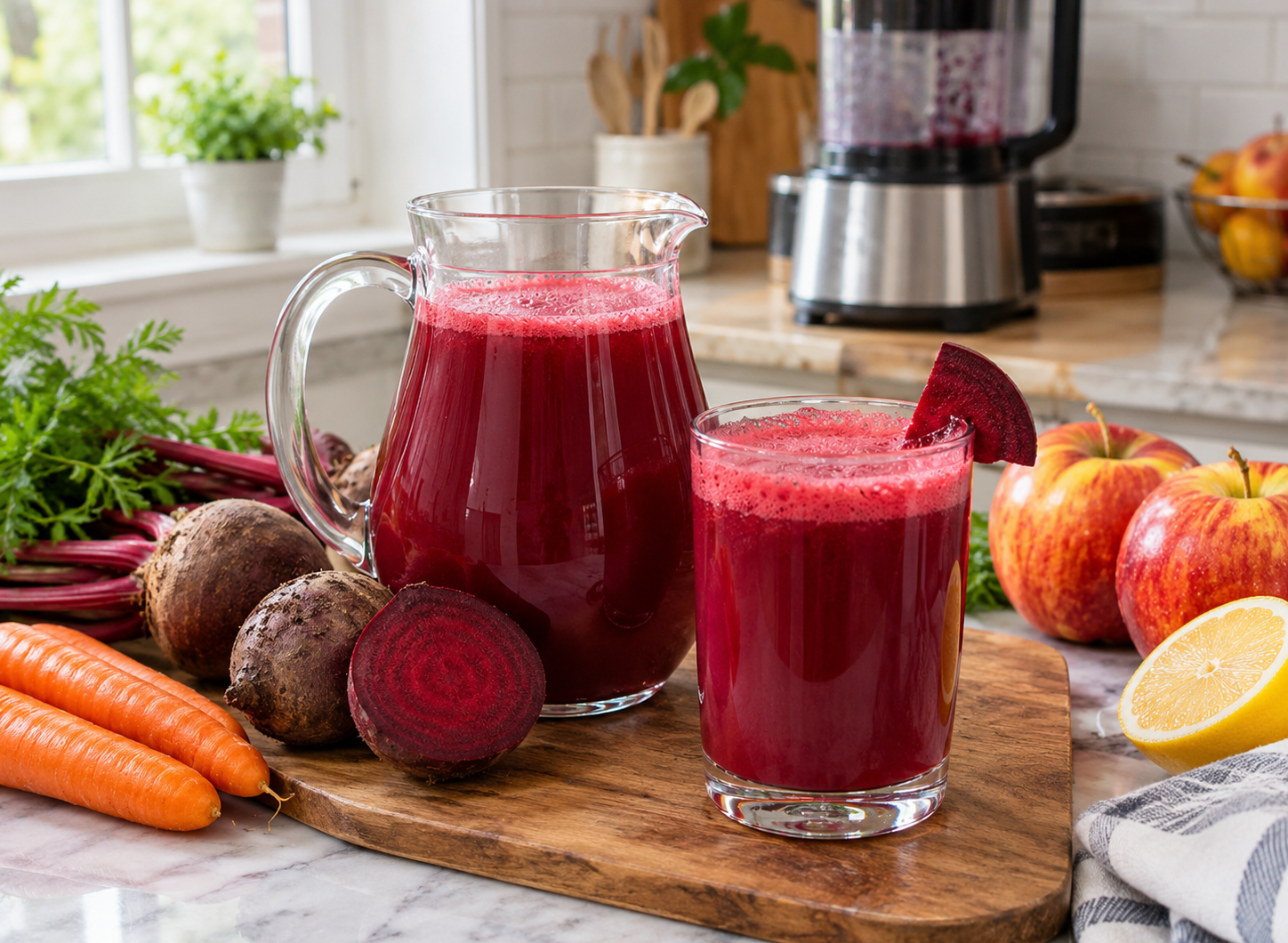
Fresh Beetroot Juice
Refreshing beetroot juice made with apple, carrot, ginger, lemon, orange, and cucumber. This naturally sweet, citrusy drink offers a convenient way to enjoy a variety of fresh fruits and vegetables.
4
servings10
minutes161
kcalIngredients
2 red beets, peeled and diced
1 large Gala or Fuji apple, cored and diced
2 carrots, peeled and diced
1 lemon, peeled and diced
1 orange, peeled and diced
1 Persian cucumber, peeled and diced
1-inch piece fresh ginger, peeled
pinch of sumac, about ½ teaspoon (optional)
Directions
- Using a Juicer
- Wash the beets, apple, carrots, lemon, orange, cucumber, and ginger thoroughly.
- Peel and dice the beets, carrots, lemon, orange, and cucumber. Core and dice the apple, and peel the ginger.
- Feed the prepared beets, apple, carrots, lemon, orange, cucumber, and ginger through your juicer according to the manufacturer’s instructions.
- Stir the extracted juice. Add the optional sumac if desired.
- Divide between glasses and serve immediately.
- Using a Blender
- Place the prepared beets, apple, carrots, lemon, orange, cucumber, and ginger in a blender.
- Add 1 cup of water to help the ingredients blend smoothly.
- Blend on medium-high speed until the mixture is thoroughly liquefied.
- Pour through a fine-mesh strainer for a smoother texture, or leave unstrained to retain more fiber.
- Stir in the optional sumac, divide into two servings, and enjoy fresh.
Notes
- For a sweeter flavor: Use a ripe Gala or Fuji apple.
- For a smoother drink: Strain the blended mixture through a fine-mesh strainer.
- For more fiber: Skip straining when using a blender.
- For a tangy finish: Add the optional sumac.
- Storage: Refrigerate promptly in a clean, airtight container and aim to consume within 24 hours.
- Health note: Beetroot juice is not a treatment for iron deficiency or high blood pressure. People with certain kidney stone risks or blood pressure concerns should seek individualized medical advice.
Nutrition Facts
4 servings per container
- Amount Per ServingCalories161
- % Daily Value *
- Total Carbohydrate
40.6g
15%
- Total Sugars 25.9g
- Protein 3.6g 6%
* The % Daily Value tells you how much a nutrient in a serving of food contributes to a daily diet. 2,000 calories a day is used for general nutrition advice.
