Avocados are delicious, creamy, and packed with nutrients, but they can spoil quickly once they become ripe. If you have purchased too many avocados or found a few soft ones sitting in your kitchen, freezing them is an excellent way to save money and reduce food waste. Learning how to freeze avocados without browning allows you to enjoy their rich flavor and creamy texture long after their natural ripening period.
Frozen avocados are incredibly useful for everyday cooking. You can add frozen avocado chunks to smoothies, thaw mashed avocado for toast, or use frozen portions when preparing homemade guacamole, salad dressings, tacos, and burritos. Although frozen avocado does not have exactly the same texture as fresh avocado, it remains a convenient ingredient for many delicious recipes. With a few simple preparation steps, you can keep ripe avocados ready for whenever you need them.
This easy guide explains how to freeze whole avocados, avocado slices, chunks, and mashed avocado. You will also learn how to prevent avocado from turning brown, how to thaw frozen avocado safely, and how to recognize an avocado that is no longer suitable for freezing. Whether you are preparing ingredients for meal planning or simply trying to avoid wasting fresh produce, this freezer-friendly method makes avocado storage simple.
Why You Will Love Freezing Avocados
Reduce Food Waste
One of the biggest advantages of freezing avocados is that it helps prevent perfectly good food from going to waste. Avocados can move from ripe to overripe in a surprisingly short time, especially when left at room temperature. Instead of throwing away an avocado that has become soft, you can prepare it for the freezer and save it for another meal. This method is particularly useful when several avocados ripen at once.
Save Money on Groceries
Avocados are often available at lower prices when purchased in bulk or during seasonal sales. Buying extra avocados can be a smart way to save money, but only if you can store them properly. Freezing ripe avocados allows you to take advantage of good prices without worrying about using every avocado immediately. You can prepare several portions at once and enjoy them over the coming weeks.
Keep Healthy Ingredients Ready
Having frozen avocado available makes everyday meal preparation easier. You can take a few pieces from the freezer whenever you want to prepare a smoothie, avocado toast, or a creamy dressing. Frozen avocado is also convenient for quick lunches, homemade dips, and simple snacks. Instead of making another trip to the grocery store, you can use the avocado portions already stored in your freezer.
Convenient for Meal Preparation
Freezing avocado in small portions is especially helpful when preparing meals ahead of time. You can divide mashed avocado into individual servings or freeze slices that are easy to measure. This approach helps you avoid thawing more avocado than you need. For people who enjoy smoothies, quick breakfasts, or simple homemade sauces, frozen avocado can become a practical kitchen staple.
Ingredients for Freezing Avocados
This simple avocado freezing method requires only two ingredients. The avocado provides the creamy texture, while lemon or lime juice helps slow down the natural browning process. No complicated ingredients, special preservatives, or advanced kitchen equipment are necessary.
Ripe avocados: Choose avocados that are fully ripe but not spoiled. A ripe avocado usually has dark green to nearly black skin, a slightly bumpy exterior, and a gentle softness when pressed. The fruit should give slightly under light pressure without feeling mushy. Ripe avocados have a creamy texture that works well for freezing and later use in smoothies, dips, and spreads.
Lemon or lime juice: Fresh lemon or lime juice is useful for protecting avocado from browning. Avocado flesh naturally changes color when exposed to air because of oxidation. The acidity in citrus juice slows this process and helps preserve a greener appearance. You can use either lemon juice or lime juice, depending on what you have available in your kitchen.
How to Choose the Best Avocados for Freezing
Selecting the right avocado is an important part of achieving good results. Freezing does not stop an unripe avocado from being unripe, nor does it improve the quality of fruit that has already spoiled. For the best frozen avocado, begin with fruit that has reached the right level of ripeness. This will give you a better flavor and a smoother texture after thawing.
Look at the avocado’s skin first. Many ripe avocados have dark green or almost black skin, although the exact color can vary depending on the variety. Gently press the avocado with your fingers. If it gives slightly but does not collapse, it is generally ready to use. A firm avocado may need more time to ripen, while an excessively soft avocado may already be past its best.
Avoid freezing avocados that have an unpleasant smell, extensive dark discoloration inside, or a very mushy texture. These signs may indicate spoilage. Freezing is a storage method for fresh, good-quality food, not a way to rescue rotten produce. If an avocado appears spoiled, discard it rather than placing it in the freezer.
How to Freeze Avocado Slices or Chunks
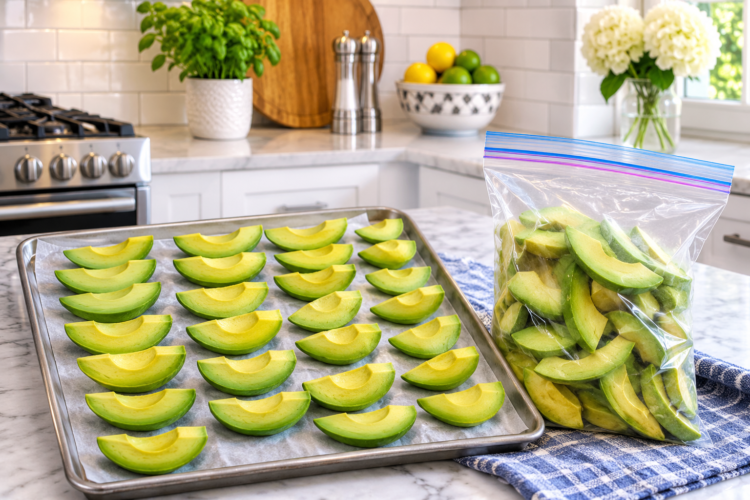
Freezing avocado slices or chunks is a great option when you want flexible portions for smoothies, toast, sauces, and other recipes. The main advantage of this method is that the pieces freeze separately before being stored together. This process, known as flash freezing, makes it easier to remove only the amount you need later.
Begin by washing the outside of the ripe avocado under clean running water. Dry it with a clean towel, then place it on a cutting board. Carefully cut the avocado lengthwise around the pit. Twist the two halves gently to separate them. Remove the pit safely using a spoon or another suitable method, taking care not to cut yourself.
Next, cut the avocado flesh into slices or bite-sized chunks. You can remove the skin before cutting, but many people find it easier to cut the avocado first and then peel the pieces. Use a spoon or your fingers to separate the flesh from the skin. Try to keep the pieces relatively similar in size so that they freeze evenly.
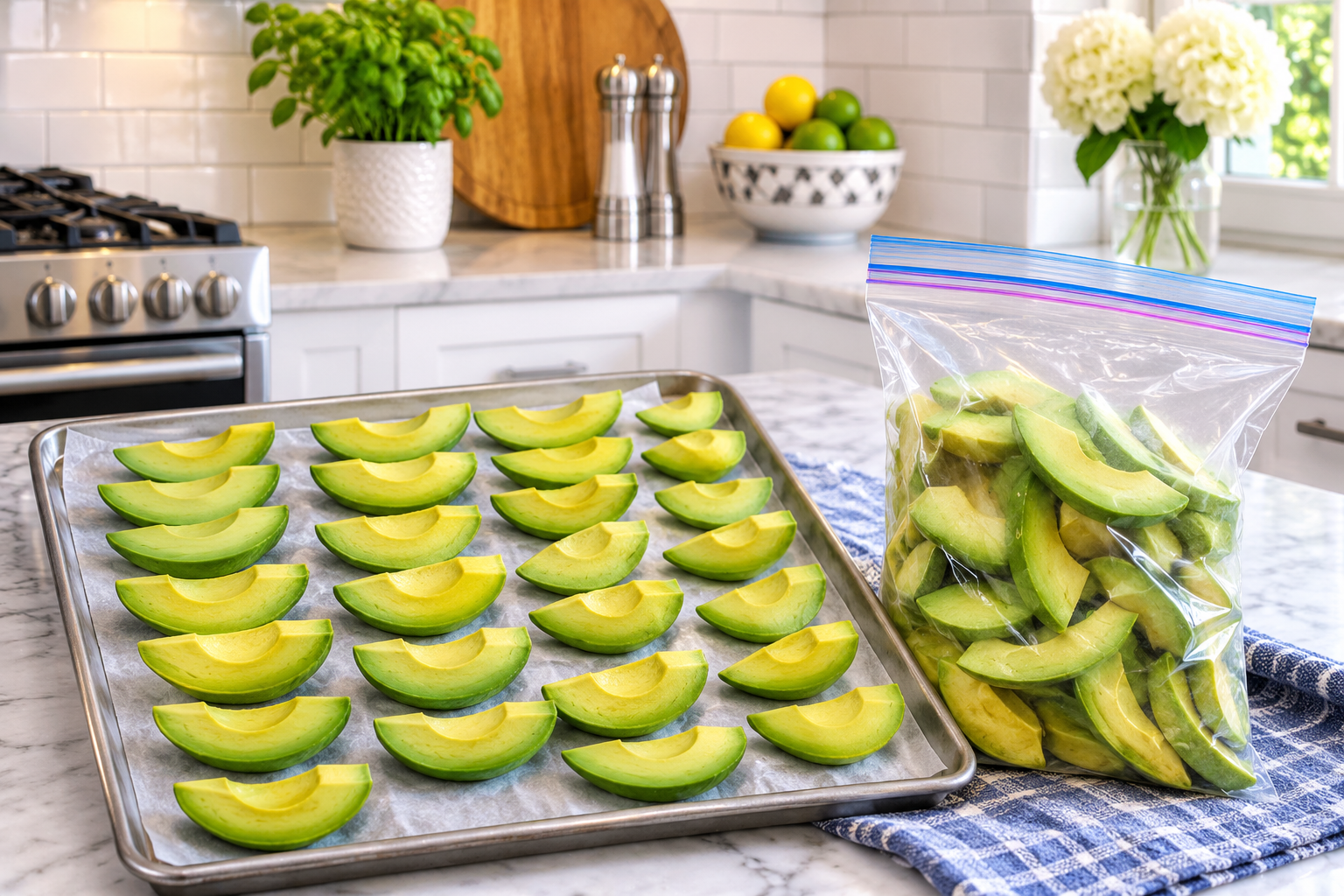
Arrange the avocado pieces in a single layer on a plate, tray, or baking sheet lined with parchment paper. Make sure the pieces are not touching too closely. Squeeze lemon or lime juice over the avocado slices or chunks, covering the exposed surfaces lightly. The citrus juice helps reduce browning while the avocado is stored.
Place the tray in the freezer for approximately one hour, or until the avocado pieces become firm. This initial freezing step prevents the pieces from sticking together. Once frozen, transfer them into freezer-safe bags or airtight containers. Remove as much air as possible from the bags before sealing them. Label the container with the preparation date and return it to the freezer.
How to Freeze Whole Avocados
If you prefer a simple storage method, you can freeze whole avocados. This option requires less preparation because you do not need to cut the fruit into pieces or remove the pit. However, whole frozen avocados may become softer after thawing, making them more suitable for mashed avocado recipes, smoothies, and dips than for neat slices.
Start by selecting ripe, good-quality avocados. Clean and dry the outside of each avocado. Wrap the fruit securely in plastic wrap, then place it inside a freezer-safe bag or airtight container. Seal the package carefully to limit exposure to air and help protect the avocado from freezer odors.
Place the wrapped avocado in the freezer. For the best results, label the package with the date so you can keep track of storage time. When you are ready to use it, thaw the avocado in the refrigerator. Once thawed, the flesh may be softer than fresh avocado, so use it in recipes where a creamy consistency is welcome.
How to Freeze Mashed Avocado
Mashed avocado is one of the most convenient forms to freeze because it can be portioned according to your needs. This method is especially useful if you regularly prepare avocado toast, guacamole, creamy dips, or avocado-based sauces. Frozen mashed avocado is also easy to add to recipes without having to cut and peel the fruit again.
Cut the ripe avocado in half lengthwise and remove the pit. Scoop the flesh into a bowl using a spoon. Mash the avocado with a fork or potato masher until it reaches your preferred consistency. You can leave it slightly chunky or make it smooth, depending on how you plan to use it.
Add lemon or lime juice to the mashed avocado and mix thoroughly. The citrus juice helps slow down browning by reducing the effects of oxidation. Make sure the juice is distributed throughout the mixture rather than remaining only on the surface. This is particularly important when freezing mashed avocado because a larger portion of the flesh is exposed to air.
Divide the mashed avocado into freezer-safe bags, airtight containers, or silicone trays. Small silicone trays are especially useful because they allow you to freeze individual portions. Once the avocado portions are firm, you can transfer them into a larger freezer bag for convenient storage. Always keep the portions sealed properly to protect their flavor and texture.
How to Thaw Frozen Avocados
Thawing frozen avocado correctly helps preserve its flavor and makes it easier to use in your favorite recipes. Frozen avocado may become softer or slightly watery compared with fresh avocado. This is a normal result of freezing and thawing, as the process changes the structure of the fruit. For this reason, thawed avocado is best used in recipes where its creamy texture is more important than its appearance.
Thawing Avocado in the Refrigerator
The refrigerator is one of the best ways to thaw frozen avocado. Remove the amount you need from the freezer and place it in an airtight container. Leave it in the refrigerator until it has thawed. Depending on the size and thickness of the portions, thawing may take approximately four to six hours or longer.
If you plan to prepare avocado toast for breakfast, it is helpful to move the avocado from the freezer to the refrigerator the night before. This gives it enough time to thaw without becoming too warm. Once thawed, use the avocado promptly. A small amount of browning may occur, but mixing it into a recipe often improves its appearance.
Thawing Avocado in Cold Water
Cold-water thawing is a useful option when you need avocado sooner. Place the frozen avocado inside a sealed, leakproof plastic bag. Make sure the bag is securely closed, then submerge it in a bowl of cold water. Depending on the portion size, the avocado may thaw in approximately 30 minutes.
Check the avocado periodically to see whether it has softened enough for your recipe. Avoid using warm or hot water, as this can cause uneven thawing and affect the texture. Once thawed, use the avocado immediately rather than leaving it at room temperature for an extended period.
Thawing Avocado in the Microwave
The microwave can help thaw frozen avocado quickly when you are short on time. Place the avocado slices or mashed avocado in a microwave-safe container. Heat for approximately 25 to 60 seconds, checking frequently. The exact time will depend on the quantity and the microwave’s power.
The goal is to thaw the avocado while keeping it cool, not to cook it. Use short intervals and stop as soon as the avocado has softened. After mixing it, the texture may become smoother and more suitable for avocado toast, brownies, or other recipes that use mashed avocado. Avoid overheating, as excessive heat can affect both flavor and texture.
Can You Use Frozen Avocado in Smoothies?
Yes, frozen avocado is excellent for smoothies. In fact, you usually do not need to thaw it before blending. Simply add a few frozen avocado slices or approximately one-quarter cup of frozen mashed avocado to your blender along with your other ingredients.
Frozen avocado gives smoothies a creamy texture without requiring ice. It works well with bananas, berries, spinach, milk, yogurt, and other smoothie ingredients. Because avocado has a mild flavor, it blends easily into many fruit and vegetable combinations. This makes frozen avocado a convenient ingredient for breakfast smoothies and refreshing drinks.
Best Ways to Use Frozen Avocados
Frozen avocado can be used in a wide range of recipes, although its softer texture makes it less suitable for dishes that require fresh, firm slices. Once thawed, avocado is especially useful in recipes where it will be mashed, blended, or mixed with other ingredients.
Avocado toast: Thaw mashed avocado in the refrigerator or microwave. Spread it over toasted bread and add your favorite toppings. Lemon juice, black pepper, chili flakes, or a poached egg can make a simple breakfast more flavorful.
Homemade guacamole: Frozen avocado works well for guacamole because the fruit is mashed as part of the recipe. Combine thawed avocado with lime juice, onion, tomatoes, cilantro, and seasonings for a flavorful dip.
Smoothies: Add frozen avocado directly to your blender. It creates a smooth, creamy consistency and works well with fruit, yogurt, or leafy greens.
Salad dressings: Thawed avocado can be blended with lemon juice, herbs, olive oil, and other ingredients to make a creamy homemade dressing.
Tacos and burritos: Use thawed avocado as a soft topping or spread. It pairs well with beans, chicken, vegetables, and other taco or burrito fillings.
Baking recipes: Mashed avocado can be incorporated into certain baking recipes, such as brownies, where its creamy texture can be useful. Follow the recipe’s ingredient measurements for the best results.
How to Prevent Frozen Avocados from Turning Brown
Avocado browning is a natural process caused by exposure to oxygen. When the flesh is cut, enzymes interact with oxygen and cause the color to change. Although freezing slows many processes, it does not completely prevent browning. A few simple steps can help maintain a more attractive color during storage.
The most useful method is to apply lemon or lime juice to the exposed avocado flesh before freezing. The acidity of citrus juice helps slow oxidation. For sliced or cubed avocado, lightly coat the pieces with juice. For mashed avocado, stir the juice into the mixture so it reaches the exposed surfaces.
Another helpful step is to reduce air exposure. Use airtight freezer bags or containers, remove excess air from bags, and seal them properly. Flash freezing avocado pieces before placing them into a storage bag also makes handling easier and reduces the chance of the pieces sticking together.
Even when you follow these steps, a little browning may occur during thawing. This does not necessarily mean the avocado has spoiled. If it smells fresh and has been stored properly, a slight color change is usually a quality issue rather than a reason to discard it. Mix the avocado into your recipe and use it promptly after thawing.
Frequently Asked Questions About Freezing Avocados
How do you keep frozen avocado from turning brown?
The best way to slow browning is to apply lemon or lime juice to the avocado before freezing. For slices and chunks, squeeze the juice over the exposed flesh. For mashed avocado, mix the juice into the entire portion. Store the avocado in an airtight freezer-safe container or bag to reduce contact with air. These methods help preserve the color, although they cannot completely prevent browning.
Can you freeze an avocado that is already overripe?
You can freeze an avocado that is very ripe if it is still fresh and has no signs of spoilage. Soft avocados are often ideal for mashed avocado or smoothies. However, if the fruit smells unpleasant, feels extremely mushy, or shows signs of decay, it should be discarded. Freezing does not make spoiled food safe to eat.
How can you tell if an avocado is rotten?
A spoiled avocado may have very dark or black skin, an excessively mushy texture, an unpleasant smell, or extensive dark discoloration inside. Some natural brown spots may occur in ripe avocado, but widespread discoloration combined with a bad smell or unusual texture can indicate spoilage. When in doubt, it is safer to discard the fruit.
Can you freeze guacamole?
Yes, guacamole can be frozen. If you have prepared more guacamole than you can eat, freezing the extra portion is a convenient way to save it for later. Place the guacamole in an airtight freezer-safe container, smooth the surface, and reduce air exposure before sealing. Guacamole can generally be frozen for up to three months for best quality. Thaw it in the refrigerator and stir well before serving.
Freeze Avocado Without Browning
freeze ripe avocados in whole, sliced, cubed, or mashed form to reduce food waste and keep this creamy fruit ready for smoothies, avocado toast, guacamole, and other recipes. Lemon or lime juice helps slow browning and maintain a fresher appearance.
8
servings5
minutes5
minutes60
kcal10
minutesIngredients
2 ripe avocados
1 lemon or lime
Directions
- Freeze Whole Avocados
- Select ripe, fresh avocados that are slightly soft when gently pressed
- Clean the outside of the avocados and dry them thoroughly.
- Wrap each avocado securely in plastic wrap.
- Place the wrapped avocados in a freezer-safe bag or airtight container.
- Seal the package, label it with the date, and place it in the freezer
- Freeze Avocado Slices or Chunks
- Wash and dry the ripe avocados.
- Cut each avocado lengthwise and carefully remove the pit.
- Cut the avocado flesh into slices or chunks.
- Remove the skin carefully.
- Arrange the pieces in a single layer on a parchment-lined plate or baking tray.
- Squeeze lemon or lime juice over the avocado pieces.
- Place the tray in the freezer for approximately one hour, until the pieces are firm.
- Transfer the frozen avocado pieces into freezer-safe bags or airtight containers.
- Remove excess air, seal the bags, label them, and return them to the freezer.
Notes
- Refrigerator method: Place the required amount of frozen avocado in an airtight container and thaw in the refrigerator for approximately 4–6 hours, depending on the portion size. For breakfast, transfer the avocado to the refrigerator the night before.
- Cold-water method: Place frozen avocado in a sealed plastic bag and submerge it in a bowl of cold water. Small portions may thaw in approximately 30 minutes.
- Microwave method: Place avocado slices or mashed avocado in a microwave-safe container. Heat for 25–60 seconds, checking frequently, until thawed but still cool.
- Smoothie method: There is no need to thaw frozen avocado. Add a few slices or approximately ¼ cup of mashed avocado directly to the blender.
Nutrition Facts
8 servings per container
- Amount Per ServingCalories60
- % Daily Value *
- Total Fat
5g
7%
- Total Carbohydrate
3g
2%
- Protein 1g 2%
* The % Daily Value tells you how much a nutrient in a serving of food contributes to a daily diet. 2,000 calories a day is used for general nutrition advice.
