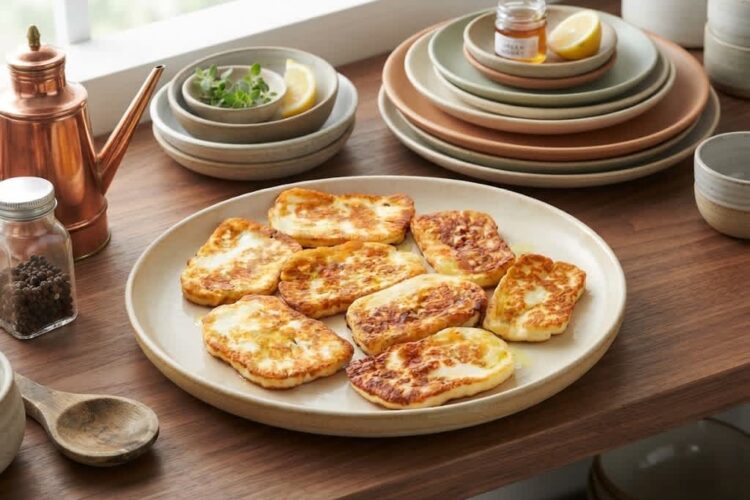
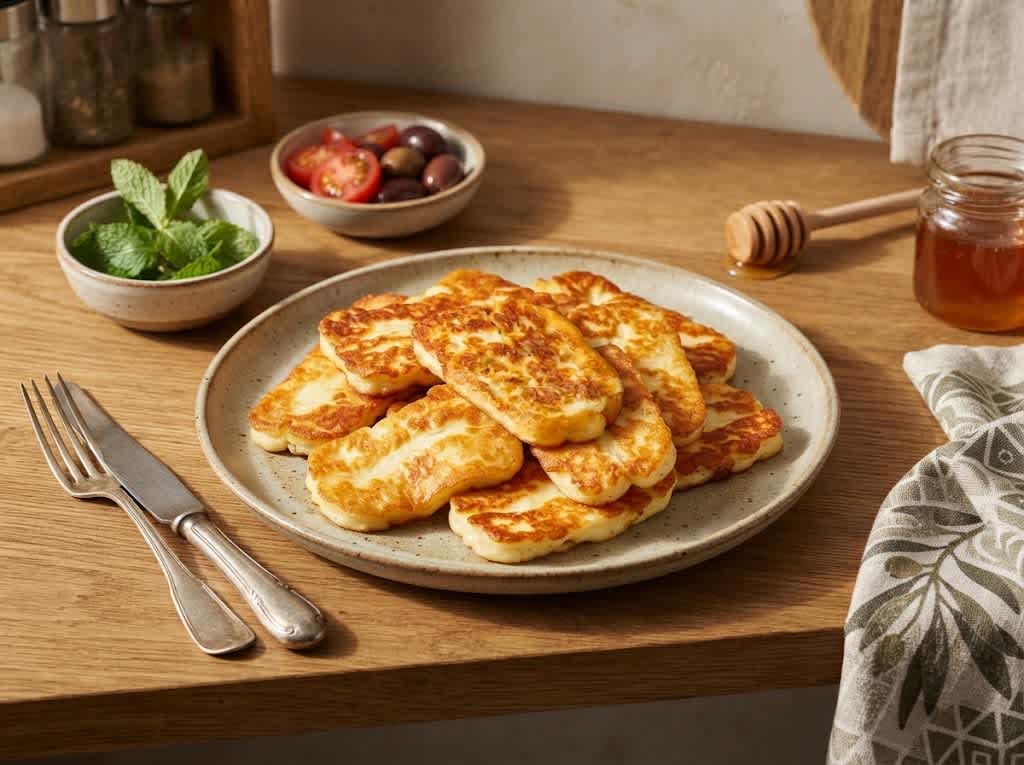
If you are looking for a quick appetizer that feels special but takes almost no time to prepare, this fried halloumi recipe is an excellent choice. Thick slices of halloumi cheese are cooked in a hot pan with a little olive oil until the outside turns beautifully golden and crisp while the inside becomes warm, soft, and creamy.
The result is a simple dish with plenty of flavor and an irresistible contrast between the crisp edges and tender center. With only two ingredients and about 10 minutes from start to finish, fried halloumi is an easy addition to breakfast, lunch, dinner, or a sharing platter.
Halloumi is especially well suited to pan-frying because it behaves differently from many other cheeses. Instead of quickly melting into a pool when exposed to high heat, halloumi holds its shape and develops a browned exterior. This makes it possible to create a deliciously crisp cheese appetizer without needing breadcrumbs, flour, or a complicated coating. A small amount of olive oil is enough to help the slices brown evenly while adding a subtle richness to every bite.
This crispy halloumi cheese recipe is also wonderfully versatile. You can serve the fried slices on their own, add them to a Mediterranean-style meal, or arrange them with fresh fruit and vegetables. Halloumi pairs particularly well with watermelon, juicy tomatoes, cucumber, salads, warm bread, and wraps. It can also become part of a larger mezze platter alongside dips and other small dishes. Because it cooks so quickly, it is ideal when you need something delicious without spending much time in the kitchen.
What Is Halloumi Cheese?
Halloumi is a semi-firm cheese traditionally associated with Cyprus. It has become popular far beyond its place of origin because of its distinctive texture and excellent cooking qualities. The cheese generally has a mild, salty flavor with a slight sweetness and a firm texture when uncooked. One of its most recognizable characteristics is its high melting point, which allows it to be grilled, fried, or cooked without completely losing its shape.
Fresh halloumi can have a firm and slightly rubbery texture, and it may produce a characteristic squeaky sensation when chewed. Cooking changes that texture considerably. Once the cheese is placed in a hot pan, the surface begins to brown while the interior becomes warmer, softer, and creamier. This transformation is what makes pan-fried halloumi so appealing. You get a browned, lightly crisp surface together with a tender center that is much more enjoyable than the uncooked cheese for many people.
The cheese is often used in Mediterranean and Middle Eastern-inspired meals because it works well with both fresh and cooked ingredients. Its salty flavor makes it especially useful when paired with naturally sweet foods such as watermelon or honey. Fresh tomatoes and other juicy vegetables provide another pleasant contrast, while wraps and salads offer a convenient way to turn fried halloumi into part of a more substantial meal.
Why Halloumi Is Perfect for Frying
Many cheeses soften dramatically as soon as they are heated, which makes them difficult to fry directly in a pan. Halloumi is different because its structure allows it to withstand relatively high cooking temperatures. Rather than melting away, the cheese keeps its shape and develops a golden crust. This unique quality is the main reason fried halloumi cheese has become such a popular appetizer and side dish.
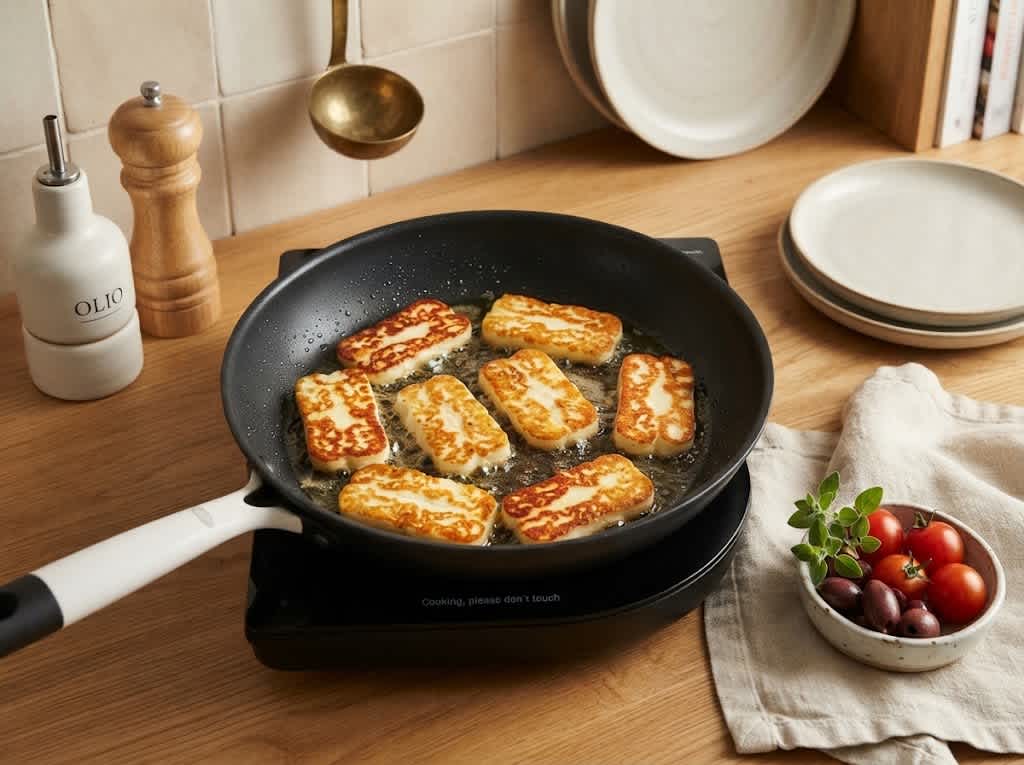
The cooking process is remarkably simple. Slices of halloumi are placed into a hot non-stick pan containing olive oil and cooked briefly on both sides. Because the cheese already has plenty of flavor, there is no need for a long marinade or complicated seasoning mixture. The goal is simply to create an attractive golden-brown exterior while keeping the inside warm and creamy.
Another advantage is speed. Traditional appetizers can require chopping, mixing, baking, or lengthy preparation, but this recipe needs only a few minutes of active cooking. That makes it particularly useful for entertaining. You can prepare the cheese just before serving so your guests receive it while the outside is still crisp and the center is warm.
How to Make Fried Halloumi
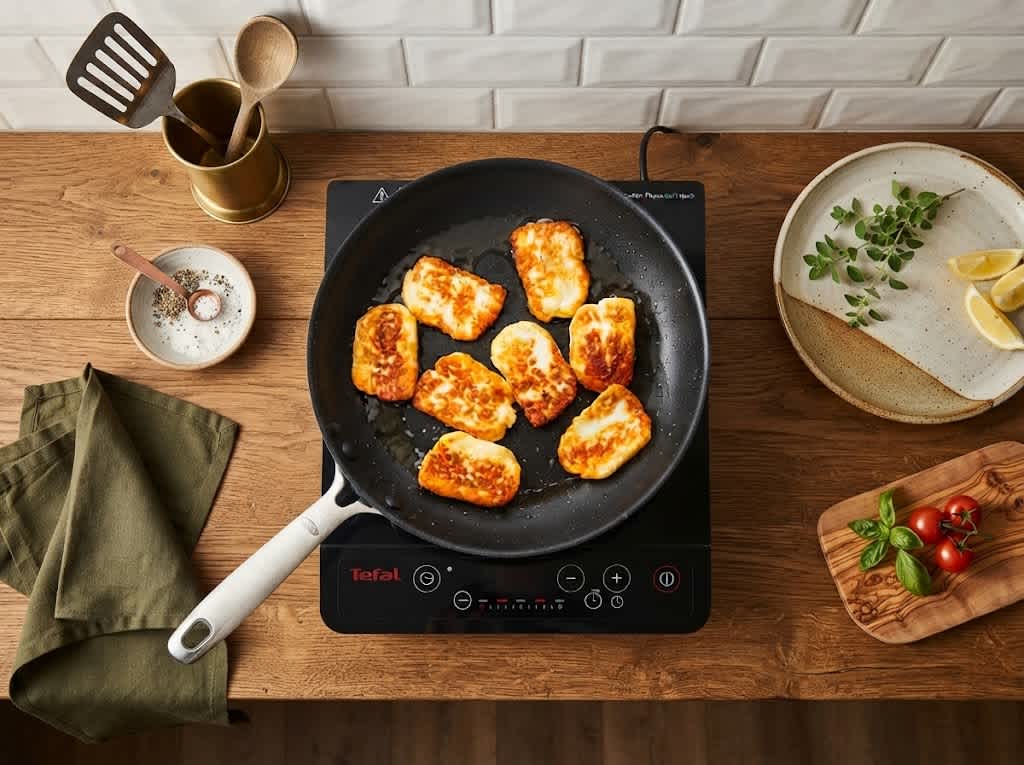
Start by cutting the halloumi block into slices of reasonably even thickness. Consistent slices help the cheese cook at a similar rate, so one piece does not become deeply browned while another remains pale. There is no need to add flour, breadcrumbs, or a coating. The natural surface of the halloumi is enough to create a beautiful crust when it comes into contact with a properly heated pan.
Next, place a non-stick pan over medium-high heat and add the olive oil. Allow the oil to become hot and shimmering before adding the cheese. This is an important step because the halloumi should begin browning as soon as it reaches the pan. If the pan is not sufficiently hot, the cheese may take longer to develop a golden crust and can lose some of the texture that makes this recipe so enjoyable.
Arrange the halloumi slices in a single layer. Avoid overcrowding the pan because the pieces need enough direct contact with the hot cooking surface. If the slices are packed too closely together, they may not brown evenly. Giving each piece enough space allows the heat to reach the surface properly and encourages the crisp golden exterior you want.
Cook the halloumi for approximately one to two minutes on each side. Watch the surface closely as it cooks because halloumi can move from golden brown to overly dark quite quickly. Use a spatula to turn each piece carefully. Once both sides have developed a golden crust, remove the cheese from the pan and transfer it to a serving plate.
How to Get Golden and Crispy Halloumi
The key to excellent fried halloumi is controlling the heat and cooking time. Medium-high heat gives the cheese enough temperature to brown without requiring a long cooking period. Because halloumi contains moisture and has a firm structure, it can tolerate the short burst of heat needed to create a browned exterior.
Avoid leaving the cheese unattended while it cooks. The recommended one to two minutes per side is short, so the difference between a lightly golden crust and a darker crust can happen quickly. Keep an eye on the surface and turn the slices once they have reached the level of browning you prefer.
Using a non-stick pan also makes the process easier. The cheese can be flipped with a spatula without excessive sticking, while the small amount of olive oil helps the surface brown attractively. There is no need to use a large amount of oil. The recipe is designed around a simple, light layer of olive oil that allows the halloumi to cook effectively.
What to Serve With Fried Halloumi
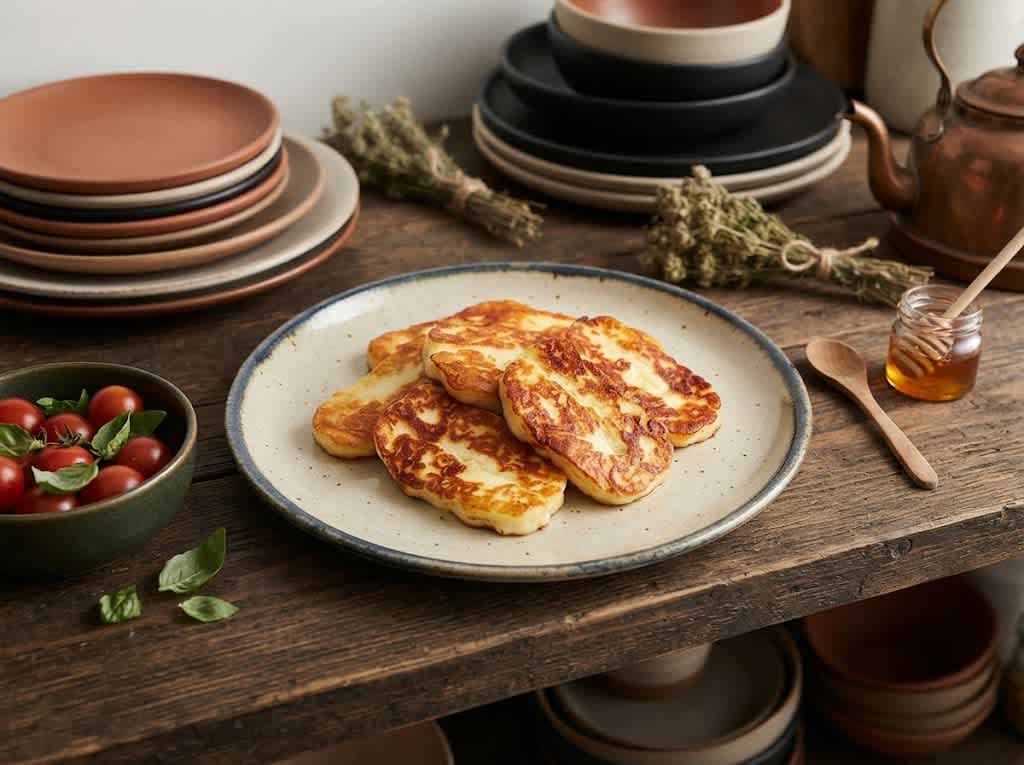
One of the best things about this recipe is how many different ways you can serve it. For a simple appetizer, place the warm halloumi slices on a plate and serve them immediately. A drizzle of extra virgin olive oil can add freshness and richness. Warm honey is another excellent finishing option because its sweetness contrasts naturally with the salty flavor of the cheese.
For a fresh Mediterranean-inspired presentation, serve fried halloumi with watermelon and juicy tomatoes. The sweetness and moisture of fresh produce provide a refreshing contrast to the warm, salty cheese. This combination is particularly enjoyable during warmer weather when lighter meals and fresh ingredients are more appealing.
Fried halloumi also works beautifully in wraps. Add the warm cheese to a flatbread with fresh vegetables and your preferred fillings for a quick lunch. It can also be cut into smaller pieces and added to salads, giving a simple bowl of greens a more substantial texture and a satisfying savory element.
For entertaining, arrange the cooked slices as part of a mezze platter. The cheese can sit alongside breads, vegetables, dips, and other small dishes. Since it requires only a few minutes of cooking, you can prepare it shortly before guests arrive or cook it while the rest of the meal is being assembled.
Halloumi for Breakfast, Lunch, or Dinner
Although fried halloumi is commonly served as an appetizer, it does not need to be limited to the beginning of a meal. The cheese can add flavor and texture to breakfast plates, particularly when served alongside fresh vegetables or bread. Its salty taste and creamy center make it a satisfying alternative to more traditional breakfast ingredients.
At lunch, fried halloumi can be incorporated into a wrap or salad. Because the cooking process takes only minutes, it is useful for quick meals when there is little time for preparation. A few slices can transform simple ingredients into a more filling and flavorful dish without requiring a complicated recipe.
For dinner, serve the cheese as a side dish with vegetables, salads, grains, or warm bread. It can also become part of a Mediterranean-inspired spread where several small dishes are placed in the center of the table. The versatility of halloumi means that you can adapt the serving style to suit almost any meal.
Common Mistakes to Avoid
One common mistake is overcrowding the pan. When too many slices are added at once, the cheese may not make enough direct contact with the hot surface. This can interfere with browning and make it harder to achieve a crisp exterior. Cooking the slices in a single layer gives each piece enough room to develop an even golden crust.
Another mistake is cooking halloumi for too long. The objective is not to deeply cook the cheese but to brown its surface and warm its center. Keeping the cooking time short helps maintain the pleasant contrast between the golden outside and creamy interior. Watch the cheese closely and turn it when the surface is sufficiently browned.
It is also important to serve fried halloumi soon after cooking. The dish is at its best when the exterior is freshly browned and the center is warm. If it sits for too long, the texture can become firmer as it cools. Preparing it close to serving time helps preserve the qualities that make this quick cheese appetizer so appealing.
Notes for Making Fried Halloumi
For the best result, use a good-quality halloumi block and slice it evenly before cooking. Make sure the pan and olive oil are hot before the cheese goes in, but avoid allowing the oil to smoke heavily. Keep the slices in a single layer and give them enough room to brown. The short cooking time means you should remain near the pan throughout the process.
The finished halloumi can be served with a drizzle of extra virgin olive oil or warm honey, depending on whether you prefer a more savory or sweet contrast. Since the cheese itself has a naturally salty flavor, simple accompaniments often work better than heavy sauces or strong seasonings. The goal is to complement the halloumi rather than hide its distinctive flavor.
Why This Quick Halloumi Recipe Works
This recipe succeeds because it focuses on the natural qualities of halloumi rather than adding unnecessary ingredients. The cheese provides the main flavor, while olive oil supports the browning process. A short cooking time creates the desired contrast between the golden surface and soft center, making the dish feel much more elaborate than the preparation actually is.
With only a few minutes required, easy fried halloumi is an excellent option for busy cooks, casual entertaining, and last-minute appetizers. It can be prepared when guests arrive, added to a meal just before serving, or cooked as part of a quick lunch. Its versatility also means the same basic recipe can appear in several different meals throughout the week.
Whether you serve it with watermelon, tomatoes, honey, olive oil, wraps, or a mezze platter, warm halloumi offers a satisfying combination of salty flavor, crisp edges, and creamy texture. Once you know how quickly and easily it can be prepared, it becomes a useful recipe to keep in your collection whenever you want a simple cheese appetizer with plenty of character.
Crispy Pan-Fried Halloumi Cheese
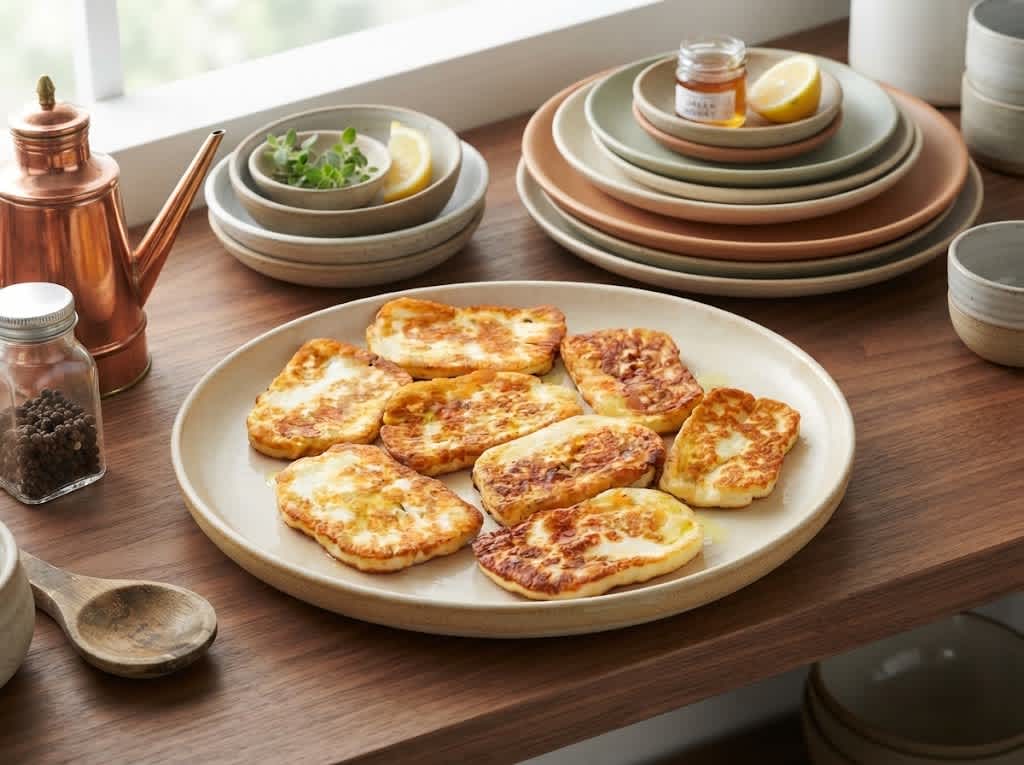
Golden pan-fried halloumi with a lightly crisp exterior and warm, creamy center. This quick two-ingredient cheese appetizer is ready in about 10 minutes and can be served with extra virgin olive oil or warm honey.
4
servings5
minutes5
minutes402
kcal10
minutesIngredients
9-ounce (250g) halloumi block
1 tablespoon olive oil
Directions
- Slice the halloumi block into even pieces so that the slices cook consistently.
- Place a non-stick pan over medium-high heat and add the olive oil. Heat until the oil is shimmering.
- Arrange the halloumi slices in a single layer in the hot pan. Avoid overcrowding the pan so each slice has direct contact with the cooking surface.
- Cook the halloumi for 1–2 minutes on the first side, watching carefully until it becomes golden brown.
- Use a spatula to carefully flip each slice and cook the other side for another 1–2 minutes, or until golden brown. Keep an eye on the crust so it does not become too dark.
- Transfer the cooked halloumi to a serving plate immediately.
- Serve warm with a drizzle of extra virgin olive oil or warm honey.
Nutrition Facts
- Total number of serves: 1
- Calories: 402kcal
- Fat: 31g
- Carbohydrates: 1g
- Fiber: 1g
- Sugar: 1g
- Protein: 28g
