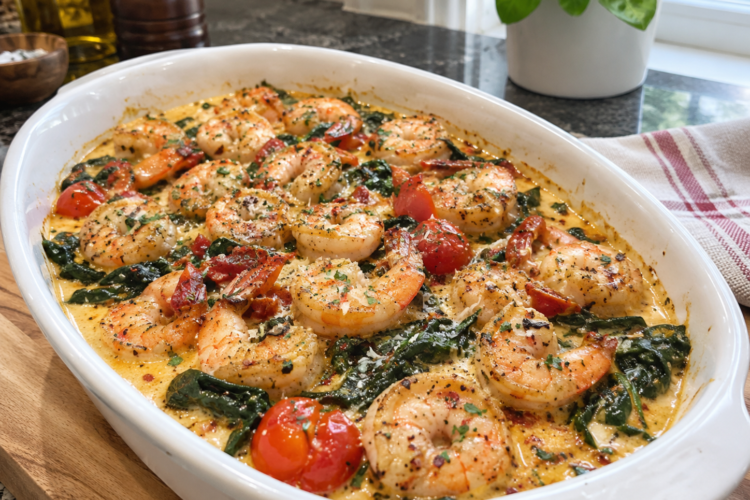
Creamy Tuscan Garlic Shrimp is a delicious, restaurant-style seafood dish featuring tender shrimp coated in a rich garlic Parmesan cream sauce with fresh spinach and sun-dried tomatoes. This easy shrimp recipe brings together simple ingredients to create a satisfying meal with a beautiful balance of creamy, savory, and slightly tangy flavors. Whether you are preparing a quick weeknight dinner or planning something special for guests, this dish delivers plenty of flavor without requiring hours in the kitchen.
One of the best things about this creamy Tuscan shrimp recipe is how quickly it comes together. The shrimp cook in just a few minutes, while the Parmesan cream sauce develops its flavor in the same skillet. The combination of garlic, Italian seasoning, chicken broth, and heavy cream creates a smooth sauce that clings beautifully to every shrimp. Spinach adds a fresh green color, while sun-dried tomatoes bring a concentrated tomato flavor that makes the dish especially memorable.
If you enjoy easy seafood dinners with rich sauces, this recipe deserves a place in your regular meal rotation. It is simple enough for a busy evening but elegant enough to serve at a dinner party. You can enjoy the creamy garlic shrimp on its own, spoon it over freshly cooked pasta, or pair it with rice, roasted vegetables, or crusty bread to make the most of the flavorful sauce.
What Makes Creamy Tuscan Garlic Shrimp So Special?
The appeal of Tuscan garlic shrimp comes from the combination of tender seafood and a creamy, well-seasoned sauce. Shrimp have a naturally mild, slightly sweet flavor that works wonderfully with garlic and Parmesan cheese. Heavy cream creates a rich texture, while chicken broth adds savory depth without making the sauce overly heavy. Italian seasoning ties the ingredients together with a familiar blend of herbs that complements the seafood.
Spinach and sun-dried tomatoes give the dish its signature appearance and flavor. The spinach softens in the warm sauce, creating a tender texture without overpowering the other ingredients. Sun-dried tomatoes contribute a concentrated sweetness and gentle tang that balance the richness of the cream and cheese. Together, these ingredients create a colorful skillet meal that looks impressive when served but requires very little preparation.
Another reason this dish is so popular is its versatility. You can serve it as a low-carb-style main dish without pasta, or turn it into a hearty family dinner by adding noodles. The creamy sauce works especially well with fettuccine, linguine, spaghetti, or penne because the pasta catches the garlic and Parmesan flavors in every bite. With a handful of everyday ingredients, you can create a meal that feels far more elaborate than the cooking process suggests.
What Is Tuscan-Style Cooking?
Tuscan-inspired cooking draws on the rustic flavors associated with Tuscany, a region in central Italy. Many dishes associated with this style emphasize straightforward ingredients, herbs, garlic, vegetables, olive oil, and satisfying combinations of flavors. The aim is to make each ingredient contribute something useful rather than overwhelm the dish with complicated seasoning or unnecessary additions.
Creamy Tuscan shrimp is a modern, Tuscan-inspired recipe rather than a traditional regional Italian preparation. Its creamy garlic sauce, spinach, sun-dried tomatoes, and Parmesan create a combination that is widely enjoyed in contemporary home cooking. These ingredients work together because each serves a different purpose: the cream provides richness, the cheese adds savory depth, the spinach offers freshness, and the tomatoes bring a concentrated, slightly sweet flavor.
This style of cooking is particularly useful for home cooks who want restaurant-quality meals without complicated techniques. You do not need specialized equipment or advanced culinary skills to prepare this dish. A large skillet, a spoon or whisk, and a few minutes of careful cooking are enough to produce a flavorful seafood dinner with a smooth, creamy finish.
Ingredients That Make the Best Creamy Tuscan Shrimp
Large Shrimp
Large shrimp are the main ingredient in this recipe, providing a tender texture and naturally sweet seafood flavor. Peeled and deveined shrimp make preparation easier because they require less cleaning before cooking. Fresh shrimp can be used when available, but frozen shrimp also work well when properly thawed. Choose shrimp of a similar size so they cook evenly in the skillet.
Removing the tails before cooking is optional, but it makes the finished dish easier to eat, especially when serving the shrimp with pasta. The most important point is to avoid overcooking them. Shrimp cook quickly, and their texture can become firm and rubbery when exposed to heat for too long. Watch for the color to change from translucent to pink and the flesh to become opaque.
Garlic and Olive Oil
Garlic provides the distinctive aroma that forms the foundation of the sauce. Three minced garlic cloves offer a noticeable garlic flavor without completely overpowering the shrimp. Freshly minced garlic is especially useful because it releases its aroma quickly when heated. Add it with the shrimp and cook briefly to prevent it from burning, as burnt garlic can introduce an unpleasant bitter taste.
Olive oil helps cook the shrimp while adding a subtle fruity flavor. It also helps distribute the garlic flavor throughout the skillet. Heat the oil before adding the shrimp, but avoid allowing it to smoke. If you prefer a richer flavor, butter can be used instead of olive oil, although that changes the original ingredient list and is best treated as an optional variation rather than part of the standard recipe.
Heavy Cream and Chicken Broth
Heavy cream is responsible for the sauce’s smooth, rich consistency. It creates a luxurious coating that surrounds the shrimp and vegetables without becoming watery when prepared properly. Because the cream contributes both body and flavor, it is an important ingredient in achieving the intended texture of this dish.
Chicken broth balances the cream by adding savory flavor and helping the sauce reach a spoonable consistency. Together, the broth and cream form the liquid base for the Parmesan cheese and seasonings. Allow the sauce to simmer gently until it begins to thicken. Avoid boiling it aggressively, as gentle heat makes it easier to achieve a smooth sauce without scorching the bottom of the pan.
Garlic Powder and Italian Seasoning
Fresh garlic provides the main aromatic flavor, while garlic powder adds another layer of seasoning throughout the creamy sauce. Using both creates a more rounded garlic taste. Italian seasoning contributes a blend of herbs that complements the shrimp, spinach, tomatoes, and Parmesan cheese. Since seasoning blends can vary by brand, the flavor may differ slightly depending on the product you use.
These seasonings are added directly to the cream and broth, allowing them to spread evenly throughout the sauce. Whisking the mixture helps distribute the herbs and garlic powder rather than leaving concentrated patches of seasoning. The result is a balanced sauce in which the individual ingredients remain recognizable without any single flavor becoming overwhelming.
Parmesan Cheese
Parmesan cheese adds a salty, savory flavor that makes the sauce taste fuller and more complex. Freshly grated Parmesan is a good choice because it generally melts more smoothly than many pre-shredded varieties. As the cheese warms in the cream and broth, it helps give the sauce additional body and a pleasantly cheesy finish.
For the best result, add the Parmesan gradually while whisking. Keep the heat controlled so the cheese has time to incorporate into the liquid. If the sauce seems too thick, a small amount of additional broth can help loosen it, although the recipe should first be prepared using the specified quantities.
Spinach and Sun-Dried Tomatoes
Spinach brings color, freshness, and a soft texture to the finished dish. Chopping it makes it easier to distribute through the sauce and ensures that each serving includes some greens. The leaves wilt quickly in the heat, so they should be added after the creamy sauce has begun to thicken.
Sun-dried tomatoes provide concentrated tomato flavor that contrasts beautifully with the richness of the cream. Jarred sun-dried tomatoes are convenient because they are ready to use once drained. Drain them well, but do not rinse them, as rinsing can wash away some of their flavor. Once added, the tomatoes release their distinctive taste into the sauce, creating the familiar flavor combination that makes Tuscan-inspired shrimp so appealing.
How to Make Creamy Tuscan Garlic Shrimp
Step 1: Prepare the Shrimp
Before turning on the stove, make sure the shrimp are peeled and deveined. If you are using frozen shrimp, thaw them according to the package instructions and drain away excess liquid. Patting the shrimp dry with paper towels can help them cook more evenly and reduce the amount of moisture released into the skillet. Mince the garlic and prepare the spinach and sun-dried tomatoes so everything is ready to add when needed.
Place a large skillet over medium-high heat and add the olive oil. Once the oil is hot, add the shrimp and minced garlic. Cook for approximately two to three minutes, turning the shrimp as needed, until they become pink and opaque. The exact cooking time depends on their size and the heat of your skillet, so use their appearance and texture as your guide rather than relying only on the clock.
Step 2: Remove the Cooked Shrimp
Transfer the cooked shrimp to a clean plate while you prepare the sauce. Removing them from the skillet prevents them from continuing to cook while the cream and broth heat up. This small step makes a significant difference because shrimp can become rubbery when left in a hot pan for too long.
Leave the flavorful residue from cooking the shrimp in the skillet. Those small browned bits, along with the garlic and remaining oil, contribute to the final sauce. There is no need to wash the pan between steps. Keeping everything in one skillet allows the ingredients to build flavor while also reducing the number of dishes you need to clean afterward.
Step 3: Make the Creamy Garlic Parmesan Sauce
Reduce the heat as needed and add the heavy cream, chicken broth, garlic powder, Italian seasoning, and Parmesan cheese to the skillet. Whisk the ingredients together until the seasonings and cheese are evenly distributed. Allow the mixture to heat and begin thickening, stirring regularly so the sauce does not stick to the bottom of the pan.
The sauce should gradually develop a smooth consistency that coats the back of a spoon. If it appears thin at first, give it a little time to simmer gently. Avoid rushing the process with excessively high heat. A controlled simmer helps the cream and cheese combine while allowing the garlic and Italian seasoning to release their flavors into the liquid.
Step 4: Add the Spinach and Sun-Dried Tomatoes
Once the sauce starts to thicken, stir in the chopped spinach and drained sun-dried tomatoes. Mix well so the vegetables become coated with the creamy Parmesan sauce. The spinach will gradually wilt, changing from a bulky pile of leaves into a tender ingredient that blends naturally with the other components.
Allow the sauce to simmer briefly until the spinach softens. The sun-dried tomatoes will begin sharing their concentrated flavor with the cream, creating a savory, slightly tangy taste. Keep stirring gently to distribute the vegetables throughout the skillet. At this stage, the sauce should look colorful, with green spinach and red tomato pieces scattered through the pale, creamy base.
Step 5: Return the Shrimp to the Skillet
Add the cooked shrimp back to the skillet and gently stir them into the sauce. Allow everything to heat together briefly so the shrimp become coated with the garlic Parmesan mixture. Since the shrimp have already been cooked, avoid leaving them over the heat longer than necessary. They should be hot throughout without becoming tough.
Taste the sauce and check that the ingredients are evenly distributed. The Parmesan and seasonings already contribute plenty of flavor, so additional salt should only be added if needed. Once the sauce is creamy and the shrimp are heated through, remove the skillet from the stove and serve immediately for the best texture and flavor.
Step 6: Serve and Enjoy
Creamy Tuscan garlic shrimp can be served straight from the skillet as a satisfying main course. For a more filling dinner, spoon it over freshly cooked pasta and allow the sauce to coat the noodles. Fettuccine, linguine, and penne are all suitable options because their shapes work well with a thick cream sauce. Rice is another practical choice when you want something simple to serve alongside the shrimp.
You can also pair the dish with steamed vegetables, a crisp green salad, or crusty bread. Bread is especially useful for enjoying any remaining sauce on the plate. For a more polished presentation, arrange the shrimp evenly, spoon the spinach and tomatoes over the top, and make sure each serving receives a generous amount of sauce.
Expert Tips for Perfect Creamy Tuscan Shrimp
Avoid Overcooking the Shrimp
The most important technique for this recipe is cooking the shrimp just until they are done. Shrimp require only a short time in a hot skillet, particularly when they are large but not extra-large. Look for pink coloring and opaque flesh throughout. If they curl into a tight ring and become very firm, they may have been cooked too long.
It is also helpful to remove the shrimp from the pan before making the sauce. This prevents them from sitting in the skillet while the cream heats and thickens. Returning them at the end gives them enough time to warm through without sacrificing their tender texture. For food safety, shrimp should reach an internal temperature of 145°F (63°C) when checked with a food thermometer.
Use Heavy Cream for the Intended Texture
Heavy cream is the preferred choice for this recipe because it provides the richness and thickness that define the sauce. Lower-fat alternatives may produce a thinner consistency and can be more likely to separate when heated. If you want the closest result to the original recipe, use the specified heavy cream rather than making a direct substitution.
A gentle simmer is also important. High heat can cause dairy-based sauces to reduce too quickly or develop an uneven texture. Stir regularly, especially after adding the Parmesan cheese, and allow the sauce to thicken gradually. The goal is a smooth coating that clings to the shrimp rather than a watery liquid or an overly thick paste.
Prepare the Vegetables Before Cooking
This recipe moves quickly once the shrimp enter the skillet, so preparing the garlic, spinach, and sun-dried tomatoes in advance makes the process easier. Mince the garlic, chop the spinach, and drain the tomatoes before heating the oil. Having everything ready allows you to focus on the shrimp and sauce instead of rushing to prepare ingredients while something is already cooking.
If the spinach stems are particularly thick, you can remove them before chopping the leaves. This is optional, but it can create a more delicate texture in the finished sauce. Choose whichever preparation method suits your preferences, and remember that the spinach will shrink considerably as it wilts.
Drain the Sun-Dried Tomatoes Properly
Jarred sun-dried tomatoes are a convenient choice for this meal because they provide strong flavor with very little preparation. Drain them before adding them to the sauce, but avoid rinsing them under water. Excess moisture can affect the consistency of the sauce, while rinsing may remove some of the tomatoes’ concentrated flavor.
Cut larger pieces into smaller strips if you want the tomato flavor spread more evenly throughout the dish. This also makes it easier to distribute the spinach, shrimp, and tomatoes among individual servings. The tomatoes should complement the creamy sauce rather than dominate it, so use the specified amount for the intended balance.
Make the Sauce in the Same Skillet
Using the same skillet for the shrimp and sauce is one of the easiest ways to build flavor. The pan retains the garlic aroma and cooking residue left behind by the seafood, allowing those flavors to become part of the cream sauce. It also reduces cleanup because you do not need separate pans for each stage of the recipe.
Choose a skillet large enough to hold the shrimp in a reasonably even layer. Crowding them too much can make it harder to cook them evenly. If your pan is small, cooking in batches may be helpful, although a large skillet is generally the simplest option for this quantity.
Delicious Ways to Serve Tuscan Garlic Shrimp
Serve It Over Pasta
Pasta is one of the most popular ways to serve creamy Tuscan shrimp because it turns the skillet dish into a complete, filling dinner. Long noodles such as fettuccine and linguine are particularly good at holding creamy sauces, while penne and other short pasta shapes catch small pieces of spinach and sun-dried tomato. Cook the pasta separately and spoon the shrimp and sauce over it just before serving.
Because the recipe itself does not include pasta in its ingredient list, the nutritional information provided in the recipe card applies to the shrimp dish rather than an additional serving of noodles. If you add pasta, the total calories and carbohydrates will increase depending on the amount and type used. This makes it easy to adapt the meal to different appetites and dietary preferences.
Pair It with Rice or Vegetables
Rice offers a mild base that complements the savory garlic and Parmesan flavors without competing with the sauce. Plain rice, brown rice, or another preferred variety can be served alongside the shrimp. Spoon some of the sauce over the rice to bring the two components together, and include spinach and sun-dried tomatoes in each portion for a balanced combination of textures.
For a lighter-feeling meal, serve the shrimp with steamed broccoli, roasted zucchini, asparagus, or a simple green salad. These sides add freshness and contrast to the richness of the cream sauce. Crusty bread is another useful addition, especially for guests who enjoy dipping bread into the remaining sauce. Choose one or two accompaniments rather than adding too many competing flavors to the plate.
Make It a Special Dinner
Although this recipe is quick enough for an ordinary weeknight, its creamy appearance makes it suitable for special occasions as well. Serve the shrimp in shallow bowls, distribute the spinach and sun-dried tomatoes evenly, and spoon the sauce over the top. A simple side dish and an attractive serving plate can make the meal feel restaurant-inspired without adding much work.
For a family meal, place the skillet in the center of the table and let everyone serve themselves alongside pasta, rice, or vegetables. For individual portions, arrange the shrimp neatly over the chosen side and ensure that each plate receives plenty of sauce. The dish is best served warm, while the sauce is still smooth and the shrimp retain their tender texture.
Recipe Variations and Adaptations
Use Frozen Shrimp When Needed
Fresh shrimp are convenient when available, but frozen shrimp are a practical alternative for keeping this recipe accessible throughout the year. Thaw them in the refrigerator or follow the quick-thaw directions on the package. Drain away excess liquid before cooking so the shrimp can heat properly in the skillet without releasing too much water.
Avoid using precooked shrimp if possible because they need very little heating and can become tough quickly. If precooked shrimp are your only option, add them toward the end of the cooking process and heat them just until warmed through. The original method works best with raw shrimp because it allows you to control their cooking from start to finish.
Adjust the Garlic Flavor
The combination of minced garlic and garlic powder creates a noticeable garlic flavor without requiring a complicated seasoning blend. If you particularly enjoy garlic, you may prefer to serve the dish with a garlic-forward side such as garlic bread. For the most faithful result, however, follow the specified quantities in the recipe card.
Fresh garlic should be cooked briefly with the shrimp rather than left to brown deeply. Garlic can turn bitter if it burns, and that bitterness may be noticeable in a cream sauce. Keep the pan moving gently as needed and adjust the heat if the garlic starts to darken too quickly.
Keep the Recipe Simple
One of the strengths of this creamy shrimp dish is that it does not require numerous extra ingredients. The heavy cream, chicken broth, Parmesan, garlic, herbs, spinach, and sun-dried tomatoes already provide richness, seasoning, color, and texture. Adding too many extra components can make the flavors less balanced and distract from the main ingredients.
If you want to change the way you serve the meal, start with the accompaniments rather than changing the sauce itself. Pasta, rice, vegetables, and bread can each give the dish a different feel without requiring changes to the core recipe. This approach is useful when cooking for family members who prefer different sides but enjoy the same main course.
How to Store and Reheat Leftover Creamy Tuscan Shrimp
Refrigerating Leftovers
Creamy Tuscan garlic shrimp tastes best immediately after cooking, when the shrimp are tender and the sauce has its smoothest consistency. If you have leftovers, allow them to cool promptly and transfer them to a clean, airtight container. Refrigerate them within two hours of cooking, or within one hour if the surrounding temperature is above 90°F (32°C).
The supplied recipe recommends keeping leftovers in the refrigerator for up to four days. For best quality, use them as soon as practical and keep the refrigerator at 40°F (4°C) or below. If the shrimp develop an unusual odor, appearance, or texture, discard them rather than tasting them to determine whether they are safe.
Reheating on the Stove
The stovetop is a good choice for reheating this creamy shrimp dish because it allows you to control the temperature gradually. Place the leftovers in a skillet over low heat and stir gently while the sauce warms. If the sauce has thickened in the refrigerator, a small splash of broth can help loosen it, although any added liquid will change the original quantities.
Heat the dish until it reaches 165°F (74°C), stirring as needed for even warming. Avoid prolonged heating, which can make the shrimp tough and cause the sauce to become less smooth. Once everything is hot, remove the skillet from the stove and serve immediately.
Can You Freeze Creamy Tuscan Shrimp?
Freezing is not recommended for the best texture. Cream-based sauces can separate or become grainy after freezing and thawing, while cooked shrimp may lose some of their tenderness. Even if the dish remains safe to eat after proper freezing and reheating, the consistency may not be as pleasant as when it is freshly made.
For this reason, it is best to prepare an amount you expect to eat within a few days. Since the recipe takes only about 20 minutes from start to finish, making a fresh batch is often a better option than freezing the completed dish. If you regularly cook for one or two people, you can also consider preparing the shrimp and sauce in smaller batches.
Frequently Asked Questions About Creamy Tuscan Garlic Shrimp
Can I Use Frozen Shrimp for This Recipe?
Yes, frozen shrimp work well when they are properly thawed before cooking. Follow the thawing instructions on the package, remove excess moisture, and use raw shrimp whenever possible. Frozen shrimp offer convenience and can deliver excellent results without changing the basic cooking method.
How Do I Know When the Shrimp Are Cooked?
Cooked shrimp turn pink and opaque, and their flesh should no longer look translucent. Large shrimp usually cook in just a few minutes, depending on their size and the heat of the skillet. For the most reliable food-safety check, use a food thermometer and make sure they reach 145°F (63°C). Remove them from the pan promptly to avoid a rubbery texture.
Can I Replace Heavy Cream with Half-and-Half?
Heavy cream is recommended for the intended rich, thick sauce. Half-and-half contains less fat and may produce a thinner result, so the finished dish will not have exactly the same consistency. If you want the recipe as written, use heavy cream and allow the sauce to simmer gently until it thickens.

Creamy Tuscan Shrimp Recipe
Tender shrimp cooked in a rich garlic Parmesan cream sauce with spinach and sun-dried tomatoes. This quick, restaurant-style seafood dinner is ready in approximately 20 minutes and can be served over pasta, rice, or vegetables.
4
servings5
minutes15
minutes532
kcal20
minutesIngredients
1½ pounds large shrimp, peeled and deveined
3 garlic cloves, minced
2 tablespoons olive oil
1 cup heavy cream
½ cup chicken broth
1 teaspoon garlic powder
1 teaspoon Italian seasoning
½ cup Parmesan cheese
1 cup chopped spinach
½ cup sun-dried tomatoes
Directions
- Cook the shrimp.
Heat the olive oil in a large skillet over medium-high heat. Add the shrimp and minced garlic. Cook for 2–3 minutes, or until the shrimp turn pink and opaque. Transfer them to a plate. - Prepare the cream sauce.
Add the heavy cream, chicken broth, garlic powder, Italian seasoning, and Parmesan cheese to the skillet. Whisk over medium-high heat until the mixture is smooth and begins to thicken. - Add the vegetables.
Stir in the chopped spinach and drained sun-dried tomatoes. Let the sauce simmer gently until the spinach wilts and the vegetables are evenly coated. - Combine and serve.
Return the cooked shrimp to the skillet. Stir gently and heat briefly until the shrimp are warmed through. Serve immediately on its own or over freshly cooked pasta, if desired.
Notes
- Shrimp: Fresh or frozen raw shrimp can be used. Thaw frozen shrimp before cooking, and avoid overcooking to keep them tender.
- Cream sauce: Heavy cream gives the sauce its intended richness and consistency. Simmer gently to help prevent the sauce from separating.
- Sun-dried tomatoes: Drain jarred tomatoes well, but do not rinse them.
- Spinach: Remove thick stems if preferred, then chop the leaves before adding them to the sauce.
- Serving suggestion: Serve with pasta, rice, vegetables, or crusty bread. Pasta is optional and is not included in the ingredient list.
- Storage: Refrigerate leftovers in an airtight container for up to four days. Reheat gently on the stove until the dish reaches 165°F (74°C). Freezing is not recommended because the cream sauce may separate and the shrimp may become tough.
- Food safety: Cook shrimp until opaque and at least 145°F (63°C) internally.
Nutrition Facts
4 servings per container
- Amount Per ServingCalories532
- % Daily Value *
- Total Fat
35g
45%
- Saturated Fat 17g 85%
- Total Carbohydrate
12g
5%
- Total Sugars 5g
- Protein 43g 86%
* The % Daily Value tells you how much a nutrient in a serving of food contributes to a daily diet. 2,000 calories a day is used for general nutrition advice.
