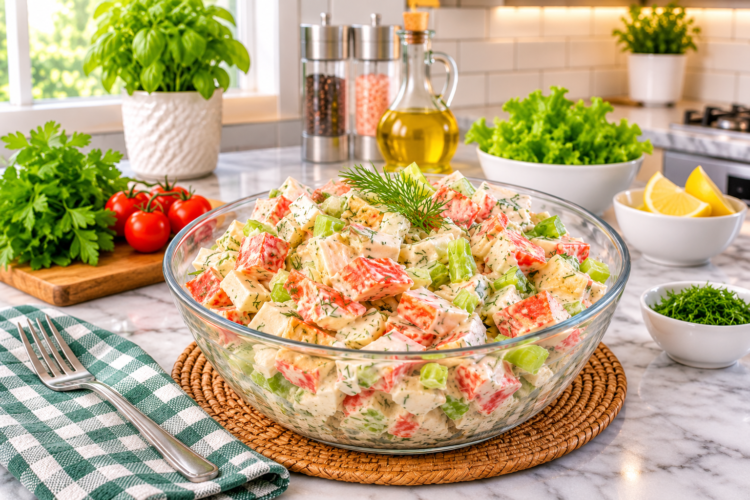
Crab Salad with Crisp Vegetables is a delicious, creamy seafood salad that brings together tender crab meat, fresh celery, mayonnaise, lemon juice, and a touch of dill. This simple crab salad recipe is ideal for anyone who wants a quick meal without spending much time in the kitchen. Its refreshing flavor and pleasant texture make it a wonderful choice for lunch, dinner, snacks, or a light appetizer. Whether you serve it with crackers, prepare a crab salad sandwich, or enjoy it in crisp lettuce cups, this easy recipe offers plenty of delicious possibilities.
One of the best things about homemade crab salad is how easily it comes together. There is no complicated cooking process, and the ingredients are simple enough to find at most grocery stores. You can prepare everything in one mixing bowl, combine the ingredients, and enjoy the salad immediately or let it chill for a little while. The creamy dressing coats the crab meat beautifully, while celery adds a fresh crunch. A small amount of lemon juice brightens the flavor, helping the mayonnaise feel balanced rather than too rich.
What Makes This Crab Salad Recipe Special?
A Simple and Refreshing Seafood Salad
This creamy crab salad is a great example of how a few everyday ingredients can create something flavorful and satisfying. The crab meat provides a mild seafood taste, while celery contributes a crisp texture that makes every bite more interesting. Mayonnaise brings the ingredients together into a smooth dressing, and lemon juice adds a light citrus flavor. Fresh dill is optional, but it gives the salad a classic deli-style finish that many people enjoy.
Unlike recipes that require several cooking steps, this easy crab salad recipe focuses on preparation and mixing. It is suitable for busy weekdays, casual family meals, and gatherings where you want a dish that can be prepared ahead of time. The salad can be served in different ways, allowing you to adapt it to the occasion. A small bowl of crab salad with crackers works well for a snack, while a generous sandwich filling can turn it into a complete lunch.
A Budget-Friendly Recipe with Flexible Ingredients
Crab salad can be prepared using imitation crab meat, fresh crab meat, or canned crab meat. Imitation crab is often the most affordable and convenient choice, making it a practical option for everyday meals. Real crab meat is another excellent option when you want a more delicate seafood flavor. Canned crab can also be used, especially when fresh crab is difficult to find, although it needs to be drained carefully before mixing.
The flexibility of this recipe makes it useful for different kitchens and budgets. You do not need to purchase expensive seafood to enjoy a flavorful crab salad. The creamy dressing, fresh celery, and lemon juice help create a balanced taste regardless of which type of crab you choose. Keeping the preparation simple also allows the crab flavor to remain the main focus instead of being overwhelmed by too many additional ingredients.
Ingredients for Homemade Crab Salad
Crab Meat
Crab meat is the main ingredient in this recipe, and it gives the salad its seafood flavor and tender texture. Imitation crab is commonly used because it is easy to find, affordable, and convenient. It is usually made from surimi, a mild white fish that is processed and seasoned to resemble crab. Imitation crab is generally fully cooked, so it can be eaten directly from the package when handled and stored properly.
Real crab meat can be used instead if you prefer a more delicate, naturally sweet seafood flavor. Lump crab meat is a popular choice because it contains larger pieces that look attractive in the finished salad. If you use canned crab, make sure it is drained thoroughly and gently patted dry. Removing excess moisture helps the dressing remain creamy and prevents the salad from becoming watery.
Celery
Celery is an important ingredient because it gives the salad its signature crisp texture. Its mild, fresh flavor complements the crab without overpowering it. Finely chopped celery distributes evenly throughout the mixture, ensuring that every spoonful contains a little crunch. Cutting it into small pieces also helps the salad feel smooth and balanced rather than containing large, distracting vegetable chunks.
Although celery is sometimes treated as a simple supporting ingredient, it makes a noticeable difference in this recipe. The contrast between soft crab meat and crunchy celery is one of the reasons classic deli-style crab salad is so appealing. If you enjoy a refreshing seafood salad, keeping the celery finely chopped is a helpful preparation step. It is best not to omit it unless you are replacing it with another crisp vegetable.
Mayonnaise and Lemon Juice
Mayonnaise creates the creamy texture that makes this crab salad so enjoyable. It coats the crab meat and celery while helping the ingredients blend into a consistent mixture. The original recipe uses Best Foods mayonnaise or Hellmann’s, but other mayonnaise varieties can also be used. Since the dressing is simple, choosing a mayonnaise with a flavor you enjoy can make a difference in the finished dish.
Lemon juice adds freshness and helps balance the richness of the mayonnaise. A small amount is enough to brighten the seafood flavor without making the salad overly sour. Fresh lemon juice is a good choice when available, although the recipe can be prepared with the specified lemon juice. If the finished salad tastes too rich, a little additional lemon juice can help improve the balance.
Salt, Pepper, and Fresh Dill
Salt and pepper provide the basic seasoning for this simple crab salad. They enhance the flavor of the crab and dressing without adding unnecessary complexity. Because crab meat and mayonnaise can already contain some salt, it is helpful to begin with a modest amount and adjust after mixing. Tasting the salad before serving allows you to make small changes according to your preferences.
Fresh dill is an optional ingredient that adds a light herbal flavor. It is especially useful when you want the salad to taste like a traditional seafood salad from a deli. Fresh dill provides a bright, aromatic quality, while dried dill can be used if fresh herbs are not available. The amount can be adjusted according to taste, but it is best to keep the seasoning gentle so the crab remains the main flavor.
How to Make Crab Salad with Crisp Vegetables
Step 1: Prepare the Crab Meat
Begin by preparing the crab meat according to the type you are using. If you have imitation crab, gently pull it apart into smaller pieces with your hands or coarsely chop it using a knife. The goal is to create a pleasant texture that is easy to mix and serve. If you prefer a finer consistency for sandwiches or dip, you can pulse the crab briefly in a food processor.
Avoid processing the crab for too long because it can quickly become too smooth. A little texture helps make the salad more appealing and gives each serving a satisfying bite. If using real crab meat, check carefully for any pieces of shell before adding it to the bowl. For canned crab, drain away the liquid and pat the meat dry if necessary. Proper preparation at this stage helps prevent excess moisture in the finished salad.
Step 2: Chop the Celery
Wash the celery stalks and finely chop them into small pieces. Smaller pieces are ideal because they spread throughout the salad and provide a consistent crunch. Large chunks of celery can make the texture uneven, particularly when the crab salad is used as a sandwich filling or served with crackers. A sharp knife makes it easier to achieve a neat, even chop.
Once the celery is ready, place it in a large mixing bowl with the prepared crab meat. Add the salt, pepper, and fresh dill if you are using it. Mixing the dry ingredients together before adding the mayonnaise helps distribute the seasoning throughout the salad. This simple step also makes it easier to adjust the flavor later without overmixing the crab.
Step 3: Add the Creamy Dressing
Add the mayonnaise and lemon juice to the crab and celery mixture. Stir gently until the ingredients are evenly coated. The dressing should bring the salad together without making it excessively wet. If you prefer a lighter texture, you can begin with a little less mayonnaise and add more gradually until the mixture reaches your preferred consistency.
The amount of mayonnaise can influence how the crab salad feels when served. A creamier mixture works well for sandwiches and dips, while a slightly lighter mixture may be more suitable for lettuce cups or a fresh green salad. Stir gently to avoid breaking the crab into very small pieces. The aim is to maintain a pleasing balance between the creamy dressing, tender crab, and crisp vegetables.
Step 4: Taste and Adjust the Seasoning
After mixing, taste the crab salad and decide whether it needs any additional seasoning. You may want a little more lemon juice for freshness, a small amount of salt to enhance the flavor, or a little more pepper for a gentle kick. If the dressing tastes too sharp, a small spoonful of mayonnaise can help balance it.
Fresh dill can also be adjusted at this stage. Some people enjoy a stronger herbal flavor, while others prefer a more subtle seasoning. If you are preparing the salad ahead of time, remember that chilling can slightly change how the flavors come together. It is often helpful to taste it again shortly before serving and make any final adjustments.
Step 5: Chill and Serve
The crab salad can be served immediately after preparation, but chilling it for at least 30 minutes is recommended for the best flavor. Cover the bowl and place it in the refrigerator so the crab, celery, lemon juice, mayonnaise, and seasoning have time to blend. If you have extra time, chilling for one to two hours can create an even more developed deli-style flavor.
Before serving, stir the salad gently and check its consistency. If it has released a little moisture, a quick stir can help bring the dressing together again. Serve it in a bowl, on crackers, in sandwiches, or inside crisp lettuce leaves. A small sprinkle of fresh dill or parsley can provide an attractive finishing touch when you want to present it for guests.
Imitation Crab vs. Real Crab Meat
Choosing Imitation Crab
Imitation crab is a practical choice for homemade crab salad because it is convenient, affordable, and easy to prepare. It is commonly sold in sticks, flakes, or chunks, making it suitable for a variety of salad textures. Its mild taste works well with mayonnaise, celery, and lemon juice, allowing the finished recipe to resemble the familiar seafood salads often found in grocery stores and delis.
For everyday lunches, imitation crab can be especially useful because it does not require extensive preparation. It is typically fully cooked, which means it can be added directly to the salad after opening. However, it should still be kept refrigerated and handled according to the package instructions. If the pieces are large, shredding or chopping them before mixing will make the salad easier to serve.
Using Fresh or Canned Crab
Fresh crab meat provides a more delicate seafood flavor and can make the salad feel more special. Lump crab meat is particularly attractive because it contains larger pieces that maintain their shape. When preparing the salad with fresh crab, mix gently to avoid breaking the meat apart. The natural sweetness of real crab pairs beautifully with the creamy dressing and fresh celery.
Canned crab is another useful option, especially when you want to prepare the recipe without purchasing fresh seafood. It is important to remove as much liquid as possible before adding it to the bowl. Excess moisture can thin the mayonnaise dressing and make the salad less appealing. After draining, gently pat the crab dry and check for any shell fragments before mixing.
Delicious Ways to Serve Crab Salad
Crab Salad Sandwiches
A crab salad sandwich is one of the easiest ways to enjoy this recipe as a satisfying lunch. Spoon the prepared salad onto sandwich bread, a croissant, a hoagie roll, or a soft Hawaiian roll. Adding lettuce provides another layer of freshness and helps create a pleasant contrast with the creamy filling. Toasted bread can also add a little crunch and make the sandwich feel more substantial.
This serving idea is convenient for packed lunches and casual meals. The crab salad can be prepared ahead of time and stored in the refrigerator until needed. When assembling sandwiches, keep the bread and filling separate until shortly before eating if you want to avoid soggy bread. A little extra lemon juice or fresh dill can also add a finishing touch to the sandwich.
Crab Salad with Crackers
Serving crab salad with crackers is a simple way to turn it into an appetizer or snack. Choose sturdy crackers that can hold the creamy mixture without breaking. Ritz crackers, club crackers, pita chips, and tortilla chips are all suitable choices. You can place the crab salad in a small bowl surrounded by crackers, allowing guests to scoop their own portions.
This presentation works well for parties, family gatherings, and casual entertaining. The creamy seafood mixture pairs nicely with the crisp texture of crackers, creating an easy bite-sized snack. For a more attractive display, serve the salad in a chilled bowl and garnish it with a small amount of fresh dill. Keep the dish refrigerated until serving time to maintain freshness.
Lettuce Cups and Cucumber Boats
For a fresh and lighter serving idea, spoon crab salad into crisp lettuce leaves. Butter lettuce, romaine, and iceberg lettuce can all work well, depending on the size and shape of the leaves. Lettuce cups are easy to prepare and provide a refreshing contrast to the creamy filling. They are also convenient for appetizers because each serving can be held and eaten without utensils.
Cucumber slices and cucumber boats offer another attractive option. You can spoon a small amount of crab salad onto thick cucumber rounds or fill hollowed-out cucumber halves. These serving styles create a crisp base that complements the seafood. If desired, a little sriracha mayonnaise can be drizzled over the top for a spicy variation, although it is not part of the original ingredient list.
Crab Pasta Salad
Crab salad can also be transformed into a more filling meal by adding cooked and cooled pasta. Short pasta shapes are particularly useful because they mix easily with the crab and dressing. Once the pasta has cooled completely, stir it into the prepared salad and adjust the mayonnaise, lemon juice, salt, and pepper according to taste. This variation works well for potlucks, barbecues, and easy lunches.
When preparing crab pasta salad, make sure the pasta is not warm when it is mixed with the mayonnaise dressing. Warm pasta can soften the texture and make the salad less refreshing. The added pasta may also absorb some of the dressing, so a small adjustment may be needed before serving. Keep the finished salad chilled until it is ready to be enjoyed.
Stuffed Avocado and California Roll Bowls
For a more attractive presentation, crab salad can be spooned into avocado halves. The creamy avocado complements the seafood mixture, while a little lemon juice, salt, and pepper can enhance the overall flavor. This is a simple serving option when you want something that looks elegant without requiring complicated preparation. It can be served as a light lunch, appetizer, or part of a larger meal.
Another creative option is to use crab salad in California roll-inspired bowls. Combine it with sushi rice, shredded carrot, and avocado, then finish with sriracha mayonnaise and furikake if desired. You can also prepare a simple bowl without rolling sushi. These ideas provide a convenient way to enjoy familiar sushi-inspired flavors while using the crab salad as a ready-made filling.
Helpful Tips for the Best Crab Salad
Keep the Salad Creamy, Not Watery
One of the most important details when preparing crab salad is managing moisture. Crab meat, celery, and additional vegetables can sometimes release liquid, especially when the salad is stored for a while. If the crab feels wet before mixing, gently pat it dry with paper towels. Canned crab should always be drained thoroughly before being added to the bowl.
If you plan to include extra ingredients such as pickles, cucumber, or onions, chop them finely and drain them well. Excess moisture can thin the mayonnaise and change the texture of the salad. Starting with properly prepared ingredients helps keep the dressing creamy and makes the salad easier to serve with crackers, bread, or lettuce cups.
Choose the Right Texture
The way you prepare the crab meat can influence how the finished salad is used. A gentle shred or rough chop creates the classic deli-style texture that works well in a bowl or on a plate. Smaller pieces are more convenient when the salad is intended for sandwiches, dips, or crackers because they make it easier to scoop and spread.
A food processor can be used for a finer texture, but it should be operated briefly. Overprocessing can turn the crab into a paste, which may make the salad less appealing. Finely chopped celery is also important because it adds crunch without creating large pieces. Taking a little care with the texture helps make the recipe more enjoyable.
Balance the Lemon and Mayonnaise
Mayonnaise and lemon juice work together to create the flavor of this seafood salad. Too much mayonnaise can make the salad taste heavy, while too much lemon juice can make it overly sharp. It is helpful to add the dressing gradually, mix gently, and taste the salad before making any additional changes. This allows you to control the consistency and flavor.
If the salad tastes too rich, add a little more lemon juice. If the lemon flavor is too strong, a small amount of mayonnaise can soften it. The ideal balance depends on the mayonnaise used and the type of crab meat. Small adjustments are usually enough to improve the finished dish without changing the original recipe’s basic character.
Make-Ahead Preparation and Storage
Preparing Crab Salad in Advance
This crab salad is convenient for meal preparation because it can be mixed a few hours before serving. Once the ingredients are combined, cover the bowl and refrigerate it until needed. Chilling allows the flavors to blend and makes the salad especially refreshing. If you are preparing it for a gathering, making it ahead can also reduce the amount of work required just before guests arrive.
Before serving, stir the salad gently and taste it again. The flavors may become milder after chilling, so you might want to adjust the seasoning slightly. If the salad appears thicker than expected, a small amount of mayonnaise can help restore its creamy consistency. Avoid leaving the salad at room temperature for extended periods, particularly when serving it outdoors or during warm weather.
Storing Leftovers Safely
Store leftover crab salad in an airtight container in the refrigerator. The original recipe recommends keeping it for two to three days. Because this is a seafood salad with a mayonnaise-based dressing, proper refrigeration is important for maintaining both freshness and food safety. Use clean utensils when serving and return the container to the refrigerator promptly after use.
Freezing is not recommended for this recipe. Mayonnaise-based dressings can separate after thawing, causing the salad to become watery and lose its creamy texture. The crab and celery may also become less pleasant in texture after freezing. For the best results, prepare an amount that can be enjoyed within the recommended refrigerated storage period.
Frequently Asked Questions About Crab Salad
Is Imitation Crab Meat Already Cooked?
Imitation crab, also known as surimi, is generally fully cooked and can be eaten directly from the package. It is commonly used in seafood salads because it is convenient and has a mild flavor. Even though it is cooked, imitation crab should be kept refrigerated and handled according to the package directions. Always check the packaging for storage and use-by instructions.
Can I Use Real Crab Instead of Imitation Crab?
Yes, real crab meat can be used in place of imitation crab. Fresh lump crab meat is a particularly good choice because it has a delicate flavor and attractive texture. Make sure the crab is properly prepared and free of shell pieces before adding it to the salad. Since real crab can be more delicate, mix gently to preserve the larger pieces.
Should I Shred or Chop the Crab Meat?
Both methods work well, and the choice depends on how you plan to serve the salad. Shredding the crab creates a classic deli-style texture, while chopping it into smaller pieces makes it easier to spread in sandwiches or scoop as a dip. A food processor can also be used for a finer texture, but it is important not to process the crab for too long.
Can I Use Dried Dill Instead of Fresh Dill?
Yes, dried dill can be used if fresh dill is not available. Fresh dill generally provides a brighter herbal flavor, but dried dill can still add a pleasant taste to the salad. Begin with a small amount and adjust according to your preference. Since dill is optional in the original recipe, the salad can also be prepared without it.

Crab Salad with Crisp Vegetables
This easy crab salad recipe combines tender crab meat, crisp celery, creamy mayonnaise, lemon juice, and optional fresh dill.
8
servings10
minutes207
kcal10
minutesIngredients
1½ pounds crab meat or imitation crab meat
2 stalks celery, finely chopped
Salt and pepper, to taste
⅔ cup Best Foods mayonnaise or Hellmann’s
1 teaspoon fresh lemon juice
Fresh dill, optional, to taste
Directions
- Prepare the crab: Break the imitation crab meat into small pieces using your hands or coarsely chop it with a knife. For a finer texture, pulse it briefly in a food processor.
- Chop the celery: Finely chop the celery stalks to create small, evenly sized pieces.
- Combine the ingredients: Place the crab meat, celery, salt, pepper, and optional fresh dill in a large mixing bowl.
- Add the dressing: Stir in the mayonnaise and lemon juice until the crab and celery are evenly coated.
- Adjust the flavor: Taste the salad and add more salt, pepper, lemon juice, or dill if needed.
- Chill the salad: Serve immediately or cover and refrigerate for at least 30 minutes to allow the flavors to blend.
- Serve: Enjoy the crab salad with crackers, in lettuce cups, on sandwiches, or as a dip.
Notes
- Chill the crab salad for at least 30 minutes for improved flavor.
- If the crab meat is wet, pat it dry before mixing to prevent a watery salad.
- For a dip, chop the crab into smaller pieces so it is easier to scoop.
- For crab pasta salad, mix in cooked and cooled short pasta and adjust the mayonnaise, lemon juice, salt, and pepper as needed.
- For a Neptune-style crab salad, add hard-boiled egg, peas, pickles, shredded carrot, onions, Old Bay seasoning, or paprika.
- Real crab meat can replace imitation crab. Check it carefully for shell pieces before using.
- Store leftovers in an airtight container in the refrigerator for 2 to 3 days.
- Freezing is not recommended because the mayonnaise-based dressing may separate after thawing.
- Keep the salad refrigerated until serving, and do not leave it at room temperature for extended periods.
Nutrition Facts
8 servings per container
- Amount Per ServingCalories207
- % Daily Value *
- Total Fat
15g
20%
- Saturated Fat 2g 10%
- Total Carbohydrate
1g
1%
- Total Sugars 1g
- Protein 16g 32%
* The % Daily Value tells you how much a nutrient in a serving of food contributes to a daily diet. 2,000 calories a day is used for general nutrition advice.
