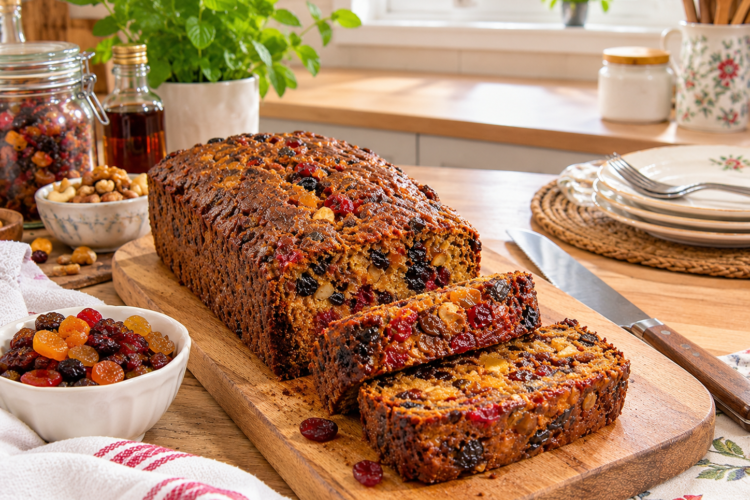
A homemade rum fruit cake is a wonderful addition to holiday celebrations, family gatherings, and special occasions. This classic rich fruit cake recipe combines sweet dried fruits, crunchy walnuts, fragrant spices, candied orange peel, and dark rum to create a beautifully moist cake with deep, comforting flavors. Each slice is packed with fruit and has a soft, tender texture that makes it a delicious treat for anyone who enjoys traditional homemade cakes.
Unlike some traditional fruit cake recipes that require weeks of preparation and aging, this easy rum fruit cake can be prepared without a lengthy maturing process. The secret is gently boiling the dried fruit with butter, brown sugar, water, and warming spices before mixing it with the remaining ingredients. This simple technique allows the fruit to absorb moisture and flavor, producing a rich cake that stays soft and enjoyable.
Another advantage of this recipe is that it does not require an electric mixer. Everything can be combined using a wooden spoon and a few basic kitchen utensils. Whether you are preparing a Christmas fruit cake, a festive dessert, or a homemade cake to share with friends and family, this recipe offers a straightforward way to achieve delicious results.
What Makes This Rum Fruit Cake Special?
Deep Flavor from Rum-Soaked Dried Fruit
The most important feature of a good fruit cake is its fruit mixture. Dried fruits provide natural sweetness, texture, and a concentrated flavor that becomes even better when combined with warm spices and dark rum. In this recipe, the fruit is simmered before baking, allowing it to absorb the buttery liquid and develop a soft, juicy consistency.
Dark rum contributes a warm, slightly sweet flavor that complements the dried fruit beautifully. It also adds depth to the overall taste without overpowering the other ingredients. When a little extra rum is added after baking, it gives the cooled cake another layer of flavor while helping maintain its moisture.
A Moist and Tender Cake Texture
Fruit cakes sometimes become dry when they are baked for too long or prepared without enough moisture. This recipe uses a boiled fruit mixture to help prevent that problem. The butter, brown sugar, and water create a flavorful base that keeps the fruit soft before it is combined with flour and eggs.
Slow cooling is another important part of achieving the right texture. Wrapping the cake in a clean kitchen towel while it cools helps it retain moisture. The result is a rich, tender fruit cake that slices beautifully and remains enjoyable for several days when stored correctly.
No Electric Mixer Required
You do not need expensive equipment or complicated baking techniques to make this homemade fruit cake. A large saucepan, mixing bowls, a wooden spoon, and a round cake pan are enough to prepare the recipe. The ingredients are combined gradually, making the process manageable even for beginner bakers.
Avoiding an electric mixer also helps keep preparation simple. The fruit mixture already provides plenty of moisture, so the batter only needs to be stirred until the ingredients are evenly distributed. This makes the recipe particularly convenient during busy holiday baking seasons.
Perfect for Christmas and Special Occasions
A rich fruit cake is closely associated with Christmas celebrations, winter holidays, and family gatherings. Its combination of dried fruit, walnuts, warming spices, and rum creates the traditional festive flavor many people enjoy during the holiday season.
However, there is no reason to reserve this cake exclusively for Christmas. It can also be served at birthdays, afternoon tea, dinner parties, and other special occasions. Its rich flavor makes even a small slice satisfying, especially when paired with a cup of coffee or tea.
Ingredients That Give This Fruit Cake Its Rich Flavor
The quality of the ingredients plays an important role in the final taste and texture. Since dried fruit is the main feature of this cake, choosing flavorful ingredients will make a noticeable difference.
Dried Fruit
Dried fruit provides the sweetness and characteristic texture of a traditional fruit cake. Raisins, golden sultanas, currants, and glace fruits can all contribute different flavors and textures. The recipe allows flexibility in choosing your preferred combination, making it easy to create a fruit cake that suits your taste.
If you enjoy a traditional flavor, a mixture of raisins and sultanas is an excellent choice. Dates, figs, and prunes can also be included for a naturally sweet and rich result. Larger fruits should be chopped into smaller pieces so they distribute evenly throughout the batter.
One important point is to maintain the original total weight of dried fruit when changing the combination. This helps preserve the balance of the recipe and prevents the cake from becoming too dry or overloaded with fruit.
Dark Rum
Dark rum gives this cake its distinctive character. Its deep flavor works particularly well with dried fruits, brown sugar, cinnamon, cloves, and nutmeg. Dark spiced rum is a popular choice, but other varieties of rum can also be used.
The recipe includes rum in the batter and additional rum for finishing the cooled cake. This creates a more noticeable rum flavor while contributing to the cake’s rich texture. Choose a rum that you enjoy drinking, as its flavor will influence the finished dessert.
Candied Orange Peel
Candied orange peel brings a pleasant citrus note to the fruit mixture. Its slightly sweet and aromatic flavor balances the richness of the butter, brown sugar, dried fruit, and rum.
Quality is particularly important when choosing candied orange peel. Some varieties can taste excessively bitter, which may affect the overall flavor of the cake. If suitable candied orange peel is unavailable, the recipe notes offer several alternatives that can provide a similar fruity character.
Walnuts
Chopped walnuts add a satisfying crunch to an otherwise soft and moist cake. Their mild, nutty flavor complements the sweetness of the dried fruit and the warm spices.
For an alternative texture, chopped pecans or slivered almonds can be used. Whatever nuts you choose, distribute them evenly throughout the mixture so that each slice contains a pleasant combination of fruit and crunch.
Butter and Brown Sugar
Salted butter gives the cake richness and contributes to its soft texture. Brown sugar adds sweetness along with a deeper caramel-like flavor that works particularly well with dark rum and dried fruit.
Both light and dark brown sugar are suitable. The butter is melted during the initial cooking stage, allowing it to combine with the water, sugar, and fruit to form the flavorful base.
Warm Baking Spices
Cinnamon, cloves, and nutmeg provide the familiar aroma associated with traditional holiday fruit cakes. Cinnamon adds warmth, cloves contribute a strong aromatic note, and nutmeg brings a subtle earthy sweetness.
Fresh spices generally provide the best flavor. If your spices have been sitting in the cupboard for a long time, check their aroma before using them. You can also use a suitable mixed spice blend if you prefer a convenient alternative.
Eggs and Flour
Eggs help bind the ingredients together and give the cake structure. All-purpose flour provides the foundation for the batter, while baking powder and baking soda support the cake’s rise.
It is important to allow the boiled fruit mixture to cool before adding the eggs. Adding eggs while the mixture is still hot can cause them to cook prematurely and affect the consistency of the batter.
How to Make Classic Rum Fruit Cake
Step 1: Prepare the Boiled Fruit Mixture
Begin by placing the dried fruit, salted butter, brown sugar, water, cinnamon, cloves, and nutmeg into a large saucepan. Set the pan over medium heat and stir regularly as the butter melts. The mixture should gradually become glossy as the sugar dissolves and the fruit begins absorbing the liquid.
Once the butter has completely melted, bring the mixture to a boil and allow it to boil for five minutes. Stir occasionally to prevent the ingredients from sticking to the bottom of the saucepan. This cooking stage is essential because it softens the fruit and allows the flavors to combine.
Step 2: Add the Baking Soda
Remove the saucepan from the heat and stir in the baking soda. The mixture will foam as the baking soda reacts with the hot fruit mixture. This is normal, so make sure you use a saucepan large enough to accommodate the temporary increase in volume.
Transfer the mixture to a large heatproof bowl and leave it to cool completely. This usually takes around two hours, although the exact time depends on the temperature of your kitchen. You can also prepare the fruit mixture the night before and continue with the recipe the following day.
Step 3: Prepare the Cake Pan
While the fruit mixture cools, prepare a 9-inch (23 cm) round cake pan. Double-line the pan with nonstick parchment paper, covering the base and sides.
Preheat your oven to 320°F (160°C). Double lining is especially important for this recipe because the cake requires a relatively long baking time. The extra parchment helps protect the edges and bottom from becoming too dark before the center is fully cooked.
Step 4: Prepare the Eggs and Flour
Crack the eggs into a small bowl and beat them lightly until the yolks and whites are combined. There is no need to whisk them until fluffy; simply breaking them up is sufficient.
In another bowl, combine the all-purpose flour and baking powder. Stir them together so the baking powder is distributed evenly throughout the flour. Preparing these ingredients separately makes it easier to incorporate them into the fruit mixture without leaving dry patches.
Step 5: Combine the Fruit, Nuts, and Orange Peel
Once the boiled fruit mixture has cooled completely, add the chopped walnuts and candied orange peel. Stir gently until both ingredients are distributed throughout the fruit.
Next, add the lightly beaten eggs and half a cup of dark rum. Mix thoroughly so the liquid ingredients combine evenly with the fruit. The mixture should be rich, thick, and packed with fruit and nuts.
Step 6: Add the Flour Mixture
Gradually incorporate the flour and baking powder mixture into the fruit mixture. Stir with a wooden spoon until all the ingredients are combined and no dry flour remains.
Avoid unnecessary mixing once the flour has been incorporated. The batter should be thick and full of dried fruit, walnuts, and candied orange pieces. This consistency is expected for a traditional rich fruit cake.
Step 7: Transfer the Batter to the Pan
Spoon the finished batter into your prepared cake pan. Use the back of a spoon or a spatula to spread it evenly, making sure the mixture reaches the edges.
Smooth the surface gently so the cake bakes at a consistent thickness. Check that there are no large air pockets around the sides of the pan before placing it in the oven.
Step 8: Bake Until Fully Cooked
Place the cake pan in the preheated oven and bake at 320°F (160°C) for approximately 1 hour and 30 minutes. Baking time can vary depending on your oven, the pan, and the moisture content of the fruit mixture.
After the initial baking period, gently press the top of the cake. It should feel firm rather than soft and wet. Insert a skewer into the center to check the inside. If it comes out clean or with a few dry crumbs, the cake is ready. If wet batter remains on the skewer, continue baking for another 10 to 15 minutes before checking again.
If the top becomes too dark before the center is fully baked, cover the cake loosely with foil and continue cooking.
Step 9: Cool the Cake Slowly
Remove the fully baked cake from the oven and leave it in the pan. Carefully wrap the cake in a clean kitchen towel and allow it to cool slowly.
This gradual cooling process helps retain moisture and keeps the cake soft. Avoid rushing this stage by cutting into the cake while it is still warm, as the texture will be better once it has cooled completely.
Step 10: Finish with Extra Rum
Once the cake has cooled, drizzle the additional dark rum over the surface. Allow it to settle into the cake before wrapping it for storage.
The extra rum enhances the flavor and adds moisture, making the finished fruit cake even more aromatic. Store the cake in an airtight container in a cool place, or refrigerate it when the weather is particularly hot or humid.
Helpful Substitutions for Rum Fruit Cake
Alternative Spice Combinations
If you do not have individual cinnamon, cloves, and nutmeg available, you can use a suitable spice blend instead. Pumpkin pie spice, apple pie spice, or mixed spice can provide a similar warm flavor. Use the same amount of the replacement spice blend as the individual spices specified in the recipe.
Replacing Candied Orange Peel
Candied orange peel can be replaced with finely grated zest from one lemon and one orange. This provides a fresh citrus aroma that works well with the dried fruit and rum.
Other possible replacements include equal quantities of candied pineapple or dried apricot, peach, or pear. These alternatives maintain the fruity character of the cake while allowing you to adjust the flavor according to ingredient availability.
Using Different Nuts
Walnuts are traditional in many fruit cake recipes, but they are not the only option. Chopped pecans and slivered almonds can provide a different texture while still complementing the fruit and spices.
Delicious Variations to Try
Chocolate Rum Fruit Cake
For a chocolate-inspired version, add ¾ cup of chocolate chips to the batter when incorporating the flour. The chocolate creates a richer dessert and pairs nicely with the natural sweetness of the dried fruit.
Ginger Fruit Cake
Crystallized ginger is another interesting addition. Stir ½ cup of diced crystallized ginger into the batter to introduce a sweet, spicy flavor that contrasts with the raisins, walnuts, and dark rum.
Brandy Fruit Cake
If you prefer brandy, you can use it instead of dark rum. Brandy provides a different but equally suitable flavor profile for a traditional rich fruit cake. It works particularly well with dried fruit and warming spices.
Tips for Making the Best Moist Fruit Cake
Choose Good-Quality Dried Fruit
The fruit is the main attraction, so choose ingredients that taste good on their own. Freshly purchased dried fruit with a pleasant flavor will produce a better result than old fruit that has become excessively hard or stale.
If using dates or figs, chop them into small pieces before measuring. This helps distribute the fruit evenly and makes the finished cake easier to slice. Keep the total quantity of dried fruit at 1½ pounds to maintain the intended recipe balance.
Use a Large Saucepan
The baking soda causes the boiled fruit mixture to foam. A large saucepan gives the ingredients enough space and helps prevent the mixture from spilling over the sides.
Allow Enough Cooling Time
Do not rush the cooling stage after boiling the fruit. The mixture needs to reach room temperature before the eggs are added. You can prepare it in advance and leave it overnight if that fits your baking schedule.
Double-Line the Cake Pan
The long baking time means the outside of the cake needs extra protection. Two layers of parchment paper help prevent the bottom and sides from becoming overly dark while the center finishes baking.
Check the Center Rather Than Relying Only on Time
Ovens can vary considerably, so the suggested baking time should be treated as a guide. Use a skewer to check the middle of the cake. A clean skewer or one with a few dry crumbs indicates that the cake is ready.
Cool Slowly to Retain Moisture
Allowing the cake to cool gradually helps maintain its soft texture. Keep it in the pan while cooling and wrap it in a kitchen towel as directed. This simple step is particularly useful for rich cakes that spend a long time in the oven.
Add the Finishing Rum After Cooling
The additional rum should be added after the cake has cooled. This allows its flavor to remain noticeable and prevents the finishing liquid from being affected by the heat of the freshly baked cake.
How to Store Homemade Rum Fruit Cake
Storing at Room Temperature
When stored correctly, this rum fruit cake can keep for at least two weeks in a cool environment. Wrap the completely cooled cake tightly in plastic wrap and place it inside an airtight container.
Keep the container away from direct sunlight, heat, and moisture. Proper wrapping helps protect the cake from drying out and keeps it fresh for serving.
Refrigerating the Cake
If you live in a warm or humid climate, refrigeration is a better option. Wrap the cake securely and place it in an airtight container before refrigerating. According to the supplied recipe, it can stay fresh in the refrigerator for up to three months.
Allow refrigerated cake to come closer to room temperature before serving for a softer texture and fuller flavor.
Freezing for Longer Storage
Freezing is suitable when you want to prepare the cake well ahead of a special occasion. Wrap it tightly in plastic wrap to protect it from freezer burn, then place it in a suitable freezer-safe container.
The supplied recipe notes that the cake can be frozen for up to a year. When you are ready to serve it, thaw it and allow it to reach room temperature. Avoid wrapping it in aluminum foil, as plastic wrap is recommended for this storage method.
Frequently Asked Questions
What Is the Best Rum for Fruit Cake?
Dark spiced rum is an excellent choice because it has a deep flavor that complements dried fruit, brown sugar, and warm spices. Gold rum and white rum can also be used if you prefer a different flavor. Choose a variety that suits your personal taste.
Can I Use Something Other Than Rum?
Yes. Brandy, whiskey, and gin are possible alternatives. Cointreau is another option if you want a citrus-influenced flavor. Brandy is particularly suitable for traditional fruit cake because it pairs nicely with dried fruit and baking spices.
Can I Make Fruit Cake Without Alcohol?
Yes. Orange juice can be used in the cake batter as a non-alcoholic alternative to rum. However, do not drizzle orange juice over the finished cake after baking, as the additional liquid may cause spoilage or mold during storage.
Does This Fruit Cake Need Weeks to Mature?
No. One of the advantages of this recipe is that it does not require the traditional weeks-long aging process. The boiled fruit mixture helps develop moisture and flavor before baking, so the cake can be enjoyed after cooling.
Why Does the Fruit Mixture Need to Cool Before Adding Eggs?
The boiled fruit mixture becomes very hot during cooking. Adding eggs immediately could cause them to cook or scramble before they are properly incorporated into the batter. Cooling the mixture first helps create a smooth, evenly combined cake batter.
How Can I Tell When the Fruit Cake Is Fully Baked?
The cake should have a firm surface, and a skewer inserted into the center should come out clean or with a few dry crumbs. If wet batter sticks to the skewer, continue baking for another 10 to 15 minutes and test again.
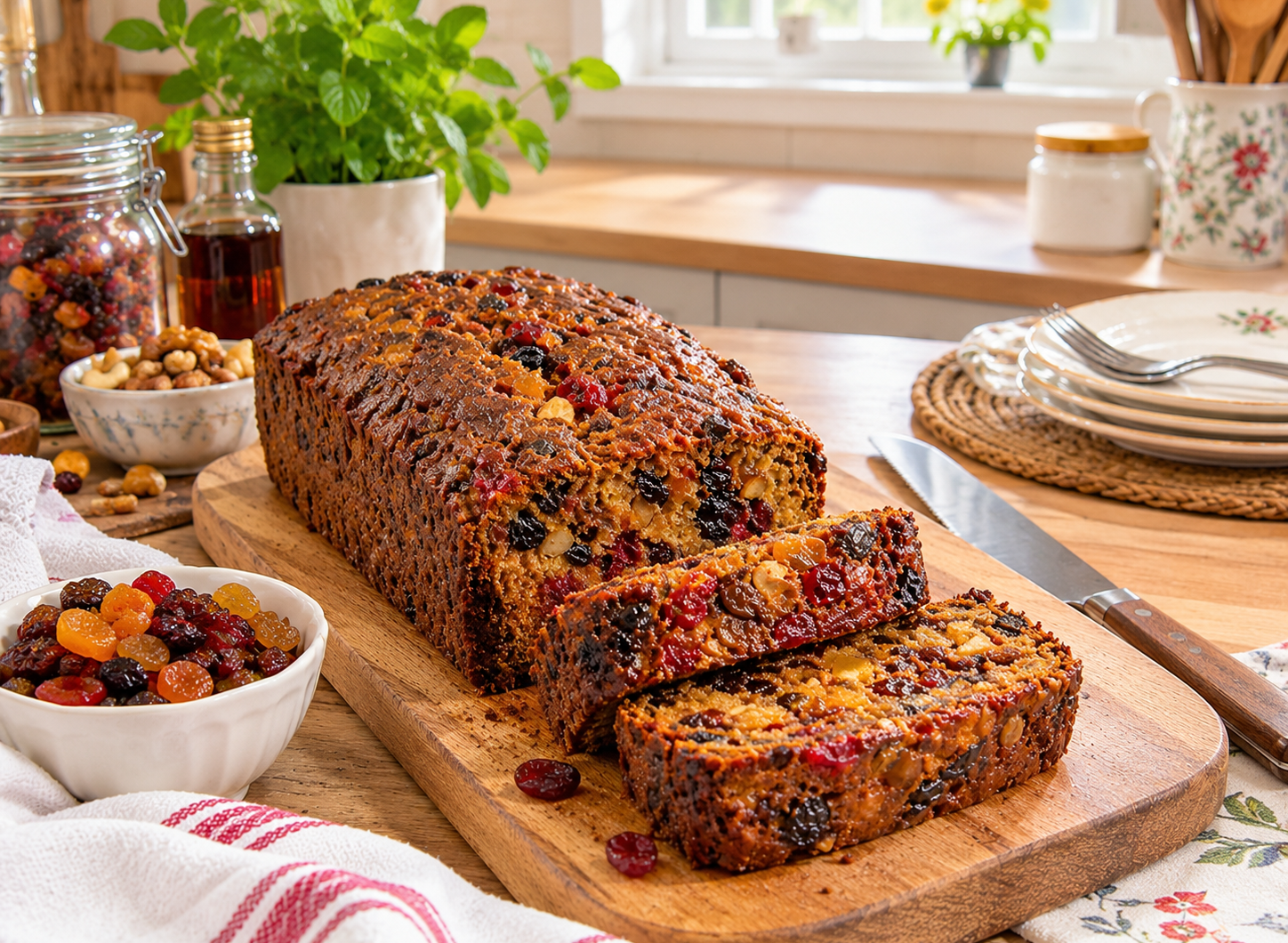
Classic Rich Fruit Cake Recipe with Rum-Soaked Fruit
A moist and flavorful homemade rum fruit cake packed with dried fruits, crunchy walnuts, candied orange peel, warm spices, and dark rum.
25
servings30
minutes1
hour33
minutes253
kcal480
minutes10
hours3
minutesIngredients
1½ pounds (680 grams / 5 cups) dried fruit (golden sultanas, raisins, currants, glace fruits, etc.)
1 cup (2 sticks / 227 grams) salted butter
1 cup (213 grams) brown sugar
1½ cups water
2 teaspoons ground cinnamon
½ teaspoon ground cloves
¼ teaspoon freshly grated nutmeg
1 teaspoon baking soda (bicarbonate of soda)
4 eggs
2 cups (250 grams) all-purpose flour
½ cup (2½ ounces / 70 grams) chopped candied orange
2 teaspoons baking powder
½ cup (120 ml) dark rum
1 cup (90 grams) chopped walnuts
¼ cup (60 ml) extra dark rum
Directions
- Cook the fruit: Add dried fruit, butter, brown sugar, water, cinnamon, cloves, and nutmeg to a large saucepan.
- Boil the mixture: Heat over medium heat, stirring regularly until the butter melts. Bring to a boil and cook for 5 minutes.
- Add baking soda: Remove from the heat and stir in the baking soda. The mixture will foam. Transfer to a large bowl and leave to cool completely, approximately 2 hours or overnight.
- Prepare the pan: Double-line a 9-inch (23 cm) round cake pan with nonstick parchment paper. Preheat the oven to 320°F (160°C).
- Prepare the eggs and flour: Lightly beat the eggs in a small bowl. Combine the all-purpose flour and baking powder in another bowl.
- Add fruit and nuts: Stir the chopped walnuts and candied orange into the cooled fruit mixture.
- Add wet ingredients: Mix in the beaten eggs and ½ cup dark rum until thoroughly combined.
- Finish the batter: Add the flour and baking powder mixture. Stir until everything is evenly incorporated.
- Fill the pan: Transfer the batter into the prepared cake pan and spread evenly.
- Bake: Bake at 320°F (160°C) for approximately 1 hour and 30 minutes. Check the center with a skewer. If wet batter remains, bake for another 10–15 minutes. Cover loosely with foil if the top browns too quickly.
- Cool slowly: Remove from the oven and wrap the cake in a clean kitchen towel while cooling in the pan.
- Add extra rum: Once completely cool, drizzle the remaining ¼ cup dark rum over the cake. Store in an airtight container.
Notes
- Choose good-quality dried fruits for the best flavor.
- Chop larger fruits, such as dates and figs, into smaller pieces.
- Keep the total dried fruit weight unchanged when using different varieties.
- Use a large saucepan because the mixture foams after adding baking soda.
- Allow the boiled fruit mixture to cool completely before adding eggs.
- Double-line the cake pan to protect the cake during its long baking time.
- Check the center with a skewer rather than relying only on baking time.
- Cool the cake slowly in the pan to help retain moisture.
- Add extra rum only after the cake has cooled.
- Store in an airtight container for up to two weeks in a cool place, or refrigerate in warm and humid conditions. The supplied recipe gives a refrigerated storage period of up to three months.
- For longer storage, wrap tightly in plastic wrap and freeze for up to one year.
Nutrition Facts
25 servings per container
- Amount Per ServingCalories253
- % Daily Value *
- Total Fat
8g
11%
- Total Carbohydrate
40g
15%
- Total Sugars 26g
- Protein 3g 6%
* The % Daily Value tells you how much a nutrient in a serving of food contributes to a daily diet. 2,000 calories a day is used for general nutrition advice.
