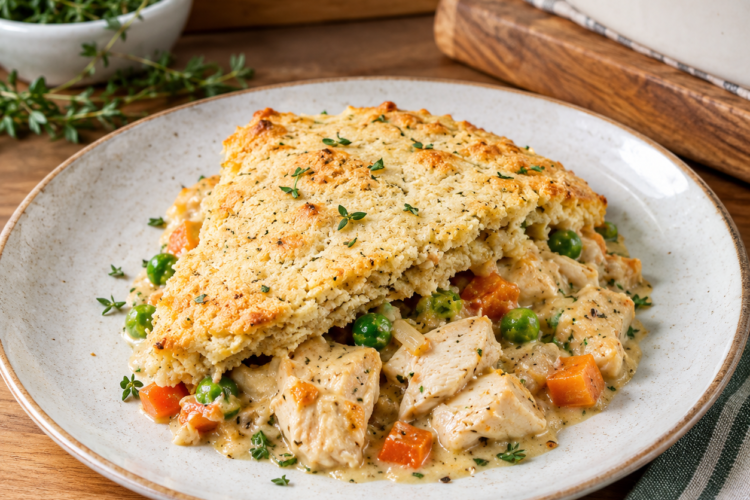
Keto Chicken Pot Pie is the kind of comforting dinner that brings together a creamy chicken filling and a tender, biscuit-style topping without relying on traditional wheat flour or a high-carb pastry crust. This low carb chicken pot pie is packed with bite-sized chicken, onion, carrots, peas, garlic, thyme, and a rich cream-based sauce. The result is a satisfying family meal that feels hearty and familiar while fitting into a keto-friendly meal plan.
A Comforting Low Carb Chicken Dinner
Traditional chicken pot pie usually contains a flour-based pastry crust and a thick sauce made with wheat flour, making it difficult to fit into a low carb lifestyle. This keto version takes a different approach by using super fine almond flour, ground flax seeds, xanthan gum, sour cream, and butter to create a biscuit-style topping. The filling remains rich and flavorful, while the topping provides a pleasant contrast to the creamy chicken mixture underneath.
The combination works particularly well because the chicken filling is prepared separately before the biscuit topping is added. This allows the broth to reduce and become naturally concentrated before heavy cream and peas are introduced. Instead of depending on a large quantity of flour or another traditional thickener, the cooking process creates a flavorful, gravy-like consistency that coats the chicken and vegetables beautifully. The finished dish can then be baked until the topping is lightly browned.
Why This Keto Chicken Pot Pie Works
One of the best features of this recipe is the balance between its creamy filling and almond flour biscuit topping. The chicken provides plenty of protein, while butter and heavy cream give the filling a satisfying richness. Garlic and dried thyme bring savory depth, and white wine vinegar adds a small amount of acidity that helps brighten the otherwise creamy sauce. The vegetables add texture and color without overwhelming the dish.
Although carrots and peas contain more carbohydrates than vegetables such as spinach, cauliflower, or leafy greens, the quantities used here are relatively small and distributed throughout the entire pie. According to the supplied recipe information, each serving contains 3 grams of net carbohydrates. This makes the recipe particularly appealing to people looking for a low carb comfort food option while still wanting the traditional character of chicken pot pie.
Choosing the Chicken
Chicken breasts are used for this recipe and should be cut into small, even cubes of approximately one-half inch. Keeping the pieces similar in size helps them cook more evenly and makes the finished pot pie easier to serve. The chicken is initially cooked in butter until it begins to brown on all sides, rather than being completely cooked at this stage. It continues cooking later as the filling simmers and during the final baking process.
Allowing the chicken to develop some color in the skillet is important because those browned areas contribute extra savory flavor to the finished filling. When the vinegar is added later, it also helps loosen the browned bits from the bottom of the skillet. Those flavorful pieces become part of the sauce, giving the pot pie a deeper taste without requiring complicated ingredients or additional seasoning.
Building the Creamy Chicken Filling
The filling begins with butter melted in a large skillet over medium-high heat. Once the butter has melted and stopped foaming, the cubed chicken is added. The chicken is cooked for about five minutes, with occasional stirring, until it starts to brown on the outside. At this point, the chicken does not need to be fully cooked because additional cooking will take place as the sauce develops.
Finely chopped yellow onion and diced carrots are then added to the skillet. A small amount of salt and pepper is used at this stage before the heat is reduced to medium-low. The vegetables cook until the onions begin to brown around the edges. This step gives the filling a more developed flavor while allowing the carrots to begin softening without becoming overly tender.
Adding Garlic and Thyme
Garlic and dried thyme are added after the onions and carrots have had time to cook. They only need about one minute in the skillet, and stirring constantly helps prevent the garlic from burning. Garlic brings a warm, savory quality to the chicken filling, while thyme adds the familiar herbal flavor often associated with classic homemade chicken pot pie.
Because garlic can become bitter if it is heavily browned, the short cooking time is useful here. The goal is simply to release its aroma and allow it to mingle with the chicken and vegetables before the liquid ingredients are introduced. This small step makes a noticeable difference in the overall flavor of the filling.
The Secret to a Richer Sauce
White wine vinegar may seem unusual in a creamy chicken pot pie, but it serves an important purpose. When it is stirred into the skillet, it helps lift the browned bits from the bottom of the pan. The vinegar is cooked until almost completely evaporated, leaving behind its acidity while allowing the savory flavors already developed in the skillet to remain.
Low-sodium chicken broth is then added, and the mixture is brought to a stronger simmer. Using low-sodium broth is especially useful because the liquid is reduced for approximately 15 to 20 minutes. As water evaporates, the flavor becomes more concentrated. Starting with heavily salted broth could therefore make the final filling excessively salty once the reduction is complete.
How to Know When the Filling Is Ready
The broth needs to reduce until it becomes noticeably thicker. Rather than relying only on a precise cooking time, the supplied recipe gives a practical visual test: draw a line across the bottom of the skillet with a spoon. If the liquid immediately flows back together, the mixture needs more time. If the line remains visible briefly, the broth has reached the desired consistency.
Once the broth has reduced, heavy cream and peas are added. The mixture is brought back to a simmer and then cooked over low heat until it becomes thick and gravy-like. This final stage is important because the filling should not be watery when it goes into the baking dish. A thicker filling helps the biscuit topping sit neatly on top and gives the finished pie a more substantial texture.
Preparing the Keto Biscuit Topping
The biscuit-style topping is made without traditional wheat flour. Super fine almond flour provides the main structure, while ground flax seeds contribute additional texture. Xanthan gum helps the mixture hold together, and baking powder provides some lift. Sea salt rounds out the dry ingredients before butter, sour cream, and egg white are incorporated.
The dry ingredients should first be whisked together thoroughly. Cold or firm chunks of butter are then worked into the mixture using a pastry blender. The goal is to create a mealy texture rather than completely blending the butter into a smooth paste. Small pieces of butter distributed throughout the mixture help produce a more biscuit-like result once the topping is baked.
Bringing the Dough Together
In a separate small bowl, the sour cream and egg white are whisked together before being added to the dry mixture. Stirring them into the almond flour mixture creates a dough that can be gathered into a ball. Because almond flour dough behaves differently from wheat-based dough, it is best handled gently rather than kneaded extensively.
The dough is placed onto parchment paper or a surface lightly dusted with almond flour. Clean hands or an almond-flour-dusted rolling pin can then be used to press or roll the dough into an approximately eight-inch circle. Keeping the topping in one piece makes it easier to transfer onto the filling without disturbing the creamy mixture underneath.
Assembling the Chicken Pot Pie
Once the filling has reached its gravy-like consistency, it is transferred to the prepared nine-inch round baking pan. The biscuit dough is then gently placed over the chicken filling. There is no need to press the topping deeply into the filling. It should rest on top, creating a separate biscuit layer that browns during baking.
The oven should already be preheated to 400°F, and the baking pan should be greased before the filling is added. The assembled pot pie is baked for approximately 10 to 12 minutes. Since the filling is already hot and cooked before assembly, the short baking time is primarily intended to cook and brown the biscuit topping.
Getting the Best Biscuit Topping
The topping should be watched closely during the final minutes of baking because almond flour can brown relatively quickly. The goal is a lightly browned surface with a cooked, tender texture. Depending on the individual oven and baking pan, the exact browning time can vary slightly, so visual appearance is a useful guide alongside the stated 10-to-12-minute baking period.
Another important consideration is the consistency of the filling before baking. If the sauce is too thin, it can make the topping less appealing and may cause the finished dish to feel watery. Taking enough time to reduce the chicken broth before adding the cream is therefore one of the most important parts of the recipe.
Serving This Low Carb Comfort Food
This keto chicken pot pie can be served as a complete meal because it already contains chicken, vegetables, a rich sauce, and a biscuit-style topping. The eight-serving portion listed in the original recipe makes it practical for a family dinner or for preparing several portions at once. Letting the pie rest briefly after baking can also make serving easier because the filling has a chance to settle.
The combination of tender chicken, creamy gravy, small pieces of vegetables, and a buttery almond flour topping creates the comforting character people expect from a classic pot pie. It is a useful option for evenings when you want something warmer and more substantial than a simple chicken dish but still want to keep the meal relatively low in carbohydrates.
Keto-Friendly Meal Planning
For people following a keto or low carb eating pattern, comfort food can sometimes be difficult to recreate because many traditional recipes depend on flour, potatoes, pastry, or other high-carbohydrate ingredients. This recipe addresses that issue by focusing on the components that provide the most flavor and texture while using almond flour in place of conventional flour for the topping.
The supplied nutritional information lists 219 calories, 11 grams of fat, 6 grams of carbohydrates, 3 grams of fiber, and 24 grams of protein per serving. It also lists 3 grams of net carbohydrates per serving. Nutritional values can vary depending on the specific brands and ingredients used, so the provided figures should be treated as recipe estimates rather than universal values.
Ingredient Details That Matter
The ingredient list is relatively straightforward, but each component has a specific purpose. Butter is used in both the chicken filling and biscuit topping, contributing richness and helping develop flavor. Chicken breasts form the protein base, while onion, carrots, garlic, thyme, peas, and pepper build the savory profile. White wine vinegar helps balance the sauce, and low-sodium chicken broth provides the liquid for the reduction.
For the topping, super fine almond flour creates the main flour substitute, while ground flax seeds and xanthan gum help provide structure. Baking powder contributes lift, and sour cream adds moisture and richness. Egg white helps bind the mixture. Keeping the listed quantities unchanged is important for maintaining the intended consistency of both the filling and topping.
Making the Recipe Successfully
The most important technique in this recipe is patience during the broth-reduction stage. The chicken filling needs enough time for the broth to reduce and concentrate before the cream is added. Rushing this step can leave too much liquid in the skillet, resulting in a thinner filling. Watching the consistency rather than relying exclusively on the clock makes it easier to achieve the intended gravy-like texture.
It is also useful to prepare the biscuit topping while the broth is reducing. This keeps the cooking process efficient without requiring the filling to sit for a long period. Once the topping is shaped, the filling should be finished and transferred to the prepared pan before the biscuit dough is placed over it. This creates a smooth transition from stovetop preparation to oven baking.
Notes for the Best Results
Keep the Broth Low in Sodium
Low-sodium chicken broth is recommended because the broth is reduced significantly during cooking. Reduction concentrates not only the chicken flavor but also the salt already present in the liquid. Starting with low-sodium broth gives you more control over the final seasoning, especially because salt is added at different stages of the recipe.
Taste Before Final Seasoning
The filling receives salt and pepper during preparation, but the final seasoning should be adjusted only after the heavy cream and peas have been incorporated. This prevents unnecessary oversalting. Taste the finished gravy-like filling before adding additional seasoning, and use the listed sea salt and freshly ground black pepper as needed.
Handle the Biscuit Dough Gently
The almond flour topping is different from traditional wheat dough and does not need heavy kneading. Once the wet ingredients have been incorporated, gather the mixture into a ball and gently press or roll it into a circle. Using parchment paper or a lightly almond-flour-dusted surface can make this process easier.
Notes
Net Carbohydrates
The supplied recipe states that each serving contains 3 grams of net carbohydrates. The serving size is listed as one-eighth of the pie.
Portion Size
The recipe is designed to make eight servings. Dividing the finished pie into eight portions provides the serving size used for the supplied nutritional information.
Nutritional Information
The supplied values per serving are 219 calories, 11 grams of fat, 6 grams of carbohydrates, 3 grams of fiber, and 24 grams of protein. These figures correspond to the original ingredient quantities provided with the recipe.
Dietary Suitability
The original recipe describes this dish as suitable for keto, Atkins, Banting, and other low carb diets. Anyone following a specific dietary plan should check the labels of individual ingredients, particularly broth, dairy products, and baking ingredients, because formulations can vary between brands.
Why You’ll Want to Make This Recipe
This keto chicken pot pie is a strong choice when you want a homemade dinner that combines the familiar comfort of chicken pot pie with a lower-carbohydrate approach. The creamy chicken filling is flavorful and hearty, while the almond flour biscuit topping provides the baked element that makes the dish feel complete. With straightforward preparation and a short final baking time, it is well suited to a comforting family meal.
The recipe also demonstrates that a low carb dinner does not have to feel plain or restrictive. Small quantities of carrots and peas add traditional pot pie character, while garlic, thyme, butter, chicken broth, and cream create a rich savory base. The result is a satisfying dish with a familiar homemade feel and a biscuit-style topping that complements the creamy filling.
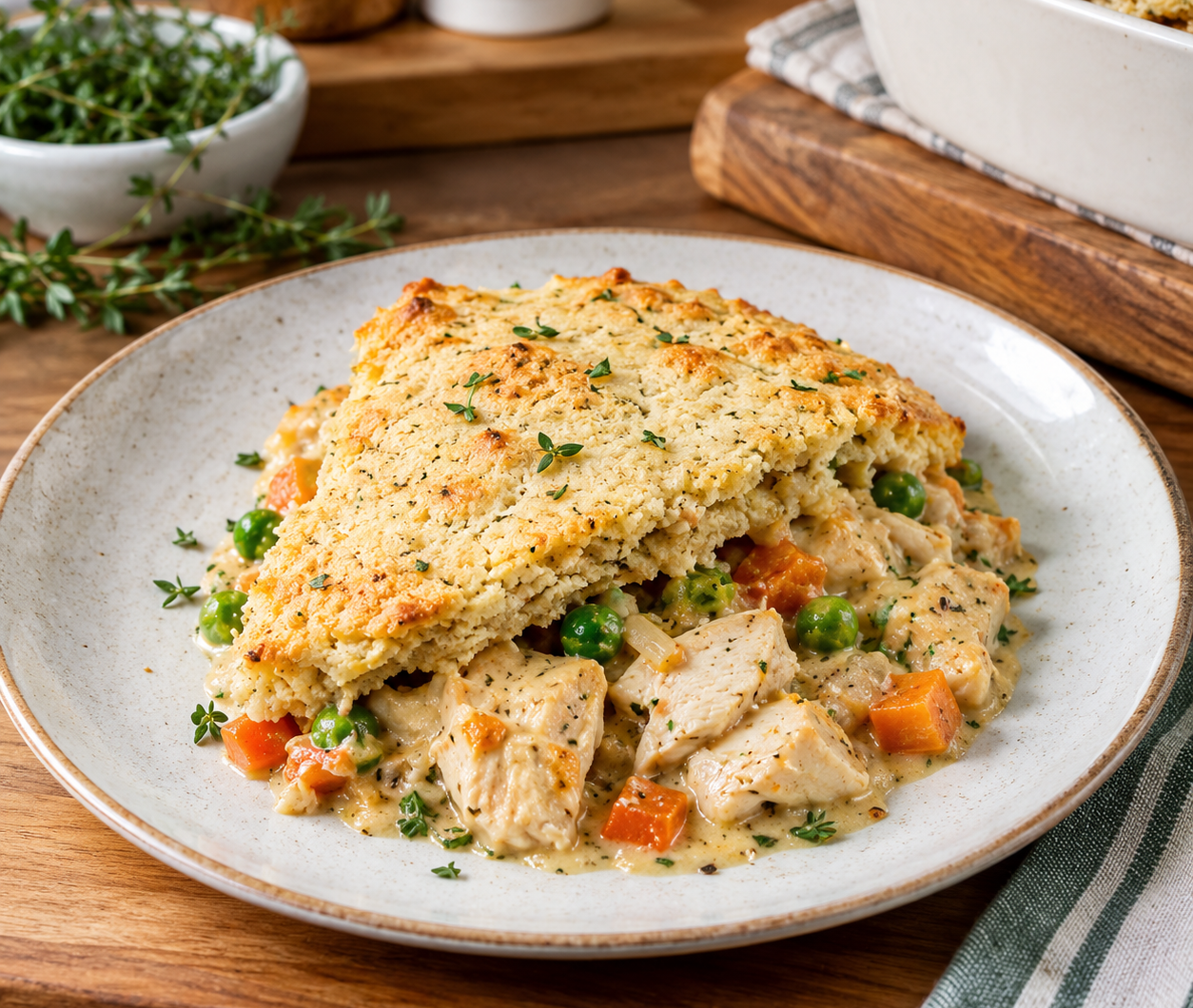
Keto Chicken Pot Pie
A creamy and comforting low carb chicken pot pie made with tender chicken breasts, onion, carrots, peas, garlic, thyme, and a rich gravy-like sauce, finished with a buttery almond flour biscuit topping.
8
servings20
minutes35
minutes219
kcal55
minutesIngredients
- For the Chicken Filling
1 tablespoon butter
1.5 pounds chicken breasts, cut into 1/2-inch cubes
4 ounces yellow onion, finely chopped
1/4 cup carrots, finely diced
1 clove garlic, crushed
1/2 teaspoon dried thyme
1 tablespoon white wine vinegar
1 cup low-sodium chicken broth
1/4 cup fresh or frozen peas, no need to defrost
1/2 cup heavy cream
1/4–1/2 teaspoon sea salt, to taste
1/4 teaspoon freshly ground black pepper
- For the Biscuit Topping
1 cup super fine almond flour
1 tablespoon ground flax seeds
1/2 teaspoon xanthan gum
1 teaspoon baking powder
1/4 teaspoon sea salt
2 tablespoons butter, cut into large chunks
2 tablespoons sour cream
1 egg white
Directions
- Preheat the oven to 400°F. Grease a 9-inch round baking pan and set it aside.
- Heat a large skillet over medium-high heat. Melt the butter. Once it has melted and stopped foaming, add the cubed chicken. Cook for about 5 minutes, stirring occasionally, until the chicken begins to brown on all sides.
- Add the white wine vinegar and scrape the browned pieces from the bottom of the skillet. Continue cooking until the vinegar has almost completely evaporated.
- Stir in the crushed garlic and dried thyme. Cook for approximately 1 minute, stirring constantly.
- Add the white wine vinegar and scrape the browned pieces from the bottom of the skillet. Continue cooking until the vinegar has almost completely evaporated.
- Pour in the low-sodium chicken broth. Increase the heat to medium-high and bring the mixture to a simmer.
- Simmer for approximately 15–20 minutes, stirring occasionally, until the broth has thickened. The mixture is ready when a spoon can create a line across the bottom of the pan and the liquid does not immediately flow back over it.
- Add the heavy cream and peas. Bring the mixture back to a simmer, then reduce the heat to low. Continue simmering until the filling becomes thick and gravy-like. Taste and adjust the salt and pepper if necessary.
- While the filling is reducing, combine the almond flour, ground flax seeds, xanthan gum, baking powder, and sea salt in a medium bowl.
- Whisk the sour cream and egg white together in a small bowl. Stir this mixture into the almond flour mixture until a dough forms.
- Cut the butter into the dry ingredients using a pastry blender until the mixture has a mealy texture.
- Gather the dough into a ball. Place it on parchment paper or a surface lightly dusted with almond flour. Using clean hands or an almond-flour-dusted rolling pin, press or roll the dough into an approximately 8-inch circle.
- Pour the prepared chicken filling into the greased baking pan. Carefully place the biscuit dough over the top of the filling.
- Place the assembled pot pie in the preheated oven. Bake for 10–12 minutes, or until the biscuit topping is browned.
- Allow the pot pie to rest briefly before dividing it into eight portions and serving.
Nutrition Facts
- Calories: 219kcal
- Fat: 11g
- Carbohydrates: 6g
- Fiber: 3g
- Protein: 24g
