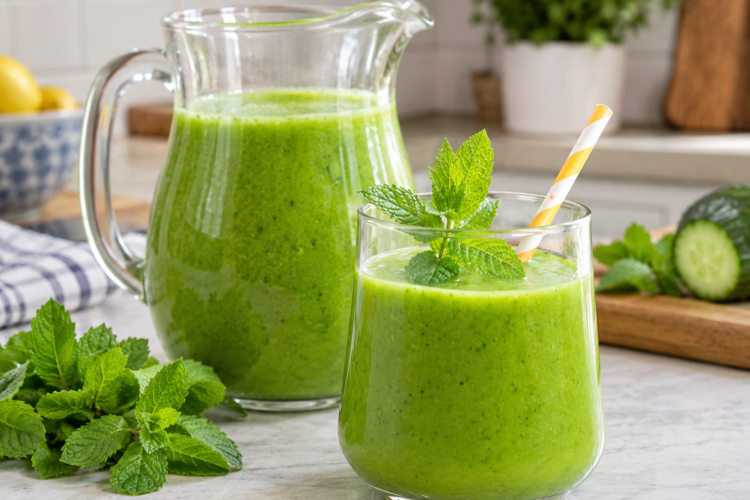
A Green Smoothie with Mint is a refreshing way to enjoy leafy greens, naturally sweet fruit, and cooling herbs in one delicious drink. Made with spinach, cucumber, avocado, banana, pineapple, fresh mint, lemon juice, and coconut water, this easy green smoothie recipe combines bright flavors with a smooth, creamy texture. It is an excellent choice for breakfast, a light snack, or a refreshing afternoon drink when you want something quick and satisfying.
This healthy green smoothie is naturally vegan when prepared with the ingredients listed, contains no added sugar, and brings together several servings of fruits and vegetables. The sweetness comes from banana and pineapple, while spinach adds a mild green flavor that blends beautifully with the other ingredients. Fresh mint and lemon juice brighten the entire drink, creating a balanced combination of sweetness, gentle tartness, and cool herbal freshness.
One of the best features of this mint green smoothie is its creamy consistency without milk, yogurt, or other dairy products. Ripe avocado provides richness and body, while frozen banana slices and pineapple help create a thick, chilled texture. Coconut water keeps the mixture light and refreshing, making this smoothie a useful option for anyone looking for a dairy-free breakfast drink that is easy to prepare and full of natural flavor.
Why You Will Love This Healthy Green Smoothie
There are plenty of reasons to add this spinach and mint smoothie to your regular breakfast routine. First, it requires only a few minutes of preparation and uses simple ingredients that are easy to find at most grocery stores. Once everything is washed, measured, and added to the blender, the smoothie comes together in less than a minute. It is particularly convenient on busy mornings when you want a homemade drink without cooking or washing several pans.
Another reason to enjoy this recipe is its combination of fresh and frozen ingredients. Frozen banana and pineapple chill the drink while helping create a thicker texture, whereas cucumber and spinach contribute freshness. Avocado brings a smooth, velvety quality that makes the smoothie feel more substantial than a simple fruit juice. These ingredients work together to create a refreshing drink that tastes fruity and minty rather than overwhelmingly green.
This easy green smoothie recipe is also adaptable to different tastes and dietary preferences. You can use coconut water for a light tropical flavor, filtered water for a simpler taste, or unsweetened almond milk if you prefer a slightly richer drink. The basic recipe is vegan and contains no added sugar, although the natural sugar content depends on the fruit used. You can also adjust the mint and lemon juice to suit your personal preference.
What Makes This Spinach and Mint Smoothie Special?
Spinach is the main leafy green in this recipe, but it does not overpower the drink. Its mild flavor combines well with the sweetness of pineapple and banana, while fresh mint gives every sip a cooling finish. Cucumber adds another layer of freshness, helping the smoothie taste light and clean. Together, these ingredients create a balanced green drink that is approachable even for people who are still learning to enjoy vegetable-based smoothies.
The texture is just as important as the flavor. Some green smoothies become watery when they contain too much liquid, while others can feel fibrous if the ingredients are not blended thoroughly. This recipe uses avocado and frozen fruit to help create a smooth consistency, with enough liquid to keep the blender moving. Blending for approximately 30 to 45 seconds usually works well, although the exact time will depend on the power of your blender and the size of the fruit pieces.
Fresh mint is the ingredient that gives this recipe its distinctive character. Rather than relying only on fruit for flavor, the smoothie uses finely chopped mint leaves to provide a naturally cooling aroma. Lemon juice adds brightness and helps balance the sweetness of the pineapple and banana. The result is a homemade green smoothie that feels fresh and vibrant without needing syrups, sweeteners, or artificial flavorings.
Ingredients for Green Smoothie with Mint
Spinach
Spinach provides the green color and a mild leafy flavor that works well with sweet fruit. Both baby spinach and mature spinach are suitable for this recipe. Baby spinach is usually more tender and convenient, while mature spinach may have thicker stems that are better removed before blending. Wash the leaves thoroughly and drain them well to remove any dirt or excess water before measuring one cup.
Spinach also contributes nutrients such as vitamin K, vitamin A precursors, folate, and other vitamins and minerals. Because the leaves are blended with fruit, cucumber, and avocado, their flavor becomes less noticeable than it would in a plain vegetable drink. This makes spinach a useful ingredient for anyone who wants to include more leafy greens in a breakfast smoothie without making the finished drink taste strongly vegetal.
Coconut Water, Water, or Unsweetened Almond Milk
One cup of liquid helps the ingredients blend into a drinkable consistency. Coconut water provides a light tropical taste that complements the pineapple, while filtered water offers a more neutral flavor. Unsweetened almond milk creates a slightly fuller texture and is a suitable alternative for those who prefer a creamier dairy-free smoothie. Choose the liquid that best matches your taste and the ingredients you already have available.
If you use coconut water, check the label for added sugar if your goal is to keep the recipe free of added sweeteners. The liquid also affects how thick the smoothie becomes, so you can adjust the amount slightly if your blender struggles with frozen fruit. Start with the listed quantity, blend thoroughly, and add a small splash more only if needed.
Avocado
Half an avocado gives this green smoothie a creamy texture and helps the ingredients blend into a satisfying drink. Its mild taste does not compete with the pineapple, mint, or lemon juice. Instead, it softens the sharper flavors and adds richness without requiring cream, yogurt, or dairy milk. Use a ripe avocado that yields gently when pressed but does not have large brown or damaged areas inside.
Avocado supplies mostly unsaturated fats, along with fiber and several nutrients. These qualities make it a useful addition to smoothies when you want a richer texture and a drink that feels more substantial. Because avocado can vary in size, the exact nutritional values of the finished smoothie may differ from one batch to another.
Cucumber
Half a cup of chopped cucumber brings a cool, refreshing taste to the recipe. English and Persian cucumbers are particularly suitable because they often have a mild flavor and relatively small seeds. Peel the cucumber and remove the seeds as specified in the ingredient list before chopping it into manageable pieces. This preparation helps create a smooth drink and reduces the chance of large pieces remaining after blending.
Cucumber contains a high proportion of water, making it a natural choice for a refreshing smoothie. Its gentle flavor works especially well with mint and lemon, creating a combination reminiscent of fresh herbal water but with the creaminess of avocado and banana. If your cucumber tastes unusually bitter, choose another one for the best flavor.
Frozen Banana Slices
One-third cup of frozen banana slices contributes natural sweetness and helps thicken the smoothie. Banana softens the stronger green notes of spinach and cucumber while complementing the tropical flavor of pineapple. Freezing the banana before blending also helps keep the drink cold without needing a large amount of ice, which can dilute the finished flavor as it melts.
For convenient preparation, peel the banana before freezing it. Slice it into small pieces, arrange them in a suitable freezer bag or container, and freeze until firm. Keeping frozen banana on hand makes this recipe easier to prepare whenever you need a quick breakfast or snack.
Frozen Pineapple Chunks
Frozen pineapple adds a sweet-tart tropical flavor that balances the earthier taste of spinach. Its natural acidity works particularly well with fresh mint and lemon juice, creating a bright flavor that makes this healthy green smoothie taste lively rather than heavy. The frozen chunks also help chill the drink and contribute to its thick consistency.
Measure three-quarters of a cup of frozen pineapple chunks for the recipe. If the pieces are particularly large, break them into smaller chunks before blending, especially when using a less powerful blender. Pineapple sweetness varies depending on ripeness, so the finished smoothie may taste slightly sweeter or more tart from batch to batch.
Fresh Mint Leaves
Fresh mint is the defining ingredient in this smoothie. Three tablespoons of finely chopped mint leaves provide a clear herbal aroma and a cooling flavor that complements the fruit and vegetables. Spearmint is a good starting choice because its flavor is generally gentle and familiar. Other varieties can work too, but stronger peppermint may require a smaller quantity to avoid overpowering the pineapple and banana.
Wash the mint carefully, remove any damaged leaves, and chop it before adding it to the blender. Finely chopping the leaves helps distribute the mint flavor throughout the drink and makes it easier to blend evenly. Start with the stated amount rather than adding a large handful, because excessive mint can create a sharp or bitter taste.
Fresh Lemon Juice
One tablespoon of fresh lemon juice brings the other ingredients together. Its bright acidity balances the sweetness of the frozen fruit and complements the refreshing combination of cucumber and mint. Freshly squeezed lemon juice is ideal because it provides a clean, lively flavor without the processed taste that some bottled juices can have.
If you prefer a more tart smoothie, you can adjust the lemon flavor when serving future batches. However, the original recipe uses one tablespoon, which offers a useful balance between sweetness, creaminess, and citrus freshness. Add the measured juice directly to the blender so it is evenly distributed throughout the drink.
How to Make Green Smoothie with Mint
Step 1: Prepare the Ingredients
Begin by washing the spinach, cucumber, and mint leaves thoroughly. Remove tough spinach stems, peel the cucumber, and remove its seeds before chopping enough cucumber to measure half a cup. Finely chop the mint leaves, cut the avocado in half, and measure the frozen banana slices and pineapple chunks. Preparing everything before blending makes the process quicker and helps ensure the proportions remain balanced.
Step 2: Add Everything to the Blender
Place one cup of spinach leaves and one cup of your chosen liquid into the blender. Add half an avocado, half a cup of chopped cucumber, one-third cup of frozen banana slices, three-quarters of a cup of frozen pineapple chunks, three tablespoons of finely chopped mint, and one tablespoon of fresh lemon juice. Make sure the lid is secured before switching on the blender.
Adding the liquid with the spinach can help the blades move the leafy ingredients around more easily. If your blender has difficulty processing frozen fruit, pause the machine and use its tamper only if the appliance is designed for one. Avoid forcing the motor to run when the blades are stuck, as this can strain the appliance.
Step 3: Blend Until Smooth
Blend the ingredients for approximately 30 to 45 seconds, or until the mixture reaches your preferred consistency. Check the smoothie after the first blending cycle. If you can still see large spinach pieces or chunks of fruit, continue blending briefly until the drink looks evenly mixed. A high-speed blender may finish more quickly, while a smaller appliance may need a little extra time.
For a thicker smoothie, use well-frozen fruit and avoid adding extra liquid too soon. If the mixture is too thick to pour, add a small amount of your chosen liquid and blend again. For a thinner drink, add more liquid gradually until the smoothie reaches the consistency you enjoy. Small adjustments are usually enough to improve the texture without changing the overall flavor significantly.
Step 4: Pour and Serve Immediately
Once the smoothie is smooth and creamy, pour it into a serving glass and enjoy it straight away. Freshly blended smoothies generally have their best texture and most vibrant appearance immediately after preparation. You can serve the drink as a quick breakfast, a midmorning refreshment, or an afternoon snack when you want a cold, fruit-filled option.
If desired, garnish the glass with a small mint leaf or a thin cucumber slice. These additions are optional and are not required for the original recipe. Since this recipe makes one serving, you can prepare it in a single blender session without needing to store a large batch for later.
Tips for the Best Mint Green Smoothie
Adjust the Consistency to Your Preference
The ideal smoothie should be creamy enough to feel satisfying but light enough to pour easily into a glass. Frozen banana and pineapple naturally help thicken this recipe, while avocado adds a smooth texture. If you prefer an extra-thick smoothie, use thoroughly frozen fruit and avoid adding more liquid than necessary. If you prefer a lighter drink, add a little extra coconut water, filtered water, or unsweetened almond milk and blend again.
You can also experiment with the balance between fresh and frozen ingredients. Frozen ingredients are helpful when you want a cold smoothie without ice, while fresh fruit and vegetables can produce a lighter texture. If you are using fresh banana and pineapple instead of frozen, add a handful of ice if desired and reduce the liquid slightly at first. Blend until smooth, then adjust the texture gradually.
Chop the Mint Before Blending
Although a blender can process many ingredients, chopping mint leaves before adding them helps distribute their flavor more evenly. This simple preparation step can also reduce the likelihood of finding larger pieces of leaf in the finished drink, particularly if your blender is not designed for very fine blending. Remove any damaged leaves and use fresh, fragrant mint for the best result.
Mint has a distinctive flavor that can quickly become dominant when too much is used. If you are unfamiliar with adding fresh herbs to smoothies, begin with the specified three tablespoons and adjust the amount in future batches if needed. The goal is to create a refreshing herbal note that complements the pineapple and lemon rather than overpowering the entire drink.
Choose Ripe Fruit for Natural Sweetness
The ripeness of your banana and pineapple influences the final flavor of this smoothie. A ripe banana generally tastes sweeter and blends more easily than an underripe one. Pineapple also varies in sweetness depending on the fruit and how it was prepared before freezing. Using flavorful fruit helps balance the spinach and cucumber without requiring additional sweeteners.
Because this recipe already includes banana and pineapple, there is usually no need to add sugar, honey, or syrup. If the finished smoothie tastes more tart than you prefer, check the ripeness of the fruit when preparing your next batch. Remember that adding sweeteners would change the original recipe and its nutritional profile.
Use a Blender That Can Handle Frozen Fruit
A blender with sharp blades and sufficient power makes it easier to achieve a smooth texture with frozen pineapple and banana. If your blender is less powerful, cut large fruit chunks into smaller pieces and add the liquid first. Blend in short intervals if necessary, allowing the ingredients to settle toward the blades between cycles. Always follow the manufacturer’s instructions when working with frozen ingredients.
Avoid filling the blender beyond its recommended capacity. This recipe makes one serving, so a personal blender or standard kitchen blender should generally be suitable. If you double the recipe, check that the container has enough room for the additional ingredients to circulate freely.
Optional Additions and Variations
Add Fresh Ginger for Extra Zing
Fresh ginger is an optional addition for anyone who enjoys a slightly spicy finish. Grate one teaspoon of fresh ginger into the blender to introduce a warm, peppery flavor that contrasts with the cool mint and cucumber. Ginger pairs naturally with pineapple and lemon, giving the smoothie a brighter and more pronounced taste.
This addition is entirely optional and is not included in the original ingredient list or nutritional calculation. Start with the suggested quantity if you decide to experiment, particularly if you prefer a mild flavor. You can adjust the amount when preparing future servings to suit your taste.
Include an Optional Protein Boost
If you want a more substantial smoothie, consider adding a protein-rich ingredient. The original recipe includes avocado, which contributes a modest amount of protein, but it is not a high-protein drink by itself. A scoop or two of vanilla protein powder can increase the protein content, although the exact amount depends on the product you choose.
Another optional addition mentioned for this recipe is one-quarter cup of cauliflower rice. It has a relatively mild flavor and can add more vegetable content without substantially changing the smoothie’s overall character. You can also experiment with collagen powder, but its protein content and nutritional contribution will depend on the brand and serving size. These additions change the original recipe and are not included in the nutrition information below.
Replace Some Spinach with Kale
Kale offers another way to prepare a green smoothie with leafy vegetables. You can replace half or all of the spinach with kale if you enjoy its more pronounced flavor. Kale provides nutrients such as vitamins C and K, and its taste works well with pineapple, banana, mint, and lemon juice.
For a smoother result, remove thick kale stems and chop the leaves before blending. Because kale can have a stronger flavor and firmer texture than baby spinach, start with a partial substitution if you are trying it for the first time. This is an optional variation rather than a change to the original recipe.
Try Chia Seeds or Ground Flaxseed
Chia seeds and ground flaxseed are additional ingredients you can consider when you want to experiment with texture and fiber. One tablespoon of ground flaxseed or one tablespoon of whole chia seeds can be blended into the smoothie. Chia seeds may thicken the drink as they absorb liquid, while ground flaxseed generally blends into the mixture with less noticeable texture.
If you add seeds or other nutritional boosters, the final calorie, fat, fiber, and protein values will change. For the original recipe, keep these ingredients out and follow the quantities in the recipe card. This ensures the smoothie retains its intended flavor and consistency.
When to Enjoy This Healthy Green Smoothie
A Quick Breakfast
This spinach, pineapple, and mint smoothie is convenient for mornings when you want a quick homemade breakfast without preparing a cooked meal. Its combination of fruit, vegetables, avocado, and liquid makes it more substantial than a simple glass of juice. You can prepare the ingredients in advance, then blend everything when you are ready to eat.
Whether the smoothie is enough for breakfast depends on your appetite and daily nutritional needs. Some people may find one serving satisfying on its own, while others may prefer to pair it with oatmeal, whole-grain toast, eggs, or another breakfast food. Choosing a complementary food can help make breakfast more filling and varied.
A Refreshing Afternoon Snack
This green smoothie is also a practical afternoon snack, particularly when you want something cold and refreshing instead of a packaged sweet drink. The pineapple provides tropical sweetness, the cucumber contributes a cool taste, and the mint creates a fresh finish. Since the ingredients require little preparation, the recipe is easy to fit into a busy day.
You can make it whenever you need a quick snack, whether you are working at home or taking a break between activities. For the best flavor, blend the ingredients shortly before drinking rather than leaving the prepared smoothie sitting for several hours.
A Post-Activity Refreshment
After everyday activities or light exercise, this smoothie can be an enjoyable way to consume fluids and fruit. Coconut water provides liquid and naturally occurring electrolytes, while the banana and pineapple contribute carbohydrates. However, the drink should not automatically be considered a complete recovery meal, particularly after strenuous exercise, because its protein content is relatively modest.
If you need a more substantial post-workout option, you can pair the smoothie with a suitable source of protein or use an optional protein addition. Your individual needs will depend on the type and intensity of your activity, as well as your overall diet.
Is a Green Smoothie with Mint Healthy?
This recipe combines spinach, cucumber, avocado, banana, pineapple, mint, and lemon juice, providing a range of nutrients from whole fruits and vegetables. Spinach contributes several vitamins and minerals, avocado provides unsaturated fats, and the fruit supplies carbohydrates and natural sugars. The ingredients also contribute dietary fiber, which is one reason a blended whole-fruit smoothie differs from juice that has had its pulp removed.
The smoothie contains no added sugar when prepared according to the original ingredient list, but it does contain naturally occurring sugar from banana and pineapple. For that reason, it is more accurate to describe it as a no-added-sugar smoothie rather than a sugar-free drink. Its nutritional suitability depends on your dietary requirements, portion size, and the rest of your meals throughout the day.
The avocado makes this recipe creamier and contributes fat, while the spinach and cucumber add vegetables without making the drink overly heavy. The combination offers variety in a convenient format, but a smoothie should complement a balanced diet rather than replace every serving of whole fruit and vegetables. Eating a variety of foods throughout the day remains important for overall nutrition.
Frequently Asked Questions
Can I Make This Green Smoothie Without Coconut Water?
Yes. The recipe specifically allows filtered water or unsweetened almond milk as alternatives to coconut water. Filtered water produces a lighter, more neutral flavor, while unsweetened almond milk gives the smoothie a slightly richer consistency. Use one cup of whichever option you prefer, then adjust the texture slightly after blending if necessary.
Can I Use Fresh Banana and Pineapple Instead of Frozen Fruit?
Yes, although the smoothie may be less thick and cold. Frozen banana and pineapple help create the original recipe’s chilled, creamy texture. If using fresh fruit, add a handful of ice if you want a colder drink and begin with a little less liquid. Blend thoroughly and adjust as needed.
Can I Prepare This Smoothie Ahead of Time?
Freshly blended is best for flavor and texture, but you can prepare it a little ahead if necessary. Transfer the smoothie to a clean, airtight container, refrigerate promptly, and consume it as soon as practical, preferably the same day. Separation and some color changes can occur during storage, so stir or shake the smoothie before drinking.
Can I Make This Green Smoothie Without Avocado?
You can omit the avocado, but doing so changes the original recipe. The drink will generally be less creamy and may have a thinner texture. If you want to follow the original recipe exactly, retain half an avocado as listed. If you experiment with substitutions, adjust the liquid gradually and remember that the nutritional information will no longer be the same.
Does This Recipe Contain Added Sugar?
No. The original ingredient list contains no added sugar, syrup, or honey. Its sweetness comes primarily from the banana and pineapple. Coconut water may contain added sugar depending on the product, so check the label and choose an unsweetened option if avoiding added sweeteners is important to you.
How Can I Prevent the Smoothie from Tasting Too Minty?
Measure the mint carefully and chop it finely before blending. Fresh mint can vary in strength, and peppermint is often more intense than spearmint. If you are especially sensitive to herbal flavors, use a milder variety and avoid adding extra leaves without tasting the mixture first. For the original recipe, the specified three tablespoons provide the intended mint-forward flavor.
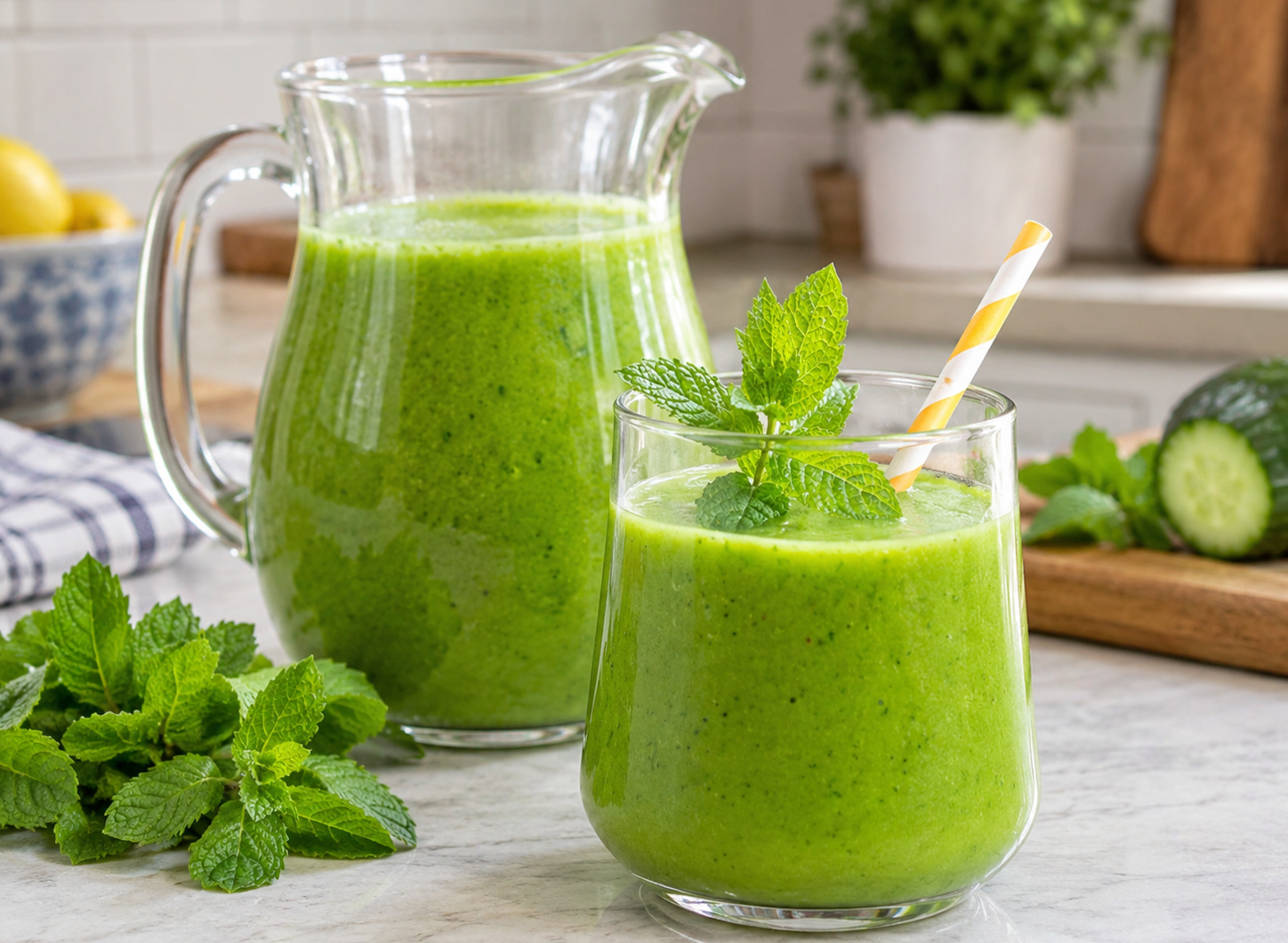
Green Smoothie with Mint Recipe – Fresh, Healthy, and Naturally Delicious
A fresh, creamy, and naturally sweet green smoothie made with spinach, cucumber, avocado, frozen banana, pineapple, mint, and lemon juice. This quick vegan smoothie contains no added sugar and is perfect for breakfast or a refreshing snack.
1
servings5
minutes341
kcalIngredients
1 cup spinach leaves, tough stems removed
1 cup coconut water, water, or unsweetened almond milk
1/2 avocado
1/2 cup chopped cucumber, peeled and seeds removed
1/3 cup frozen banana slices
3/4 cup frozen pineapple chunks
3 tablespoons finely chopped mint leaves
1 tablespoon fresh lemon juice
Directions
- Prepare the ingredients: Wash the spinach and mint. Remove tough spinach stems, peel and deseed the cucumber, chop the cucumber, and finely chop the mint leaves.
- Add to the blender: Place the spinach, coconut water or chosen liquid, avocado, cucumber, frozen banana, frozen pineapple, mint, and lemon juice into a blender.
- Blend until smooth: Blend for 30–45 seconds, or until the ingredients are thoroughly combined and the smoothie reaches your preferred consistency.
- Adjust if necessary: If the smoothie is too thick, add a small amount of liquid and blend again. If you are using fresh fruit instead of frozen, add ice if desired.
- Serve immediately: Pour into a serving glass and enjoy while fresh.
Notes
- To freeze bananas, remove the peel, slice the banana into chunks, and freeze in a freezer-safe bag or container.
- If frozen ingredients are unavailable, reduce the liquid slightly and add a handful of ice to keep the smoothie cold.
- Chop the mint before blending to help distribute its flavor evenly.
- Use unsweetened coconut water or almond milk if you want to avoid added sweeteners.
- For the best texture and flavor, serve immediately after blending.
Nutrition Facts
1 servings per container
- Amount Per ServingCalories341
- % Daily Value *
- Total Fat
16g
21%
- Total Carbohydrate
50.9g
19%
- Total Sugars 26.6g
- Protein 6.8g 12%
* The % Daily Value tells you how much a nutrient in a serving of food contributes to a daily diet. 2,000 calories a day is used for general nutrition advice.
