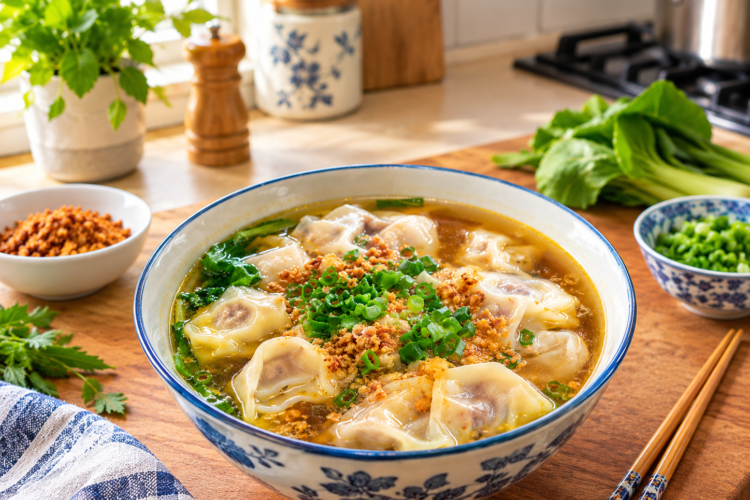
Wonton Soup is a comforting, flavorful dish that brings the delicious taste of Chinese restaurant-style cooking straight to your kitchen. Made with tender mini wontons, fresh baby bok choy, earthy mushrooms, garlic, ginger, and a savory broth, this easy wonton soup recipe is perfect for busy weeknights, chilly evenings, or whenever you want something warm and satisfying. The best part is that you can prepare this delicious soup in approximately 20 minutes without spending hours making broth or folding wontons from scratch.
This easy Chinese wonton soup uses frozen mini wontons to make preparation quicker and more convenient. Combined with low-sodium chicken broth, aromatic seasonings, and fresh vegetables, the ingredients create a balanced soup with plenty of flavor. A finishing touch of sesame oil, soy sauce, and Shaoxing wine gives the broth a wonderful depth that tastes similar to the wonton soup served at Chinese restaurants.
Whether you are looking for a quick homemade Asian soup, a light lunch, or a comforting appetizer before dinner, this recipe is an excellent choice. You can also customize it with additional vegetables, different types of wontons, or a vegetarian broth to suit your preferences.
Why You Will Love This Easy Wonton Soup Recipe
One of the biggest advantages of this homemade wonton soup is how quickly it comes together. Many traditional soup recipes require long simmering times, but this version uses prepared chicken broth and frozen wontons to simplify the cooking process. With only a few minutes of preparation and approximately 10 minutes of cooking, you can have a warm, delicious meal ready without complicated techniques or special equipment.
Another reason to enjoy this recipe is its wonderful combination of textures. The mini wontons become tender and juicy as they cook in the flavorful broth, while baby bok choy adds a delicate freshness. Shiitake mushrooms contribute an earthy taste, and garlic and ginger provide the aromatic foundation that makes the soup especially inviting.
This recipe is also easy to adjust depending on what you have available. You can include spinach, bean sprouts, or other vegetables to make the soup more filling. If you enjoy a little heat, a drizzle of chili oil adds a spicy finish that complements the savory broth beautifully.
What Makes Homemade Wonton Soup So Delicious?
The secret to a flavorful wonton soup is building the broth with aromatic ingredients before adding the remaining components. Sesame oil, garlic, ginger, scallions, and mushrooms create a fragrant base that gives the chicken broth more character. Instead of relying entirely on plain broth, these ingredients add layers of savory flavor that make every spoonful enjoyable.
Chicken broth provides the main liquid base and carries the flavors throughout the soup. Low-sodium broth is particularly useful because soy sauce and other seasonings contribute additional saltiness. This allows you to enjoy a well-seasoned soup without making the broth unnecessarily salty.
Baby bok choy is another important ingredient because it adds freshness and a pleasant texture. Its leaves soften gently in the hot broth, while the white portions retain a little bite. Shiitake mushrooms bring a deeper, earthy flavor that works especially well with the ginger, garlic, and sesame oil.
Finally, Shaoxing wine gives the broth a traditional Chinese cooking flavor. When combined with soy sauce and sesame oil at the end of cooking, it creates a delicious finishing mixture that makes this quick wonton soup taste complete.
Ingredients for Easy Chinese Wonton Soup
You do not need a long shopping list to prepare this simple homemade wonton soup. Most ingredients are easy to find at regular grocery stores, while frozen mini wontons make the recipe especially convenient.
Frozen mini wontons: These are the main ingredient and provide the comforting dumpling texture that makes wonton soup so popular. Mini wontons cook quickly in simmering broth and are ideal for a fast meal. You can use meat-filled or vegetarian wontons depending on your preference.
Low-sodium chicken broth: Chicken broth creates the savory foundation of the soup. Choosing a low-sodium variety helps control the overall salt level, especially because soy sauce is added later.
Baby bok choy: This fresh vegetable adds color, mild flavor, and a delicate texture. Separate the leaves, trim the ends, and wash everything thoroughly before cooking to remove any dirt trapped between the leaves.
Shiitake mushrooms: Fresh shiitake mushrooms contribute an earthy, savory taste that complements the chicken broth. Remove their stems before slicing. Other fresh mushroom varieties can also be used, but canned mushrooms are not recommended for this recipe.
Scallions: Both the white and green portions of scallions are used. The white parts cook with the garlic and ginger to create the aromatic base, while the green parts are added toward the end for a fresh onion flavor.
Garlic and ginger: These two ingredients provide the familiar aromatic taste associated with many Asian soups. Freshly minced garlic and grated ginger work particularly well, although ginger paste is also suitable.
Sesame oil: Dividing the sesame oil between the beginning and end of cooking helps build flavor. The first portion is used to soften the aromatics, while the remaining portion adds a fragrant finishing touch.
Soy sauce and Shaoxing wine: These seasonings give the broth its savory character. Mirin or dry sherry can be used instead of Shaoxing wine if necessary.
Chili oil: This optional finishing ingredient adds warmth and a little spice. You can leave it out if you prefer a mild, traditional-style soup.
How to Make Wonton Soup Step by Step
Preparing this easy wonton soup requires just one large cooking pot and a few basic kitchen utensils. The process is straightforward, making it suitable for beginners and experienced home cooks alike. For the best results, prepare and measure your ingredients before turning on the stove so everything is ready when needed.
Step 1: Prepare the Aromatic Ingredients
Begin by preparing the vegetables and seasonings. Dice the scallions and separate their white and green portions because they will be added at different stages of cooking. Mince the garlic, grate the ginger, and slice the fresh shiitake mushrooms after removing their stems.
Wash the baby bok choy carefully under running water, separating the leaves so that any dirt can be removed. Trim the ends and allow the excess water to drain. Preparing everything in advance makes the cooking process smoother and prevents the aromatics from overcooking while you prepare other ingredients.
Step 2: Cook the Garlic, Ginger, Scallions, and Mushrooms
Place a large pot over medium heat and add 2 teaspoons of sesame oil. Allow the oil to warm until it becomes fragrant and lightly shimmering. Add the white portions of the diced scallions, minced garlic, grated ginger, and sliced mushrooms.
Stir the ingredients continuously for approximately 4 minutes. The mushrooms should gradually soften, while the garlic, ginger, and scallions release their natural aromas into the oil. Avoid cooking the garlic for too long because it can become bitter if it browns excessively.
This first stage is important because it develops the flavor of the broth before the liquid is added. Taking a few minutes to soften these ingredients helps create a more flavorful soup.
Step 3: Add the Chicken Broth
Pour the low-sodium chicken broth into the pot, stirring gently to combine it with the cooked vegetables and aromatics. Increase the heat and bring the liquid to a boil.
Once the broth reaches a boil, the flavors from the mushrooms, garlic, ginger, and scallions will begin to blend together. This creates a fragrant soup base that will cook the wontons and vegetables while adding flavor to every ingredient.
If you prefer a slightly milder broth, you can adjust the final seasoning after cooking rather than adding extra soy sauce at this stage.
Step 4: Add the Baby Bok Choy and Frozen Wontons
Add the prepared baby bok choy and frozen mini wontons directly to the boiling broth. Reduce the heat so the soup continues cooking at a gentle simmer rather than a vigorous boil.
Allow everything to cook for approximately 5 minutes. During this time, the bok choy leaves will soften and become tender, while the frozen wontons will heat through. As the wontons cook, they will generally float toward the surface of the soup.
Floating is a helpful indication that the wontons may be ready, but it should not be the only way you check them. Cut one wonton open to confirm that the filling is completely heated. If necessary, continue simmering until it is thoroughly hot.
Step 5: Add the Final Seasonings
Once the wontons and bok choy are cooked, remove the pot from the heat. Add the green portions of the scallions, the remaining teaspoon of sesame oil, soy sauce, and Shaoxing wine.
Stir gently so the seasonings distribute evenly throughout the broth. Adding these ingredients at the end preserves their fresh and aromatic qualities, giving the finished soup a pleasant fragrance and balanced savory taste.
If you are using mirin or dry sherry as an alternative to Shaoxing wine, add the same measured quantity specified in the ingredient list.
Step 6: Serve the Homemade Wonton Soup
Ladle the hot soup into individual serving bowls, distributing the broth, vegetables, mushrooms, and wontons evenly. The recipe makes six servings, with approximately five mini wontons per serving.
For an extra touch of flavor, drizzle a little chili oil over each bowl just before serving. You can adjust the amount depending on how spicy you like your food.
Serve immediately while the wontons are tender and the broth is hot. This homemade Chinese wonton soup makes a delicious light meal on its own, but it can also be served as an appetizer alongside other Asian-inspired dishes.
Helpful Tips for the Best Wonton Soup
Check That the Wontons Are Fully Cooked
Frozen mini wontons usually cook within a few minutes, but cooking times can vary depending on their size and filling. Although they often float to the surface when ready, always check one by cutting it open to make sure the filling is heated completely. This is particularly important when using larger wontons or varieties with thicker wrappers.
Adjust Cooking Time for Regular-Sized Wontons
If you do not have mini wontons, regular-sized frozen wontons are also suitable. However, larger wontons generally need more time to cook. Add them to the broth a few minutes before adding the baby bok choy so they have enough time to heat through without making the vegetables overly soft.
Choose Low-Sodium Broth and Soy Sauce
The combination of chicken broth and soy sauce can make soup quite salty if both ingredients contain high amounts of sodium. Using low-sodium chicken broth and low-sodium soy sauce helps create a more balanced flavor. Taste the broth before serving and add extra seasoning only if necessary.
Wash Baby Bok Choy Thoroughly
Baby bok choy can trap small amounts of dirt between its leaves and around the base. Separate the leaves and rinse them thoroughly before adding them to the soup. Clean vegetables improve the overall texture and make the finished dish more enjoyable.
Avoid Overcooking the Vegetables
Baby bok choy cooks quickly, especially when added to hot broth. Keep the soup at a gentle simmer and avoid boiling it aggressively for an extended period. This helps the leaves remain tender while preserving some texture in the thicker white portions.
Easy Wonton Soup Variations
Make Vegetarian Wonton Soup
You can easily adapt this recipe into a vegetarian wonton soup by replacing the chicken broth with vegetable broth and choosing vegetable-filled wontons. Make sure the wontons are suitable for a vegetarian diet by checking their ingredient labels.
The remaining ingredients can be prepared in the same way. Garlic, ginger, mushrooms, scallions, and sesame oil provide plenty of flavor, so the vegetarian version can still be satisfying and delicious without chicken broth or meat-filled wontons.
Add Spinach for Extra Greens
Spinach is an easy vegetable to incorporate into homemade wonton soup. You can add it alongside the baby bok choy or use it as a replacement if bok choy is unavailable. Fresh spinach cooks very quickly, so add it toward the end of cooking to prevent it from becoming overly soft.
Include Bean Sprouts
Bean sprouts are another excellent addition if you enjoy extra texture in Asian-inspired soups. They bring a light crunch and fresh flavor that contrasts nicely with the tender wontons and soft mushrooms. Add them shortly before serving to preserve their texture.
Make the Soup Spicier
If you enjoy spicy food, chili oil is a simple way to add extra heat without changing the main recipe. Drizzle a small amount over each serving and adjust according to your taste. You can also keep the main pot mild so everyone can season their individual bowls.
What to Serve with Wonton Soup
Homemade wonton soup can be enjoyed as a light meal, but pairing it with other dishes makes it suitable for a more complete dinner. Steamed rice is a simple option that works well with the savory broth. You can also serve it alongside vegetable stir-fry, fried rice, or steamed Asian greens.
For a larger Chinese-inspired meal, consider serving the soup before dishes such as chicken stir-fry, vegetable noodles, or crispy spring rolls. The light broth and tender wontons make a pleasant beginning to a meal with richer main dishes.
If you prefer something simple, enjoy a bowl of wonton soup on its own. The combination of dumplings, mushrooms, bok choy, and flavorful chicken broth provides a comforting meal without requiring additional side dishes.
How to Store Homemade Wonton Soup
Refrigerating Leftover Wonton Soup
Allow any leftover soup to cool before transferring it to an airtight food storage container. Keep it refrigerated and consume it within 3 days. The broth will continue absorbing flavors as it sits, but the wonton wrappers may become softer over time.
For better texture, you can store the wontons separately from the broth if you expect to have leftovers. This helps prevent the wrappers from absorbing too much liquid during storage.
Reheating Wonton Soup
You can reheat leftover soup using either the stovetop or microwave. For stovetop reheating, transfer the soup to a saucepan and warm it over medium-low heat until thoroughly hot. Stir gently to prevent the wontons from sticking or breaking apart.
For microwave reheating, place an appropriate portion in a microwave-safe bowl and heat until steaming hot, stirring carefully if needed. Avoid overheating because the wontons may become too soft.
Freezing Wonton Soup
This soup can also be frozen for longer storage. Allow it to cool completely, transfer it to an airtight freezer-safe container, and freeze for up to 3 months.
When you are ready to enjoy it, thaw the soup overnight in the refrigerator. Reheat it in a saucepan on the stovetop until thoroughly hot. Keep in mind that the wonton wrappers may soften after freezing and thawing, so the texture may not be exactly the same as freshly prepared soup.
Frequently Asked Questions About Wonton Soup
Can I Use Frozen Wontons for Homemade Wonton Soup?
Yes. Frozen wontons are one of the easiest ways to prepare homemade wonton soup quickly. There is no need to thaw them before cooking. Add them directly to the simmering broth and cook according to their size and package instructions. Always check that the filling is fully heated before serving.
Why Do Wontons Float When They Are Cooked?
Wontons often float toward the surface as they cook because changes in their internal temperature and trapped air affect their buoyancy. Floating can indicate that they are close to being ready, but it does not guarantee that the filling is completely cooked. Check one by cutting it open before serving.
Can I Make Wonton Soup Without Bok Choy?
Yes. Although baby bok choy gives the soup a traditional vegetable component, you can substitute spinach or use other suitable vegetables. Bean sprouts are also a good addition. Choose vegetables that cook quickly so the wontons do not become overcooked while waiting for them to soften.
What Can I Use Instead of Shaoxing Wine?
Mirin or dry sherry can be used as alternatives to Shaoxing wine in this recipe. Both provide additional flavor to the broth, although their taste profiles are slightly different. Use the quantity listed in the ingredient measurements and adjust the final seasoning if necessary.
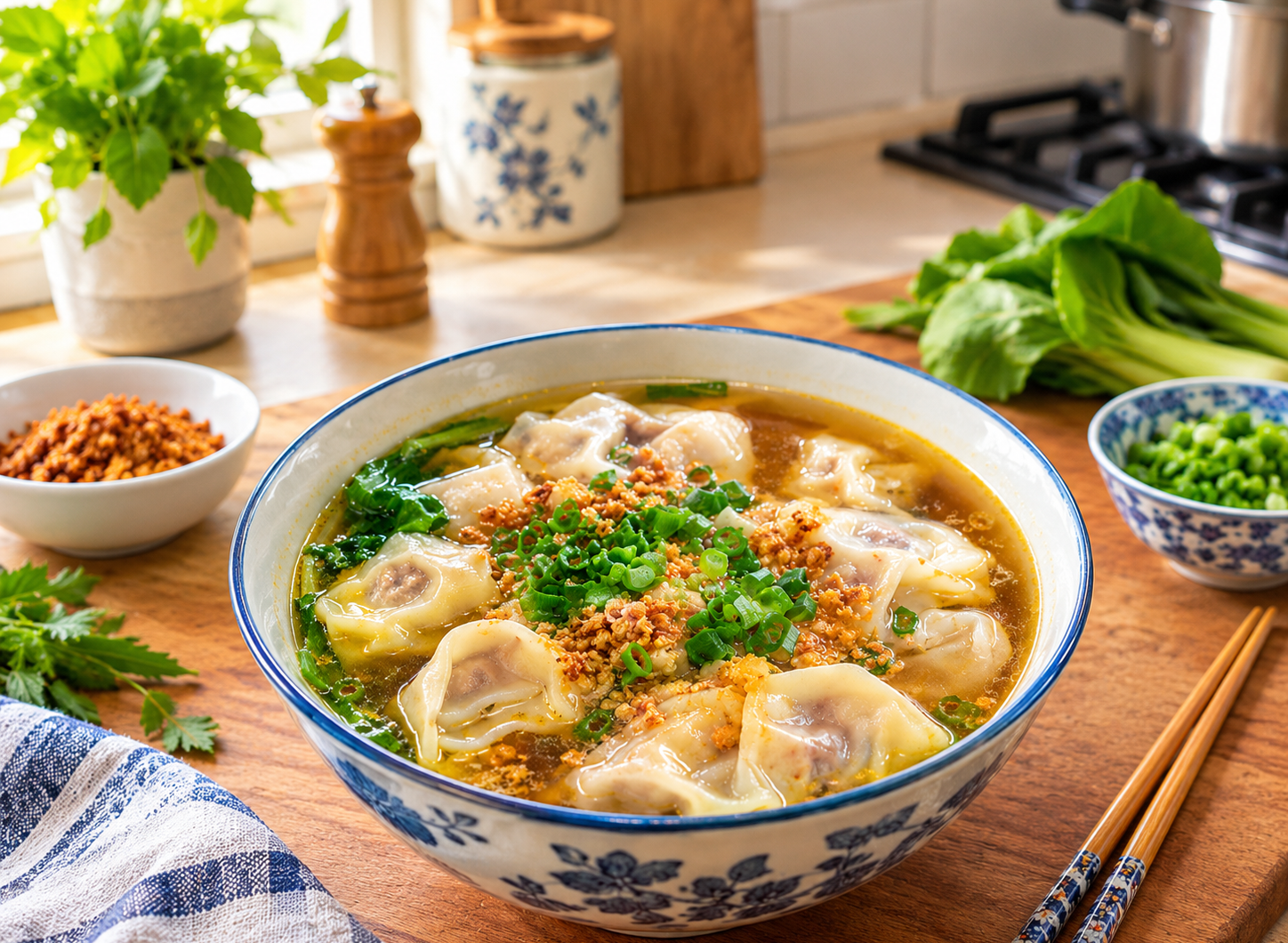
Easy Wonton Soup Recipe
This easy wonton soup features tender frozen mini wontons, fresh baby bok choy, shiitake mushrooms, garlic, and ginger in a deliciously seasoned chicken broth.
6
servings10
minutes10
minutes141
kcal20
minutesIngredients
3 teaspoons sesame oil, divided
3 scallions, finely diced, with white and green portions separated
2 cloves garlic, minced
1 teaspoon grated ginger or ginger paste
1 cup sliced shiitake mushrooms, stems removed (other fresh mushrooms can also be used; avoid canned mushrooms)
48 oz. low-sodium chicken broth
4 baby bok choy, leaves separated, ends trimmed, and thoroughly washed
30 frozen mini wontons
1½ tablespoons soy sauce
1½ tablespoons Shaoxing wine (or mirin or dry sherry)
A drizzle of chili oil, for serving (optional)
Directions
- Heat the sesame oil: Add 2 teaspoons of sesame oil to a large pot over medium heat. Allow it to warm until shimmering.
- Cook the aromatics: Add the white portions of the scallions, minced garlic, grated ginger, and sliced mushrooms. Stir continuously for approximately 4 minutes, until the mushrooms have softened.
- Add the broth: Pour the chicken broth into the pot and bring the mixture to a boil.
- Cook the wontons and vegetables: Add the baby bok choy and frozen mini wontons. Reduce the heat to a gentle simmer and cook for approximately 5 minutes, until the bok choy wilts and the wontons float to the surface and are heated through. Cut one wonton open to check that the filling is hot.
- Season the soup: Remove the pot from the heat. Stir in the green portions of the scallions, remaining 1 teaspoon of sesame oil, soy sauce, and Shaoxing wine.
- Serve: Divide the soup between six bowls, allowing approximately five wontons per serving. Finish with a drizzle of chili oil if desired. Serve hot.
Notes
- Frozen mini wontons can be added directly to the broth without thawing.
- Larger wontons require additional cooking time, so add them a few minutes earlier than the bok choy.
- Floating wontons are not always fully cooked; check one before serving.
- For vegetarian wonton soup, replace chicken broth with vegetable broth and use vegetable-filled wontons.
- Spinach and bean sprouts are optional vegetable additions.
- Low-sodium broth and soy sauce help prevent excessive saltiness.
- Refrigerate leftovers in an airtight container for up to 3 days.
- Freeze cooled soup for up to 3 months. Thaw overnight in the refrigerator and reheat thoroughly.
- Wonton wrappers may become softer during storage, so freshly prepared soup offers the best texture.
Nutrition Facts
6 servings per container
- Amount Per ServingCalories141
- % Daily Value *
- Total Fat
4g
6%
- Total Carbohydrate
17g
7%
- Total Sugars 3g
- Protein 9g 18%
* The % Daily Value tells you how much a nutrient in a serving of food contributes to a daily diet. 2,000 calories a day is used for general nutrition advice.
