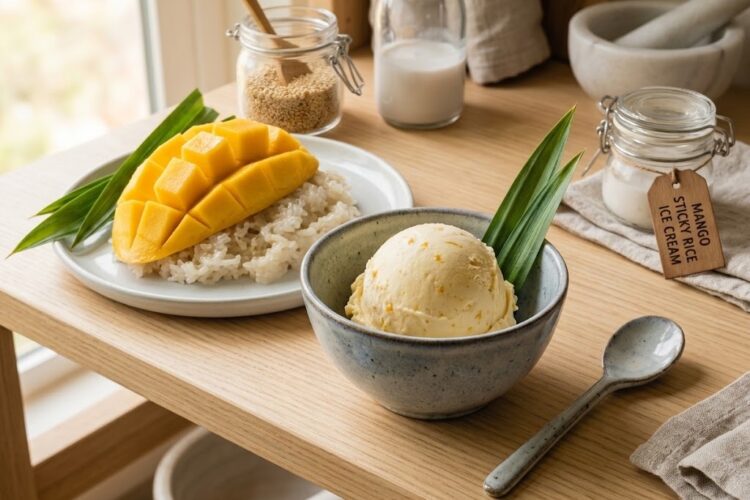
Mango Sticky Rice Ice Cream brings together the tropical sweetness of ripe mango, the richness of coconut sticky rice, and the smooth texture of homemade ice cream. Inspired by the beloved Southeast Asian dessert mango sticky rice, this frozen treat offers a creative way to enjoy those familiar flavors in a cool and creamy dessert.
The recipe is made in a small batch, making it especially convenient when you want something homemade without preparing a large quantity. With fresh or frozen mango, cooked sticky rice, milk, cream, vanilla, and sugar, you can create an ice cream with a wonderfully soft tropical flavor and a satisfying creamy finish.
What Is Mango Sticky Rice?
Mango sticky rice is a traditional Southeast Asian dessert particularly associated with Thailand and neighboring regions. The classic dessert combines sweet glutinous rice with coconut milk and ripe mango, creating a combination of creamy, fruity, and gently sweet flavors. The texture of sticky rice is an important part of the traditional experience, while mango provides freshness and natural sweetness. Mango Sticky Rice Ice Cream takes inspiration from these elements and turns them into a frozen dessert that is smooth enough to scoop while still carrying the distinctive flavor of cooked sticky coconut rice.
Why Mango Sticky Rice Ice Cream Works So Well
The appeal of this homemade mango ice cream comes from the balance between its ingredients. Mango contributes bright fruit flavor, while cooked coconut sticky rice gives the mixture a subtle richness and distinctive body. Whole milk keeps the base balanced, and heavy whipping cream provides the creamy texture expected from a classic ice cream. Vanilla extract adds another layer of flavor without overpowering the mango. Together, these ingredients create a dessert that tastes tropical, creamy, and pleasantly sweet rather than simply tasting like ordinary mango ice cream.
Ingredients for Homemade Mango Sticky Rice Ice Cream
Cooked Coconut Sticky Rice
Cooked coconut sticky rice forms the foundation of this recipe and is what gives the ice cream its connection to traditional mango sticky rice. The rice should be cooled before adding it to the blender. Using cooked rice rather than uncooked rice is essential because the cooked grains blend into the mixture and contribute their characteristic texture and mild flavor to the finished frozen dessert.
Mango
Fresh mango gives the ice cream its fruity character and naturally tropical taste. Frozen mango can also be used, which makes this recipe convenient when fresh mangoes are not available. Choose mango with a pleasant ripe flavor, as the quality and sweetness of the fruit will influence the finished ice cream. Mango also contributes the vibrant fruitiness that makes this dessert particularly enjoyable during warmer weather.
Granulated Sugar
A small amount of granulated sugar provides additional sweetness and helps balance the flavors of the mango, milk, cream, and sticky rice. The sugar also contributes to the texture of the frozen dessert. Since mangoes can vary considerably in natural sweetness, the specified amount gives the recipe a consistent base while allowing the fruit to remain an important part of the overall flavor.
Vanilla Extract
Vanilla extract adds a gentle aromatic note to the ice cream. A high-quality vanilla extract works particularly well because the recipe contains relatively few ingredients, meaning each flavor can be noticeable. An alcohol-based vanilla extract can also help maintain a smooth texture in homemade frozen desserts. The vanilla should complement the mango and coconut sticky rice rather than dominate them.
Whole Milk
Whole milk provides the liquid needed to blend the sticky rice and mango into a smooth base. It also contributes a mild dairy richness without making the ice cream excessively heavy. If desired, coconut milk can be used instead, giving the finished dessert a stronger coconut character that fits naturally with the traditional mango sticky rice flavor profile.
Heavy Whipping Cream
Heavy whipping cream is responsible for much of the luxurious texture associated with homemade ice cream. The recipe calls for cream containing at least 36% milkfat, which helps create a rich and creamy consistency. Adding the cream after blending the rice, mango, sugar, vanilla, and milk helps preserve the desired texture of the base while giving the finished ice cream its characteristic richness.
How to Make Mango Sticky Rice Ice Cream
Blend the Main Ingredients
Begin by placing the cooled cooked coconut sticky rice into a high-powered blender. Add the mango, granulated sugar, vanilla extract, and whole milk. Blend these ingredients thoroughly until the mixture becomes smooth. A high-powered blender is helpful because it can break down the cooked sticky rice more effectively, producing a base that is creamy rather than noticeably grainy.
Add the Heavy Cream
Once the mango and rice mixture has been blended until smooth, transfer it to a glass container. Stir in the heavy whipping cream. Mixing the cream into the prepared base at this stage creates the rich liquid mixture that will later be churned in the ice cream maker. Make sure the ingredients are evenly combined before covering the container.
Chill the Ice Cream Base
Cover the container and place it in the refrigerator for at least six hours or overnight. This chilling period is an important part of the recipe because the ice cream base needs to become thoroughly cold before it enters the ice cream maker. A properly chilled base can churn more effectively and can help produce a smoother final texture.
Churn the Mixture
After the mixture has chilled, pour it into your ice cream maker. Churn the base according to the manufacturer’s instructions for your particular machine. Churning incorporates air while continuously moving the mixture as it freezes, helping develop the creamy consistency that distinguishes ice cream from a simple frozen mixture.
Freeze Until Firm
When the mixture has finished churning, transfer the freshly churned ice cream into a suitable freezer container. Place it in the freezer and allow it to freeze until firm. Freshly churned ice cream is often softer than the finished texture, so giving it sufficient time in the freezer allows it to develop a more scoopable consistency.
Getting a Smooth Homemade Ice Cream Texture
Texture is particularly important when making homemade ice cream. One of the most useful steps in this recipe is making sure the ice cream base is thoroughly chilled before churning. The ice cream maker’s container should also be completely frozen if your machine requires a pre-frozen bowl. A properly frozen churning container helps the mixture freeze efficiently and reduces the chance of an overly soft or icy result.
Another useful preparation step is chilling the storage container before transferring the churned ice cream. A cold container helps the freshly churned mixture remain frozen as it is moved from the machine to the freezer. This is especially helpful when making homemade ice cream because temperature changes during preparation and storage can affect the final texture.
How to Prevent Ice Crystals
Keep the Ice Cream Cold
Ice crystals can become noticeable if homemade ice cream melts too much before it is returned to the freezer. Keeping the mixture cold throughout the process helps protect its creamy consistency. The refrigerated base should remain chilled until it is ready to go directly into the ice cream maker.
Freeze the Churning Container Properly
If your ice cream maker uses a freezer bowl, make sure the bowl is completely frozen before beginning. A minimum of eight hours is recommended for freezing the container, although leaving it in the freezer longer can be helpful. An inadequately frozen bowl may not chill the mixture quickly enough, which can result in a softer texture and larger ice crystals.
Use a Suitable Storage Container
After churning, transfer the ice cream to a freezer-safe airtight container and freeze it promptly. Keeping the container covered helps reduce exposure to air and limits the formation of unwanted ice crystals on the surface. For the best texture, avoid repeatedly allowing the entire container to soften and refreeze.
Can You Use Fresh or Frozen Mango?
Both fresh and frozen mango can work in this recipe. Fresh mango is an excellent choice when ripe fruit is readily available and has a naturally sweet, fragrant flavor. Frozen mango is a convenient alternative because it can be stored for longer and used whenever you want to make the recipe. Either option allows you to prepare this tropical ice cream without changing the specified amount of mango.
Can You Make This Recipe Vegan?
Dairy-Free Variation
The original recipe uses whole milk and heavy whipping cream, but it can be adapted for a vegan diet. The suggested approach is to replace the dairy ingredients with coconut cream and coconut milk or another suitable plant-based milk. This variation can make the dessert more closely resemble the coconut-forward flavors associated with traditional mango sticky rice while keeping the recipe dairy-free.
How to Serve Mango Sticky Rice Ice Cream
Mango Sticky Rice Ice Cream is delicious served by itself in a bowl or cone. Because the recipe already combines mango, sticky rice, dairy, vanilla, and sweetness, it does not require an elaborate topping to taste complete. A simple scoop is enough for an easy dessert after lunch or dinner. Allowing the ice cream to soften slightly before scooping can also make serving easier after it has been stored in the freezer.
Mango Pairing
For an even stronger mango flavor, serve this ice cream alongside mango ice cream. The additional mango component creates a particularly fruity dessert for anyone who enjoys tropical flavors. You can also use the two ice creams together when preparing a larger dessert spread for family meals, summer gatherings, or casual celebrations.
Matcha Shaved Ice
Another serving idea is to pair Mango Sticky Rice Ice Cream with matcha shaved ice. The cool shaved ice provides a light texture, while the creamy mango ice cream adds richness. Matcha also introduces a contrasting flavor that works nicely with the sweetness of mango. This combination can turn a simple scoop of homemade ice cream into a more interesting dessert presentation.
How to Store Mango Sticky Rice Ice Cream
Freezer Storage
Store the finished ice cream in an airtight container in the freezer. Keeping the container sealed helps protect the dessert from freezer odors and reduces exposure to air. Properly stored, the Mango Sticky Rice Ice Cream can be kept for up to three months. For the best eating quality, however, homemade ice cream is generally most enjoyable while its texture and flavor remain at their freshest.
Can You Double the Recipe?
Yes, the ingredients can be doubled when you want to make a larger batch. This is useful for family gatherings, parties, or occasions when four servings are not enough. When preparing a larger quantity, make sure your blender and ice cream maker can safely accommodate the increased volume. If your ice cream maker has a limited capacity, it may be better to churn the mixture in separate batches.
Troubleshooting the Recipe
Why Did My Ice Cream Become Icy?
Ice crystals may develop if the ice cream base became too warm before freezing or if the ice cream maker’s churning container was not frozen solid enough. Homemade ice cream depends heavily on rapid and consistent freezing for a smooth texture. Make sure the base has chilled for at least six hours and that a freezer bowl, if required by your machine, has been frozen for at least eight hours.
Why Is the Ice Cream Too Soft?
Freshly churned ice cream is normally softer than fully frozen ice cream. If the mixture is still soft immediately after churning, transfer it to the freezer and allow it to become firm before serving. The chilling and freezing stages are both important, so avoid judging the final texture immediately after the ice cream comes out of the machine.
Notes for Better Results
Chill Everything Properly
For a smoother homemade ice cream texture, keep the prepared base cold and make sure the ice cream maker’s container is fully frozen when required. You can also place the storage container in the freezer before churning so that the freshly churned ice cream goes into a cold container rather than a room-temperature one.
Choose Flavorful Mangoes
The mango is one of the main flavors in this dessert, so using flavorful ripe mango can make a noticeable difference. Frozen mango is perfectly suitable when fresh mango is unavailable. The goal is to use mango with a pleasant, naturally sweet flavor so it complements the creamy sticky rice base.
Do Not Skip the Chilling Time
The six-hour chilling period is not simply a waiting step. Thoroughly chilling the mixture prepares it for the ice cream maker and helps the freezing process work efficiently. If possible, preparing the base the night before and churning it the following day makes the process convenient and straightforward.
Why This Dessert Is Worth Making
Mango Sticky Rice Ice Cream is a creative interpretation of a classic Southeast Asian dessert, but it remains simple enough for a home kitchen. The recipe does not require a long list of ingredients or complicated techniques. Instead, its character comes from combining cooked sticky rice, mango, milk, cream, sugar, and vanilla, then transforming the mixture into a creamy frozen dessert. The result is a refreshing treat with tropical fruit flavor and a subtle connection to traditional mango sticky rice.
Whether you are looking for a homemade mango ice cream recipe, a unique summer dessert, or a new way to enjoy the flavors of mango sticky rice, this small-batch recipe offers an appealing option. The creamy texture, fruity mango flavor, and richness from coconut sticky rice make it different from ordinary fruit ice cream. Once prepared, it can be served simply or paired with other desserts for a more elaborate presentation.
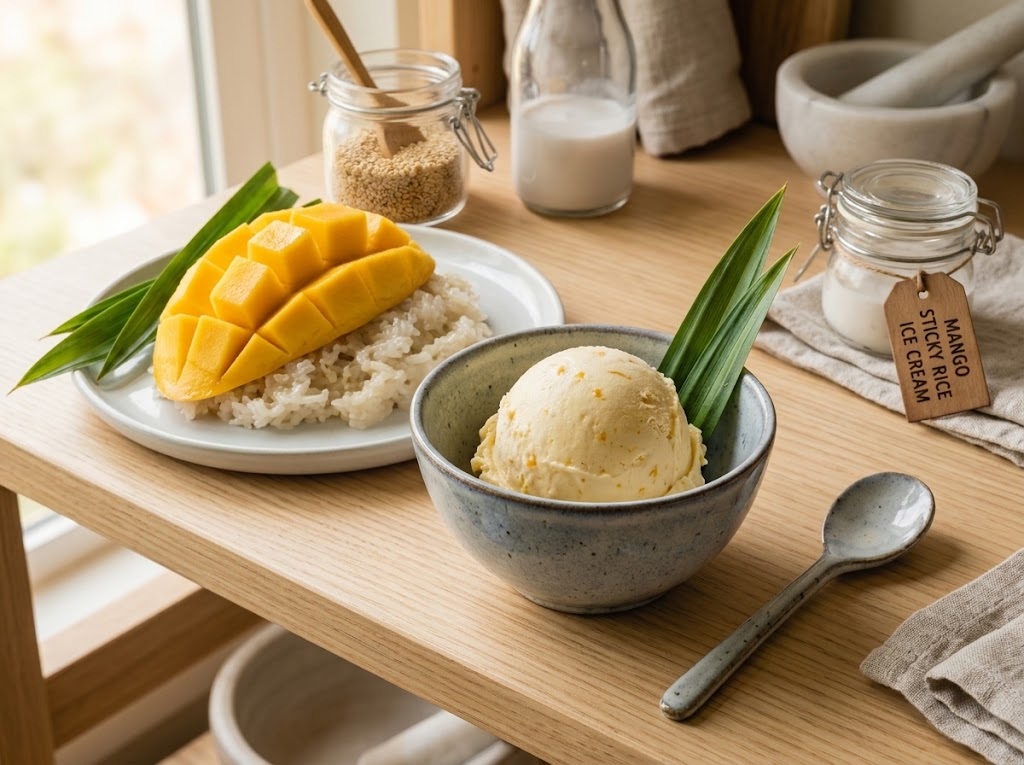
Mango Sticky Rice Ice Cream
A creamy homemade frozen dessert inspired by traditional mango sticky rice.
4
servings15
minutes211
kcal360
minutes6
hours15
minutesIngredients
130 g cooked coconut sticky rice
100 g mango, fresh or frozen
30 g granulated sugar
1 teaspoon vanilla extract
125 ml whole milk
125 ml heavy whipping cream, at least 36% milkfat (MF)
Directions
- Add the cooled cooked coconut sticky rice, mango, granulated sugar, vanilla extract, and whole milk to a high-powered blender.
- Blend the ingredients until the mixture becomes smooth and well combined.
- Pour the blended mixture into a glass container and stir in the heavy whipping cream.
- Cover the container and refrigerate the ice cream base for at least 6 hours or leave it chilled overnight.
- Once thoroughly chilled, pour the mixture into your ice cream maker and churn according to the manufacturer’s instructions.
- Transfer the churned ice cream to a suitable freezer container and freeze until firm.
- Storage
- Store the finished Mango Sticky Rice Ice Cream in an airtight container in the freezer for up to 3 months.
- Serving Suggestions
- Serve on its own, pair it with mango ice cream for extra mango flavor, or serve alongside matcha shaved ice.
Notes
- For a smoother texture, make sure the ice cream maker’s churning container is frozen solid for at least 8 hours when required by your machine. Chilling the storage container before transferring the churned ice cream can also help reduce the development of ice crystals.
- Vegan Option
For a vegan version, use coconut cream together with coconut milk or a suitable plant-based milk in place of the dairy ingredients.
Nutrition Facts
- Calories: 211kcal
- Fat: 13g
- Carbohydrates: 21g
- Fiber: 1g
- Sugar: 14g
- Protein: 3g
