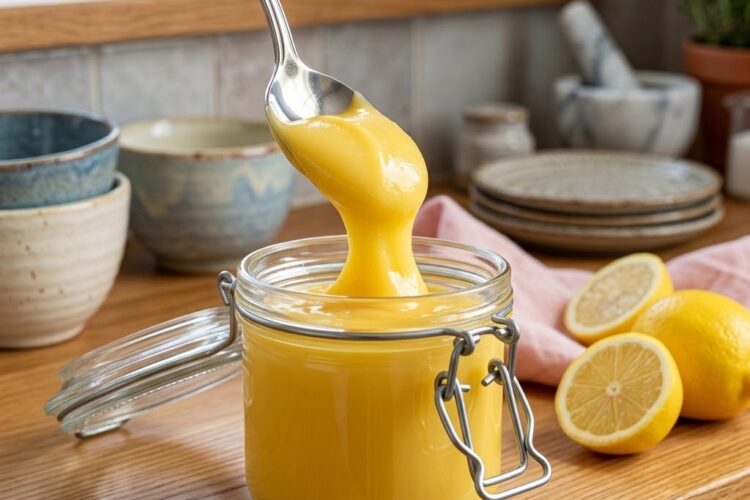
Homemade lemon curd is a simple dessert spread made with fresh lemons, egg yolks, sugar, and butter. It has a smooth, rich texture with a bright citrus flavor that balances sweetness with a pleasant tartness. This easy lemon curd recipe is especially useful when you want a versatile homemade filling for cakes, cupcakes, tarts, pastries, scones, toast, pancakes, or other desserts. With only a handful of ingredients and a short cooking time, you can prepare a silky lemon spread that tastes fresh and vibrant.
The secret to excellent lemon curd is not complicated technique but careful cooking. Fresh lemon juice provides the cleanest citrus flavor, while lemon zest adds concentrated aromatic oils that make the finished curd taste noticeably more lemony. Egg yolks create the thick, custard-like consistency, sugar balances the natural acidity of the lemons, and cold unsalted butter gives the curd its smooth finish. When these ingredients are combined gently over low heat, they create a luxurious texture without requiring complicated equipment or specialist baking skills.
Why Make Lemon Curd From Scratch?
Homemade lemon curd has a freshness that makes it particularly appealing compared with many prepared versions. Freshly squeezed lemon juice gives the curd a lively citrus taste, while freshly grated zest contributes a fragrant lemon aroma. The combination produces a spread that works equally well in simple breakfasts and more elaborate desserts. Because the recipe uses basic ingredients, it is also convenient when you need a quick homemade component for another recipe.
Another advantage is its versatility. A small amount of lemon curd can transform an ordinary dessert into something much more flavorful. Spoon it over pancakes or waffles, spread it between layers of cake, use it as a tart filling, or serve it alongside scones. It can also be paired with meringue, whipped cream, yogurt, or other desserts where a bright citrus contrast is welcome. Its sweet-tart flavor makes it especially useful for balancing rich and buttery desserts.
Fresh Lemons Are the Key to Good Lemon Curd
Fresh lemons are the most important ingredient for achieving a clean and naturally bright flavor. This recipe uses both lemon zest and lemon juice, so choosing good-quality lemons makes a noticeable difference. The zest contains flavorful citrus oils, while the juice provides the acidity and refreshing tartness that give lemon curd its distinctive character.
Freshly squeezed juice is preferable to bottled lemon juice because bottled varieties can have a sharper or less natural flavor. The goal is to create a balanced citrus taste rather than an aggressively acidic one. Before juicing, wash and dry the lemons thoroughly, then grate only the yellow outer layer of the peel. Avoid removing too much of the white pith underneath, as it can introduce unwanted bitterness.
Understanding the Four Main Ingredients
This recipe contains a short ingredient list, but every ingredient has an important purpose. Granulated sugar provides sweetness and helps balance the acidity of the lemons. Lemon zest and lemon juice deliver the main citrus flavor. Egg yolks provide structure and help the mixture thicken into a creamy curd. Finally, cold unsalted butter contributes richness and creates the smooth, silky texture associated with good homemade lemon curd.
Because the ingredients work together so closely, substitutions should be considered carefully. White granulated sugar is used for its neutral sweetness and light color. Brown sugar would alter both the appearance and flavor of the finished curd. Unsalted butter is preferred because it gives you control over the flavor, while the cold temperature of the butter helps the mixture cool and firm after cooking.
Preparing the Lemon Zest and Sugar
The lemon zest can be combined with the sugar before the cooking process begins. If a food processor is available, pulsing the zest and sugar together helps distribute the citrus oils throughout the sugar. This creates an especially fragrant mixture and intensifies the lemon flavor throughout the curd.
A food processor is not essential, however. You can achieve a similar result by placing the zest and sugar together and gently rubbing them with your fingertips. Continue until the sugar feels slightly moist and becomes strongly aromatic. This simple preparation step helps release the natural oils from the lemon zest and makes the citrus flavor more pronounced.
Preparing Fresh Lemon Juice
The recipe requires approximately half a cup of lemon juice. Juice the lemons after zesting them, then strain the juice to remove seeds and excess pulp. Straining the juice before adding it to the egg mixture keeps the curd smooth and prevents unwanted pieces from ending up in the finished spread.
The exact amount of juice matters because lemon juice provides both flavor and acidity. Too much acidity can overpower the sweetness, while too little can make the curd taste flat. Measuring the juice rather than simply estimating it helps maintain the intended balance of sweet, tart, creamy, and citrusy flavors.
Preparing the Egg Yolks
Only egg yolks are used in this lemon curd recipe. The yolks provide the proteins and richness needed to thicken the mixture while creating its creamy custard-like texture. When separating the eggs, keep the whites separate rather than discarding them, as they can be reserved for another recipe.
Straining the yolks into the cooking pot is optional but helpful. It removes any unwanted pieces from the eggs and contributes to a smoother final texture. Once the yolks are in the pot, lightly beat them with a wire whisk before adding the sugar. Whisking the yolks and sugar together until the mixture becomes lighter helps distribute the sugar evenly.
Combining the Lemon Mixture
Once the egg yolks and sugar have been mixed, gradually whisk in the strained lemon juice. Adding the juice slowly while whisking helps create an even mixture. This step is particularly important because the eggs will later be exposed to heat, and a well-mixed base makes it easier to cook the curd gently and consistently.
At this stage, the mixture will be quite thin. Do not worry if it does not resemble finished lemon curd yet. The thick, creamy consistency develops during cooking as the egg yolks gently set. The key is to resist the temptation to increase the heat in an effort to make the process faster.
Why Low Heat Matters
Low heat is one of the most important techniques in this easy lemon curd recipe. Egg yolks can cook very quickly when exposed to excessive heat. If the mixture becomes too hot, the eggs may scramble, resulting in a curdled or lumpy texture rather than the smooth consistency you want.
Keep the heat low and whisk the mixture continuously while it cooks. Constant movement prevents the bottom of the pan from becoming hotter than the rest of the mixture. If your stovetop does not provide a sufficiently low setting, a double boiler can provide gentler heat and greater control. It may take slightly longer, but the additional time is worthwhile when a silky texture is the goal.
How to Know When Lemon Curd Is Ready
The lemon curd is ready when it becomes noticeably thicker and coats the back of a wooden spoon. One useful test is to run a finger across the coated spoon. If the line remains visible instead of immediately filling in, the curd has reached a suitable consistency.
The mixture may still appear somewhat softer than you expect while it is hot. This is normal because lemon curd continues to thicken as it cools. For that reason, it is better not to overcook it simply because it does not look completely firm in the saucepan. Removing it from the heat at the appropriate stage helps preserve the smooth texture.
Adding Cold Butter
After the curd has thickened, remove the pot from the heat and add the cold, cubed unsalted butter. Stir until the butter has completely melted and become incorporated into the lemon mixture. Using cold butter helps cool the curd while contributing to the rich, creamy texture.
This final butter stage is one of the most important parts of the recipe. The butter softens the sharpness of the lemon and creates a smooth mouthfeel. It also helps the curd firm as it cools. Cutting the butter into cubes before beginning the recipe makes it easier to add quickly and evenly once the mixture is removed from the heat.
Straining the Finished Lemon Curd
Straining the cooked curd is optional, but it is an excellent way to achieve an especially smooth result. Pour the warm lemon curd through a fine strainer into a clean bowl or container. This removes any small pieces of zest or cooked egg that may remain after cooking.
For fillings, layered cakes, tarts, and other desserts where texture matters, straining is particularly useful. The result is a smooth and polished lemon curd with a creamy consistency. Even if the mixture looks smooth in the saucepan, this extra step can make the finished product feel more refined.
Cooling Lemon Curd Correctly
Cooling is an important part of the process because lemon curd becomes thicker as its temperature drops. Immediately after cooking, the mixture will be softer and more fluid than the chilled curd. Allowing it to cool completely gives the butter and egg yolks time to establish the final consistency.
To prevent a skin from developing on the surface, press plastic wrap directly against the lemon curd while it cools. This minimizes contact with air and helps prevent a rubbery layer from forming. Once the curd has fully cooled, it can be transferred to an airtight container for refrigerated storage.
How to Use Homemade Lemon Curd
There are many ways to enjoy homemade lemon curd. For breakfast, it can be spread over toast or served with scones, pancakes, or waffles. Its tart flavor also pairs beautifully with creamy ingredients such as yogurt or whipped cream. A small spoonful can provide a strong citrus accent without overwhelming the rest of the dish.
For baking, lemon curd can be used as a filling between cake layers or inside cupcakes. It also works beautifully in tarts, pastries, and other desserts that benefit from a bright lemon flavor. Because it has a rich and creamy consistency, it can also be spooned over meringues or used as a component in layered dessert recipes.
Can Other Citrus Fruits Be Used?
This basic curd method can also work with other citrus fruits. Oranges, Meyer lemons, regular limes, key limes, and grapefruit can provide different variations. Each fruit brings its own balance of sweetness and acidity, so the final flavor will naturally change depending on the citrus used.
Sweeter citrus such as oranges may produce a milder curd. Keeping some lemon juice in the overall juice amount can help maintain the tartness that makes citrus curd so appealing. When experimenting with other fruits, fresh zest and juice remain important for obtaining a strong, natural citrus flavor.
Common Mistakes to Avoid
One of the most common mistakes when making lemon curd is cooking it over high heat. This can cause the egg yolks to cook too quickly and produce scrambled pieces. Another mistake is leaving the mixture unattended while it cooks. Continuous whisking helps distribute heat and reduces the chance of the eggs sticking or overcooking at the bottom of the pot.
Using bottled lemon juice is another thing to avoid when possible. Freshly squeezed lemon juice gives the best flavor for this recipe. It is also important not to rush the cooling stage. Since the curd thickens considerably as it cools, judging the final consistency while it is still hot can lead to unnecessary overcooking.
How to Get Extra-Smooth Lemon Curd
For the smoothest possible texture, pay attention to every stage of preparation. Start with finely grated lemon zest, strain the lemon juice, whisk the egg yolks thoroughly with the sugar, cook the mixture gently, and stir continuously. After adding the butter, strain the finished curd once more before transferring it to a container.
These small steps do not require much additional work, but together they make a meaningful difference. The final result should be creamy, glossy, and smooth enough to spread easily. Proper temperature control is more important than complicated technique, making this recipe accessible even if you are new to homemade curd.
Notes for Storage and Preparation
Lemon curd should be cooled completely before being used as a cake or pastry filling. The chilled texture is significantly thicker than the warm mixture, so allowing enough time for refrigeration is essential. Preparing the curd in advance can make dessert preparation easier because the mixture will already be cold and ready to use when needed.
Store the finished lemon curd in an airtight container in the refrigerator for up to one week. While the curd is cooling in an open bowl, keep plastic wrap pressed directly against its surface to prevent a skin from forming. Once completely cooled and stored with an airtight lid, the plastic wrap does not need to remain directly on the curd.
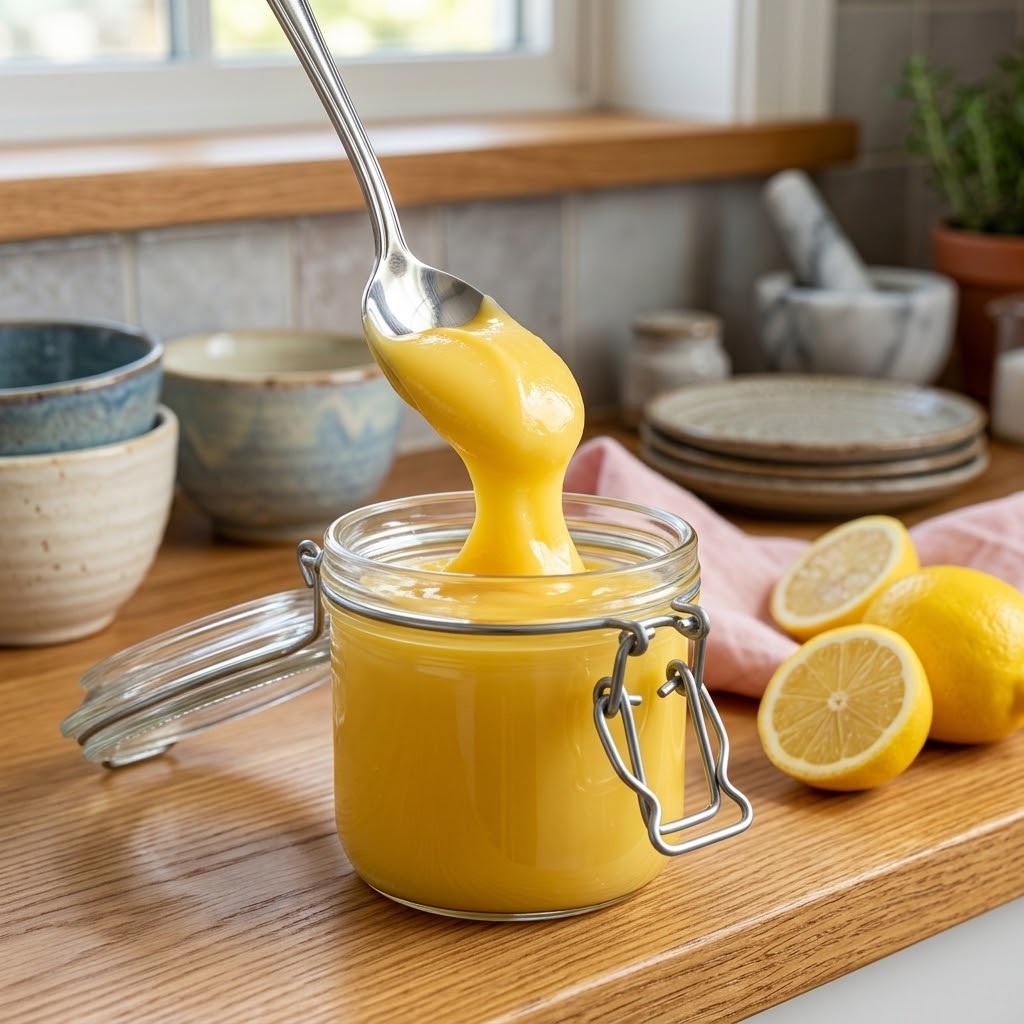
Lemon Curd Recipe
A smooth and creamy homemade lemon curd made with fresh lemon zest, lemon juice, egg yolks, sugar, and unsalted butter.
1.5
cups15
minutes10
minutes1307
kcal120
minutes2
hours25
minutesIngredients
1 cup granulated sugar (200g)
2 tablespoons lemon zest (from 2 lemons)
6 large egg yolks
7 tablespoons lemon juice (100mL)
½ cup unsalted cold butter (113g)
Directions
- Zest two lemons to obtain approximately 2 tablespoons of lemon zest. Combine the zest with the granulated sugar in a food processor and pulse until well incorporated. If you do not have a food processor, rub the zest and sugar together with your fingertips until the sugar becomes fragrant and slightly moist.
- Juice the lemons until you have approximately ½ cup of lemon juice. Strain the juice to remove seeds and excess pulp before using.
- Strain the egg yolks into a saucepan and lightly whisk them. Add the sugar and whisk until the mixture becomes lighter in color. Gradually add the strained lemon juice while continuing to whisk until everything is thoroughly combined.
- Place the saucepan over low heat. Whisk constantly as the mixture cooks. Continue until the lemon curd noticeably thickens, begins to gently bubble, and coats the back of a wooden spoon.
- Remove the saucepan from the heat. Add the cold, cubed unsalted butter and stir until the butter has completely melted and blended into the curd.
- For an especially silky texture, pour the finished lemon curd through a strainer into a clean bowl or container. This optional step removes small pieces of zest or any remaining egg particles.
- Transfer the lemon curd to a sealable container or bowl. If using a bowl, press plastic wrap directly onto the surface of the curd to prevent a skin from developing. Refrigerate until completely cooled and thickened before using.
Notes
- Cooling
The lemon curd becomes considerably thicker as it cools. Allow it to chill completely before using it as a filling for cakes, cupcakes, or other desserts. Preparing it a day or two in advance can make dessert preparation easier. - Storage
Keep homemade lemon curd refrigerated in an airtight container for up to 1 week. During initial cooling, plastic wrap should touch the surface directly to prevent a skin from forming. Once the curd is fully cooled and stored in an airtight container, this is no longer necessary. - Cooking Temperature
Keep the heat low throughout cooking and whisk continuously. High heat can cause the egg yolks to overcook and scramble, resulting in a lumpy curd. - Citrus Variations
This method can also be adapted for oranges, Meyer lemons, regular limes, key limes, and grapefruit. Sweeter citrus fruits may benefit from retaining some lemon juice to maintain a pleasantly tart flavor.
Nutrition Facts
- Calories: 1307kcal
- Fat: 81g
- Carbohydrates: 142g
- Fiber: 1g
- Sugar: 136g
- Protein: 12g
