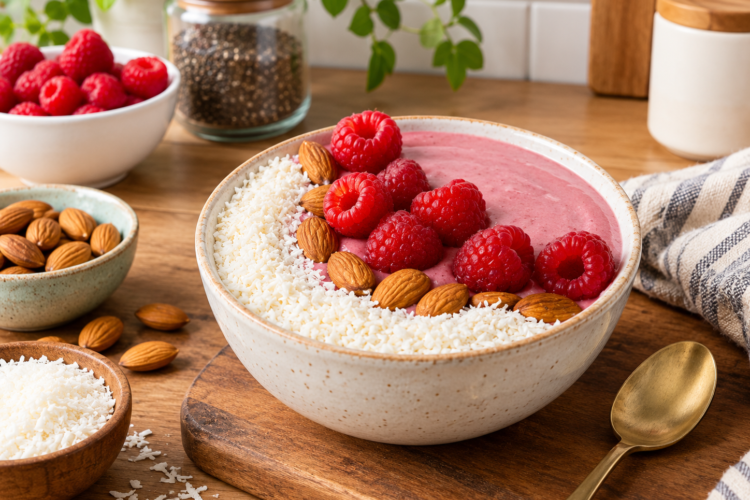
Starting the morning with a satisfying breakfast can make it much easier to stay consistent with a low-carb lifestyle. This Keto Raspberry Breakfast Pudding Bowl combines full-fat coconut milk, frozen raspberries, MCT oil, chia seeds, apple cider vinegar, vanilla extract, and alcohol-free stevia into a smooth and creamy breakfast.
The result is a simple raspberry pudding with a pleasant balance of richness, berry flavor, and gentle sweetness. It takes only about five minutes to prepare, making it especially useful for busy mornings when you want something quick without turning to a traditional high-carbohydrate breakfast.
The combination of ingredients gives this keto breakfast bowl a creamy texture while keeping the recipe relatively low in carbohydrates. Frozen raspberries provide the main fruit flavor and a naturally bright color, while chia seeds contribute body to the mixture.
Full-fat coconut milk adds richness, and MCT oil makes the pudding particularly suited to people who enjoy incorporating MCT oil into their ketogenic eating routine. Because the ingredients are blended together rather than cooked, preparation is straightforward and requires very little kitchen equipment.
Why This Raspberry Pudding Works for a Keto Breakfast
A good keto breakfast needs to be satisfying without relying heavily on sugar or starchy ingredients. This raspberry breakfast pudding is built around ingredients that fit naturally into a low-carb eating pattern. Full-fat coconut milk and MCT oil provide most of the richness, while raspberries contribute fruit flavor without requiring a large amount of fruit. Chia seeds help create a thicker pudding-like consistency and add dietary fiber. Together, these ingredients make a convenient breakfast bowl that can be enjoyed on its own or finished with optional toppings.
The texture is one of the most appealing parts of this recipe. When the ingredients are blended thoroughly, the raspberries become evenly distributed throughout the coconut milk, producing a smooth berry mixture.
The chia seeds help add thickness, giving the finished bowl a pudding-like quality. Unlike a complicated breakfast recipe that requires several cooking steps, this one can be prepared directly in a blender or food processor. That simplicity makes it a practical choice for anyone searching for an easy keto breakfast recipe.
The Flavor of Coconut and Raspberry
Raspberries and coconut make a naturally appealing combination. The tartness of the berries cuts through the richness of full-fat coconut milk, creating a breakfast that does not taste overly heavy despite its creamy consistency. The alcohol-free vanilla extract adds a soft background note, while alcohol-free stevia provides sweetness without requiring conventional sugar. Apple cider vinegar is another important ingredient because its sharpness can help balance the richness of the coconut milk and bring a little extra brightness to the overall flavor.
The frozen raspberries are particularly convenient because they can be kept in the freezer and used whenever you want to prepare this breakfast. There is no need to wait for fresh berries to be perfectly ripe. Frozen fruit also blends easily into the mixture and gives the pudding a cool, refreshing quality. If you enjoy berry-based breakfasts, this recipe provides an easy way to include raspberries in a creamy low-carb meal without turning the kitchen into a complicated cooking project.
How to Make Keto Raspberry Breakfast Pudding
Blend the Ingredients
Begin by placing all of the breakfast pudding ingredients into the jug of a blender or the bowl of a food processor. This includes the full-fat coconut milk, frozen raspberries, MCT oil, chia seeds, apple cider vinegar, alcohol-free vanilla extract, and alcohol-free stevia. Keeping all of the ingredients together from the beginning makes the preparation particularly quick. Blend the mixture until it becomes smooth and evenly combined, paying attention to the chia seeds so they are incorporated throughout the pudding rather than remaining concentrated in one area.
The goal is a creamy, consistent mixture with the raspberries fully broken down. Depending on the blender or food processor you use, the blending time may vary slightly. Avoid stopping before the mixture is smooth because larger raspberry pieces can change the final texture. Once blended, the mixture should have a rich berry appearance and a spoonable pudding consistency. Since there is no cooking involved, this step is the main preparation stage for the recipe.
Divide Into Serving Bowls
Once the raspberry pudding has been blended, divide it between three bowls. The original recipe recommends bowls that hold at least ¾ cup, or approximately 180 ml, so there is enough room for the pudding and any toppings you want to add. Dividing the mixture evenly also makes it easier to keep the serving sizes consistent. For meal planning, you can prepare all three portions together and serve them individually.
The recipe lists the serving size as ½ cup, or approximately 120 ml or 150 grams. This provides a convenient portion for a breakfast or light morning meal. If you are tracking your carbohydrate intake, using consistent portions can also make it easier to estimate how much you are consuming. Once the pudding has been divided, it is ready for optional toppings.
Choosing Keto-Friendly Toppings
Shredded Coconut
Shredded coconut is a natural match for the creamy coconut base. It adds a little texture and reinforces the coconut flavor without changing the character of the pudding. A small amount sprinkled over the top can make the bowl look more finished while providing a contrast to the smooth raspberry mixture. Because the topping is optional, you can leave it out if you prefer a completely smooth breakfast.
Almonds
Almonds can provide a pleasant crunch against the soft pudding. Their mild nutty flavor also works well with both raspberry and coconut. If you enjoy texture in breakfast bowls, almonds are an easy optional addition. Sprinkle them over the finished pudding immediately before serving so they retain their crunch.
Hemp Hearts
Hemp hearts offer another way to add texture to the breakfast bowl. Their mild flavor allows the raspberry and coconut combination to remain the main focus. They can be scattered across the surface of the pudding for a simple finishing touch. This option is particularly useful for people who like adding seeds to low-carb breakfast recipes.
Fresh Berries
Fresh berries can be used as an optional finishing touch when you want a fresh fruit appearance. A few berries placed on top make the pudding look colorful and inviting. Since the recipe already contains raspberries, fresh berries can complement the existing fruit flavor while adding a slightly different texture.
Making the Breakfast More Filling
One of the useful features of this recipe is that it can be adapted according to your nutritional preferences without changing the original pudding ingredients. The supplied recipe notes that protein powder can be added to increase the protein content. A scoop of collagen is also suggested as an option. This can be particularly useful when you want your breakfast to provide more protein while keeping the basic raspberry pudding concept intact.
If you add protein powder or collagen, consider how it affects the final texture. Some powders absorb liquid and can make a blended pudding thicker. You may want to blend thoroughly so the added ingredient is distributed evenly. Since the original recipe does not specify a particular protein powder or quantity, those additions should be considered optional rather than part of the base recipe.
A Convenient Breakfast for Busy Mornings
The five-minute preparation time is one of the biggest advantages of this keto raspberry pudding recipe. Many breakfast dishes require cooking, chopping, or multiple pans, but this one mainly involves adding the ingredients to a blender or food processor and processing them until smooth. That makes it a practical option for mornings when time is limited. It can also be useful when you want a breakfast that feels different from eggs, cheese, or other common savory keto meals.
The recipe serves three, so it is also suitable for preparing multiple portions at once. Dividing the pudding into individual bowls after blending keeps serving straightforward. If you are preparing breakfast for several people, the recipe can be served with different optional toppings so everyone can customize their bowl. The basic pudding remains the same, while the toppings provide variety.
Understanding the Nutrition
Each listed serving contains 328 calories, with 307.8 calories coming from fat. The total fat content is 34.2 grams, including 30.8 grams of saturated fat. The recipe contains 8.8 grams of total carbohydrates and 3.1 grams of dietary fiber, resulting in 5.7 grams of net carbohydrates per serving. It also provides 3.2 grams of protein and 3.4 grams of sugars. These figures make the recipe particularly relevant to people searching for a low-carb or keto-friendly breakfast option.
The nutritional information should be considered in relation to the serving size and the ingredients used. Optional toppings can change the final nutritional values, so the stated nutrition information applies to the base serving described in the recipe. If you add almonds, shredded coconut, hemp hearts, fresh berries, protein powder, or collagen, the calorie, fat, carbohydrate, fiber, and protein totals may be different.
Why Chia Seeds Are Useful in Pudding Recipes
Chia seeds are a familiar ingredient in many homemade pudding and breakfast recipes because they help create a thicker texture. In this recipe, the seeds are blended with the other ingredients rather than being used alone as a soaking mixture. Their inclusion helps give the raspberry and coconut combination more body while also contributing dietary fiber. They are a small component of the ingredient list but play an important role in the final consistency.
Using chia seeds also helps make this breakfast feel more substantial than a simple fruit-and-liquid smoothie. The finished mixture has a pudding-style texture rather than the thinner consistency associated with many smoothies. If you prefer a completely smooth texture, blend the mixture thoroughly. If you enjoy a little more texture, you can use a blending method that leaves some of the chia seeds more noticeable.
Notes for Preparing the Best Pudding
Use Thorough Blending
For the smoothest result, blend the ingredients until the raspberries are completely incorporated and the mixture looks uniform. Incomplete blending can leave pieces of fruit or unevenly distributed chia seeds. A properly blended mixture should have a consistent raspberry color and creamy appearance.
Measure Portions Carefully
The recipe makes three servings, with the stated serving size being ½ cup, approximately 120 ml or 150 grams. Using similar-sized portions helps maintain consistency, especially if you are following a specific low-carb meal plan or monitoring your nutritional intake.
Keep Toppings Optional
The toppings are completely optional. Shredded coconut, almonds, hemp hearts, and fresh berries can all be used according to preference. The pudding itself already contains the primary flavors and does not require toppings to be enjoyable.
Consider Protein Additions
For a higher-protein variation, the original notes suggest adding your favorite protein powder or a scoop of collagen. Because the amount and type are not specified, treat these additions as optional and account for their nutritional information separately.
Frequently Considered Questions
Is This Raspberry Pudding Keto-Friendly?
This recipe is designed as a low-carb breakfast and contains 5.7 grams of net carbohydrates per listed serving. The combination of full-fat coconut milk, MCT oil, raspberries, and chia seeds makes it suitable for many ketogenic meal plans. However, individual daily carbohydrate targets vary, so the serving should be considered as part of your overall food intake.
Can I Use Different Toppings?
Yes. The original recipe lists shredded coconut, almonds, hemp hearts, and fresh berries as optional toppings. You can use any combination of those listed options depending on the texture and flavor you prefer. Remember that adding toppings changes the nutritional values from those listed for the base pudding.
Can I Add Protein Powder?
Yes. The original notes specifically suggest adding your favorite protein powder to boost the protein content. A scoop of collagen is also mentioned as an option. Since different protein powders have different nutritional profiles and serving sizes, check the label of your chosen product when calculating the final nutrition.
How Many Servings Does This Recipe Make?
The recipe makes three servings. Each serving is listed as ½ cup, approximately 120 ml or 150 grams. Dividing the finished pudding evenly between three bowls makes portioning simple.
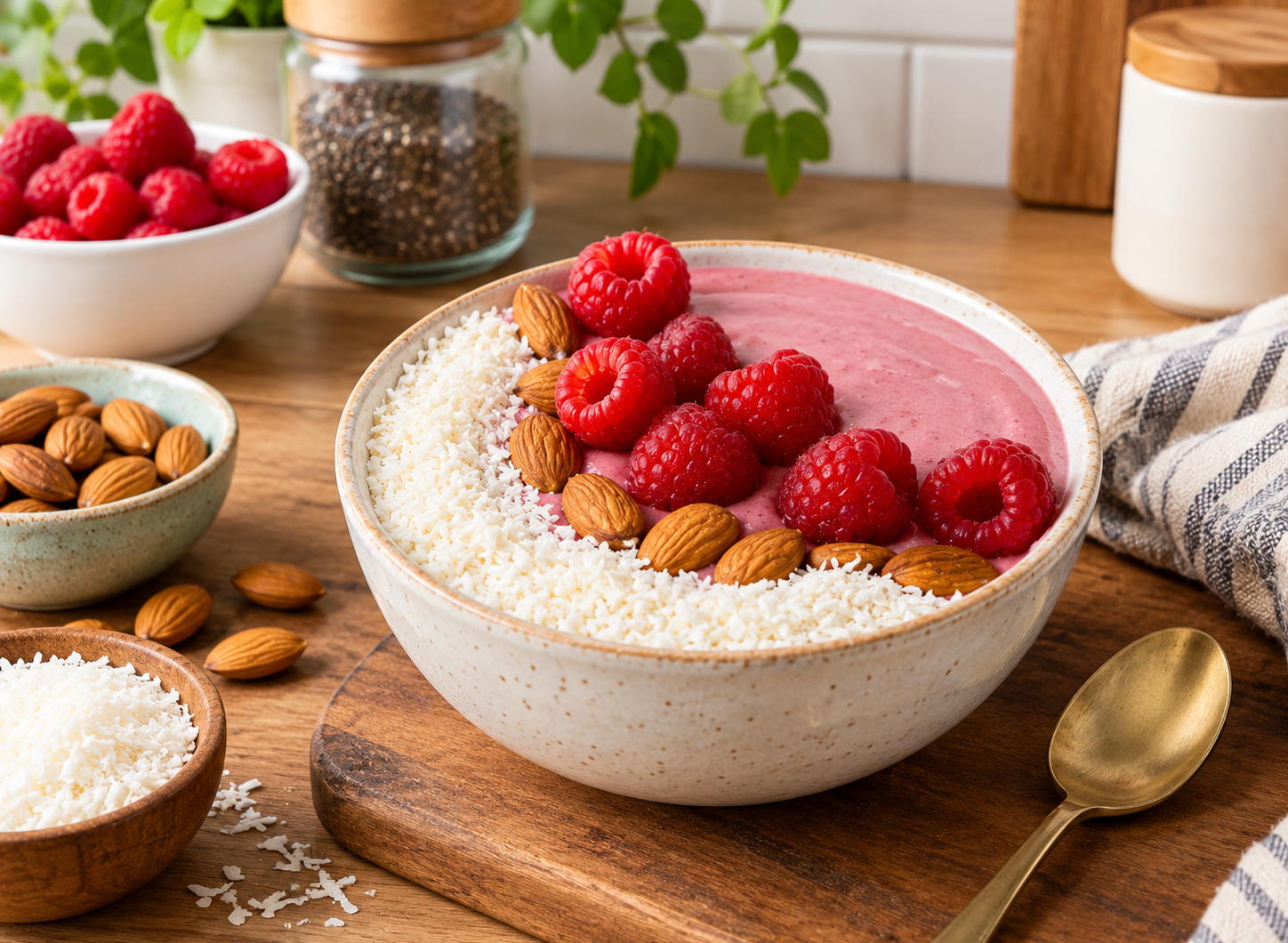
Keto Raspberry Breakfast Pudding Bowl
A creamy, fruity, low-carb breakfast pudding made with full-fat coconut milk, frozen raspberries, MCT oil, chia seeds, apple cider vinegar, vanilla extract, and alcohol-free stevia.
3
servings5
minutes328
kcal5
minutesIngredients
- Breakfast Pudding
1 1/2 cup (350 ml) full-fat coconut milk
1 cup (110 grams) frozen raspberries
1/4 cup MCT oil
2 tablespoons Bob’s Red Mill Chia Seeds
1 tablespoon apple cider vinegar
1 teaspoon alcohol-free vanilla extract
3 drops alcohol-free stevia
- Optional Toppings
Shredded coconut
Almonds
Hemp hearts
Fresh berries
Directions
- Add the full-fat coconut milk, frozen raspberries, MCT oil, chia seeds, apple cider vinegar, alcohol-free vanilla extract, and alcohol-free stevia to a blender jug or food processor bowl.
- Blend the ingredients until the mixture is smooth and evenly combined.
- Divide the finished raspberry pudding between three bowls, using bowls that hold at least ¾ cup (180 ml).
- Add shredded coconut, almonds, hemp hearts, fresh berries, or a combination of the optional toppings if desired.
- Serve according to the listed serving size of ½ cup (120 ml or 150 grams).
Notes
- The recipe makes 3 servings.
- The listed serving size is ½ cup (120 ml or 150 grams).
- Protein powder can be added if you want to increase the protein content.
- A scoop of collagen can also be used as an optional protein boost.
- Optional toppings are not required and can be selected according to preference.
- Adding toppings or protein powder will change the final nutritional values.
Nutrition Facts
- Calories: 328kcal
- Fat: 34.2g
- Carbohydrates: 8.8g
- Sugar: 3.4g
- Protein: 3.2g
