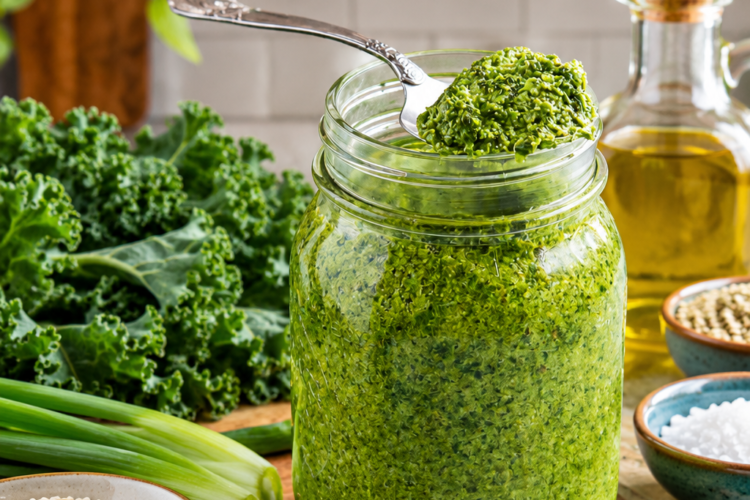
Kale Pate and Spread is an easy way to turn fresh leafy greens into a smooth, savory recipe that can be enjoyed as a dip, vegetable spread, or snack. Made with chopped kale, sesame seeds or hemp hearts, extra-virgin olive oil or MCT oil, green onion tops, apple cider vinegar, and grey sea salt, this recipe delivers a rich texture with a fresh vegetable flavor. It takes only a short time to prepare and offers a creative alternative to traditional dips and spreads.
Enjoy This Kale Recipe
This homemade kale spread is especially appealing because it uses a small number of ingredients while creating a surprisingly flavorful result. Kale provides the main vegetable base, while sesame seeds or hemp hearts add richness and help create a creamy consistency. Extra-virgin olive oil or MCT oil gives the mixture a smooth texture, while apple cider vinegar adds brightness. Green onion tops provide a gentle onion flavor without overpowering the kale.
An Easy Way to Eat More Leafy Greens
Finding enjoyable ways to include more leafy vegetables in everyday meals can make meal preparation more interesting. Instead of serving kale only as a salad or cooked side dish, this recipe transforms it into a smooth pâté that can be paired with raw vegetables and other suitable foods. The cooked kale becomes softer and easier to blend, creating a spread with a completely different texture from ordinary kale dishes.
What Makes Kale Pate Different?
A Creamy Vegetable-Based Spread
The texture is one of the most appealing features of this kale pate. Once the cooked kale is combined with the seeds, oil, green onion tops, vinegar, and salt, the ingredients are blended until smooth. The result is thick enough to spread or use as a dip while remaining soft enough to spoon easily from the storage jar.
No Garlic or Nuts
This recipe does not include garlic or nuts, which makes it different from many homemade vegetable spreads. The flavor comes from the combination of kale, seeds or hemp hearts, green onion tops, apple cider vinegar, oil, and sea salt. This simple ingredient combination allows the natural flavor of kale to remain noticeable while the other ingredients provide balance and richness.
Suitable for Different Serving Ideas
A versatile spread can make simple foods more interesting, and this kale recipe offers several serving possibilities. It can be placed alongside raw vegetables as a dip or spread onto foods that pair well with its savory flavor. Because the recipe is rich and flavorful, a relatively small serving can add a substantial amount of taste to a snack plate or light meal.
Choosing Kale for the Recipe
Green, Purple, or Dino Kale
The original recipe allows you to use green, purple, or dino kale, giving you some flexibility based on availability. Each variety has its own appearance and slightly different texture, but all can work for this preparation. Fresh kale is ideal because the leaves provide the hearty vegetable base needed for the pâté.
Preparing the Kale
Before cooking, the kale should be chopped into smaller pieces. Evenly chopped leaves are easier to cook and later process in a blender or food processor. Rinse the kale thoroughly and remove excess water before adding it to the pan. Proper preparation at this stage helps the kale cook more evenly and makes the blending process easier.
Cooking the Kale
Gentle Low-Heat Cooking
The kale is cooked in a cast iron pan with one tablespoon of extra-virgin olive oil. The pan should be covered and heated on low for approximately seven minutes. This is a gentle cooking process designed to soften and slightly crisp the kale rather than heavily frying it. Keeping the heat controlled helps preserve the intended flavor and texture.
Why the Cooking Step Matters
Raw kale can have a firm texture and a strong leafy flavor. Briefly cooking it changes both qualities, making the greens more suitable for blending. The slight crispness mentioned in the recipe adds another layer of flavor before the kale is combined with the remaining ingredients. Once cooked, the kale is ready to become the main base of the spread.
Adding Sesame Seeds or Hemp Hearts
Choosing Between the Two Options
The recipe uses either raw organic sesame seeds or hemp hearts. Sesame seeds contribute a distinct earthy, slightly nutty flavor, while hemp hearts have a milder taste and soft texture. Both options work with the kale and provide substance to the finished spread. Using either ingredient keeps the recipe simple while contributing to its creamy and satisfying consistency.
How the Seeds Affect the Texture
When blended with cooked kale and oil, the seeds help give the pâté body. The high-powered blender or food processor breaks down the ingredients and combines them into a smooth mixture. This is important because the final recipe is intended to be a spread rather than a coarse vegetable mixture. Thorough blending produces a more even consistency.
The Importance of Olive Oil or MCT Oil
Oil for Cooking
The first tablespoon of extra-virgin olive oil is used during the kale cooking stage. It helps coat the kale while it heats in the cast iron pan and contributes some richness to the cooked greens. Because the kale is cooked over low heat, the oil works together with the covered pan to create the desired texture.
Oil for Blending
The recipe then uses another half cup of extra-virgin olive oil or MCT oil during the blending stage. This larger quantity helps create the smooth, rich consistency associated with the finished pâté. The oil also helps the ingredients move through the blender or food processor, allowing the kale and seeds to become thoroughly incorporated.
Adding Green Onion Tops
Mild Onion Flavor
Eight green onions are used with the green part only. This gives the recipe a fresh onion flavor without making the spread overly sharp. The green portions blend easily with the kale and other ingredients, distributing their flavor throughout the mixture. This ingredient is especially useful because it adds freshness while keeping the overall recipe relatively simple.
Preparing the Green Onions
Before adding them to the blender or food processor, rinse the green onion tops and make sure they are free from excess moisture or dirt. They can be added after the cooked kale has been transferred to the blending container. Since everything will be blended together, there is no need for complicated preparation.
Apple Cider Vinegar for Flavor
Balancing Rich Ingredients
Apple cider vinegar plays an important role in balancing the richness of the oil and seeds. Three tablespoons are added to the mixture before blending. Its acidity gives the kale spread a brighter taste and prevents the combination of leafy greens and oil from becoming too heavy.
Creating a Fresh Finish
The vinegar also helps bring the individual ingredients together. Kale has an earthy flavor, while seeds and oil provide richness. Apple cider vinegar adds contrast, creating a spread that tastes lively rather than flat. Once blended, the vinegar should be evenly distributed throughout the pâté.
Blending the Kale Pate
Using a High-Powered Blender
After the kale has finished cooking, transfer it to a high-powered blender or food processor fitted with an “S” blade. Add the remaining ingredients and begin blending. A powerful appliance is useful because the mixture contains leafy greens and seeds that need to be processed thoroughly to achieve the smooth consistency expected from a pâté.
Using the Tamper Correctly
The original instructions recommend using the blender’s tamper to push ingredients down toward the blade. This can help when the mixture becomes thick and does not naturally circulate. Use the tamper according to the instructions for your specific blender, keeping it away from the blades. The goal is to encourage even processing without leaving large pieces of kale or seeds in the mixture.
Checking the Texture
Continue blending until the ingredients become smooth and well combined. If pieces remain around the sides, pause the machine and scrape them down when necessary. A uniform texture makes the finished kale spread easier to serve and more pleasant to eat. The final consistency should be thick, creamy, and suitable for spreading or dipping.
How to Serve Kale Pate
Pairing With Raw Vegetables
One of the simplest ways to enjoy this recipe is with raw vegetables. The fresh crunch of vegetables contrasts nicely with the soft, creamy texture of the kale pate. Arrange the vegetables around a bowl of the spread for an easy snack or appetizer presentation. This is also a practical way to make raw vegetables more appealing.
Using It as a Spread
The mixture can also be used as a savory spread with suitable foods. Its rich texture makes it easy to spoon and spread, while the apple cider vinegar gives it a noticeable tang. Since the recipe is already strongly flavored, a thin layer may be enough to add character to a serving.
Preparing Kale Spread Ahead of Time
A Convenient Make-Ahead Recipe
This kale pate is useful for advance preparation because it can be stored in the refrigerator for four to five days. Once blending is complete, transfer the spread to a mason jar and refrigerate it. Preparing it ahead means you can have a ready-made vegetable spread available whenever you want a quick snack or simple accompaniment.
Keeping the Spread Refrigerated
The prepared pâté should remain refrigerated during storage. Use clean utensils whenever serving it from the jar, and keep the container properly closed between uses. The recipe is designed for short-term refrigerator storage, so it is best enjoyed within the recommended four-to-five-day period.
Making the Recipe Lower in FODMAPs
The Original FODMAP Note
The recipe includes a specific note for people who want to make the spread even lower in FODMAPs. The suggested adjustment is to use less sesame seeds. The original note recommends reducing the sesame seeds to one-quarter cup and using an equal amount of oil. This changes the quantities of those ingredients only for the stated lower-FODMAP variation.
Following the Suggested Adjustment
If using the lower-FODMAP variation, follow the reduced sesame seed quantity and corresponding oil adjustment described in the recipe. Individual dietary tolerance can differ, so anyone following a specific dietary plan should consider their own needs when choosing ingredients and serving sizes. The main recipe remains unchanged unless this optional adjustment is selected.
Tips for the Best Kale Pate
Keep the Heat Low
The kale should be cooked over low heat for about seven minutes according to the original instructions. Avoid rushing this stage with excessive heat. The goal is to achieve slightly crispy kale while keeping the cooking process controlled. Gentle cooking also makes the kale easier to blend into a smooth mixture afterward.
Blend Thoroughly
A smooth texture depends heavily on adequate blending. Make sure the cooked kale and remaining ingredients are processed until they are evenly combined. If ingredients collect around the sides, pause and push them back toward the blade. Taking time during this stage helps produce the creamy consistency that makes the recipe suitable as a pâté and spread.
Store Promptly
Once the mixture reaches the desired texture, spoon it into a mason jar and place it in the refrigerator. Keeping the spread chilled is important because the recipe contains oils and fresh vegetables. The original storage recommendation is four to five days, so plan to use the prepared batch within that period.
Common Questions About Kale Pate
Can I Use Different Types of Kale?
Yes. The recipe specifically lists green, purple, or dino kale, so any of these varieties can be used. The color and texture may vary slightly depending on the type of kale selected, but the preparation remains the same. Chop the kale before cooking so it can heat evenly and blend more easily.
Can I Use Hemp Hearts Instead of Sesame Seeds?
Yes. The original recipe provides sesame seeds or hemp hearts as alternatives. You can use the option that suits your preference or availability. Hemp hearts generally have a softer, milder flavor, while sesame seeds provide a more pronounced seed flavor. Both contribute to the body and richness of the finished spread.
How Long Does Kale Spread Last?
The recipe recommends storing the finished kale pate in a mason jar in the refrigerator for approximately four to five days. Keep it refrigerated and use clean utensils when serving. Because this is a fresh homemade spread, it is best to follow the recommended storage period rather than keeping it for an extended time.
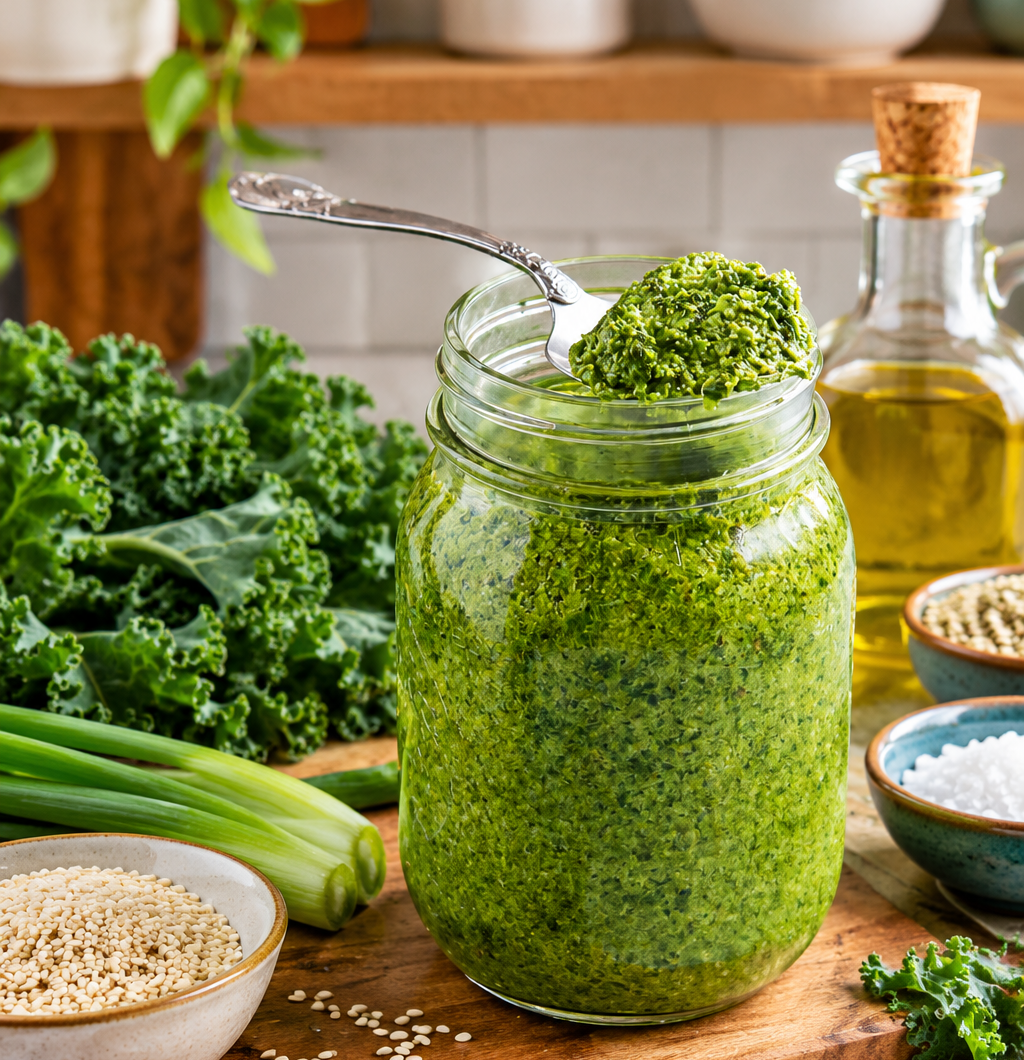
Kale Pate and Spread
A smooth and flavorful homemade kale pate made with chopped kale, sesame seeds or hemp hearts, olive oil or MCT oil, green onion tops, apple cider vinegar, and grey sea salt.
10
servings10
minutes7
minutes207
kcal17
minutesIngredients
1 head (6 cups) green, purple, or dino kale, chopped
1 tablespoon extra-virgin olive oil
1/2 cup raw organic sesame seeds or hemp hearts
1/2 cup extra-virgin olive oil or MCT oil
8 green onions, green part only
3 tablespoons apple cider vinegar
1 1/4 teaspoons grey sea salt
Directions
- Add the chopped kale and 1 tablespoon of extra-virgin olive oil to a cast iron pan. Cover and cook over low heat for approximately 7 minutes, or until the kale becomes slightly crispy.
- Move the cooked kale into a high-powered blender or food processor fitted with an “S” blade.
- Add the sesame seeds or hemp hearts, remaining extra-virgin olive oil or MCT oil, green onion tops, apple cider vinegar, and grey sea salt.
- Blend the mixture until it reaches a smooth, spreadable consistency. If necessary, use the blender’s tamper to push the ingredients down toward the blade.
- Spoon the finished kale pâté into a mason jar. Refrigerate and use within approximately 4–5 days.
Notes
- Lower-FODMAP option: For an even lower-FODMAP version, use less sesame seeds. The original note suggests reducing them to 1/4 cup and using an equal amount of oil.
- Keep the prepared spread refrigerated.
- The recommended serving size is 2 tablespoons.
- The recipe contains no garlic or nuts.
Nutrition Facts
- Calories: 207kcal
- Fat: 19.6g
- Carbohydrates: 7.4g
- Protein: 3.1g
