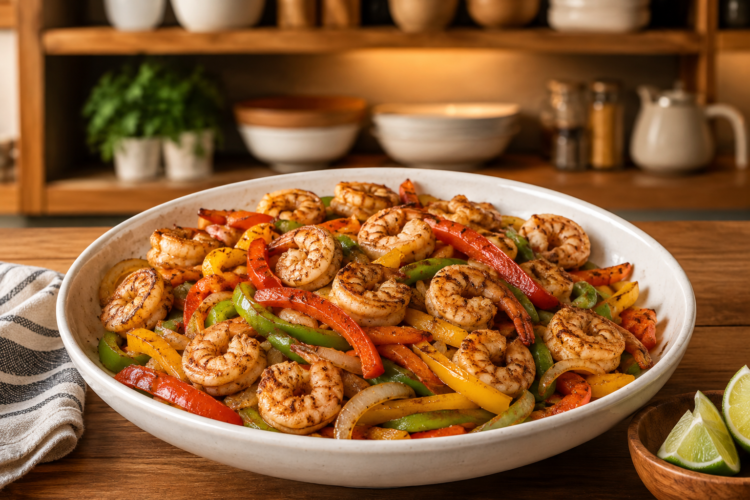
Sheet Pan Shrimp Fajitas are an excellent choice when you need a fast, flavorful, and satisfying dinner without spending a long time in the kitchen. This easy shrimp fajita recipe brings together tender shrimp, colorful bell peppers, sliced onion, and a bold blend of classic fajita spices. Everything cooks on one sheet pan, making both preparation and cleanup simple. The result is a healthy low carb dinner that can be served in several different ways, including over cauliflower rice, in low carb tortillas, or as part of a colorful shrimp fajita bowl.
This recipe is especially useful for busy weeknights because it takes only about 20 minutes from start to finish. The shrimp cooks quickly at a high temperature, while the peppers and onions become tender and develop lightly charred edges under the broiler. Using a sheet pan allows the ingredients to roast together while keeping the cooking process straightforward. Instead of preparing multiple pans or cooking each ingredient separately, the shrimp and vegetables are combined with oil and seasoning before going directly into the oven.
The flavors in these healthy shrimp fajitas are inspired by classic Mexican-style fajitas. Chili powder, ground cumin, paprika, garlic powder, onion powder, and kosher salt create a warm, savory seasoning that works beautifully with seafood and vegetables. A squeeze of fresh lime at the end adds brightness and helps balance the deeper spice flavors. The finished meal is colorful, fresh, and suitable for anyone looking for a quick dinner with plenty of protein and vegetables.
Why This Easy Shrimp Fajita Recipe Works So Well
One of the biggest advantages of making shrimp fajitas on a sheet pan is speed. Shrimp does not need a long cooking time, especially when it is roasted at a high oven temperature. The vegetables can be sliced and added to the same pan, allowing the entire meal to cook together. After the initial roasting period, the broiler is used briefly to give the peppers more color and a lightly charred finish. This simple combination of roasting and broiling creates a restaurant-style fajita texture without requiring a skillet or grill.
Another benefit is that this meal fits easily into many different eating styles. The recipe is naturally high in protein and relatively low in carbohydrates. It can be served with cauliflower rice for a low carb shrimp bowl or placed in low carb tortillas for a lighter version of traditional fajitas. For family meals, regular tortillas can also be served separately, allowing everyone to build their own plate according to their preferences.
Sheet pan dinners are also practical because there is less to clean afterward. The shrimp, peppers, and onions are cooked together, so there are fewer dishes compared with recipes that require separate skillets for protein and vegetables. A good quality sheet pan also provides enough space for the ingredients to roast. When the ingredients are spread out instead of piled together, they are more likely to cook evenly and develop better color.
The Flavor and Texture of Sheet Pan Shrimp Fajitas
A good fajita should offer more than just seasoning. The contrast between the tender shrimp and roasted vegetables is an important part of the finished dish. Shrimp should remain juicy and tender rather than becoming dry or rubbery. The bell peppers should soften while keeping some structure, and the onions should become sweeter as they roast. The short broiling step helps create darker edges on the vegetables, adding extra depth and a slightly smoky flavor.
The homemade seasoning blend gives these shrimp fajitas a familiar fajita flavor without relying on a packaged seasoning mix. Chili powder provides warmth, while ground cumin adds an earthy taste. Paprika contributes color and mild sweetness, and garlic powder and onion powder add savory flavor. Kosher salt brings the other ingredients together. The seasoning coats both the shrimp and vegetables, ensuring that every bite has a balanced flavor.
The final squeeze of lime should not be overlooked. Citrus helps brighten the rich roasted flavors and gives the dish a fresh finish. The lime is squeezed over the cooked fajitas immediately before serving. This simple step can make the difference between a meal that tastes good and one that tastes vibrant and well balanced.
Choosing and Preparing the Shrimp
This recipe uses raw shrimp that has been thawed, peeled, and deveined, with the tails removed. Preparing the shrimp correctly before cooking is important because shrimp cooks very quickly in a hot oven. Once the shrimp is ready to use, it can be added directly to the sheet pan with the sliced vegetables. There is no need for a complicated marinade or a long resting time, which is one reason this recipe works so well for quick dinners.
If using frozen shrimp, it should be completely thawed before starting the recipe. Excess moisture should be avoided because too much water can affect how the shrimp and vegetables roast. Once thawed, the shrimp can be combined with avocado oil and the fajita seasoning. The oil helps the spices adhere to the shrimp while also supporting even roasting in the oven.
Shrimp should be watched carefully during cooking because overcooking can quickly affect its texture. The high oven temperature allows the shrimp to cook in a short amount of time, and the recipe’s brief cooking period is designed to keep it tender. After roasting, the short broiling step is mainly intended to char the peppers slightly while the shrimp finishes cooking.
Bell Peppers and Onion for Classic Fajita Flavor
Bell peppers and onion are essential vegetables for creating the classic fajita combination. In this recipe, they roast beside the shrimp and absorb the same flavorful seasoning. As they cook, the peppers become softer and sweeter while the onion develops a milder, richer flavor. Together, these vegetables add color, texture, and freshness to the finished sheet pan meal.
Slicing the vegetables into relatively even pieces helps them cook more consistently. The exact colors of the bell peppers can be selected based on preference or availability. Using different colors can make the finished shrimp fajitas especially attractive, but the flavor remains the focus. The vegetables are coated with avocado oil and seasoning along with the shrimp so they can roast together with minimal preparation.
The final broiling step is particularly helpful for the vegetables. After roasting, a couple of minutes under the broiler can create slightly charred edges that resemble the appearance and flavor of fajitas cooked in a very hot skillet. This additional step adds visual appeal and enhances the roasted flavor without making the recipe difficult or time-consuming.
The Homemade Fajita Seasoning
The seasoning in this easy shrimp fajita recipe is made with chili powder, ground cumin, paprika, garlic powder, onion powder, and kosher salt. These ingredients are simple, but when combined, they create the warm and savory flavor commonly associated with fajitas. Mixing the spices together before adding them to the sheet pan helps distribute the seasoning more evenly over the shrimp and vegetables.
Chili powder provides a mild spicy character, while cumin brings an earthy flavor that complements shrimp particularly well. Paprika adds both color and a gentle sweetness. Garlic powder and onion powder create a fuller savory taste, and kosher salt helps enhance the natural flavors of the shrimp and vegetables. The result is flavorful without requiring a long ingredient list or a complicated sauce.
Using a homemade spice blend also allows the dish to maintain a simple ingredient profile. The seasoning is applied directly to the ingredients after they are drizzled with avocado oil. Tossing everything together ensures that the shrimp, peppers, and onion are evenly coated before the sheet pan goes into the oven.
How to Make Shrimp Fajitas in the Oven
The process begins by heating the oven to a high temperature. A hot oven is important because shrimp fajitas should cook quickly rather than slowly. The prepared shrimp, sliced bell peppers, and sliced onion are placed on a sheet pan. Avocado oil is then added, helping the ingredients roast and allowing the spice mixture to coat the surface evenly.
The fajita seasoning is prepared by combining the chili powder, ground cumin, paprika, garlic powder, onion powder, and kosher salt. This mixture is sprinkled evenly over the shrimp and vegetables. Everything is tossed together until the ingredients are coated with both the oil and seasoning. Spreading the mixture across the sheet pan helps encourage even cooking.
The fajitas are baked for the initial cooking period and then transferred briefly under the broiler. The high heat of the broiler gives the peppers a slightly charred finish and deepens their flavor. After cooking, the fresh lime is squeezed over the sheet pan. The shrimp fajitas can then be served immediately while hot.
Serving Sheet Pan Shrimp Fajitas
There are many ways to serve these healthy shrimp fajitas. A simple option is to place the shrimp and vegetables over cauliflower rice for a low carb shrimp fajita bowl. The combination is filling, colorful, and easy to customize. Cauliflower rice can provide a lighter alternative to traditional rice while allowing the bold fajita flavors to remain the focus of the meal.
Low carb tortillas are another good serving choice. The shrimp and roasted vegetables can be spooned directly into the tortillas and served as shrimp fajita tacos. For a family meal, regular tortillas can also be offered alongside the low carb options. This makes the recipe flexible without requiring any changes to the main sheet pan preparation.
Toppings can add freshness and extra texture. Guacamole, sliced avocado, Mexican crema, crumbled queso fresco, cotija cheese, and salsa all work well with the warm shrimp and vegetables. These toppings can be placed on the table so each serving can be customized. A fresh squeeze of additional lime can also provide extra brightness.
Making a Low Carb Shrimp Fajita Bowl
For a healthy low carb dinner, these shrimp fajitas are particularly good when served as a bowl. Start with a base of cauliflower rice and add the roasted shrimp, bell peppers, and onion on top. The combination creates a filling meal with protein and vegetables while keeping the overall carbohydrate content relatively low.
A shrimp fajita bowl can be finished with avocado, guacamole, salsa, cheese, or Mexican crema. The ingredients can be arranged in sections or mixed together before eating. This style of serving also works well for meal preparation because the shrimp and vegetables can be portioned with the chosen base into individual containers.
The bowl format is also useful for people who prefer to avoid tortillas or simply want more vegetables in their meal. The bold seasoning ensures that the dish remains flavorful even with a simple base. Adding a fresh lime squeeze before serving keeps the finished bowl tasting bright and fresh.
Notes for Best Results
The most important consideration when making oven-baked shrimp fajitas is avoiding overcooked shrimp. Shrimp cooks quickly, especially at a high oven temperature. Following the short cooking time helps preserve a tender texture. The broiler should also be used carefully because it is intended to char the vegetables slightly rather than leave the ingredients under intense heat for too long.
Make sure the shrimp has been properly thawed before cooking. The recipe is designed for thawed raw shrimp that is peeled, deveined, and without tails. Preparing the ingredients before the oven is heated can also make the cooking process faster and more organized. Once the vegetables are sliced and the spices are mixed, the meal comes together very quickly.
For the best roasting results, try to spread the shrimp and vegetables across the sheet pan rather than keeping them in a thick pile. Giving the ingredients enough space helps the heat reach the surface more effectively. The broiling step at the end can then add the desired charred appearance to the bell peppers.
Storing and Reheating Leftover Shrimp Fajitas
Leftover shrimp fajitas can be stored in a covered container in the refrigerator for approximately three to four days. Allow the food to cool before storing it, and keep the container properly covered. The leftovers can be useful for another quick lunch or dinner, especially when paired with cauliflower rice or another preferred side.
To reheat the fajitas, warm them until hot using the oven or microwave. Because shrimp can become tough when cooked for too long, it is best to avoid unnecessary reheating time. Reheat only until the food is warmed through. If possible, storing toppings separately can help maintain their freshness.
The leftovers can also be served in a different way from the original meal. Add the shrimp and vegetables to a fresh bowl, place them in tortillas, or combine them with cauliflower rice. This makes the recipe practical for meal planning while keeping the leftovers interesting.
Why Sheet Pan Shrimp Fajitas Are Perfect for Busy Nights
A successful weeknight dinner should be quick, easy to prepare, and satisfying enough to become part of a regular meal rotation. This Sheet Pan Shrimp Fajitas recipe meets those needs by using a straightforward preparation method and familiar ingredients. There is no long marinating time, complicated sauce, or extensive cleanup. The shrimp and vegetables cook together in about 10 minutes, giving you a complete and flavorful main dish in very little time.
The recipe also offers flexibility at the table. It can be served as a low carb meal with cauliflower rice or low carb tortillas, while regular tortillas can be available for anyone who prefers them. Toppings can be customized, and the basic sheet pan preparation remains the same. This makes the recipe suitable for a variety of serving preferences.
With tender shrimp, roasted bell peppers, sweet onion, homemade fajita seasoning, and fresh lime, this is a simple meal that delivers plenty of flavor. Whether you are looking for a quick shrimp dinner, a healthy low carb recipe, or an easy sheet pan meal, these shrimp fajitas are an excellent option. The short cooking time, minimal cleanup, and flexible serving choices make this a practical recipe to keep on your regular dinner menu.

Sheet Pan Shrimp Fajitas
Quick and flavorful Sheet Pan Shrimp Fajitas made with tender shrimp, roasted bell peppers, sliced onion, avocado oil, and a homemade fajita seasoning.
6
servings10
minutes10
minutes204
kcal20
minutesIngredients
1 ½ pounds raw shrimp, thawed, peeled, and deveined, tail off
2 bell peppers, sliced
1 onion, sliced
2 tablespoon avocado oil
2 teaspoons chili powder
2 teaspoons ground cumin
1 teaspoon paprika
1 teaspoon garlic powder
1 teaspoon onion powder
1 teaspoon kosher salt
1/2 lime
Directions
- Preheat the oven to 450 degrees.
- Add the shrimp and sliced vegetables to a sheet pan. Drizzle with the avocado oil.
- Mix together the chili powder, ground cumin, paprika, garlic powder, onion powder, and kosher salt. Sprinkle the seasoning evenly over the shrimp and vegetables. Toss everything together until well coated.
- Bake for 8 minutes.
- Turn the broiler on and cook for 2 more minutes to lightly char the peppers.
- Squeeze the lime over the cooked shrimp fajitas.
- Serve hot in a low carb tortilla or over cauliflower rice.
Notes
- Serving Suggestions
These Sheet Pan Shrimp Fajitas work especially well with cauliflower rice. You can also serve them with guacamole, sliced avocado, Mexican crema, crumbled queso fresco, cotija cheese, and salsa. - Storage
Store the cooked fajitas well covered in the refrigerator for approximately 3 to 4 days. Reheat in the oven or microwave until hot.
Nutrition Facts
- Calories: 204kcal
- Fat: 7g
- Carbohydrates: 7g
- Fiber: 1g
- Sugar: 2g
- Protein: 27g
