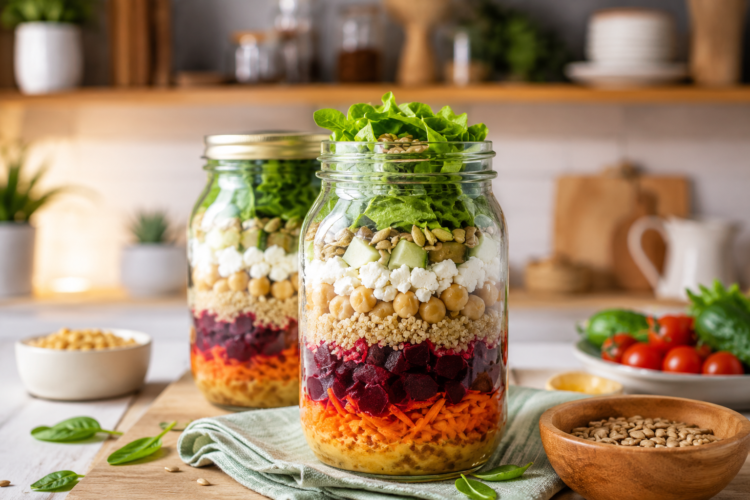
Mason jar salads are one of the easiest ways to prepare fresh, satisfying meals ahead of time without ending up with soggy lettuce or a separate container of salad dressing. This simple meal prep method uses a layered approach that keeps each ingredient in its best condition until you are ready to eat. Whether you are preparing lunch for work, planning healthy meals for busy weekdays, or looking for a convenient way to enjoy more vegetables, a mason jar salad can make everyday meal preparation much easier.
The idea behind a healthy mason jar salad is simple: ingredients are arranged in a specific order so the dressing stays at the bottom while delicate greens remain safely at the top. The heavier and sturdier ingredients sit closer to the dressing, while lettuce, spinach, kale, or other leafy greens are added last. This arrangement helps preserve texture and freshness, making it possible to prepare a delicious salad in advance and enjoy it later without sacrificing quality.
One of the biggest advantages of easy mason jar salads is their flexibility. You can create a vegetarian salad with chickpeas, vegetables, quinoa, and cheese, or add chicken and other protein-rich ingredients for a more filling lunch. The same basic layering method can also be used with beans, tofu, shrimp, tuna, eggs, grains, fruit, nuts, and a wide range of vegetables. Once you understand how to layer the ingredients correctly, creating different meal prep salad combinations becomes simple.
How to Build a Fresh Mason Jar Salad
The key to making the perfect mason jar salad is understanding which ingredients can safely sit near the dressing and which ingredients need to stay dry. Salad dressing belongs at the very bottom of the jar because it creates the foundation for the entire layered salad. Ingredients that can handle moisture and marinating are placed directly above it, while delicate ingredients are kept as far away from the dressing as possible.
For a single serving, the general method begins with approximately two tablespoons of dressing in the bottom of the jar. In the recipe card below, three tablespoons of apple cider vinegar dressing are used for each jar. The exact amount can vary depending on the salad you are making, but the important part is keeping the dressing at the bottom. When the jar is stored upright, the dressing stays separated from the leafy greens until serving time.
After adding the dressing, place sturdy vegetables into the jar. Cucumbers, squash, mushrooms, carrots, beets, onions, celery, and cabbage are all suitable choices for this lower layer. These ingredients are firm enough to remain fresh when placed near the dressing. Some may even absorb a little flavor while they sit, which can make the finished salad even more enjoyable.
The next layer is an excellent place for protein. Adding protein helps turn a simple vegetable salad into a balanced and satisfying meal. Chicken breast, chickpeas, black beans, tofu, tempeh, canned tuna, shrimp, and hard-boiled eggs are all useful options. You can select the protein based on your dietary preferences and the type of meal you want to prepare. A chickpea mason jar salad is a convenient plant-based option, while chicken can create a more traditional high-protein meal prep lunch.
Choosing the Right Vegetables for Salad Meal Prep
Once the protein has been added, you can continue building the salad with vegetables that are best kept away from the dressing but can still handle some moisture. Cherry tomatoes, red bell pepper, broccoli, and broccoli slaw work well in this middle section of the jar. These ingredients add color, crunch, and variety while helping create separation between the wetter ingredients below and the dry greens above.
Vegetables are especially useful when preparing mason jar salads for lunch because they can add volume without making the meal overly heavy. A combination of cucumbers, carrots, tomatoes, and other fresh produce can create a colorful salad with different textures in every bite. Using several types of vegetables also makes the salad visually appealing, which can make prepared meals feel more enjoyable throughout the week.
When choosing vegetables, it is helpful to think about how they will hold up during storage. Firmer vegetables generally work better for meal prep because they retain their texture. The mason jar method is designed to protect delicate ingredients, but using sturdy vegetables in the lower and middle layers gives the salad a stronger structure and helps keep everything separated.
Add Grains for a More Filling Mason Jar Lunch
Grains can be added after the vegetables to make a mason jar salad more substantial. Quinoa, farro, rice, and pasta are all suitable choices for this layer. These ingredients can provide extra texture and make the salad feel more like a complete meal rather than a light side dish. For people preparing lunch ahead of time, adding grains can be particularly useful because they help create a more satisfying meal.
Cooked quinoa is used in the featured mason jar salad recipe because it combines easily with chickpeas or chicken, vegetables, feta, and sunflower seeds. Its mild flavor allows the other ingredients to stand out while adding a pleasant texture to the salad. It also fits naturally into many different salad combinations, making it a convenient ingredient for weekly meal prep.
When adding cooked grains to a jar, make sure they are prepared and cooled before assembling the salad. This helps maintain the freshness of the surrounding ingredients. Once cooled, the grains can be layered between the vegetables and toppings, creating another barrier that helps keep the upper layers dry until the salad is ready to serve.
Finishing the Middle Layers with Toppings
The middle and upper sections of a mason jar salad are a good place for ingredients such as cheese, nuts, fruit, and avocado. These additions can bring extra flavor and texture to the finished meal. Feta cheese, cheddar cheese, and fresh mozzarella are examples of cheeses that can be included depending on the type of salad you are preparing.
Nuts and seeds are another useful addition because they can provide crunch. In the recipe below, roasted sunflower seeds are layered into the jar. Keeping them away from the dressing helps preserve their texture. If ingredients such as nuts or seeds are left directly in a wet environment for too long, they can lose their crispness, so placing them higher in the jar is an effective storage method.
Fruit can also be included in certain mason jar salad combinations. Depending on the flavors you choose, fruit can add natural sweetness and freshness. Avocado can be used as well, but it should be sprinkled with lemon juice to help reduce browning. Because avocado is more delicate than many other ingredients, it is best placed away from the dressing and closer to the top of the jar.
The Importance of Keeping Greens at the Top
Leafy greens are the final layer and one of the most important parts of a successful mason jar salad. Spring mix, romaine lettuce, baby spinach, and kale should be added last so they remain dry and fresh. The greens should never be placed directly next to the dressing if you plan to store the salad for later.
Romaine lettuce is used in both versions of the recipe because it provides a crisp texture and holds up well as the top layer. Depending on the size of your jar, one to two cups can be added. It is best to fill the remaining space without pressing the greens down excessively. Keeping the greens loose can help preserve their texture.
This top-layer method is what makes mason jar salads such a practical meal prep option. Instead of packing salad ingredients together in a container where the dressing can quickly spread through everything, each layer remains separated. When the jar is opened and poured into a bowl, the ingredients combine naturally and the dressing moves over the salad.
Chickpea Mason Jar Salad for a Meat-Free Option
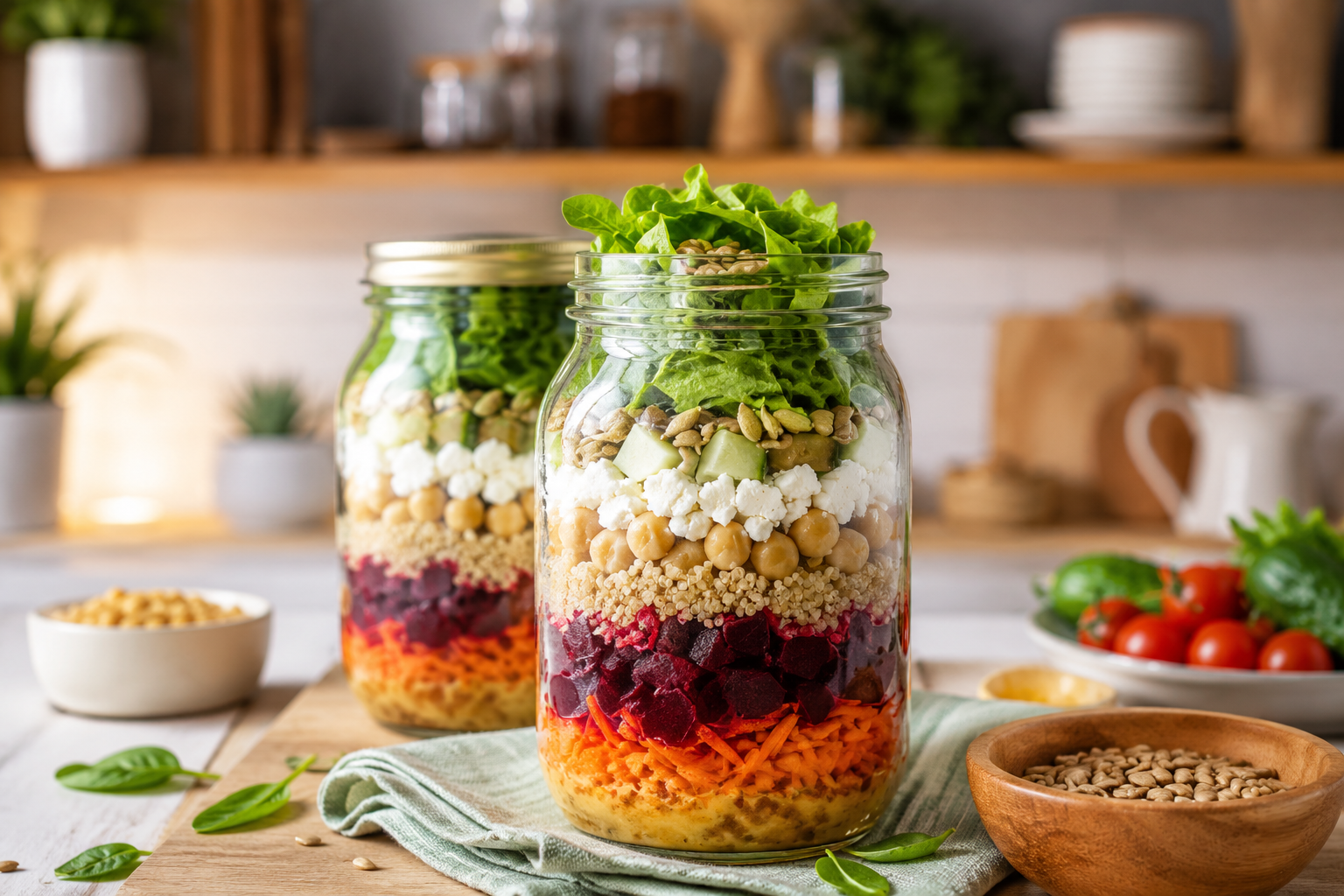
The first version of this recipe uses chickpeas as the main protein ingredient. Chickpeas pair well with cucumbers, shredded carrots, cherry tomatoes, quinoa, feta, sunflower seeds, and romaine lettuce. Together, these ingredients create a colorful vegetarian mason jar salad that works well for lunch or a simple prepared meal.
The combination also provides a good variety of textures. The cucumbers and lettuce bring freshness and crunch, while the shredded carrots add a slightly crisp bite. Chickpeas and quinoa make the salad more substantial, and the feta adds a distinctive savory element. Roasted sunflower seeds complete the combination with extra texture.
This type of salad is also easy to prepare as part of a meal prep routine. Once the ingredients are chopped, cooked, and ready to use, assembling the jar only takes a few minutes. The ingredients are simply layered in the correct order, the lid is secured, and the jar is placed in the refrigerator until it is needed.
Chicken Mason Jar Salad for a Protein-Packed Lunch
The second version follows the same layering method but uses chopped air fryer chicken instead of chickpeas. This creates a chicken mason jar salad that is convenient for anyone looking for a more traditional protein-based lunch. The remaining ingredients stay the same, so there is no need to completely change the meal prep process.
Using prepared chicken can make this recipe particularly useful for busy schedules. If the chicken has already been cooked, assembling the salad becomes a quick task. Simply layer the dressing, cucumbers, carrots, chicken, tomatoes, quinoa, feta, sunflower seeds, and romaine lettuce into the jar.
The combination of chicken and quinoa makes the salad especially filling, while the fresh vegetables keep it balanced and refreshing. It can be a useful lunch option when you want something lighter than a cooked meal but still substantial enough to keep you satisfied. Preparing the jar ahead of time can also help reduce the temptation to rely on less convenient lunch choices.
How to Prepare Mason Jar Salads for the Week
Mason jar meal prep can make weekday lunches much easier when you prepare several ingredients in advance. Begin by washing and drying the vegetables thoroughly. Chop the cucumbers and cherry tomatoes, shred the carrots if necessary, and prepare any additional ingredients you plan to use. Cook the quinoa and allow it to cool before assembling.
If you are making the chicken version, prepare the air fryer chicken and chop it before adding it to the jar. Organizing all of the ingredients before assembly can make the process faster and more efficient. Once everything is ready, line up the jars and build them one layer at a time.
Start each jar with the dressing, followed by the sturdy vegetables. Continue with chickpeas or chicken, then add the tomatoes and cooked quinoa. Next, layer the feta and roasted sunflower seeds before finishing with the romaine lettuce. Secure the lid and store the jars upright in the refrigerator.
Notes for Keeping Mason Jar Salads Fresh
The order of the ingredients should always be treated as the main storage rule. Wet ingredients belong toward the bottom, while delicate greens belong at the top. This simple separation helps prevent the lettuce from sitting in dressing and becoming soft before you are ready to eat.
Another useful step is making sure washed vegetables are properly dried before they go into the jar. Excess moisture can affect texture and reduce the freshness of ingredients during storage. Taking a few extra minutes to dry lettuce and other vegetables can make a noticeable difference in the final salad.
Wide-mouth mason jars are especially convenient because they provide enough room to layer ingredients and make it easier to remove the salad when serving. A jar that is too narrow can make packing and emptying more difficult. The goal is to create clear layers without crushing delicate ingredients.
For the best eating experience, keep the jars chilled until serving time. When you are ready to eat, give the jar a gentle shake to help distribute the dressing. Then pour the contents into a serving bowl. The greens will come out last, allowing the other ingredients and dressing to fall into the bowl first.
Why Mason Jar Salads Are Ideal for Easy Meal Prep
A well-prepared mason jar salad solves several common meal prep problems at once. It keeps the dressing and greens separate, provides a portable lunch option, and allows you to prepare fresh ingredients in advance. The method is also adaptable, so you can use the same layering system with many different combinations.
For busy mornings, having a prepared salad already waiting in the refrigerator can save time. There is no need to pack multiple containers or remember a separate bottle of dressing. Everything is already assembled in one jar, and the layers help protect the ingredients until mealtime.
Another benefit is variety. You can use the same basic method while changing the protein, vegetables, grains, cheese, and toppings. One jar can contain chickpeas, while another can contain chicken. This makes it easier to prepare different lunches without learning a completely new recipe every time.
Mason Jar Salads
A fresh and easy mason jar salad designed for convenient meal prep. The ingredients are layered carefully to keep the dressing separate from the romaine lettuce, helping the salad stay fresh until serving.
1
servings20
minutes532
kcal20
minutesIngredients
- Jar 1
3 Tablespoons Apple cider vinegar dressing
¼ cup chopped cucumbers
¼ cup shredded carrots
⅓ cup chickpeas
¼ cup chopped cherry tomatoes
¼ cup cooked quinoa
¼ cup feta, or vegan feta cheese
1–2 cups romaine lettuce
- Jar 2
3 Tablespoons Apple cider vinegar dressing
¼ cup chopped cucumbers
¼ cup shredded carrots
⅓ cup air fryer chicken, chopped
¼ cup chopped cherry tomatoes
¼ cup cooked quinoa
¼ cup feta, or vegan feta cheese
2–3 Tablespoons roasted sunflower seeds
1–2 cups romaine lettuce
Directions
- Pour 3 Tablespoons of apple cider vinegar dressing into the bottom of a large, wide-mouth mason jar.
- Add the chopped cucumbers, followed by the shredded carrots.
- For Jar 1, add the chickpeas. For Jar 2, use the chopped air fryer chicken instead.
- Add the chopped cherry tomatoes over the protein layer.
- Spoon the cooked quinoa into the jar.
- Add the feta or vegan feta cheese.
- Sprinkle the roasted sunflower seeds over the cheese layer.
- Finish by adding 1–2 cups of romaine lettuce at the top of the jar.
- Secure the lid tightly and keep the mason jar in the refrigerator until ready to serve.
- When ready to eat, shake the jar gently and pour the salad into a serving bowl so the dressing and ingredients can combine.
Nutrition Facts
- Calories: 532kcal
- Fat: 37g
- Carbohydrates: 39g
- Fiber: 10g
- Sugar: 7g
- Protein: 18g
