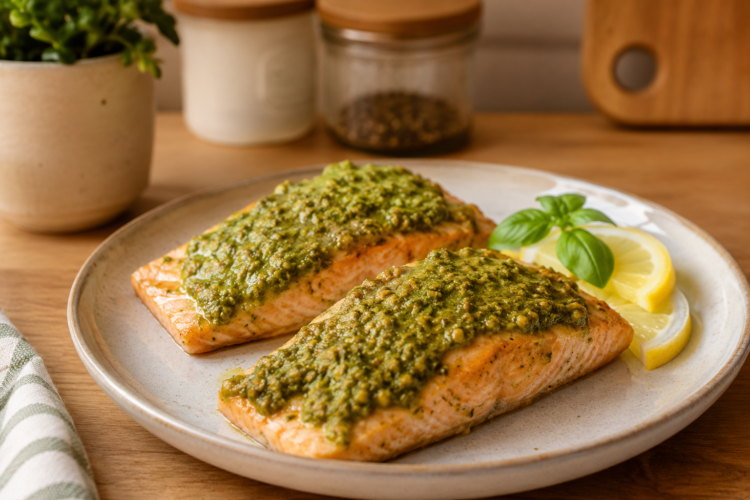
Baked Salmon with Pesto is an easy, flavorful, and satisfying dinner that brings together tender oven-baked salmon and the rich, herby taste of pesto. With only a handful of ingredients and minimal preparation, this recipe is an excellent choice for busy weeknights, relaxed family dinners, or anyone looking for a simple salmon recipe that does not require complicated cooking techniques. The salmon is gently baked at a lower oven temperature, allowing the fish to cook evenly while staying moist and tender. A generous layer of pesto adds garlic, herbs, cheese, and nutty flavor, turning a simple salmon fillet into a delicious main dish.
Salmon is already known for its naturally rich flavor and tender texture, so it does not need an overly complicated marinade or a long list of seasonings. In this oven baked salmon recipe, olive oil and salt provide a simple foundation, while pesto becomes the main source of flavor. Each salmon fillet receives an individual portion of pesto, ensuring that every serving has a flavorful topping. The result is a buttery, flaky piece of fish with a bright and savory finish that works beautifully with many different side dishes.
One of the biggest advantages of this easy pesto salmon recipe is the cooking time. From preparation to serving, the dish can be ready in around 30 minutes, depending on the thickness of the salmon fillets. That makes it a practical option when you want a homemade dinner but do not have time for an elaborate recipe. The preparation is also straightforward: prepare the baking sheet, season the salmon, spread the pesto over the top, and bake until the fish reaches your preferred level of doneness.
Why This Oven-Baked Salmon Recipe Works So Well
A good baked salmon recipe should produce fish that is moist, tender, and easy to separate with a fork. Cooking salmon at a moderate temperature can help create that result. Instead of exposing the fish to intense heat for a short period, this recipe uses a lower oven temperature of 300°F. The gentle heat allows the salmon to cook gradually, which can help prevent the outside from becoming dry before the center is properly cooked.
The olive oil on the prepared baking sheet also serves an important purpose. It helps create a lightly oiled surface for the salmon and prevents unnecessary sticking. Half of the salt is sprinkled over the oil before the salmon is placed on the baking sheet, while the remaining salt is added directly to the fish. This simple seasoning method distributes the salt throughout the dish without covering up the natural flavor of the salmon or competing with the pesto.
Pesto is particularly well suited to salmon because its ingredients complement the richness of the fish. Traditional pesto generally combines herbs, garlic, cheese, nuts, and olive oil, creating a concentrated flavor that works as both a seasoning and a topping. When spread over the salmon before baking, the pesto forms a flavorful layer that keeps the dish interesting without requiring additional sauces or complicated preparation.
The Appeal of a Quick Salmon Dinner
Finding dinner recipes that are both convenient and enjoyable can sometimes be difficult. Many quick meals rely heavily on processed ingredients, while some homemade recipes require extensive chopping, marinating, or multiple cooking steps. This easy baked salmon with pesto offers a useful balance. The ingredient list is short, the preparation is simple, and the finished dish looks impressive enough to serve for a special meal.
This recipe can also fit into a wide range of meal plans. Salmon is a popular choice for people who want a protein-rich main course, and the nutritional information provided with this recipe shows that each serving contains 23 grams of protein. With only 1 gram of carbohydrates per serving, the dish can also work well alongside low-carb vegetables, salads, or other simple side dishes.
Another reason this recipe is practical is that it does not require a special cooking appliance. A standard oven and baking sheet are enough to prepare the meal. This makes it accessible for home cooks of different skill levels. Whether you regularly cook seafood or are looking for an easy way to add more fish to your dinner rotation, this pesto baked salmon recipe provides a straightforward method with reliable steps.
Choosing the Right Salmon for Baked Pesto Salmon
The original recipe uses four skinless salmon fillets weighing approximately 4 to 6 ounces each. Skinless fillets are recommended because the salmon is baked at a relatively low temperature. When skin-on salmon is cooked this way, the skin may not become crisp and can remain soft. Using skinless fillets creates a more consistent finished texture and allows the pesto to remain the main feature of the dish.
When selecting salmon, try to choose fillets that are relatively similar in thickness. This helps them cook at approximately the same rate. If one fillet is significantly thinner than the others, it may finish cooking earlier. Thickness is one of the main factors that affects the baking time, which is why the recipe provides a range of 15 to 20 minutes rather than one exact cooking time.
The salmon should also be arranged in a single layer on the prepared baking sheet. Giving each fillet enough space helps the heat circulate around the fish and makes it easier to monitor the cooking process. There is no need to overcrowd the pan or stack the fillets. A simple, evenly arranged baking sheet makes this quick salmon dinner easy to prepare and easy to serve.
How Pesto Adds Big Flavor with Minimal Effort
One of the most convenient parts of this recipe is the use of pesto. Instead of preparing a long list of herbs, spices, garlic, and other seasonings, the pesto provides a concentrated blend of flavors in one ingredient. Each salmon fillet receives one tablespoon, creating a balanced amount of topping without overwhelming the fish.
Homemade pesto can be used when available, but store-bought pesto is also a convenient choice for a fast weeknight dinner. A quality prepared pesto can save time while still giving the salmon a rich and satisfying flavor. The exact pesto used can also slightly change the final dish, allowing you to choose a version that matches your preferences.
The pesto should be spread over the top of each fillet before baking. An even layer helps distribute the flavor across the surface of the salmon. As the fish cooks, the pesto warms and becomes more aromatic, creating a savory topping that pairs naturally with the buttery texture of the salmon underneath.
How to Bake Salmon Without Drying It Out
One of the most common concerns when cooking salmon is overcooking it. Salmon can change quickly from moist and tender to dry when it remains in the oven for too long. The thickness of the fillet, the accuracy of the oven temperature, and personal preference for doneness can all affect the final result.
For this recipe, the suggested baking time is 15 to 20 minutes at 300°F. Thicker pieces may need additional time, while thinner fillets may cook more quickly. Rather than relying only on the clock, checking the internal temperature can provide a more accurate indication of doneness. The recipe notes a preferred internal temperature of approximately 135°F.
Using a food thermometer can make cooking salmon easier, especially if the fillets vary in thickness. Insert the thermometer into the thickest part of the fish without touching the baking sheet. This allows you to monitor the temperature and remove the salmon when it reaches your preferred level of doneness. The fish should also appear opaque and should separate easily into flakes when gently tested with a fork.
A Great Option for Weeknight Meals
Busy evenings often call for recipes that require little preparation and create minimal cleanup. Baked salmon with pesto works well in this situation because most of the cooking takes place in the oven. Once the salmon is prepared and placed on the baking sheet, there is little active work required until it is ready to serve.
The foil-lined baking sheet also helps simplify cleanup. After the meal, the foil can be removed, reducing the amount of scrubbing needed. This small preparation step can be especially useful on busy days when convenience matters as much as flavor.
Because the recipe uses only salmon, olive oil, salt, and pesto, there is also very little measuring or chopping involved. This makes the dish approachable for beginners while still producing a meal that feels complete and flavorful. It is an excellent example of how a few well-chosen ingredients can create a satisfying homemade dinner.
What to Serve with Baked Salmon and Pesto
Pesto salmon is versatile enough to pair with many different side dishes. If you want to keep the meal light, a fresh green salad or roasted vegetables can provide a pleasant contrast to the rich salmon and pesto. Vegetables such as asparagus, broccoli, zucchini, or green beans can work particularly well because they have mild flavors that do not overpower the main dish.
For a more filling dinner, the salmon can be served with rice, potatoes, pasta, or another favorite grain. A simple side dish is often the best choice because the pesto already provides plenty of flavor. Keeping the remaining components of the meal straightforward allows the salmon to remain the focus.
Low-carb side dishes can also be a good match. Roasted vegetables, cauliflower-based dishes, or a crisp salad can complement the high-protein, low-carbohydrate profile of the recipe. The best side dish depends on your personal preferences and the type of meal you want to create.
How to Make the Recipe Look Special for Serving
Although this is a simple salmon dinner, presentation can make it suitable for a more formal meal as well. Place each salmon fillet carefully on an individual plate and arrange your chosen side dish beside it. Because the pesto creates a naturally attractive green topping, the salmon already has a colorful and appetizing appearance.
Serving the dish immediately after baking is recommended. Freshly cooked salmon has its best texture when it is warm and tender. Allowing it to sit for too long can affect the temperature and texture, particularly if the fillets are relatively thin.
The pesto topping also means that the salmon does not need an additional complicated sauce. The finished dish can remain simple and clean, making it suitable for everyday meals as well as dinner guests. A well-chosen side dish and thoughtful plating are usually enough to turn this easy recipe into an attractive dinner.
Notes for Getting the Best Results
Use Skinless Salmon Fillets
Skinless salmon is recommended for this particular cooking method. Because the fish is baked at 300°F, salmon skin is unlikely to become crisp. Instead, it may remain soft, which can affect the overall texture of the finished dish. Using skinless fillets avoids this issue and keeps the focus on the tender salmon and flavorful pesto topping.
Pay Attention to Fillet Thickness
Cooking time can vary depending on the thickness of the salmon. The recipe gives a range of 15 to 20 minutes, but thinner pieces may cook faster while thicker fillets may require additional time. Checking the salmon near the end of the suggested cooking period is a better approach than assuming every fillet will require exactly the same amount of time.
Check the Internal Temperature
An instant-read thermometer can be useful for monitoring doneness. The recipe suggests cooking the salmon until it reaches an internal temperature of around 135°F. Checking the temperature helps reduce the risk of overcooking and allows you to prepare the fish according to your preferred texture.
Use Homemade or Store-Bought Pesto
The recipe can be prepared with your preferred pesto. Homemade pesto can provide a fresh flavor, while store-bought pesto is convenient when you need a fast and easy dinner. Since pesto is one of the main ingredients, choosing a version with a flavor you enjoy will have a noticeable effect on the finished salmon.
Common Questions About Baked Salmon with Pesto
How Long Should Salmon Be Baked?
For this recipe, salmon is baked at 300°F for approximately 15 to 20 minutes. The exact cooking time depends largely on the thickness of the fillets. Thicker salmon pieces generally require more time than thinner ones, so checking the fish toward the end of the cooking period is recommended.
Can I Use Store-Bought Pesto?
Yes. Store-bought pesto can be used as a convenient alternative to homemade pesto. It keeps the recipe quick and simple while still adding plenty of flavor. Simply measure one tablespoon of pesto for each salmon fillet and spread it evenly over the top before baking.
Why Is Skinless Salmon Recommended?
Skinless salmon is recommended because the fish is baked at a low temperature. At 300°F, the skin may become soft rather than crisp. Removing the skin before cooking provides a more consistent texture and allows the finished salmon to be served without dealing with soggy skin.
How Do I Know When Salmon Is Ready?
The most reliable method is to check the internal temperature with a food thermometer. This recipe suggests an internal temperature of around 135°F for the preferred result. The salmon should also look opaque and separate easily into flakes when gently tested.
Why You Should Add This Easy Pesto Salmon to Your Dinner Menu
Baked Salmon with Pesto is proof that a simple recipe can still deliver excellent flavor. With only four main ingredients, the preparation remains quick and manageable, while the combination of salmon and pesto creates a meal that feels more interesting than a basic baked fish dinner. The gentle oven method helps create tender salmon, and the pesto adds a savory layer without requiring extra preparation.
This recipe is especially useful when you need an easy weeknight dinner that does not involve complicated steps. It can be prepared for a family meal, served as a protein-rich main course, or paired with different side dishes depending on the occasion. The short cooking time and minimal ingredient list also make it easy to include in a regular meal rotation.
Whether you are an experienced home cook or preparing salmon for the first time, this easy baked salmon recipe offers a clear and approachable method. Arrange the fillets on an oiled baking sheet, season them with salt, add the pesto, and bake until the fish reaches your desired level of doneness. The process is uncomplicated, but the finished result is tender, flavorful, and satisfying.
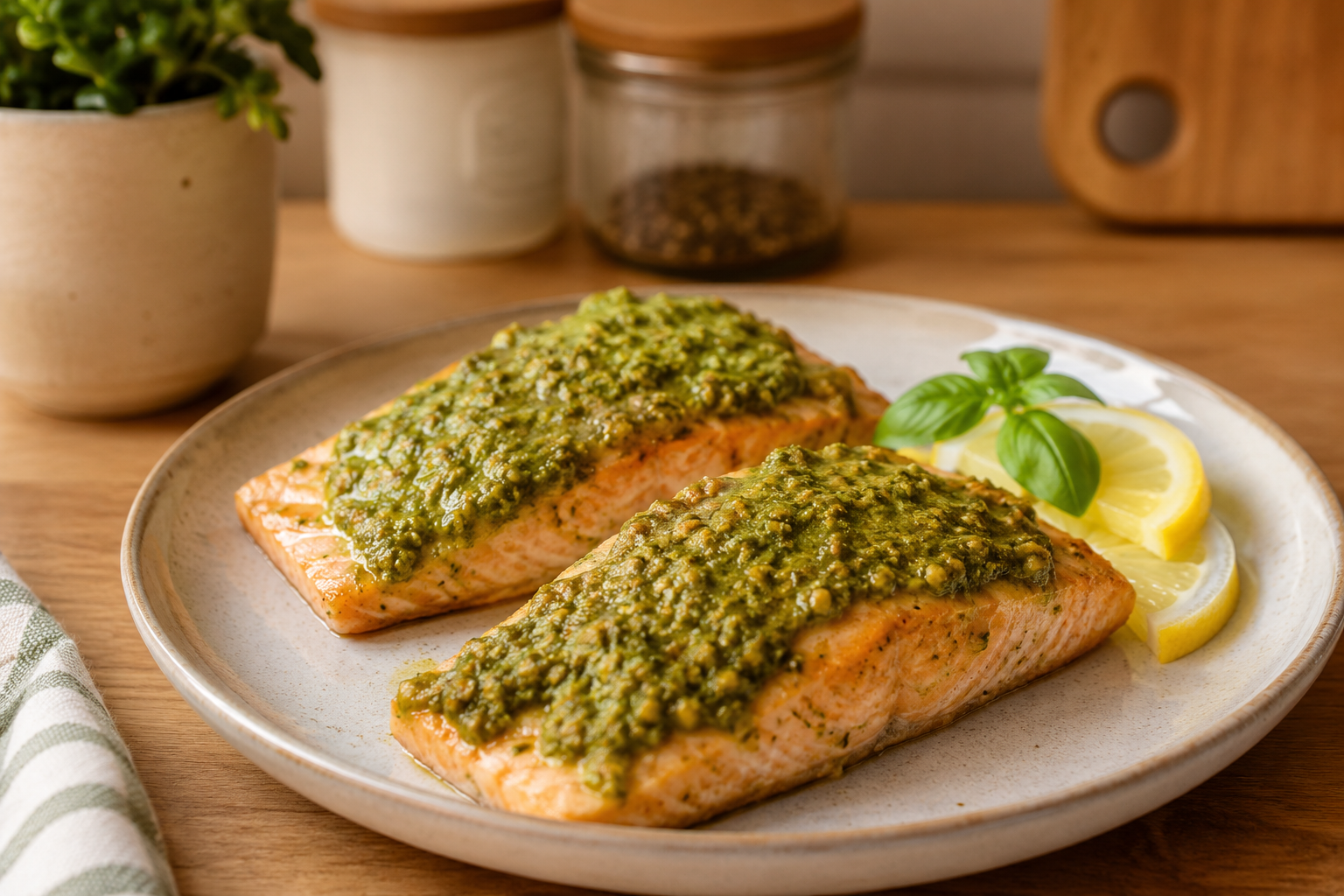
Baked Salmon with Pesto
A simple and flavorful oven-baked salmon recipe featuring tender skinless salmon fillets topped with a generous layer of pesto.
4
servings10
minutes15
minutes250
kcalIngredients
4 (4–6 oz) skinless salmon filets
1 tablespoon olive oil
½ teaspoon salt
4 tablespoons pesto
Directions
- Preheat the oven to 300°F (150°C).
- Prepare a baking sheet by lining it with foil.
- Drizzle the olive oil over the prepared baking sheet.
- Sprinkle approximately half of the salt evenly over the olive oil.
- Arrange the skinless salmon filets on the prepared baking sheet.
- Sprinkle the remaining salt evenly over the salmon.
- Spread 1 tablespoon of pesto over the top of each salmon fillet.
- Place the baking sheet in the preheated oven and bake for 15 to 20 minutes. The exact cooking time may vary depending on the thickness of the salmon.
- For the preferred level of doneness, cook until the internal temperature reaches approximately 135°F.
- Remove the baked pesto salmon from the oven and serve immediately with your preferred side dishes.
Nutrition Facts
- Calories: 250kcal
- Carbohydrates: 1g
- Sugar: 1g
- Protein: 23g
