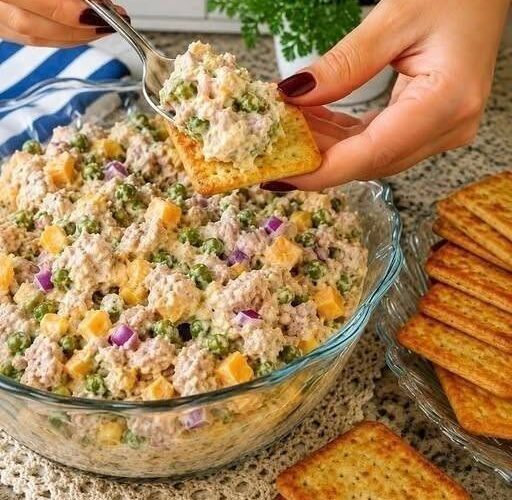
Matthew McConaughey’s Tuna Salad is a hearty, creamy, and flavorful take on the familiar tuna salad. Instead of relying only on tuna and mayonnaise, this version combines several contrasting ingredients to create a more interesting texture and flavor in every bite.
Tender tuna provides the protein-rich foundation, while sharp cheddar adds richness and a slightly salty bite. Sweet green peas bring freshness, chopped dill pickles provide tanginess, and hard-boiled eggs add a soft, satisfying texture. Red onion contributes a mild sharpness, while fresh parsley adds a bright herbal note.
The dressing is equally important. Mayonnaise creates a creamy base, Dijon mustard adds gentle heat, lemon juice provides acidity, and Italian dressing contributes herbs and extra brightness. Garlic powder and black pepper round out the flavor.
This recipe is especially useful because it can be prepared ahead of time. A short rest in the refrigerator allows the flavors to blend and gives the salad a more cohesive taste. It can be served with crackers, bread, lettuce, croissants, or even stuffed into avocado halves.
The recipe below is rewritten in original wording and organized into numbered sections for easy preparation.
1. Recipe Overview
Preparation Time: 15 minutes
Chilling Time: 30 minutes
Total Time: 45 minutes
Servings: 6–8
Difficulty: Easy
Course: Lunch / Light Dinner
Type: Tuna Salad
This recipe requires no stovetop cooking apart from preparing the hard-boiled eggs if they are not already cooked. Once the ingredients are prepared, the salad comes together quickly.
2. Ingredients
For the Tuna Salad
- 4 cans tuna, 5 ounces each, thoroughly drained
- ½ cup finely diced red onion
- ½ cup chopped dill pickles
- ¾ cup frozen green peas, thawed
- 1 cup sharp cheddar cheese, cut into small cubes
- 2 hard-boiled eggs, chopped
- 2 tablespoons fresh parsley, finely chopped
For the Dressing
- ¾ cup mayonnaise
- 2 tablespoons Italian dressing
- 1 tablespoon Dijon mustard
- 1 tablespoon fresh lemon juice
- ½ teaspoon garlic powder
- ½ teaspoon freshly ground black pepper
- Salt, according to taste
The quantities provide a balanced mixture, but you can make small adjustments depending on how creamy, tangy, or chunky you prefer your tuna salad.
3. Prepare the Tuna
Start by opening the cans of tuna and draining them thoroughly.
This is an important step because excess liquid can make the finished salad watery. Press the tuna gently against the side of a strainer if necessary to remove additional moisture.
Transfer the drained tuna to a large mixing bowl.
Use a fork to break apart only the largest pieces.
Do not completely mash the tuna. Keeping some larger flakes creates a better texture and prevents the finished salad from becoming overly smooth.
4. Prepare the Vegetables
Finely dice the red onion.
Small pieces are preferable because raw onion has a strong flavor. Finely chopping it allows the onion to distribute throughout the salad without dominating individual bites.
Next, chop the dill pickles into small pieces.
The pickles provide acidity and crunch while helping balance the richness of the mayonnaise and cheese.
If your peas are frozen, thaw them completely and drain away any excess moisture.
You want the peas to be cool and dry before adding them to the salad.
5. Prepare the Cheddar and Eggs
Cut the sharp cheddar cheese into small cubes.
Small cubes distribute more evenly than large pieces and make it easier to get a little cheese in almost every serving.
Prepare two hard-boiled eggs and allow them to cool completely.
Peel the eggs and chop them into small pieces.
The eggs add richness and a soft texture that contrasts with the crisp pickles and onion.
Finally, chop the fresh parsley.
Keep all of the prepared ingredients nearby before making the dressing.
6. Make the Creamy Dressing
Place the mayonnaise in a medium bowl.
Add the Italian dressing, Dijon mustard, lemon juice, garlic powder, and black pepper.
Whisk the mixture until it becomes smooth and evenly combined.
The mayonnaise provides the creamy foundation.
Dijon mustard introduces a subtle sharpness.
Lemon juice brings fresh acidity.
Italian dressing adds herbs and additional tang.
Garlic powder provides a mild savory background, while black pepper gives the dressing a gentle bite.
Taste the dressing before adding salt.
Because the tuna, pickles, cheese, mayonnaise, and Italian dressing can already contain salt, you may need less than expected.
7. Combine the Tuna and Mix-Ins
Return your attention to the large bowl containing the tuna.
Add the diced red onion, chopped dill pickles, thawed peas, cheddar cubes, chopped eggs, and fresh parsley.
Spread the ingredients evenly over the tuna.
At this point, the mixture should already look colorful and chunky.
Avoid mixing aggressively.
The goal is to preserve the individual textures of the ingredients.
8. Add the Dressing
Pour the prepared dressing over the tuna mixture.
Using a large spoon or rubber spatula, gently fold the ingredients together.
Lift the mixture from the bottom of the bowl and turn it over rather than stirring forcefully.
Continue folding until the dressing has coated the tuna and other ingredients evenly.
Do not overmix.
Overworking the mixture can break down the tuna, eggs, peas, and cheese and create a soft, mushy texture.
A chunky tuna salad is much more appealing because you can identify the different ingredients in every bite.
9. Taste and Adjust the Seasoning
Once everything is combined, taste a small spoonful.
If necessary, add a little salt.
You can also add additional black pepper if you prefer more spice.
If you want extra acidity, a small amount of lemon juice can brighten the salad.
For a creamier consistency, add a spoonful of mayonnaise.
If you prefer a stronger mustard flavor, add a small amount of Dijon.
Make adjustments gradually rather than adding large quantities at once.
10. Chill the Tuna Salad
Cover the mixing bowl or transfer the salad to an airtight container.
Place it in the refrigerator for at least 30 minutes.
This resting period is worth the wait.
As the tuna salad chills, the dressing has time to coat the ingredients and the flavors begin to blend.
The pickles, onion, mustard, lemon, herbs, and spices become more integrated with the tuna and cheese.
For an even more developed flavor, you can prepare the salad several hours before serving.
11. Serve the Tuna Salad
Once chilled, gently stir the salad before serving.
Serve it with your favorite accompaniment.
Some excellent options include:
- Crisp crackers
- Toasted bread
- Sandwich rolls
- Croissants
- Lettuce leaves
- Lettuce cups
- Avocado halves
- Cucumber slices
- Toasted pita bread
For a sandwich, place a generous layer of tuna salad between two slices of bread and add lettuce and sliced tomato.
For a lighter presentation, spoon the salad into crisp lettuce cups.
For a more elegant option, serve it inside avocado halves.
12. Make a Classic Tuna Salad Sandwich
One of the easiest ways to enjoy this recipe is as a sandwich.
Choose sturdy bread that can support the creamy filling.
Toast the bread lightly if desired.
Add lettuce first to create a barrier between the bread and tuna salad.
Spoon the chilled tuna mixture on top.
Add tomato, cucumber, or additional pickles if desired.
Finish with the second slice of bread.
The crisp vegetables contrast beautifully with the creamy tuna mixture.
13. Make It Extra Crunchy
If you enjoy plenty of texture, several ingredients can be added to the basic recipe.
Diced celery provides a fresh, crisp crunch.
Finely chopped bell pepper adds sweetness and color.
Chopped almonds provide a nutty texture.
Extra pickles increase the tangy crunch.
If adding additional ingredients, introduce them gradually so the tuna salad remains balanced rather than becoming overloaded.
14. Spicy Variation
For a spicy version, add finely diced jalapeño.
A little hot sauce can also be mixed into the dressing.
Crushed red pepper flakes provide another simple way to increase the heat.
If you are serving the salad to a group, consider keeping the main batch mild and providing hot sauce or sliced jalapeños separately.
That way, each person can control the spice level.
15. Mediterranean-Inspired Variation
For a Mediterranean-style variation, replace some of the original mix-ins with ingredients such as:
- Kalamata olives
- Crumbled feta cheese
- Diced cucumber
- Fresh dill
- Chopped parsley
You can also add a little extra lemon juice to emphasize the fresh, bright flavor.
This variation works particularly well served inside lettuce leaves or with toasted pita.
16. Lighter Version
If you want to reduce the richness, replace part of the mayonnaise with plain Greek yogurt.
For example, use half mayonnaise and half Greek yogurt.
The yogurt provides creaminess while adding a tangy flavor.
You can also increase the amount of chopped vegetables and reduce the amount of cheese.
Keep in mind that changing the ingredients will alter the flavor and nutritional profile of the original recipe.
17. Choosing the Best Tuna
Since tuna is the primary ingredient, selecting a variety you enjoy makes a noticeable difference.
Tuna packed in water provides a lighter flavor and texture.
Tuna packed in oil can provide a richer result.
Either option can work as long as the tuna is drained thoroughly.
If using tuna packed in oil, you may want to use slightly less mayonnaise depending on how rich you prefer the finished salad.
18. Tips for Better Results
Drain the tuna thoroughly. Excess moisture can make the salad watery.
Chop ingredients evenly. Similar-sized pieces distribute more consistently.
Use sharp cheddar. Its stronger flavor stands up well to the tuna and dressing.
Do not skip the pickles. Their acidity helps balance the creamy ingredients.
Use fresh lemon juice. It provides a brighter flavor than bottled lemon juice.
Avoid overmixing. Gentle folding preserves the chunky texture.
Taste before salting. Several ingredients already contain sodium.
Chill before serving. Resting allows the flavors to combine.
19. Storage Instructions
Transfer leftover tuna salad to an airtight container.
Keep it refrigerated and consume it within approximately three days for best quality.
Do not leave tuna salad sitting at room temperature for extended periods. Keep it chilled during serving whenever possible.
If the salad develops some separation after refrigeration, gently fold it together before serving.
For the best texture, avoid freezing this type of mayonnaise-based tuna salad because freezing and thawing can cause the dressing and vegetables to change texture.
20. Make-Ahead Instructions
This recipe is ideal for preparing ahead.
You can make it several hours before serving and store it covered in the refrigerator.
If preparing it the day before, keep it tightly covered and stir gently before serving.
The flavors may become more pronounced as the salad rests.
For meal preparation, divide the tuna salad into individual containers and keep bread, crackers, lettuce, or other accompaniments separate until you are ready to eat.
21. Ideas for Leftovers
Leftover tuna salad can be used in several different ways.
Spread it onto toasted bread for a quick sandwich.
Spoon it into lettuce cups for a lighter meal.
Place it on top of a green salad.
Stuff it into a pita pocket with fresh vegetables.
Serve it with crackers as an afternoon snack.
Spoon it over cucumber slices for small appetizers.
You can also place a serving inside half an avocado for a simple, attractive lunch.
22. Frequently Asked Questions
Can I use tuna in oil?
Yes. Tuna packed in oil can provide a richer flavor. Drain it thoroughly before mixing.
Can I use mild cheddar?
Yes, although sharp cheddar provides a stronger flavor and creates more contrast with the creamy dressing.
Can I leave out the peas?
Absolutely. The peas contribute sweetness and texture, but the salad will still work without them.
Yes. Replace part of the mayonnaise with plain Greek yogurt for a lighter, tangier version.
Can I prepare the salad in advance?
Yes. Preparing it at least 30 minutes ahead is recommended because chilling allows the flavors to develop.
Can I use Greek yogurt?
How can I prevent the salad from becoming watery?
Drain the tuna and peas well, avoid adding wet ingredients in excess, and keep the salad refrigerated.
23. Approximate Serving Information
The exact nutritional values will depend on the brands and quantities used.
Because this recipe contains tuna, eggs, cheese, mayonnaise, and peas, it provides a combination of protein, fat, and carbohydrates.
If you need precise nutritional information for dietary planning, calculate the values using the exact products and quantities in your kitchen.
24. Final Thoughts
This tuna salad stands out because it is built around contrast. The tuna provides a savory foundation, while creamy mayonnaise and sharp cheddar bring richness. Sweet peas provide a gentle sweetness, dill pickles add tanginess, and red onion delivers a little bite.
The hard-boiled eggs add another layer of texture, while fresh parsley keeps the mixture tasting bright.
The dressing ties everything together with mayonnaise, Italian dressing, Dijon mustard, lemon juice, garlic, and black pepper.
The most important technique is gentle mixing. The finished salad should remain chunky rather than becoming a smooth paste. Chopping the ingredients evenly and folding them carefully helps preserve their individual textures.
For the best flavor, chill the completed salad for at least 30 minutes before serving. This short resting period allows the dressing to mingle with the tuna and other ingredients.
Serve it on toasted bread, alongside crackers, in lettuce cups, or inside avocado halves. It is versatile enough for lunch, a quick dinner, a picnic-style meal, or an easy make-ahead option.
With a handful of familiar ingredients and minimal preparation, this creamy tuna salad delivers plenty of flavor and texture without complicated cooking. It is an easy recipe to customize, making it simple to create a milder, spicier, crunchier, lighter, or Mediterranean-inspired version while keeping the basic method intact.
