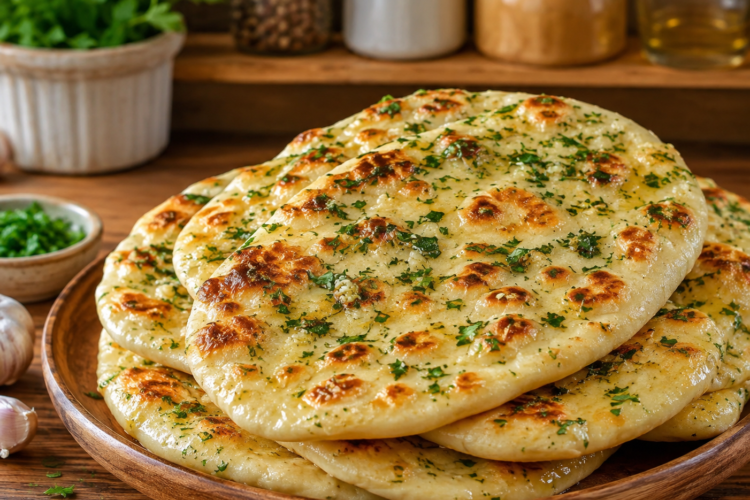
Air Fryer Garlic Butter Flatbread is an easy homemade bread recipe that delivers a soft, chewy center, lightly crisp edges, and a rich garlic butter finish. Made with simple pantry ingredients, this flavorful flatbread is ideal when you want fresh homemade bread without the long rising time required for traditional yeast dough. Because this recipe uses baking powder instead of yeast, the dough comes together quickly and only needs a short resting period before it is rolled and cooked. The air fryer provides steady, direct heat that helps the outside turn golden while the inside stays tender.
This easy air fryer flatbread recipe works well as a quick side dish, appetizer, snack, or bread accompaniment for many meals. The combination of melted butter and fresh minced garlic creates a bold savory flavor that spreads across the warm flatbread. Optional parsley adds freshness and color, while garlic powder and black pepper can provide extra depth. The finished bread is simple enough for an everyday meal but delicious enough to place on the table when serving guests.
Homemade garlic butter flatbread is also a useful recipe for busy days because the preparation is straightforward and the ingredients are familiar. All-purpose flour, baking powder, salt, warm water, and olive oil create a soft dough without complicated techniques. After a short rest, the dough is divided, rolled, brushed with garlic butter, and cooked until lightly crisp and golden. Each flatbread cooks quickly, making this an excellent choice when you need a fresh bread recipe without spending hours in the kitchen.
This Garlic Butter Flatbread
One of the best reasons to make Air Fryer Garlic Butter Flatbread is the contrast in texture. The air fryer creates a gently crisp exterior while keeping the inside soft and pleasantly chewy. When the warm flatbread is brushed with garlic butter, the surface becomes glossy and flavorful, allowing the buttery mixture to soak into the bread. Every bite combines the comforting texture of homemade flatbread with the familiar taste of warm garlic bread.
Another advantage is the simplicity of the dough. This recipe does not depend on yeast, long proofing, or complicated bread-making equipment. The baking powder helps create a lighter texture, while the olive oil contributes to a smooth, workable dough. Once the ingredients are mixed and briefly kneaded, the dough only needs time to rest. This makes the recipe especially convenient for beginners or anyone looking for an easy homemade flatbread recipe with dependable results.
The garlic butter also gives the recipe flexibility without requiring changes to the main ingredient list. Fresh minced garlic delivers a stronger, more natural garlic flavor, while the optional garlic powder can increase the intensity. Fresh parsley adds a mild herbal finish, and black pepper contributes a subtle savory warmth. These optional ingredients allow the garlic butter to be adjusted according to personal taste while keeping the original recipe ingredients intact.
The Simple Dough for Air Fryer Flatbread
The dough begins with all-purpose flour, baking powder, and salt. These dry ingredients should be mixed evenly before the warm water and olive oil are added. Combining the dry ingredients first helps distribute the baking powder and salt throughout the flour, supporting a more even texture in the finished flatbread. The warm water gradually brings the mixture together, while the olive oil helps create a smoother and more pliable dough.
Once the mixture starts forming a rough dough, kneading becomes important. A short kneading time of about two to three minutes is enough for this recipe. The goal is not to develop a heavy bread dough but to bring the ingredients together until the dough feels smooth and elastic. If it is sticky, a small amount of flour can be added gradually. Adding too much flour, however, can make the finished flatbread firmer and less tender.
After kneading, the dough should rest for around 15 to 20 minutes. This step gives the dough time to relax, making it easier to roll into even portions. Dough that is rolled immediately after mixing may shrink back or resist shaping. Allowing it to rest produces a more cooperative texture and helps create flatbreads with a more even thickness. This brief resting period is one of the easiest ways to improve the overall handling of the dough.
Making the Garlic Butter Mixture
While the dough rests, the garlic butter mixture can be prepared. Melted unsalted butter forms the base and carries the flavor of the minced garlic across the flatbread. Combining the butter and garlic while the butter is warm helps the ingredients blend together. The optional garlic powder, black pepper, and fresh parsley can then be stirred into the mixture for additional flavor.
Fresh garlic is particularly important because it gives the flatbread its recognizable garlic butter character. Minced garlic distributes easily through the melted butter, allowing the flavor to reach more of the surface. The butter also adds richness and helps the flatbread develop a more attractive golden finish during cooking. Brushing the mixture onto the bread before cooking allows the flavor to begin developing in the air fryer.
A second brush of garlic butter after cooking is equally useful. The hot flatbread absorbs some of the melted butter, creating a softer, more flavorful surface. This finishing step also gives the bread a fresh garlic aroma that is especially appealing when served immediately. If desired, a little extra chopped parsley can be added on top just before serving for a clean, fresh finish.
How to Roll the Flatbread
Once the dough has rested, divide it into four equal portions. Keeping the portions similar in size helps the flatbreads cook more evenly and gives the recipe a consistent yield. A kitchen scale can be used for precise portions, although careful visual division also works well. Each piece of dough should then be shaped into a rough ball before rolling.
On a lightly floured surface, roll each portion into a circle or oval about one-quarter inch thick. This thickness helps create the desired balance between a tender interior and slightly crisp exterior. A flatbread that is rolled too thin may become overly crisp, while a much thicker piece may need additional cooking time and could remain doughy in the center. Light flouring prevents sticking, but excessive flour should be avoided.
If several flatbreads are rolled before cooking, place parchment paper between them to prevent them from sticking together. This is especially helpful in smaller kitchens where the air fryer basket can only hold one flatbread at a time. Preparing the dough portions in advance makes the cooking process smoother because each piece is ready when the previous one comes out of the air fryer.
How to Cook Flatbread in the Air Fryer
Preheating the air fryer to 375°F (190°C) for about five minutes helps create more consistent cooking results. The hot basket or cooking chamber allows the flatbread to begin cooking immediately, encouraging the surface to develop a light golden color. Before placing the bread inside, brush one side generously with the prepared garlic butter mixture.
Place the flatbread in the air fryer with the buttered side facing up. Avoid overcrowding the basket because each flatbread needs enough room for hot air to circulate. Depending on the size and shape of the air fryer, the flatbreads may need to be cooked in separate batches. Cooking them in batches takes a little longer overall but helps maintain the proper texture.
Cook each flatbread for about five to six minutes, watching closely toward the end of the cooking time. Air fryers can vary in temperature and intensity, so visual cues are important. The finished flatbread should look golden and slightly crisp around the edges while remaining soft enough to bend. After removing it from the air fryer, brush the second side with more garlic butter while the bread is still hot.
Repeat the process with the remaining dough portions. If necessary, allow the air fryer to return to temperature between batches. Once cooked, the flatbreads can be stacked on a serving plate and covered lightly with a clean kitchen towel. This helps them remain warm while the remaining batches are prepared without trapping too much moisture.
Ways to Serve Garlic Butter Flatbread
Air Fryer Garlic Butter Flatbread is a versatile side dish that can complement many everyday meals. It works especially well with soups, pasta, salads, roasted vegetables, and other savory dishes. The soft center makes it enjoyable for tearing and dipping, while the crisp edges provide enough texture to make it satisfying as a snack on its own.
This homemade flatbread can also be served as an appetizer with your preferred dips. The garlic butter flavor makes it particularly suitable for creamy, tomato-based, or vegetable dips. The bread can be cut into smaller pieces for sharing, making it practical for casual meals and family gatherings. A small amount of additional parsley on top can make the presentation more colorful.
Another simple serving option is to use the flatbread as a base for toppings. Because the bread has a mild but savory flavor, it can support many different toppings without overwhelming them. Serve it warm for the best texture and aroma, particularly soon after brushing it with the final layer of garlic butter.
Notes for Better Air Fryer Flatbread
Keep the Dough Soft and Workable
The dough should feel smooth rather than excessively dry or sticky. If the dough sticks heavily to your hands or work surface, add flour gradually in small amounts. Too much additional flour can change the texture, so it is best to make small adjustments only when needed. A soft dough generally produces a more tender finished flatbread.
Do Not Skip the Resting Time
The short resting period may seem simple, but it makes the dough easier to roll. Rested dough is less likely to pull back after shaping and usually creates more even flatbreads. Covering the dough during this period also helps prevent the surface from drying out.
Watch the Air Fryer Closely
Cooking time may vary depending on the air fryer model and the thickness of the dough. Begin checking the flatbread as it approaches the five-minute mark. Look for a golden surface and lightly crisp edges rather than relying only on the timer.
Use the Garlic Butter While the Bread Is Hot
Brushing the cooked flatbread immediately after it comes out of the air fryer gives the best result. The warmth of the bread helps it absorb the melted butter and garlic mixture, creating a richer flavor and softer surface.
Optional Flavor Additions
The original optional garlic powder, black pepper, and fresh parsley can be included according to taste. These ingredients are not required for the dough to cook properly, but they can make the garlic butter flavor more intense and aromatic. The original notes also indicate that the garlic butter can be customized with preferred herbs or spices.
Storage and Reheating
Leftover garlic butter flatbread should be allowed to cool completely before storage. Placing hot bread in an airtight container can trap steam and affect its texture. Once cooled, the flatbread can be stored at room temperature for up to two days or refrigerated for up to one week.
For reheating, return the flatbread to the air fryer at 350°F (175°C) for about two to three minutes. This short reheating time helps warm the bread while bringing back some of its lightly crisp exterior. It is best to check the bread early because smaller or thinner pieces can heat quickly.
When reheated properly, the flatbread remains useful as a side dish, snack, or quick addition to another meal. Serving it warm brings out the aroma of the garlic butter and creates the most enjoyable texture. If the bread is stacked for serving, a clean kitchen towel can help keep it warm until the meal is ready.
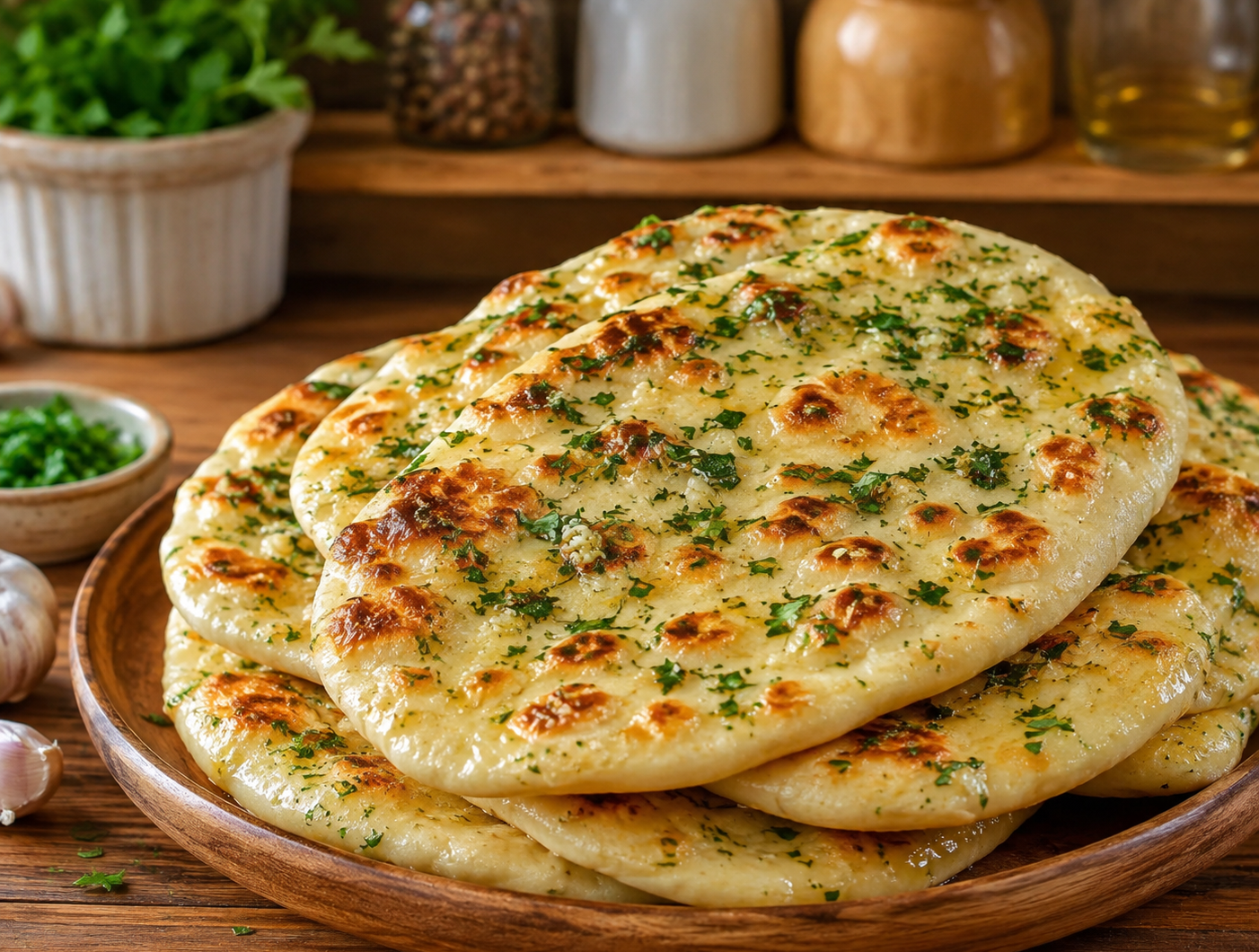
Air Fryer Garlic Butter Flatbread
A soft and chewy homemade flatbread with lightly crisp edges and a rich garlic butter coating.
4
servings15
minutes20
minutes15
minutes35
minutesIngredients
- For the flatbread dough:
2 cups all-purpose flour
1 teaspoon baking powder
1 teaspoon salt
3/4 cup warm water
2 tablespoons olive oil
- For the garlic butter:
4 tablespoons unsalted butter, melted
4 cloves garlic, minced
1 tablespoon fresh parsley, chopped (optional)
1/2 teaspoon garlic powder (optional)
1/4 teaspoon black pepper (optional)
Directions
- Add the all-purpose flour, baking powder, and salt to a large mixing bowl. Whisk until evenly combined.
- Make a space in the center of the dry ingredients. Pour in the warm water and olive oil, then stir with a wooden spoon or spatula until the mixture begins forming a dough.
- Knead the dough for about 2–3 minutes until it becomes smooth and elastic. If the dough is too sticky, add a small amount of flour, one tablespoon at a time.
- Cover the bowl with a clean kitchen towel or plastic wrap. Let the dough rest for 15–20 minutes.
- While the dough rests, combine the melted unsalted butter, minced garlic, and optional garlic powder, black pepper, and chopped parsley in a small bowl. Mix thoroughly.
- Divide the rested dough into 4 equal portions.
- On a lightly floured surface, roll each portion into a circle or oval approximately 1/4 inch thick.
- If preparing all the flatbreads before cooking, place parchment paper between the rolled pieces to prevent sticking.
- Preheat the air fryer to 375°F (190°C) for about 5 minutes.
- Brush one side of a rolled flatbread generously with the prepared garlic butter.
- Place the flatbread in the air fryer basket with the buttered side facing up. Do not overcrowd the basket.
- Air fry for 5–6 minutes, or until golden brown with lightly crisp edges.
- Remove the cooked flatbread carefully and immediately brush the other side with more garlic butter.
- Repeat with the remaining flatbreads, cooking in batches as needed.
- Stack the finished flatbreads on a serving plate and cover lightly with a clean kitchen towel to keep them warm.
- Add extra chopped parsley on top if desired.
- Serve the garlic butter flatbread warm as a side dish, appetizer, snack, or base for toppings.
- Allow leftovers to cool completely before placing them in an airtight container. Store at room temperature for up to 2 days or in the refrigerator for up to 1 week.
- Reheat leftover flatbread in the air fryer at 350°F (175°C) for approximately 2–3 minutes, until warmed through.
