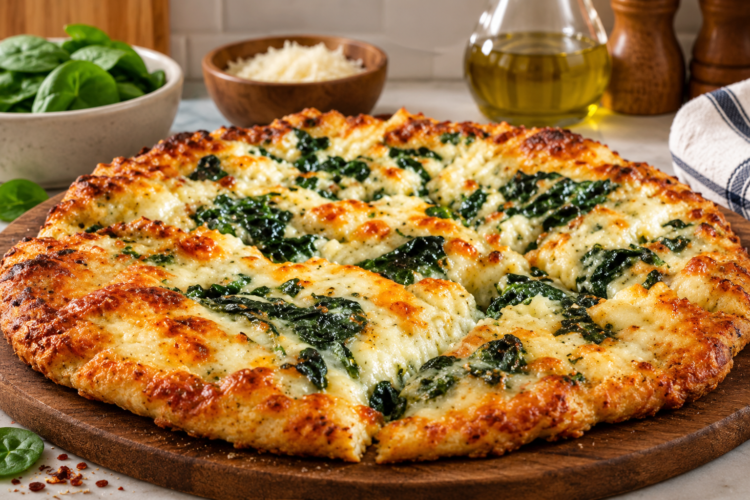
Garlic & Spinach White Pizza on Cottage Cheese Crust is a delicious way to enjoy homemade pizza while keeping the meal lower in carbohydrates than a traditional flour-based pizza. Instead of using a standard wheat crust, this recipe uses cottage cheese, mozzarella, Parmesan, and eggs to create a tender, protein-rich base. The finished crust develops lightly golden edges while remaining soft enough to complement the creamy garlic topping, fresh spinach, and melted cheese.
White pizza is known for replacing traditional tomato sauce with a creamy or cheese-based topping, allowing garlic, herbs, and other ingredients to become the main flavors. In this version, olive oil and fresh garlic create a simple white-style base that works especially well with spinach and cheese. The combination is rich without needing complicated ingredients, making this an approachable low-carb pizza recipe for a weeknight dinner, casual lunch, or satisfying snack.
Why Cottage Cheese Works So Well in Pizza Crust
Cottage cheese has become a popular ingredient in high-protein recipes because it provides creaminess and protein while working well with other simple ingredients. When blended until smooth and combined with eggs and cheese, it creates a mixture that can be spread into a pizza crust before baking. The eggs help the mixture set, while mozzarella and Parmesan contribute structure, flavor, and a pleasant cheesy texture.
Unlike a traditional yeast pizza dough, this cottage cheese pizza crust does not require yeast, kneading, or proofing. That makes it especially convenient when you want homemade pizza without waiting for dough to rise. Once baked, the crust becomes firm enough to support the toppings, particularly when it is pre-baked before the garlic, spinach, and cheese are added.
What Makes This Garlic and Spinach Pizza Different
The combination of garlic and spinach gives this pizza a balance of rich and fresh flavors. Garlic brings a warm, savory aroma, while spinach adds a mild vegetable flavor that helps offset the richness of mozzarella and Parmesan. Because the pizza does not use tomato sauce, the garlic becomes one of the main flavor components rather than simply an additional seasoning.
The crust also sets this recipe apart from conventional pizza. Cottage cheese adds a creamy base and protein, while eggs help create a sturdy texture. Parmesan adds a salty, savory character, and mozzarella provides the familiar melted-cheese quality associated with homemade pizza. Together, these ingredients create a satisfying cottage cheese pizza crust that can be enjoyed without traditional flour.
Is This Pizza Good for Weight Loss?
This pizza can fit into a weight-loss meal plan when consumed in an appropriate portion and included as part of an overall balanced diet. Its cottage cheese, eggs, mozzarella, and Parmesan provide protein, while the recipe keeps the total carbohydrate content relatively low compared with many conventional pizzas made with refined flour.
However, no single recipe automatically causes weight loss. Portion size, total calorie intake, food choices throughout the day, and individual nutritional needs all matter. The provided nutrition information lists approximately 380 calories and 26 grams of protein per serving, making it a potentially filling meal option for people who prefer higher-protein, lower-carbohydrate foods.
Is Garlic and Spinach White Pizza Keto-Friendly?
Yes, this recipe is designed to be keto-friendly and low-carb, provided the ingredients and serving size fit within your individual daily carbohydrate target. The crust does not contain wheat flour or added sugar, and the primary ingredients are cottage cheese, eggs, mozzarella, Parmesan, garlic, spinach, and olive oil.
The recipe provides approximately 7 grams of total carbohydrates per serving according to the supplied nutrition information. Because carbohydrate limits can vary between individuals following a ketogenic diet, it is still useful to check the nutrition information on the specific brands of cottage cheese and cheese you use. For strict keto eating, paying attention to serving size and total daily carbohydrate intake remains important.
The Role of Each Main Ingredient
Cottage cheese forms the foundation of the crust. Its mild flavor blends easily with the cheeses and eggs, while blending removes much of the curd-like texture and produces a smoother mixture. It also contributes protein, making the crust more substantial than a simple cheese-only base. For the best texture, use the cottage cheese as directed and blend it thoroughly before combining it with the remaining crust ingredients.
Mozzarella cheese provides the familiar stretchy, melty quality expected from pizza. It also works with the cottage cheese and eggs to help create a cohesive crust. Because mozzarella has a relatively mild flavor, it allows the garlic, Parmesan, spinach, and Italian seasoning to remain noticeable without overwhelming the dish.
Parmesan cheese adds a stronger savory flavor and helps give the crust more depth. Its salty, nutty character pairs naturally with garlic and spinach. Since Parmesan has a more concentrated flavor than mozzarella, the half-cup used in this recipe provides plenty of seasoning without requiring a complicated sauce.
Eggs are important for the structure of the crust. They help bind the blended cottage cheese and cheeses together and allow the mixture to set during baking. The result is a crust that can be sliced and served after resting. Eggs also contribute additional protein to the finished pizza.
Fresh garlic provides the signature flavor for the white pizza topping. Gently warming the minced garlic in olive oil allows its aroma to develop without requiring a long cooking time. The goal is to make the garlic fragrant rather than heavily browned, since burned garlic can become bitter and overpower the other ingredients.
Fresh spinach adds color, texture, and a mild vegetable flavor. It also works particularly well with creamy and cheesy toppings. Since spinach naturally contains moisture, using a moderate amount helps prevent the finished pizza from becoming unnecessarily wet. The two cups listed in the original recipe provide a generous vegetable component without changing the basic character of the pizza.
How to Get the Best Cottage Cheese Pizza Crust
The most important step is blending the cottage cheese until smooth. A smooth mixture creates a more even crust and helps the finished pizza hold together. Once the cottage cheese has been blended, it should be combined thoroughly with the eggs, mozzarella, Parmesan, salt, and Italian seasoning.
When spreading the mixture onto the parchment-lined baking sheet, aim for an even round shape. Avoid making the center excessively thick because a thick crust can take longer to set. Keeping the edges slightly thinner can also encourage them to become more golden during baking.
Pre-baking the crust is another important part of the process. Adding all of the toppings before the base has had time to set can make the pizza softer and more difficult to slice. The initial 15-minute bake gives the cottage cheese mixture time to firm up before the garlic oil and toppings are added.
Creating the Garlic White Pizza Topping
The topping is intentionally simple. Olive oil is warmed over low heat before the minced garlic is added. Cooking the garlic gently allows it to become fragrant while keeping the flavor smooth and savory. High heat is unnecessary and can quickly cause minced garlic to brown too much.
Once the crust has been pre-baked, the garlic-infused oil can be distributed across its surface. The spinach is then added along with the remaining cheese. As the pizza returns to the oven, the mozzarella melts and the spinach softens into the warm cheese. The final bake also helps develop a lightly golden surface that makes the pizza especially appealing.
Why Pre-Baking Should Not Be Skipped
Pre-baking is particularly useful for this type of low-carb crust because the mixture contains moist ingredients rather than traditional flour dough. Giving the base time to bake before adding the toppings allows it to become firm and stable. This creates a better foundation for the garlic, spinach, and melted cheese.
Skipping this stage can result in a softer crust that may not support the toppings as effectively. It can also make slicing more difficult. Although the additional baking step takes only a short amount of time, it plays an important role in achieving the intended texture.
Common Mistakes to Avoid
One common mistake is failing to properly blend the cottage cheese. Large curds can create an uneven mixture and affect the texture of the crust. Blending until smooth gives the base a more consistent structure. Another issue is adding too many wet toppings. Because low-carb crusts do not contain wheat flour to absorb moisture, excessive moisture can leave the finished pizza softer than intended.
Another mistake is skipping the initial bake. The crust needs time to set before it receives the topping. It is also important not to cook the garlic over high heat. Garlic can burn quickly, producing a bitter taste that distracts from the creamy cheese and spinach.
Finally, allow the pizza to rest for approximately five minutes after baking. Cutting immediately can cause the cheese and crust to shift. A short resting period gives the pizza time to settle, making it easier to cut and serve.
How to Serve This Low-Carb White Pizza
This pizza can be served as a complete meal or alongside a simple vegetable-based side. A crisp green salad, roasted vegetables, or another low-carbohydrate side can complement the richness of the cheese. Because the pizza is already satisfying, a small side is usually enough to create a balanced plate.
For additional flavor, the finished pizza can be seasoned with a small amount of chili flakes or Parmesan, as suggested in the original notes. These additions can be especially useful if you enjoy a stronger savory or slightly spicy finish. Keep additional toppings moderate so they do not overwhelm the crust.
Storage and Reheating Instructions
Leftover Garlic & Spinach White Pizza should be stored in an airtight container in the refrigerator for up to three days. Allowing the pizza to cool before sealing it helps reduce excess condensation inside the container. Individual slices can be stored separately if you expect to reheat them one at a time.
For longer storage, the slices can be individually wrapped and placed into a freezer-safe container for up to one month. When you are ready to eat them, reheating in an oven or air fryer is preferable to microwaving because dry heat helps restore some of the crust’s firmness. Reheat until warmed through and the cheese is hot.
Making This Recipe for Meal Prep
This pizza can work well for meal preparation because it stores conveniently and can be portioned into four servings. Preparing it ahead of time can make busy weekdays easier, particularly when you want a quick low-carb lunch or dinner. Once cooled, divide the pizza into portions and refrigerate the slices in an airtight container.
When reheating, avoid overheating the pizza for too long because the cheese can become excessively dry and the crust may lose its tender texture. A moderate oven or air fryer temperature generally produces a better result than prolonged high heat. The goal is simply to warm the center while keeping the crust pleasant to eat.
Flavor Variations Without Changing the Base Recipe
The original recipe already provides a strong combination of garlic, spinach, mozzarella, Parmesan, and Italian seasoning. If you want a slightly different flavor while keeping the same basic recipe, chili flakes can provide heat, while additional Parmesan can create a more pronounced savory finish. These are optional serving ideas rather than changes to the original ingredient list.
For a more pronounced garlic flavor, fresh garlic can be distributed evenly through the olive oil so that every part of the pizza receives some of its aroma. Italian seasoning adds a familiar herb flavor that works naturally with both spinach and cheese. Keeping the seasoning balanced allows the creamy ingredients to remain the focus.
A Simple Pizza for Busy Weeknights
One of the strongest advantages of this recipe is its relatively short preparation time. With 15 minutes of preparation and 25 minutes of cooking, the complete process takes approximately 40 minutes. There is no yeast activation, dough rising, or complicated sauce preparation, making this a practical choice when you want homemade pizza on a busy evening.
The recipe also uses familiar ingredients that are easy to combine. Blending the cottage cheese, mixing the crust ingredients, baking the base, preparing the garlic oil, and finishing the pizza are straightforward steps. This makes the recipe suitable for beginners who want to experiment with healthy pizza recipes or homemade low-carb meals.
Notes for the Best Results
For the best texture, blend the cottage cheese thoroughly and spread the crust evenly. Keep the garlic over low heat so it becomes fragrant without burning, and allow the crust to pre-bake before adding the toppings. The final five-minute resting period is also useful because it allows the pizza to firm slightly before slicing.
This recipe contains dairy and eggs, so it is not suitable for people avoiding those ingredients. If you are following keto or another low-carb eating plan, check the nutrition information on your particular ingredients because brands can vary. The supplied nutrition facts should be treated as an estimate rather than a laboratory measurement.
Why This Recipe Deserves a Place in Your Meal Plan
Garlic & Spinach White Pizza on Cottage Cheese Crust combines several qualities people look for in an easy homemade dinner: familiar pizza flavor, a protein-rich crust, low carbohydrate content, simple preparation, and convenient leftovers. The creamy white base, fragrant garlic, tender spinach, and melted cheese create a comforting combination without relying on traditional flour pizza dough.
Whether you are looking for a keto pizza recipe, a low-carb dinner, a high-protein pizza, or simply a different way to make homemade pizza, this recipe offers an uncomplicated option. The cottage cheese crust gives the pizza its distinctive character, while the garlic and spinach topping keeps the finished dish flavorful and satisfying.
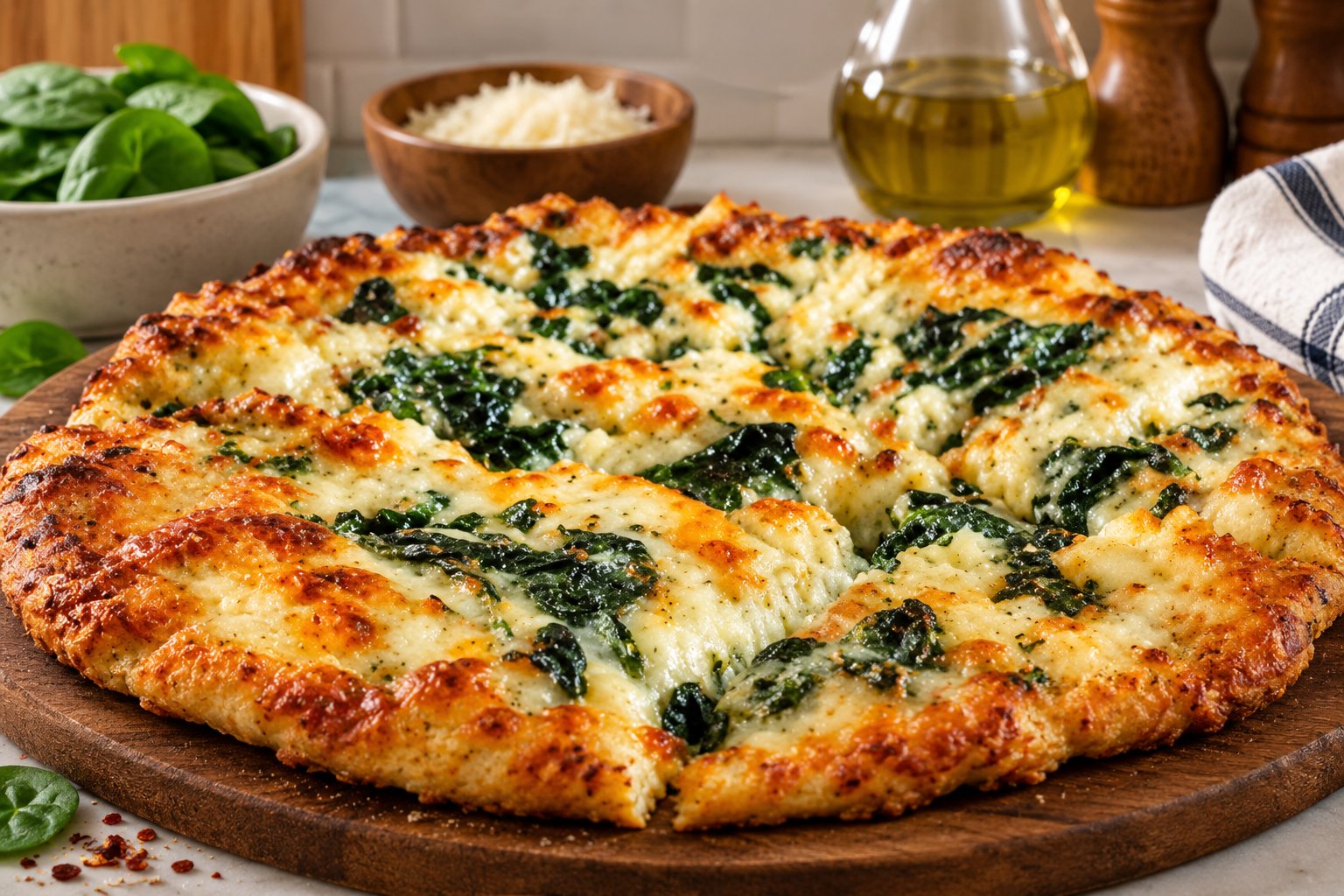
Garlic & Spinach White Pizza on Cottage Cheese Crust
A creamy, cheesy, and flavorful low-carb white pizza made with a protein-rich cottage cheese crust, fresh garlic, spinach, mozzarella, Parmesan, and Italian seasoning.
4
servings15
minutes25
minutes380
kcal40
minutesIngredients
1 cup cottage cheese
1½ cups shredded mozzarella cheese
½ cup grated Parmesan cheese
2 large eggs
2 tablespoons olive oil
3 cloves garlic, minced
2 cups fresh spinach, chopped
½ teaspoon salt
¼ teaspoon black pepper
½ teaspoon Italian seasoning
Directions
- Preheat the oven to 400°F (200°C). Line a baking sheet with parchment paper.
- Blend the cottage cheese until smooth. Transfer it to a bowl and combine it with the eggs, mozzarella, Parmesan, salt, black pepper, and Italian seasoning.
- Spread the mixture onto the prepared baking sheet, forming a round pizza crust. Keep the edges slightly thinner than the center for more even baking.
- Bake the crust for approximately 15 minutes, or until it is set and beginning to turn lightly golden.
- While the crust bakes, warm the olive oil in a small pan over low heat. Add the minced garlic and cook gently until fragrant, taking care not to burn it.
- Remove the pre-baked crust from the oven. Spread the garlic-infused olive oil over the surface.
- Add the chopped spinach and distribute it evenly across the crust. Finish with the remaining cheese from the prepared mozzarella and Parmesan mixture.
- Return the pizza to the oven and bake for approximately 10 minutes, or until the cheese is melted, bubbly, and lightly golden.
- Remove the pizza from the oven and let it rest for 5 minutes before slicing. This helps the crust and toppings settle and makes the pizza easier to serve.
Notes
- Store leftover pizza in an airtight container in the refrigerator for up to 3 days.
- For longer storage, individually wrap slices and freeze them in a freezer-safe container for up to 1 month.
- Reheat leftovers in the oven or air fryer for a firmer crust.
- Avoid overloading the pizza with wet toppings, as excess moisture can soften the cottage cheese crust.
- Do not skip the initial crust-baking stage; it helps the base become sturdy enough to hold the toppings.
- Cook the garlic gently over low heat to prevent bitterness.
- The recipe contains dairy and eggs.
- Chili flakes or additional Parmesan can be used when serving for extra flavor.
Nutrition Facts
- Calories: 380kcal
- Fat: 28g
- Carbohydrates: 7g
- Sugar: 2g
- Protein: 26g
