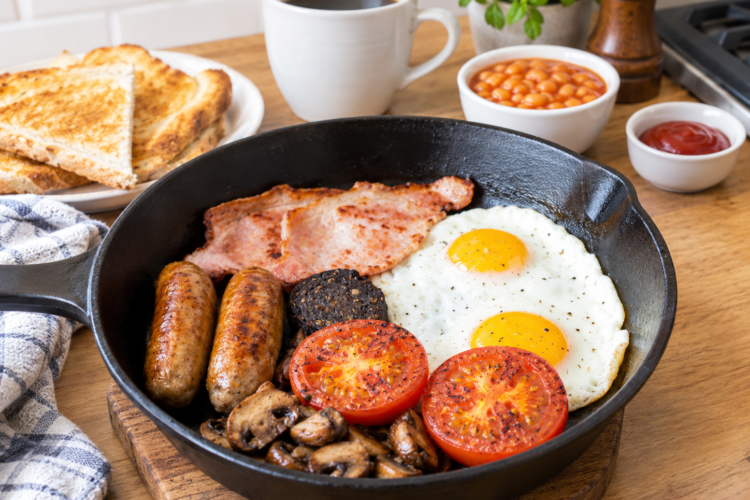
A traditional full English breakfast is one of the most recognizable meals in British food culture. Known for its generous portions, savory ingredients, and comforting flavors, this classic morning meal brings together pork sausages, back bacon, fried eggs, baked beans, mushrooms, tomatoes, black pudding, and crispy fried bread.
Every ingredient contributes a different texture and taste, creating a satisfying breakfast that feels equally suited to a relaxed weekend morning or a special family brunch. Although the meal is hearty, it can be prepared in a home kitchen using straightforward cooking techniques and familiar ingredients.
Often called a British fry-up or the Full Monty, a full English breakfast is more than a plate of eggs and bacon. It is a combination of ingredients traditionally cooked separately or together in a frying pan and served hot at the same time. Some versions include all eight classic components, while others leave out black pudding or replace fried bread with toast.
The exact combination varies between households, cafés, and regions, but the central idea remains the same: a substantial breakfast featuring several savory favorites on one plate.
This traditional English breakfast recipe focuses on the familiar flavors that make the dish so popular. British-style pork sausages provide a rich, seasoned center, while back bacon offers a meaty texture with a distinctive strip of fat. Mushrooms develop a golden surface when cooked in a hot pan, and tomatoes bring a fresh, slightly acidic contrast to the richer ingredients. Baked beans add a soft texture and mild tomato flavor, while fried eggs and crispy bread complete the meal. Black pudding provides an additional traditional element for anyone who wants the full British breakfast experience.
What Is a Traditional Full English Breakfast?
A full English breakfast is a cooked British breakfast made with a selection of savory ingredients served together on a plate. The traditional combination usually includes sausages, bacon, eggs, baked beans, tomatoes, mushrooms, black pudding, and fried bread or toast. Each component has its own place in the meal, and the combination creates a balance of salty, savory, earthy, and mildly sweet flavors. It is particularly popular in British cafés, hotels, pubs, and homes, where it is often served with a cup of hot tea.
The phrase “Full Monty” is sometimes used to describe a complete English breakfast with all the usual components included. A smaller version may contain only eggs, bacon, sausages, and beans, while a more generous plate includes mushrooms, tomatoes, black pudding, and fried bread as well. There is no single combination that every cook follows, so the dish can vary according to personal preference and ingredient availability. For this recipe, the aim is to include the traditional components while keeping the preparation practical for a home cook.
Unlike a continental breakfast, which may feature pastries, bread, fruit, and coffee, a full English breakfast centers on hot, cooked food. Most of the ingredients are prepared shortly before serving, allowing the eggs to remain tender, the bread to stay crisp, and the sausages and bacon to retain their freshly cooked texture. Preparing the ingredients in stages makes it easier to bring everything together without letting one component become cold while the others finish cooking.
The Eight Traditional Components of a Full English Breakfast
1. Pork Sausages
Pork sausages are an essential part of a traditional British fry-up. British bangers are generally thicker than many breakfast sausages sold elsewhere, with a seasoned pork filling and a casing that becomes golden during cooking. Their savory flavor pairs naturally with eggs, bacon, and baked beans, making them one of the main ingredients on the plate. When shopping, look for good-quality pork sausages with a texture and seasoning you enjoy. If British-style bangers are unavailable, a similar thick pork sausage can be used without losing the overall character of the meal.
Sausages usually take the longest to cook, so they should be started before the other ingredients. Gentle, even heat helps the exterior brown while the center cooks thoroughly. Turning them regularly encourages even coloring and reduces the chance of the skins becoming too dark before the meat is cooked. Once ready, the sausages can be transferred to a warm ovenproof dish while the remaining ingredients are prepared.
2. British Back Bacon
Back bacon differs from the streaky bacon commonly used in many American-style breakfasts. It comes from the back or loin portion of the pig and often has a leaner, meatier texture, with a strip of fat around the edge. This makes it a natural choice for a traditional English breakfast, where the bacon is usually cooked until browned and tender rather than extremely crisp throughout.
Four slices are enough to provide a generous portion for this recipe. Back bacon can be cooked in the same skillet as the sausages once they have begun to brown, allowing the ingredients to share some of their savory cooking flavors. Cook each slice until the edges are lightly crisp and the center is thoroughly heated. If back bacon is unavailable, another suitable bacon can be substituted, although the flavor and texture may differ from a traditional British fry-up.
3. Sautéed Mushrooms
Mushrooms add an earthy flavor that balances the richness of the meat and eggs. White or brown mushrooms work well because they soften during cooking and develop a pleasing golden surface when their moisture evaporates. Their mild flavor also makes them a good companion for the tomato sauce from the beans and the rich yolk of a fried egg.
For the best results, slice the mushrooms evenly so they cook at a similar rate. Add them to the skillet while the sausages and bacon are cooking, using a little of the existing cooking fat when appropriate. Avoid overcrowding the pan, as too many mushrooms together can release moisture and steam rather than brown. Cook until tender and golden, then keep them warm until the breakfast is ready to serve.
4. British Baked Beans
Baked beans are a familiar feature of a British full English breakfast. They are generally served in a mild tomato sauce rather than the sweeter, smoky barbecue-style sauce associated with some other baked bean dishes. Their soft texture and gentle tomato flavor contrast with the crisp bread, browned meats, and fried eggs, making them an important part of the overall combination.
Canned British-style baked beans are a convenient option for everyday cooking, while homemade beans can be used when extra preparation time is available. The beans are warmed separately in a small saucepan over low heat, with occasional stirring to prevent sticking. There is no need to boil them vigorously; gentle heating is enough to bring them to serving temperature. Keeping them in a separate pan also helps preserve the texture and appearance of the other breakfast components.
5. Fried or Grilled Tomatoes
Tomatoes add freshness and a pleasant acidity to the full English breakfast. Their natural sweetness becomes more pronounced when the cut surfaces are seared in a hot skillet. Plum tomatoes and ripe vine tomatoes are both suitable choices, and halving them before cooking helps them soften while allowing the exposed surfaces to develop a little caramelization.
A small pinch of salt is sufficient to season the tomatoes and bring out their flavor. Place the halves cut-side down in the skillet and cook until the surface is lightly browned, then turn them as needed to finish heating. The tomatoes should become tender without collapsing completely. Their juicy texture helps balance the richer ingredients on the plate, and their bright color also makes the finished breakfast look more inviting.
6. Black Pudding
Black pudding is a traditional British sausage commonly made with pork blood, fat, oats or other grains, and seasonings. Its dark appearance and distinctive savory flavor make it different from ordinary pork sausages, but it has long been associated with a complete English breakfast. When sliced and fried, it develops a browned exterior while retaining a soft, rich center.
Not everyone enjoys black pudding, so some cooks omit it from their usual breakfast. However, including it gives the meal a more traditional Full Monty presentation. For this recipe, four slices are included. They need only a short cooking time compared with the sausages, so they can be added toward the end of the preparation. Cook until heated through and lightly browned, following the package instructions for the particular product being used.
7. Fried Bread
Fried bread is one of the defining features of a traditional British fry-up. Although toast is a common modern alternative, bread fried in oil, lard, or pan drippings has a different texture and flavor. The outside becomes crisp and golden, while the middle remains more substantial than ordinary toasted bread. It also provides a convenient way to enjoy the runny egg yolk and a little of the tomato sauce from the beans.
White bread is traditionally used because it browns readily and develops a crisp surface. In this recipe, two slices are fried in hot oil for approximately one to two minutes per side, depending on thickness and pan temperature. Once golden, transfer the bread to a paper-towel-lined plate to remove excess oil. For the best texture, serve it soon after cooking rather than leaving it covered for too long, which can trap steam and soften the crust.
8. Fried Eggs
Fried eggs bring the different parts of a full English breakfast together. Sunny-side-up eggs with set whites and runny yolks are a popular choice because the yolk creates a rich sauce when broken over the sausages, bacon, mushrooms, and fried bread. The eggs are simple to prepare, but timing matters because they are best served immediately after cooking.
Crack the eggs into the skillet after the other ingredients have been removed. The remaining pan drippings can help the whites cook while adding flavor, provided the pan and fat are not excessively hot. Spoon a little hot fat over the egg whites and yolks if desired, taking care not to overcook the yolks. The whites should be set and the yolks should remain soft if that is your preference. Cook eggs to a safe temperature according to your needs, especially when serving young children, older adults, pregnant people, or anyone with a weakened immune system.
How to Make a Traditional Full English Breakfast at Home
Step 1: Prepare the Ingredients and Warm the Oven
Begin by gathering the sausages, back bacon, baked beans, mushrooms, tomatoes, black pudding, bread, eggs, salt, and cooking fat. Slice the mushrooms, halve the tomatoes, and arrange the ingredients near the stove so they are ready when needed. Preheat the oven to 200°F (95°C), then place a large ovenproof dish inside. This low-temperature oven will keep the cooked ingredients warm while you finish preparing the breakfast.
Step 2: Cook the Sausages Slowly
Heat a large skillet over medium-low heat with a small drizzle of oil or another suitable cooking fat. Add the sausages and cook for approximately 15 to 20 minutes, turning them occasionally to brown the surfaces evenly. The exact time depends on their thickness and the type of sausage used, so check that they are thoroughly cooked in the center. Once ready, transfer them to the warmed ovenproof dish.
Step 3: Add the Bacon and Mushrooms
When the sausages are about halfway through cooking, add the back bacon and sliced mushrooms to the skillet. Cook the bacon for approximately three to four minutes per side, adjusting the time according to thickness and your preferred level of browning. Stir or turn the mushrooms as needed so they cook evenly and develop a golden surface. Transfer both ingredients to the warm dish when they are ready.
Step 4: Sear the Tomatoes and Black Pudding
If the skillet contains excess browned bits or burnt residue, carefully wipe it clean before continuing. Season the halved tomatoes with a small pinch of salt, then place them cut-side down in the pan. Add the black pudding slices and cook for about two minutes per side, or until browned and heated through as appropriate for the product. Move the finished tomatoes and black pudding to the ovenproof dish with the other ingredients.
Step 5: Warm the Baked Beans
Place the baked beans in a small saucepan over low heat. Stir occasionally while they warm, making sure the sauce does not stick to the bottom of the pan. The beans should be hot but not aggressively boiling. Once warmed through, reduce the heat to its lowest setting if needed, or remove the pan from the stove until the rest of the meal is ready. Keep the beans separate from the fried ingredients so their tomato sauce does not make the bread soggy.
Step 6: Fry the Bread Until Golden
Add enough vegetable oil or lard to the skillet to fry the bread, then heat over medium-high heat. Place the slices in the pan and cook for approximately one to two minutes on each side, watching carefully as they brown. The bread should be crisp and deeply golden without becoming burnt. Transfer it to a plate lined with paper towels and serve it promptly for the best texture.
Step 7: Fry the Eggs
Reduce the heat to medium and carefully crack the eggs into the remaining pan drippings, adding a little extra cooking fat if necessary. Allow the whites to set while keeping the yolks soft if desired. Spoon a small amount of hot fat over the top of the eggs to help cook the surface, taking care to avoid splashing. Once the eggs reach your preferred doneness, remove them from the skillet and prepare to assemble the plates.
Step 8: Assemble and Serve the Breakfast
Arrange the sausages, bacon, mushrooms, tomatoes, black pudding, and fried eggs on warmed plates. Add a portion of hot baked beans and place the crisp fried bread alongside the other ingredients. Serve immediately, while everything is warm and the bread is still crunchy. A fresh mug of hot tea is a traditional accompaniment, and brown sauce or tomato ketchup can be offered at the table for anyone who enjoys an extra layer of flavor.
Tips for Making the Best Full English Breakfast
Cook the Ingredients in the Right Order
The easiest way to prepare a full English breakfast is to begin with the ingredients that need the most time and finish with those that cook quickly. Sausages should go into the pan first, followed by bacon and mushrooms. Tomatoes and black pudding can be cooked afterward, while the bread and eggs are best prepared near the end. This sequence reduces unnecessary waiting and helps every component reach the plate at the right temperature.
Use Separate Pans When Necessary
A single large skillet can be enough to prepare this breakfast, but using two pans can make the process easier when cooking for several people. One pan can handle the sausages and bacon, while another is used for mushrooms, tomatoes, or eggs. If you prefer to use only one pan, work in stages and transfer the cooked food to a warm ovenproof dish. Avoid placing fried bread directly beneath moist ingredients, as steam can quickly soften its crispy surface.
Choose Quality Ingredients
Because a full English breakfast contains several relatively simple ingredients, their quality makes a noticeable difference. Choose pork sausages with good seasoning, fresh eggs, ripe tomatoes, and mushrooms that are firm and free from slimy spots. British back bacon and black pudding help create a more traditional result, although suitable alternatives can be used when these ingredients are unavailable. Good-quality baked beans with a mild tomato sauce also contribute to the familiar flavor of a British café-style breakfast.
Keep the Food Warm Without Drying It Out
One of the main challenges when preparing a full English breakfast is making sure everything stays warm until serving. A low-temperature oven is useful for holding the sausages, bacon, mushrooms, tomatoes, and black pudding while the remaining ingredients cook. Use an ovenproof dish and avoid leaving the food in the oven longer than necessary. The eggs should be cooked last because they are most enjoyable when freshly prepared, while the fried bread should remain uncovered to preserve its crisp texture.
Is a Traditional Full English Breakfast Healthy?
A traditional full English breakfast contains several foods that provide useful nutrients, but its nutritional value depends on portion sizes, cooking methods, and the ingredients selected. Eggs provide protein and several essential nutrients, while mushrooms and tomatoes contribute fiber, vitamins, and minerals. Baked beans provide carbohydrates, plant-based protein, and fiber, although their sodium and added sugar content can vary between brands. Together, these foods create a filling meal with a mixture of protein, fat, and carbohydrates.
However, the traditional combination of sausages, bacon, black pudding, and fried bread can make the meal high in calories, saturated fat, and sodium. Processed meats are best enjoyed in moderation, and frequent large portions may not suit every person’s dietary needs. Although this recipe includes nutritious ingredients, it is more accurate to describe it as a hearty traditional breakfast than automatically classify it as a low-calorie or health-focused meal. The nutritional information will also change depending on the specific brands and quantities used.
If you want a lighter version, you can make individual adjustments without losing the character of the dish. For example, use a moderate amount of cooking oil, serve a generous portion of mushrooms and tomatoes, and choose baked beans with a lower sodium content when available. You can also adjust the quantity of processed meat to suit your preferences. These changes can make the meal more balanced, although they will also alter the original recipe and its nutritional profile.
What to Serve with a Full English Breakfast
Traditional British Tea
A cup of hot black tea is one of the most familiar accompaniments to a full English breakfast. Its slightly robust flavor complements the savory meats, eggs, and beans without competing with the other ingredients. Many people enjoy their tea with milk, while others prefer it plain. Coffee is also a suitable option, particularly for those who prefer a stronger morning drink. Serve the beverage freshly prepared so it is ready when the hot breakfast reaches the table.
Brown Sauce or Tomato Ketchup
Condiments are a matter of personal preference, but British brown sauce is particularly associated with the traditional fry-up. It usually has a tangy, slightly sweet, and spiced flavor that works well with sausages and bacon. Tomato ketchup is another popular choice, especially for people who prefer a sweeter sauce. You can place both options on the table and let everyone choose their favorite. Since condiments can add sodium or sugar, serving them separately also makes it easier to control the amount used.
Toast and Other Breakfast Additions
Although fried bread is included in this recipe, toast is a convenient alternative when you want a less oily accompaniment. Hash browns are another popular addition in many modern British cafés, even though they are not essential to the traditional breakfast. Some people also enjoy extra tomatoes, additional mushrooms, or a larger serving of beans. These variations make it easy to adapt the meal for different appetites while keeping its recognizable British character.
Frequently Asked Questions About a Full English Breakfast
Why Is It Called a Full English Breakfast?
The name refers to a substantial cooked breakfast associated with England and British food culture. The word “full” suggests that the meal includes several traditional components rather than just one or two items. A complete version may contain sausages, bacon, eggs, baked beans, mushrooms, tomatoes, black pudding, and fried bread. The phrase “Full Monty” is also commonly used for a particularly complete version of the meal.
Is Black Pudding Essential?
Black pudding is a traditional component, but it is not compulsory in every version of a full English breakfast. Some people enjoy its rich, savory flavor, while others prefer to leave it off their plates. A breakfast without black pudding can still be a recognizable English fry-up, although including it gives the meal a more traditional, complete presentation.
Can I Use American Bacon Instead of British Back Bacon?
Yes, you can use the bacon available in your local grocery store. British back bacon is generally meatier and often leaner than American streaky bacon, which contains more fat between the layers of meat. Streaky bacon will produce a different texture and flavor, but it can still work well with the other breakfast ingredients. Adjust the cooking time to suit the thickness of the bacon you choose.
Can I Prepare a Full English Breakfast in Advance?
Some preparation can be done in advance, such as slicing the mushrooms, washing the tomatoes, and arranging the ingredients before cooking. However, the complete breakfast is best prepared shortly before serving because fried eggs and fried bread lose their ideal texture as they sit. If you need to hold cooked ingredients briefly, keep them in a warm ovenproof dish at a low temperature. Refrigerate leftovers promptly rather than leaving cooked meat and eggs at room temperature for extended periods.
Can I Make This Breakfast Without Fried Bread?
Yes. Toast is a common alternative and is easier to prepare when you want to avoid frying additional bread. You can also omit bread entirely, although doing so changes the meal’s overall carbohydrate content and serving size. If you prefer the traditional version, fried white bread provides the characteristic crisp exterior and rich flavor associated with a classic British fry-up.
How Do I Stop the Mushrooms from Becoming Watery?
The most useful approach is to avoid overcrowding the skillet. Mushrooms naturally release moisture as they cook, and a crowded pan can prevent that moisture from evaporating quickly. Slice the mushrooms evenly, use a sufficiently hot pan, and allow them to brown before stirring too frequently. Cooking them in batches is helpful when preparing a larger breakfast, particularly if you want a golden finish rather than a soft, steamed texture.
Storage and Reheating Notes
Storing Leftovers
A full English breakfast is best enjoyed fresh, but leftover cooked ingredients can be saved safely. Separate the components where practical, place them in airtight containers, and refrigerate them within two hours of cooking. For food safety, keep the refrigerator at 40°F (4°C) or below and consume refrigerated leftovers within three to four days. If the breakfast has been left at room temperature for too long, discard it rather than attempting to make it safe by reheating.
Reheating the Breakfast
Reheat leftover sausages, bacon, mushrooms, and other cooked components until they are steaming hot throughout. A skillet or oven can help restore some of the texture of the meat and vegetables, while a microwave is convenient for reheating beans. Fried bread may become soft after refrigeration, so it is better to prepare fresh bread when possible. For the best quality, cook new eggs just before serving rather than relying on reheated fried eggs.
Healthy Traditional Full English
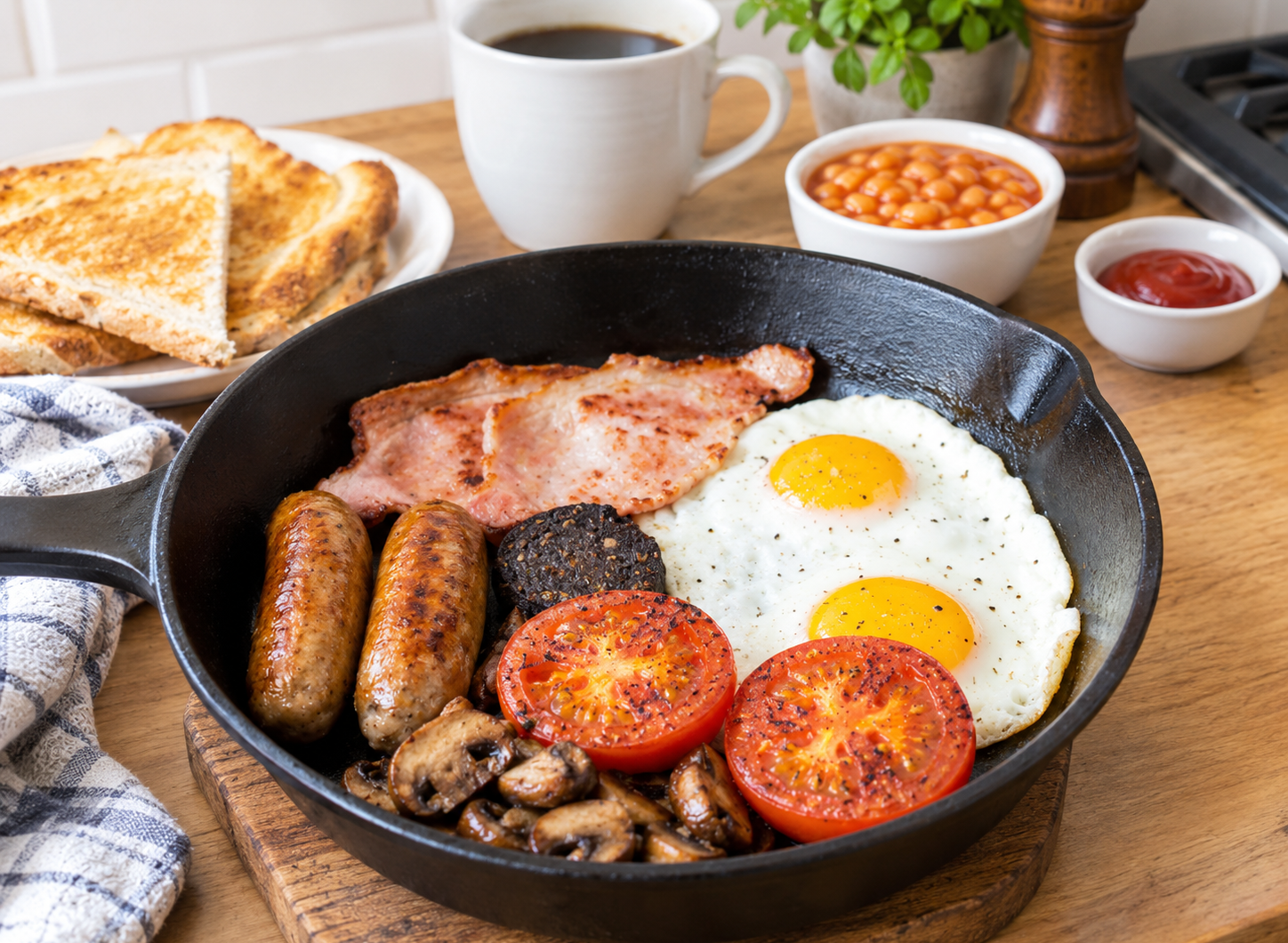
A hearty traditional British breakfast featuring pork sausages, back bacon, baked beans, golden mushrooms, seared tomatoes, black pudding, fried eggs, and crispy fried white bread. Serve everything hot for a classic English-style morning meal.
4
servings5
minutes30
minutes535
kcalIngredients
4 pork sausages, preferably British bangers
4 slices British back bacon
1 cup (136 grams) British baked beans, bought or homemade
6 ounces (170 grams) mushrooms, sliced
2 ripe tomatoes, halved
Small pinch of salt
4 slices black pudding
2 slices white bread
4 large eggs
Vegetable oil or lard for frying
Directions
- Prepare the oven: Preheat the oven to 200°F (95°C). Place a large ovenproof dish inside to warm while you cook the breakfast.
- Cook the sausages: Heat a large skillet over medium-low heat with a drizzle of oil. Add the sausages and cook for 15–20 minutes, turning occasionally until golden and thoroughly cooked. Transfer them to the warmed dish.
- Fry the bacon and mushrooms: About halfway through cooking the sausages, add the back bacon and sliced mushrooms to the skillet. Cook the bacon for 3–4 minutes per side and sauté the mushrooms until golden. Transfer both to the warm oven.
- Cook the tomatoes and black pudding: Season the tomato halves with a small pinch of salt. Place them cut-side down in the skillet alongside the black pudding slices. Sear for approximately 2 minutes per side, adjusting as necessary, until browned and heated through. Transfer to the warm dish.
- Warm the baked beans: Place the baked beans in a small saucepan over low heat. Stir occasionally until thoroughly warmed, taking care not to let the sauce stick or boil vigorously.
- Fry the bread: Heat vegetable oil or lard in the skillet over medium-high heat. Fry the bread slices for 1–2 minutes per side until deeply golden and crispy. Transfer to a paper-towel-lined plate.
- Fry the eggs: Reduce the skillet heat to medium. Crack in the eggs and cook until the whites are set and the yolks reach your preferred doneness. If desired, carefully spoon a little hot cooking fat over the eggs to help cook their surfaces.
- Assemble the plates: Divide the sausages, bacon, mushrooms, tomatoes, black pudding, baked beans, and eggs among four plates. Serve with the crispy fried bread and a fresh mug of hot tea.
Notes
- British back bacon and British-style pork sausages provide the traditional flavor of this breakfast.
- Black pudding is a classic component but can be omitted according to personal preference.
- Keep cooked ingredients warm in a low oven while preparing the remaining components.
- Prepare the fried bread and eggs just before serving for the best texture.
- Serve with British brown sauce or tomato ketchup if desired.
- The nutritional figures are estimates supplied with the original recipe and may not represent the exact values for all four servings or every ingredient brand.
Nutrition Facts
4 servings per container
- Amount Per ServingCalories535
- % Daily Value *
- Total Fat
34g
44%
- Total Carbohydrate
32g
12%
- Protein 27g 54%
* The % Daily Value tells you how much a nutrient in a serving of food contributes to a daily diet. 2,000 calories a day is used for general nutrition advice.
