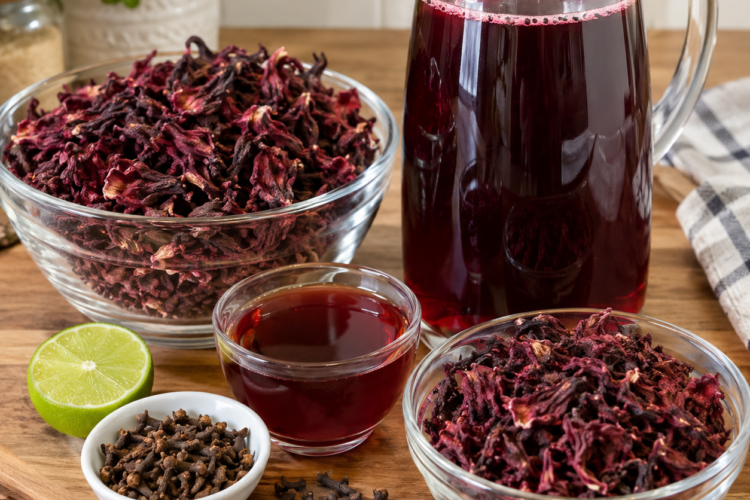
A homemade hibiscus and clove drink is a refreshing way to enjoy the bold, tangy flavor of hibiscus flowers with the warm, aromatic taste of whole cloves and the bright freshness of lemon juice. A small amount of honey softens the natural tartness, creating a balanced herbal beverage that can be served chilled over ice. Its deep red color makes it an attractive choice for everyday refreshment, family gatherings, and special occasions.
This easy hibiscus drink recipe uses a simple soaking method instead of complicated cooking techniques. Dried hibiscus flowers and cloves steep in water for two hours, allowing their color and flavor to develop naturally. Once the mixture is strained, fresh lemon juice and honey are added to complete the drink. Because the recipe requires very little active preparation, you can make it ahead of time and let it chill while you prepare other dishes or finish your daily tasks.
If you enjoy homemade herbal drinks, fruit-infused water, or naturally sweetened beverages, this recipe is worth adding to your collection. It brings together a handful of accessible ingredients without requiring special equipment or commercial drink mixes. The result is a tangy, lightly spiced beverage that can be adjusted to suit your taste, whether you prefer a stronger hibiscus flavor or a milder drink with extra water and ice.
What Makes This Hibiscus Lemon Drink Special?
One of the most appealing features of this hibiscus lemon drink is its combination of contrasting flavors. Hibiscus has a naturally tart, fruity taste that can remind some people of cranberries or other sharp red fruits. Cloves contribute a warm, slightly sweet spice aroma, while lemon introduces another layer of citrus freshness. Honey brings these flavors together by reducing the perception of sourness without completely hiding the distinctive character of the hibiscus.
The ingredients also create an appealing balance between color, aroma, and taste. Hibiscus produces a rich crimson-red infusion, making the drink look attractive in clear glasses. Whole cloves release their fragrance gradually as they soak, giving the beverage a gentle spiced note. Freshly squeezed lemon juice adds brightness just before serving, while ice makes the finished drink especially refreshing in warm weather.
Another reason to appreciate this recipe is its simplicity. You do not need to boil a large pot of water, prepare a complicated syrup, or use artificial coloring to achieve its vivid appearance. The flowers release their color during soaking, and the remaining ingredients can be mixed in shortly before serving. This straightforward approach makes the recipe suitable for anyone looking for an easy homemade hibiscus beverage.
Why Use Dried Hibiscus Flowers?
Dried hibiscus flowers are the main ingredient in this recipe and provide most of its distinctive flavor and color. When soaked in water, the dried petals release natural plant compounds that produce a deep red infusion. The resulting liquid is tart, aromatic, and easy to combine with citrus, spices, and sweeteners. For the best flavor, choose dried hibiscus intended for food or tea preparation rather than decorative flowers that may have been treated with unsuitable chemicals.
Hibiscus is widely used in traditional beverages in different parts of the world. Depending on the region, it may be served hot as an herbal infusion or cold as a refreshing drink. In some households, it is sweetened generously, while other preparations emphasize its naturally sharp flavor. This recipe takes a simple homemade approach by pairing hibiscus with cloves, lemon juice, and honey for a drink with several layers of flavor.
Hibiscus also contains naturally occurring plant compounds, including anthocyanins, which contribute to its red color. These compounds are studied for their antioxidant activity, although the nutritional and health effects of a homemade infusion depend on several factors, including the ingredients, preparation method, and amount consumed. It is best to enjoy hibiscus as a flavorful beverage rather than assume that it can prevent or treat a particular medical condition.
The Role of Cloves in This Herbal Beverage
Cloves may be small, but their flavor is strong enough to make a noticeable difference in a simple drink. These dried flower buds have a warm, pungent aroma with slightly sweet and woody notes. When combined with tart hibiscus, cloves add depth and complexity, making the finished beverage taste more rounded than a plain hibiscus infusion.
Whole cloves are especially convenient for this recipe because they can be added directly to the soaking liquid and removed easily when the drink is strained. Their flavor develops during the two-hour resting period without the need to grind them or prepare a separate spice mixture. Using the whole spice also makes it easier to control the intensity of the flavor, which is useful if you prefer a delicate clove aroma rather than a strong medicinal or spicy taste.
For the most balanced result, measure the cloves carefully instead of adding a large handful. Their flavor can quickly overpower the hibiscus if used in excessive amounts. The five whole cloves specified in this recipe provide a noticeable spiced character while allowing the tartness of the flowers and the freshness of the lemon to remain prominent.
Why Fresh Lemon Juice Matters
Fresh lemon juice gives this homemade hibiscus drink a bright citrus finish. Although hibiscus is already tart, lemon brings a different kind of acidity and fragrance that helps make the flavor more interesting. Rather than simply increasing the sourness, the citrus aroma can make the drink taste fresher and more lively, especially when it is served cold.
Adding the lemon juice after straining is a practical way to preserve its fresh taste. The hibiscus and cloves have time to develop their flavors during soaking, and the lemon can then be incorporated just before serving. This method also makes it easier to adjust the amount of citrus to suit individual preferences. If you enjoy a pronounced lemon flavor, you can experiment with the balance while keeping the original recipe quantities as your starting point.
Fresh lemon juice also contains vitamin C, although the exact amount in each serving will vary with the lemons used and the quantity consumed. It is a useful ingredient for flavor as well as nutrition, but this drink should not be treated as a substitute for a varied diet. The main reason to include lemon here is the way its fresh, citrusy taste complements the floral tartness of hibiscus.
Natural Sweetness from Honey
Honey provides the sweet element in this hibiscus and lemon drink. Its mild floral notes complement the aromatic cloves, while its sweetness helps balance the sharp flavor of the hibiscus infusion. Unlike a heavily sweetened commercial beverage, this recipe uses a measured amount of honey so that the natural character of the flowers and citrus remains noticeable.
The recipe calls for one tablespoon of honey in total, divided between two glasses. Adding the honey separately to each glass makes it easier to stir the drink thoroughly and adjust individual portions if needed. This is particularly useful when serving people who have different preferences for sweetness. Someone who enjoys a tart herbal drink may prefer the stated amount, while another person might choose to add a little more.
Although honey is often described as a natural sweetener, it is still a source of sugar and calories. Using honey instead of refined table sugar does not make a beverage sugar-free. This recipe can reasonably be described as naturally sweetened, but it should not be labeled sugar-free because both honey and the naturally occurring sugars in ingredients can contribute to its overall carbohydrate content.
How to Make Hibiscus and Clove Drink at Home
Preparing this drink is straightforward, and most of the total time is spent allowing the ingredients to soak. Begin by placing the dried hibiscus flowers in a suitable container with one cup of water. Add the five whole cloves and make sure the flowers are immersed in the liquid. A clean bowl or jar works well, provided it has enough room for the ingredients and can be covered during the resting period.
Allow the mixture to soak for two hours. During this time, the water takes on the flowers’ deep red color and absorbs their tart flavor, while the cloves contribute their distinctive aroma. Since the recipe uses a long soaking period rather than an active cooking process, there is no need to stand beside the stove. Keeping the container covered and refrigerated during soaking is a sensible food-handling practice, especially in a warm kitchen.
After the soaking period, place a fine strainer over a large bowl and pour the mixture through it. Press or gently squeeze the softened flowers with a clean spoon to release the remaining liquid. Avoid splashing, as hibiscus can leave noticeable red stains on some surfaces and fabrics. Once the liquid has been collected, discard the strained flowers and prepare the serving glasses.
Divide the hibiscus infusion between two small glasses. Add half a tablespoon of honey and one tablespoon of freshly squeezed lemon juice to each glass, then stir until the honey is evenly distributed. Add three or four small ice cubes to each serving. For an attractive finish, garnish with lemon wedges and a few whole cloves if desired, keeping in mind that the cloves provide additional aroma rather than something to chew.
Serve the drink immediately while it is cold and refreshing. If the flavor seems too concentrated, you can dilute it with additional cold water or ice. The important thing is to find a balance that allows the hibiscus, lemon, honey, and cloves to complement one another without any single ingredient becoming overpowering.
Tips for the Best Homemade Hibiscus Drink
Choose Good-Quality Hibiscus Flowers
The quality of the dried hibiscus flowers has a direct effect on the color and flavor of the finished drink. Look for flowers that have a rich red or burgundy appearance and a clean, naturally tart aroma. Avoid products that smell musty or show signs of moisture or contamination. Food-grade dried hibiscus is the best choice for preparing herbal drinks at home, and following the supplier’s storage instructions will help maintain its quality.
Allow Enough Time for Soaking
The two-hour soaking period is an important part of this recipe because it gives the water time to draw out the flavor and color of the dried flowers. Rushing this step may produce a less developed infusion. Since the recipe does not require constant attention, you can prepare the mixture in advance and strain it when you are ready to finish the drink.
Adjust the Strength to Your Preference
Hibiscus can taste quite tart, and the addition of cloves creates an even more pronounced flavor profile. If you prefer a milder beverage, add more cold water or ice after straining. For a stronger-tasting drink, start by following the original measurements and avoid diluting it too much. Keep the balance of lemon and honey in mind, because changing the strength of the hibiscus infusion also changes how the other ingredients taste.
Add Lemon and Honey After Straining
Mixing the lemon juice and honey into the strained infusion allows you to control the final flavor more easily. Honey can take a little stirring to dissolve in a cold liquid, so mix it thoroughly before adding the ice. Fresh lemon juice is best added shortly before serving to maintain its lively citrus aroma. If you are preparing several portions, taste the mixture before dividing it into glasses.
Serve in Clear Glasses
The deep red color is one of the most attractive qualities of a hibiscus drink. Clear glasses allow the color to stand out, especially when the drink is poured over ice and garnished with lemon wedges. Small glasses are suitable for the original recipe, but you can also use larger glasses if you prefer more ice or additional cold water. Keep the garnish simple so that the natural color remains the main visual feature.
When to Serve Hibiscus and Clove Drink
This refreshing herbal drink is suitable for many occasions, from a quiet afternoon at home to a family meal. Its tart, citrusy flavor pairs well with savory snacks, light lunches, and dishes that benefit from a refreshing beverage alongside them. You can serve it during warm weather, at an outdoor gathering, or as an alternative to sweetened soft drinks when you want something homemade.
The recipe can also fit into an iftar spread during Ramadan, when cold drinks are often served alongside dates, fruit, and other foods. Its striking red color makes it an appealing addition to the table, and the preparation can be completed ahead of serving time. However, because hibiscus may affect blood pressure and interact with certain medications, it is important for people with relevant health concerns to seek appropriate medical advice before consuming it regularly.
This beverage is also a useful option for people who do not drink alcohol and want a flavorful drink with a more interesting taste than plain water. The combination of flowers, spice, citrus, and honey creates a layered flavor without needing an alcoholic ingredient. It can be served in a special glass with ice and a lemon garnish, making an ordinary homemade drink feel suitable for a celebration.
Is Hibiscus and Clove Drink Healthy?
Hibiscus tea and related beverages are often discussed for their plant compounds and possible effects on cardiovascular health. Some human studies suggest that hibiscus preparations may help lower blood pressure in certain circumstances. However, results depend on the form of hibiscus, the amount consumed, and individual health factors. Evidence for a specific homemade drink made with hibiscus, cloves, lemon, and honey is limited, so it would be inaccurate to promise that this recipe will produce a particular health benefit.
Hibiscus contains anthocyanins and other polyphenols, which are studied for their antioxidant properties. Lemon provides vitamin C, and cloves contain naturally occurring aromatic compounds. These ingredients contribute flavor and some plant-derived compounds, but the drink’s nutritional value should be considered in the context of an overall balanced diet. It is not a detoxification treatment, a replacement for prescribed medicine, or a guaranteed method for improving circulation or lowering cholesterol.
The recipe uses a modest amount of honey to sweeten two servings. This can help keep the added sweetener limited compared with recipes that rely on large quantities of syrup or sugar. Nevertheless, honey contributes sugar and calories, so people monitoring their carbohydrate intake or blood glucose should account for it. The beverage can be enjoyed as part of a balanced eating pattern without assuming that natural ingredients automatically make it suitable for every dietary need.
Important Precautions Before Drinking Hibiscus Tea
Although hibiscus is commonly consumed as a beverage, it is not suitable for everyone in every circumstance. People with low blood pressure or those taking medication to control blood pressure should consult a healthcare professional before drinking hibiscus regularly, as it may contribute to a further reduction in blood pressure. Anyone taking prescription medication should also ask a qualified clinician or pharmacist whether hibiscus could interact with their treatment.
Pregnancy and breastfeeding call for additional caution. Safety information about medicinal amounts of hibiscus during pregnancy is limited, so pregnant people should seek advice from their healthcare professional before consuming it as a regular herbal preparation. The same applies during breastfeeding, particularly when considering concentrated preparations or frequent consumption. It is better not to rely on traditional claims about hormonal effects as a substitute for reliable medical guidance.
Cloves are a strongly flavored spice, and using a small culinary quantity in a drink is different from consuming concentrated clove oil or high-dose supplements. Avoid adding concentrated clove products to this recipe. Anyone with a known allergy or sensitivity to one of the ingredients should leave that ingredient out and choose a suitable alternative beverage if necessary.
Frequently Asked Questions About Hibiscus and Clove Drink
Can I Make Hibiscus and Clove Drink Without Boiling Water?
Yes. This recipe uses a soaking method rather than boiling the ingredients. The dried flowers and cloves are placed in one cup of water and left for two hours before the liquid is strained. For good food safety, use clean equipment and potable water, and keep the mixture covered in the refrigerator while it soaks. This approach produces a convenient cold infusion without requiring a saucepan.
How Long Does Hibiscus Drink Need to Soak?
The recipe specifies two hours of soaking time. This allows the dried hibiscus flowers to release their red color and tart flavor while the cloves infuse the liquid with their warm aroma. Once the soaking period is complete, strain the mixture and add the lemon juice and honey. The drink can then be poured over ice and served cold.
Can I Make the Drink Less Sour?
Yes. The original recipe uses honey to balance the natural tartness of hibiscus and lemon. If the drink still tastes too sharp, dilute it with extra cold water or ice. You can also adjust the sweetness to your preference, remembering that adding more honey increases the amount of sugar and calories in the beverage. It is best to make small adjustments and taste as you go.
Can I Prepare This Drink Ahead of Time?
Yes. You can prepare the hibiscus and clove infusion in advance, strain it, and refrigerate it in a clean, covered container. For the freshest flavor, add the lemon juice and honey closer to serving time. If you have already mixed the complete drink, keep it refrigerated and consume it promptly rather than leaving it at room temperature for an extended period.
Is Hibiscus and Clove Drink Caffeine-Free?
Hibiscus flowers and whole cloves do not naturally contain caffeine, so a drink made only with the ingredients in this recipe is naturally caffeine-free. Check the packaging if you use a commercial hibiscus blend, because some products contain additional ingredients, including caffeinated tea leaves. This recipe does not require black tea, green tea, coffee, or any other caffeinated ingredient.
Can I Drink Hibiscus and Clove Drink Every Day?
Whether regular consumption is appropriate depends on your health, medication use, and individual circumstances. Hibiscus may influence blood pressure and can interact with certain medicines, so people receiving treatment for blood pressure or other conditions should ask their healthcare professional before making it a daily habit. For general enjoyment, consider this drink one option among a variety of beverages rather than relying on it for a health outcome.
Storage and Serving Notes
If you have leftover hibiscus drink, remove the whole cloves and lemon wedges before storing it. Transfer the liquid to a clean, covered container and refrigerate it promptly. For the best taste and quality, drink it the same day when possible. The flavor may change during storage as the citrus and spice aromas develop, and the drink should be discarded if it has been stored improperly or shows signs of spoilage.
This recipe makes two small servings, but the quantities can be multiplied when you are preparing drinks for a gathering. If you increase the recipe, use a suitably sized container and allow enough time for the flowers and cloves to soak. Add the honey and lemon after straining so you can taste and adjust the finished mixture before serving. Extra ice or cold water can help make a strong infusion more refreshing.
The simplest way to enjoy this homemade hibiscus and clove drink is to serve it freshly chilled, with a few ice cubes and a lemon wedge. Its vivid color, tart floral flavor, warm spice notes, and gentle honey sweetness make it a distinctive alternative to everyday beverages. Follow the measurements, keep the preparation clean and cool, and adjust the final strength to suit your taste.
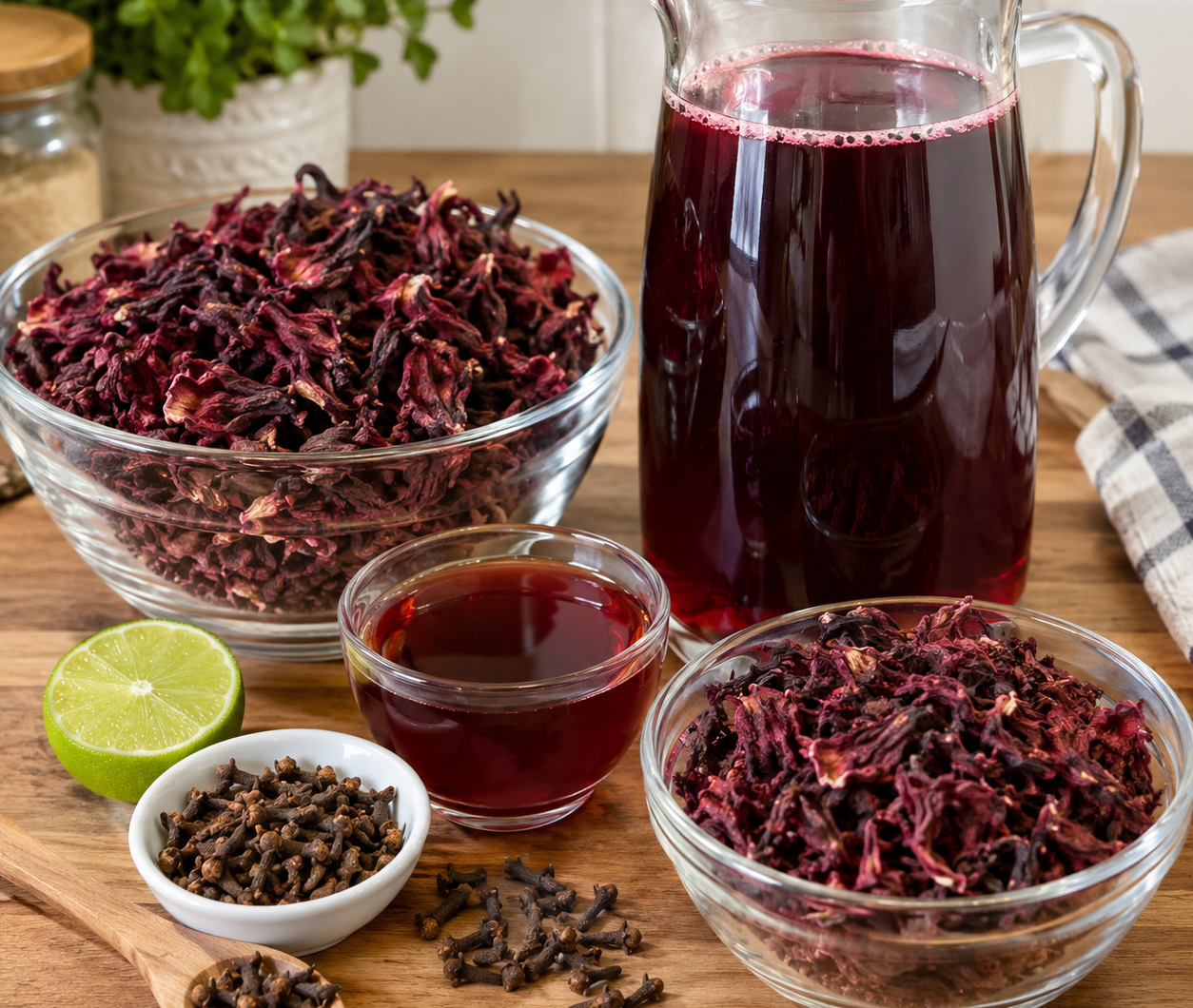
Hibiscus and Clove Drink Recipe
A refreshing homemade hibiscus lemon drink infused with whole cloves and naturally sweetened with honey. Serve chilled over ice for a tangy, aromatic herbal beverage.
4
servings2
hours5
minutes2
hours5
minutesIngredients
1 cup dried hibiscus flowers
5 cloves pods
1 cup water
2 Tb fresh lemon juice
1 Tb honey
Ice cubes
Directions
- Combine the ingredients
Place the dried hibiscus flowers in a suitable container. Add one cup of water and the whole cloves, making sure the flowers are immersed. - Soak for two hours
Cover the container and leave the mixture to soak for two hours. Refrigerate it during this period to keep the infusion cool and protected. - Strain the infusion
Place a strainer over a large bowl and pour the mixture through it. Gently press the softened flowers with a clean spoon to extract the remaining liquid. - Add lemon and honey
Divide the strained liquid between two small glasses. Add half a tablespoon of honey and one tablespoon of freshly squeezed lemon juice to each glass. Stir well. - Add ice and serve
Add three to four small ice cubes to each glass. Garnish with lemon wedges and a few whole cloves if desired. Serve immediately while cold.
Notes
- Storage: Remove the cloves and lemon wedges from any leftover drink. Refrigerate in a clean, covered container and preferably consume the same day.
- Adjust the strength: If the drink tastes too concentrated, add extra cold water or ice cubes to make it milder.
- Serving size: This recipe makes two small glasses. You can multiply the ingredients to prepare more servings.
- Preparation time: The two-hour soaking period is inactive time; no cooking is required.
- Health precaution: Hibiscus may lower blood pressure and interact with some medications. Consult a healthcare professional before regular consumption if you take medication or have a relevant medical condition. Seek professional advice before using hibiscus during pregnancy or breastfeeding.
- Sweetness: Honey is a natural sweetener, but it still contains sugar. Adjusting the amount will change the nutritional values.
