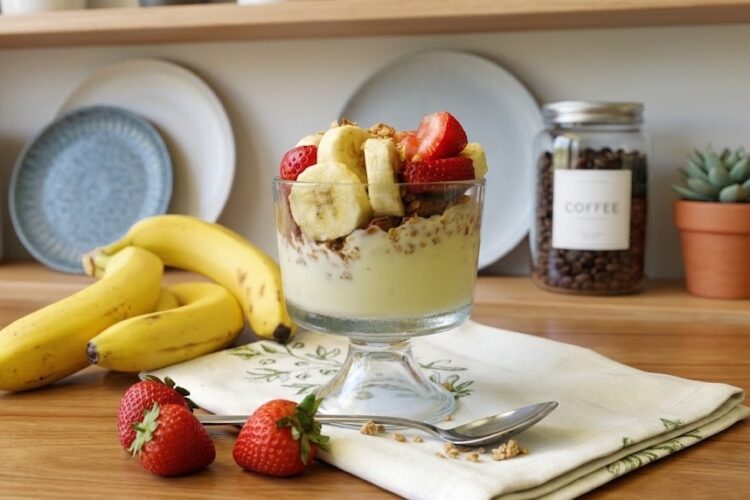
Kefir Pudding Parfait is a creamy, chilled dessert made with cultured milk, vanilla, fresh fruit, and crunchy granola. It is an easy homemade pudding recipe that brings together a smooth custard-like texture with the fresh flavor of strawberries and bananas. Unlike many rich desserts, this parfait has a light tang from kefir that balances the sweetness beautifully. The finished dessert can be served in individual glasses or small bowls, making it suitable for breakfast, an afternoon snack, or a simple after-dinner treat.
Why Make Homemade Kefir Pudding?
Homemade pudding is surprisingly easy to prepare, and using kefir gives this version a distinctive flavor and creamy consistency. Kefir is a cultured milk product with a naturally tangy taste, making it an interesting alternative to ordinary milk in sweet recipes. When combined with sugar, egg yolks, cornstarch, butter, and vanilla, it develops into a thick pudding that works especially well as the base of a fruit parfait. The recipe requires only a short cooking period, followed by chilling time to achieve the ideal texture.
A Simple Breakfast or Dessert Idea
This kefir pudding parfait can easily fit into several parts of the day. Serve it with fresh strawberries and bananas for a colorful breakfast, or add granola just before serving for extra texture. It can also be prepared ahead of time and chilled in individual serving dishes, making it convenient for busy mornings and planned desserts. Because the pudding needs several hours to become fully chilled, preparing it the night before is an excellent way to have a ready-to-serve parfait waiting in the refrigerator.
The Role of Kefir in This Recipe
Kefir is the main ingredient that gives this pudding its characteristic flavor. LifeWay Kefir Cultured Milk Smoothie is used in the original recipe, and its creamy consistency works well in a cooked pudding mixture. The cultured milk adds a mild tang that prevents the dessert from tasting overly sweet. That subtle contrast is particularly pleasant when the pudding is paired with naturally sweet fruit such as bananas and strawberries. The result is a dessert with several layers of flavor rather than a pudding that tastes simply sugary.
How Cornstarch Creates a Thick Pudding
Cornstarch is responsible for much of the pudding’s thick, spoonable consistency. It is first mixed with sugar and salt before the kefir is gradually incorporated. Whisking carefully at this stage is important because it helps distribute the cornstarch evenly and reduces the chance of dry pockets forming. As the mixture cooks, the cornstarch thickens the liquid and transforms the mixture into a smooth pudding. Continuing to cook until it becomes very thick ensures that the parfait will hold its texture after chilling.
Egg Yolks Add Richness and Structure
The three large egg yolks contribute richness and help give the pudding its custard-like character. They are added to the kefir mixture before cooking, so they need to be whisked thoroughly into the liquid. As the pudding heats, the egg yolks help create a thicker and richer texture. The mixture should be cooked gradually while whisking often. This steady cooking process helps the pudding thicken properly while maintaining a smooth consistency that is ideal for layering with fruit and granola.
Why Butter and Vanilla Matter
Unsalted butter and vanilla are added after the pudding has finished cooking. The butter contributes richness and a silky mouthfeel, while vanilla provides a familiar dessert flavor that complements both the kefir and fresh fruit. Because they are stirred in after the pudding is removed from the heat, their flavors remain noticeable in the finished mixture. Cutting the butter into small cubes also helps it melt quickly and evenly into the hot pudding, producing a smooth final texture.
The Important Straining Step
One of the most useful techniques in this kefir pudding recipe is passing the cooked pudding through a fine mesh sieve. Even when the pudding looks perfectly smooth in the saucepan, small pieces of cooked cornstarch or other tiny lumps can remain in the mixture. Straining removes those imperfections and creates a much more polished texture. This step takes very little time but can make a noticeable difference, particularly when serving the pudding in clear glasses where the creamy texture is part of the presentation.
Preventing a Skin on the Pudding
Once the pudding has been strained and transferred into serving dishes, cover the surface directly with plastic wrap. Allowing the wrap to touch the pudding prevents air from reaching the surface and helps reduce the formation of a thick skin while it chills. This is especially useful when preparing the parfait several hours before serving. Once the pudding has cooled completely, the plastic wrap can be removed and the fresh toppings can be added just before serving.
Choosing the Best Fruit for Your Parfait
Strawberries and bananas are used in the original recipe because their flavors pair naturally with creamy vanilla pudding. Strawberries bring freshness and a slightly tart note, while bananas provide sweetness and a soft texture. Their contrasting colors also make the finished parfait visually appealing. The fruit should ideally be fresh and prepared shortly before serving. Slice the bananas and strawberries into manageable pieces so they are easy to eat alongside the pudding and granola.
Adding Granola for Texture
The pudding itself is smooth and creamy, so granola provides an important contrast. Its crisp texture makes every spoonful more interesting and prevents the parfait from feeling too soft. Add the granola shortly before serving rather than mixing it into the pudding too early. If it sits in the chilled pudding for several hours, it can lose some of its crunch. A generous sprinkle over the top creates a simple finish, while additional fruit can be arranged around the granola for a more attractive presentation.
How to Cook the Pudding Correctly
The cooking stage is straightforward, but temperature and whisking are important. Begin over medium heat and whisk frequently as the mixture warms. After approximately five to six minutes, the pudding should begin bubbling and become noticeably thicker. At that point, reduce the heat to medium-low and continue cooking for another five minutes. The pudding is ready when it is very thick and ribbons form on the surface when a spoonful is drizzled back into the mixture. This visual test is more useful than relying on time alone.
What the Finished Consistency Should Be
The ideal kefir pudding should be thick enough to hold its shape but still smooth and creamy. It should not resemble a thin custard or a loose sauce. When lifted with a spoon, the pudding should fall slowly and leave visible ribbons on the surface. Remember that chilling will help the mixture become firmer. For that reason, it is better to judge the cooked pudding by its thickness and texture rather than expecting it to have the exact firmness of a fully chilled dessert while it is still warm.
Cooling the Pudding Properly
After straining, the pudding can be poured directly into individual serving dishes. Leave enough room at the top for the fruit and granola that will be added later. Cover each portion with plastic wrap placed directly against the pudding surface, then refrigerate for approximately four hours or overnight. The extended chilling period allows the pudding to firm up and become properly cold. Overnight refrigeration is particularly convenient because the dessert can be prepared in advance and assembled quickly when it is time to eat.
Preparing the Parfait in Advance
One of the advantages of this easy kefir dessert is that the pudding base can be prepared ahead of time. Make the pudding, strain it, portion it into serving dishes, cover it, and refrigerate. When you are ready to serve, remove the covering and add the fresh fruit and granola. This preparation method makes the recipe practical for breakfast gatherings, family meals, or occasions when you want dessert ready before guests arrive. Keep the fruit and granola separate until serving for the best texture.
Serving Ideas for Kefir Pudding Parfait
For an attractive presentation, use clear dessert glasses so the creamy pudding and colorful toppings can be seen easily. Spoon the chilled pudding into the glasses, then add sliced strawberries and bananas before finishing with granola. You can create distinct layers if you prefer a traditional parfait appearance, or simply arrange the toppings over the pudding. The recipe makes four servings, making it a convenient size for a small family breakfast or dessert.
A Naturally Tangy Flavor
The flavor of kefir makes this pudding different from a traditional vanilla pudding recipe. The cultured milk contributes a gentle tang that works particularly well with the sugar and vanilla. Strawberries reinforce the fresh, slightly tart flavor, while bananas add a softer sweetness. Granola completes the combination with a toasted, crunchy element. If you enjoy desserts that balance sweetness with a little tanginess, this kefir pudding parfait offers a pleasant change from heavier cream-based desserts.
Making the Recipe Chocolate-Flavored
The original recipe can also be adapted into a chocolate variation without changing the ingredients listed for the featured parfait. The original preparation notes that chocolate chips can be incorporated at the end with the butter to create a chocolate pudding variation. The resulting flavor pairs especially well with bananas and granola. However, for the featured recipe, the classic vanilla pudding combination remains the focus because its mild flavor allows the fresh strawberries and bananas to stand out.
Why This Recipe Works for Different Occasions
A good parfait recipe should be flexible enough to work at different times of day, and this one does just that. Its creamy pudding base can be served as a breakfast-style parfait when paired with fruit and granola, while the same preparation can easily become a dessert after lunch or dinner. Individual portions also make serving simple. There is no need to slice, scoop, or portion a large dessert after chilling because each serving can be prepared in its own dish.
Common Preparation Mistakes to Avoid
A few small details can affect the final result. Adding the kefir too quickly to the cornstarch mixture can make it harder to achieve a smooth base, so gradual addition and whisking are helpful. Another common issue is stopping the cooking process before the pudding becomes sufficiently thick. The mixture should be very thick before it is removed from the heat. Finally, skipping the fine mesh sieve can leave unwanted lumps, even when the pudding initially appears smooth.
How to Get a Smooth Texture
For the smoothest homemade pudding, whisk the dry ingredients with the initial portion of kefir until no visible cornstarch remains. Add the egg yolks and remaining kefir while continuing to whisk. During cooking, whisk frequently so the mixture heats evenly and does not settle against the bottom of the saucepan. After cooking, immediately pass the pudding through a fine mesh sieve. These simple steps create a much cleaner texture and help the final parfait feel creamy and refined.
Notes for Serving and Storage
The assembled parfait is best served cold, with the fruit and granola added shortly before eating. The pudding itself needs about four hours to chill properly, although overnight refrigeration is also suitable. Keep the pudding refrigerated while it is waiting to be served. For the best granola texture, do not add it until the final moment. Fresh bananas can also change color as they sit, so slicing them close to serving time helps maintain a fresh appearance.
Frequently Asked Questions
Can I prepare the kefir pudding the night before?
Yes. The pudding can be cooked, strained, portioned, covered directly on the surface, and refrigerated overnight. This is actually a convenient approach because the pudding has plenty of time to become cold and firm. Add the strawberries, bananas, and granola when you are ready to serve so the fruit stays fresh and the granola remains crunchy.
Why should I strain the pudding?
Straining removes small cornstarch lumps or other imperfections that can remain after cooking. Even if the pudding looks smooth in the saucepan, passing it through a fine mesh sieve produces a more consistently creamy texture. It is a quick step that helps create a better finished dessert.
Can I use other fruit?
The original parfait uses strawberries and bananas. The recipe’s creamy vanilla base can complement many types of fruit, but the listed ingredients for this version remain strawberries and bananas. If you are preparing variations, choose fruit that pairs well with vanilla and the mildly tangy flavor of kefir.
How long does the pudding need to chill?
The pudding should be refrigerated for approximately four hours or overnight. The longer chilling time allows it to become firm, cold, and ready for layering with fruit and granola.
What makes kefir pudding different from regular pudding?
Kefir gives the pudding a mild cultured tang that distinguishes it from a standard milk-based vanilla pudding. Combined with sugar, vanilla, butter, and fresh fruit, that tang creates a balanced flavor that is creamy without being overwhelmingly sweet.
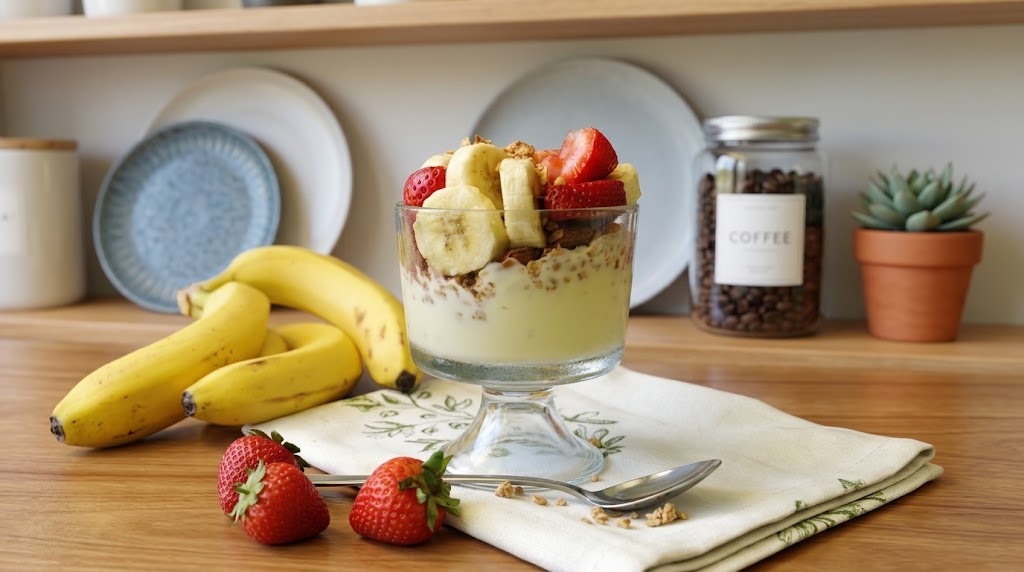
Kefir Pudding Parfait
A creamy homemade kefir pudding parfait made with LifeWay Kefir Cultured Milk Smoothie, vanilla, fresh strawberries, bananas, and crunchy granola.
4
servings20
minutes20
minutes240
minutes4
hours40
minutesIngredients
1/3 cup sugar
2 tablespoons cornstarch
1/4 teaspoon salt
2 1/4 cups LifeWay Kefir Cultured Milk Smoothie
3 large egg yolks, slightly beaten
3 tablespoons unsalted butter, cut into small cubes
2 teaspoons vanilla
Granola
Strawberries
Bananas
Directions
- Add the sugar, cornstarch, and salt to a medium saucepan. Place the saucepan over medium heat and combine the dry ingredients thoroughly.
- Slowly pour in 1/4 cup of the LifeWay Kefir Cultured Milk Smoothie, whisking continuously until the mixture becomes smooth and the cornstarch is well incorporated.
- Whisk in the three slightly beaten egg yolks, followed by the remaining kefir. Continue whisking to combine everything evenly.
- Cook the mixture over medium heat for approximately 5–6 minutes, whisking often. The pudding should begin to bubble and noticeably thicken.
- Once the mixture has thickened, reduce the heat to medium-low. Continue cooking for approximately another 5 minutes, or until the pudding becomes very thick.
- Check the consistency by lifting a little pudding with a spoon and drizzling it back over the surface. When the mixture creates visible ribbons on the surface, it is ready.
- Remove the saucepan from the heat. Stir in the cubed unsalted butter and vanilla until the butter has completely melted and the pudding is smooth.
- Immediately pour the hot pudding through a fine mesh sieve into a large measuring cup or another suitable container. This removes any small lumps and gives the pudding a smoother consistency.
- Pour the strained pudding into individual serving dishes, leaving sufficient space for the fruit and granola.
- Place plastic wrap directly against the surface of the pudding. Refrigerate for approximately 4 hours or overnight, allowing the pudding to become completely chilled and firm.
- When ready to serve, remove the plastic wrap and top each serving with granola, strawberries, and bananas.
- Serve the parfait cold and enjoy.
Notes
- Strain the pudding: Do not skip the fine mesh sieve. It helps remove small cornstarch lumps and produces a smoother pudding.
- Watch the consistency: The pudding should be very thick before it is removed from the heat. Look for ribbons forming on the surface when the pudding is drizzled from a spoon.
- Chill thoroughly: Refrigerate for approximately four hours or overnight for the best texture.
- Add granola at serving time: This keeps the granola crisp instead of allowing it to soften in the pudding.
- Fresh fruit: Strawberries and bananas are the original toppings and provide a pleasant contrast to the creamy, mildly tangy kefir pudding.
- Serving option: Prepare the pudding in individual clear glasses or dessert dishes for an attractive parfait presentation.
